The A-League can’t afford to play more games. It also can’t afford not to
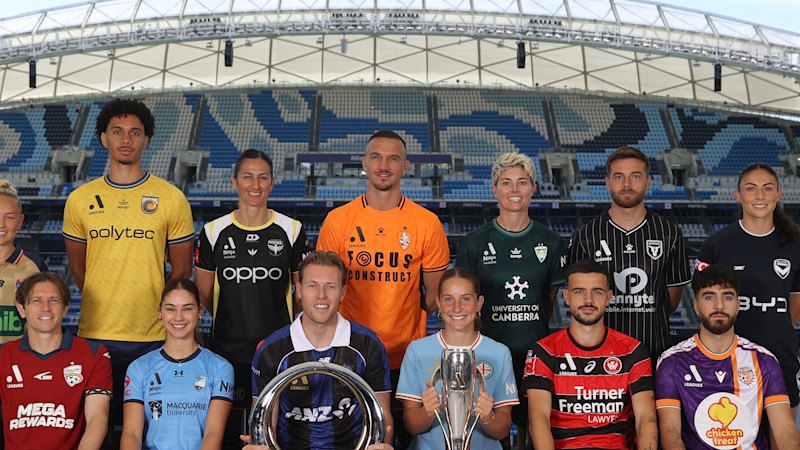
One of the world’s longest off-seasons is finally over … and thus begins one of world football’s shortest seasons. Which also happens to be the longest of any football code in Australia, but still not quite as long as it used to be.
Confused? You must be new to the A-League.
There are structural issues galore across all of Australian soccer, but one of the biggest things holding back the development of local players - and thus, the financial position of their clubs, and the progress of the code - is how often they play.
This weekend, more than five months since the end of the last A-League Men regular season, the competition’s 12 teams will begin a campaign which will see them play 26 games each - and then, for the top six, a maximum of four extra games in the finals series.
There are a few problems with the set-up. Firstly, it produces an uneven fixture, with teams playing some rivals twice and others three times. Secondly, the delayed start date in mid-October - initially intended so the A-League could launch in “clear air” - means players aren’t at full match fitness for the first international window of the season in September, disadvantaging national teams. The concept of “clear air” is outdated anyway, given the continued expansion of content from other sports into a period when the A-League used to take over.
Thirdly, and most significantly, it’s just not enough football.
It’s more matches than the AFL (23), NRL (24) and Super Rugby Pacific (14), sure - but by global standards, the A-League’s 26-game season does not measure up.
In Europe’s top five leagues, teams play between 34 to 38 games per season, not including cups and continental tournaments. That’s a gap of eight to 12 games, every year; that difference compounds, especially for younger players. By the time an Australian player hits 20 years of age, their equivalent in, say, Spain or Italy may have played an extra season or two’s worth of competitive football.
A-League clubs have pivoted hard into development, hoping the players who come through their academies will be sold for good money and eventually end up in Europe.
But the system around them is not geared for this new objective.
It’s one of Socceroos coach Tony Popovic’s biggest gripes, and most times he speaks to the media, he brings it up: the long off-season and short league campaign is leaving Australian players with a severe deficit in physical preparation and durability, and no matter how well they train or good their club’s facilities are in Australia, it doesn’t provide the continuous competitive environment necessary to ensure players are ready for the demands of elite international football. It explains why so many Australians break down physically soon after moving to European clubs, and why players of the same age from other countries often seem so much more advanced.
“You can’t compare 26 games to someone playing 40 to 50 in Europe. And then if a player has an injury and he misses four games, he’s played 22,” Popovic said last year.
Key figures in the A-League concur. Players are obviously signed to full-time contracts, but in pre-season, they spend three months training without playing competitive matches.
“For us, that’s certainly not enough football,” said Western Sydney Wanderers football director Mal Impiombato.
“I understand the challenges with extending the season ... but there needs to be a football solution. If we can bridge that gap, we’ll have a significant win for our national teams, for the progression of players, and also for our competition.”
Like most things in Australian soccer, fixing it is easier said than done.
While there is appetite for more A-League games from players, clubs and coaches, there isn’t from the rest of the industry. Projections suggest it would cost more than it would generate in revenue to do so, but in practice it may not be possible. Stadiums are expensive to hire and many are booked out until September by the winter codes, getting fans to them in the first place remains a big challenge, while the extra travel and insurance expenses would place a further financial burden on an already struggling league.
Meanwhile, ratings on Network 10 and Paramount+ don’t make a good case for extending the season to broadcasters; sources familiar with the landscape say that, while production costs vary from stadium to stadium, the average cost to put a game to air is about $80,000. Extrapolate that across an increase from 26 to 34 games per season, and that’s nearly $4 million that someone is going to have to cop just to make them available to watch.
“Our current season works with our structure, our broadcast, our accessibility for stadiums, and within the commercial parameters we have for the league,” said A-League chief executive Steve Rosich.
“We don’t see that changing in this current broadcast cycle, which is the next three years, but it’s something you’re always considering when you have a growth focus for the league - which we do.”
All of which makes sense.
With the addition of Melbourne Heart in 2010-11, the A-League’s 11 teams played 30 regular-season games each - but average crowds fell to a then-record low of about 8500. The following season, as the league reverted to a compromised fixture model of 27 games, attendances recovered to nearly 10,500 per match. History shows putting on more football doesn’t guarantee people will turn up.
But in a world where A-League clubs are increasingly reliant on transfer fees to stay afloat, but are unable to extract maximum value from their players, what if the equation works better the other way around?
What if taking the financial hit of extending the season was seen not as an expense, but an investment in the product which pays off in other ways?
The benefits might not be immediately apparent on the league’s balance sheet, but could be felt elsewhere, if improved conditions enable clubs to produce better players who are sold for bigger fees than they can currently demand.
It’s a chicken-and-egg dynamic that is on the APL’s mind as they consider the road ahead beyond the current broadcast deal, which expires in 2029.
“It’s something that you do consider as part of that, and we will,” Rosich said.
“And in fact, albeit our next broadcast cycle is three years away, that planning starts now to ensure we’re best placed for that.”
KioskNews shows a cleaned-up reading view extracted from the publisher’s page — the original always lives on their site, not ours.