Magic: The Gathering As We Know It Has Officially Come To An End

Nicholas Becher is a gaming journalist with an MFA in Creative Writing from FAU. With extensive experience playing video games, he covers all forms of gaming content at Screen Rant, from breaking news to the latest fan theories. Most-played games range from Clair Obscur to Civ to Elden Ring to Halo 2 and beyond.
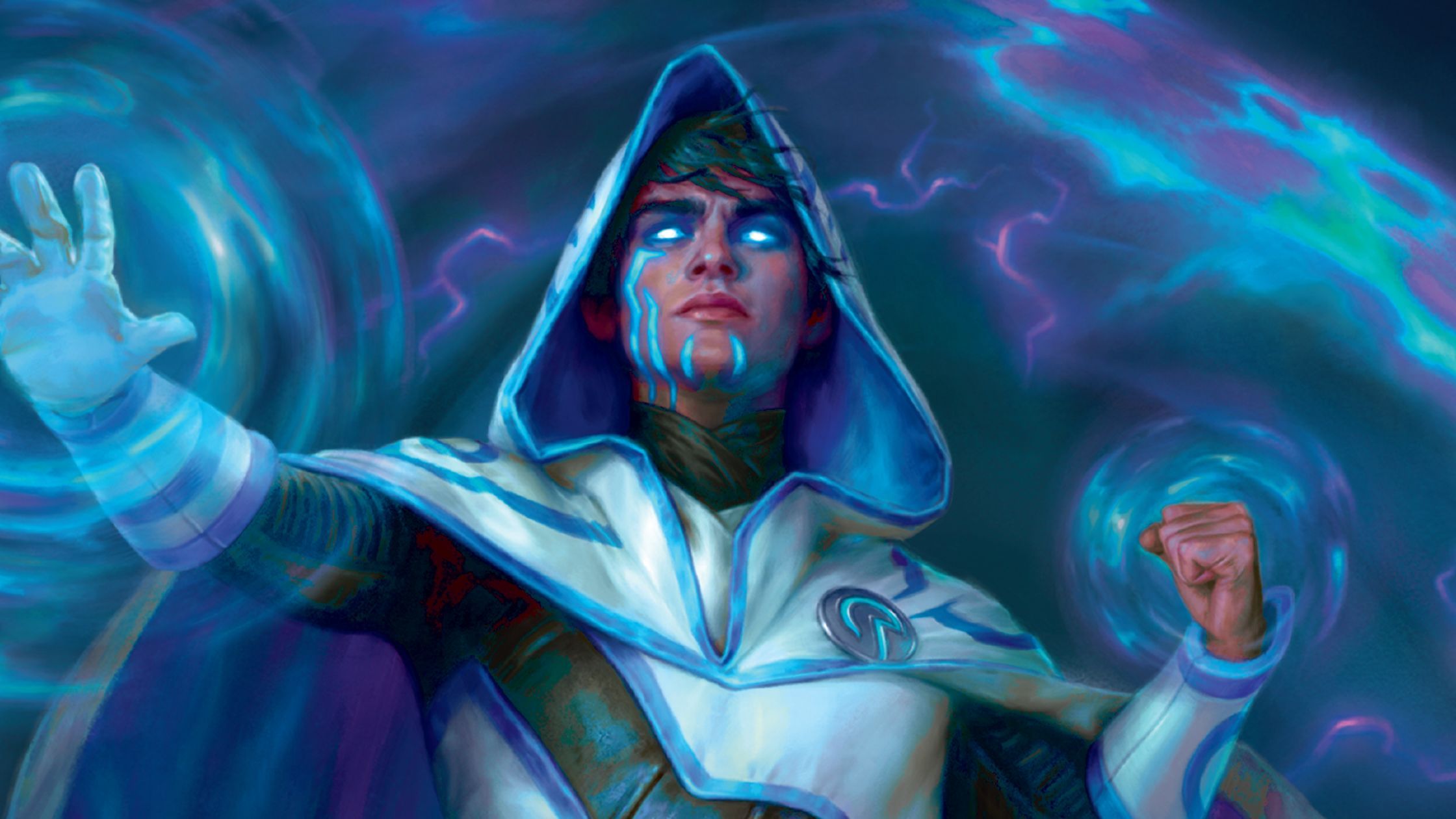
Magic: The Gathering's highly anticipated Reality Fracture set has finally arrived after months of anticipation among players and collectors alike. The set brings years of storytelling to a head as Jace Beleren attempts to replace the existing Multiverse with the Echoverse, an alternate reality built around his vision of a world without threats such as the Phyrexians, Eldrazi, or Nicol Bolas.
Familiar heroes and villains consequently appear in very different forms, allowing Reality Fracture to explore how Magic's history could have unfolded if some of its greatest storylines played out differently. Wizards of the Coast has positioned Reality Fracture as a major "capstone event set," following in the footsteps of War of the Spark and March of the Machine, giving its events potentially enormous consequences for the franchise going forward.
For longtime fans, much of that anticipation has centered on Jace himself, one of Magic's most recognizable heroes and arguably the closest thing the sprawling franchise has had to a main character. Now that Reality Fracture is here, however, MTG's Multiverse may never look the same again.

Reality Fracture has gone beyond rewriting Magic: The Gathering's Multiverse lore, and by the conclusion, it removes arguably the closest thing the franchise has had to a traditional main character for much of its modern history. Jace Beleren officially dies after Vraska plunges an Ochran dagger into his heart, bringing his attempt to overwrite the existing Multiverse with the Echoverse to an end.
Context is important here: Jace had become fractured into different aspects of himself, with the increasingly dangerous Theorist pushing forward with a plan that could effectively replace reality itself. As those pieces finally reunite, Jace recognizes what has happened and accepts that stopping the connection between the two realities requires his death. Vraska ultimately delivers the fatal blow, with Jace dying in the arms of the woman who has been one of the most important figures in his story.
There is little ambiguity surrounding what follows. Jace's body dies, and Reality Fracture gives him the kind of farewell typically reserved for a character whose story has truly reached its end rather than setting up a potential revival later on. His spark ultimately passes on to Tam, providing an obvious continuation of some aspects of his legacy without simply resetting things back to how they were before.
That distinction is critical because Jace has been a key figure in Magic for nearly two decades. First introduced in 2007's Lorwyn, he became one of the original five Planeswalkers represented after the card type debuted and eventually emerged as one of the franchise's most important characters. His position within the Gatewatch pushed him even further toward the center of the overarching narrative, to the point that Jace frequently functioned as its unofficial protagonist.
Killing a character with so much significance feels considerably bigger than simply removing another Planeswalker from the board. Magic has lost major characters before, but Jace was deeply connected to an entire era of the franchise's storytelling and branding. He survived conflicts involving Nicol Bolas, the Eldrazi, and the Phyrexians, evolving from a young mind mage into one of the Multiverse's defining figures.
Reality Fracture finally closes that chapter. Tam inheriting Jace's spark means his influence can continue, but MTG's future will no longer revolve around Jace Beleren in quite the same way. For a franchise built around constant change, this may be one of its clearest dividing lines yet: there is Magic: The Gathering before Reality Fracture, and now there is Magic after Jace.
- Video Game(s)
- Magic: The Gathering, Magic the Gathering Commander, Magic: The Gathering - Battlegrounds, Magic the Gathering: Duels of the Planeswalkers 2012, Magic: The Gathering - Duels of the Planeswalkers, Magic: The Gathering – Duels of the Planeswalkers 2012, Magic: The Gathering – Duels of the Planeswalkers 2013, Magic: The Gathering – Duels of the Planeswalkers 2014, Magic: The Gathering Arena
- Created by
- Richard Garfield
- Main Genre
- Fantasy
- Release Date
- August 5, 1993
KioskNews shows a cleaned-up reading view extracted from the publisher’s page — the original always lives on their site, not ours.