BOJ rate hike signals faster pace of tightening amid inflation risks, weak yen: Economists
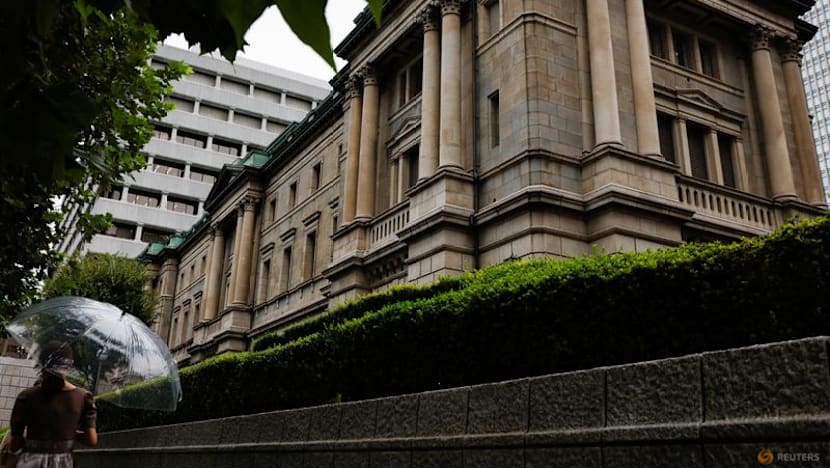
The Bank of Japan’s latest interest rate hike remains part of a gradual normalisation of monetary policy, but economists say inflation risks and a weak yen could push policymakers to tighten more quickly in the months ahead.
The central bank raised rates on Friday (Sep 18) by 25 basis points to a 31-year high of 1.25 per cent.
The widely expected move, coming three months after its previous hike, takes borrowing costs closer to levels the BOJ considers neutral for the economy and marks another step away from decades of ultra-low interest rates.
JAPAN AND US BOTH MOVE AGAINST INFLATION
For investors, however, the bigger question is what comes next – and whether the shorter interval between rate hikes signals a faster pace of tightening.
“(BOJ) has already signalled very, very clearly over the last two weeks that it would hike interest rates. The big question is now how fast will it go from here?” said Martin Schulz, chief policy economist at Fujitsu.
Until now, the BOJ had moved at a more measured pace, he told CNA’s Asia First.
“So far, it was rather clear six-month steps, but now it is a three-month step. So, will it hike interest rates in December again? Most economists actually think so.”
Norihiro Yamaguchi, lead economist at Oxford Economics, said the BOJ remains in a phase of gradual policy normalisation.
But policymakers are also paying increasing attention to the risk of inflation overshooting, he told CNA’s Asia Now.
The advisory firm expects further rate hikes in December and April, which would take the policy rate to 1.75 per cent.
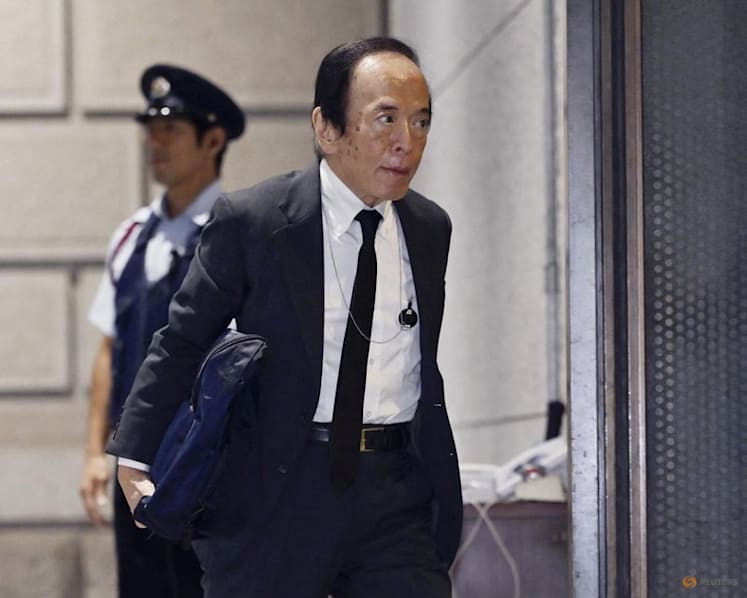
Inflation trends, developments in the United States and market expectations also point towards further tightening, Schulz said, adding that BOJ governor Kazuo Ueda remains focused primarily on conditions within Japan.
The BOJ’s decision comes shortly after the US Federal Reserve on Wednesday (Sep 16) raised interest rates for the first time since 2023.
The Fed lifted its benchmark rate by 25 basis points to a range of 3.75 per cent to 4 per cent, with chairman Kevin Warsh stressing that inflation remains “too high” for “too long”.
The Fed’s latest projections indicated another increase could come before the end of the year.
YEN WEAKNESS AND HOUSEHOLD PRESSURES
The BOJ’s rate hike comes against the backdrop of weakness in the yen, which has made imported goods more expensive and added to pressure on Japanese households.
While the exchange rate has not traditionally been the central bank’s main policy driver, economists said the yen is becoming increasingly relevant to its decisions because of the impact on inflation.
Yamaguchi touched on how a weaker yen could influence monetary policy by changing the inflation outlook.
“The yen development is one of the key factors which could deviate policy from our baseline,” he said, adding that persistent currency weakness could potentially prompt the BOJ to raise rates sooner.
Schulz said there is also a broader consensus that the yen has weakened too far.
Concerns about prices have become increasingly widespread in Japan, extending beyond economists and policymakers to businesses and households, he added.
“Households are very concerned about higher prices. They know that this is related … to the imported prices that are coming in,” he said.
Schulz said how quickly higher rates translate into lower inflation will depend partly on the broader policy mix in Japan.
The government can use fiscal policy to support domestic demand and household incomes, giving the central bank more room to focus on bringing monetary policy back towards normal levels, he added.
“Everybody needs to be on board for big changes, and the Japanese yen has been weakening for so long. Now sentiment has turned towards, ‘This went too far; we need to draw a line.’”
KioskNews shows a cleaned-up reading view extracted from the publisher’s page — the original always lives on their site, not ours.