Godzilla’s Greatest Rival King Ghidorah Has Never Been More Terrifying Than in ‘Minus Zero’

Hannah covers horror, sci-fi, and games at Collider, where she writes news and features, reviews new releases, and interviews the people who make them. She’s helping build out Collider’s gaming coverage, with Pokémon as one of her specialties. If she isn’t writing about a monster, she’s probably watching one on a tape from her VHS collection.
Sign in to your Collider account
The following contains spoilers for Godzilla Minus Zero.There is a particular kind of relief that comes with recognizing the villain in a monster movie. You know the silhouette, you know the roar, and you have probably spent years watching this creature tear through cities, lose a fight, and return in another movie to do it all again. King Ghidorah should offer that familiarity. Three heads, enormous wings, golden scales, and a terrible attitude toward anything unfortunate enough to share a planet with him. Seeing him face Godzilla is one of the franchise’s great pleasures.
Then Takashi Yamazaki gets hold of him, and suddenly that familiarity itself becomes dangerous. Godzilla Minus Zero understands exactly how excited audiences will be to see Godzilla’s most famous rival, and it also understands that excitement alone cannot sustain the kind of movie Yamazaki is making. This Ghidorah has to belong in a world where a monster attack leaves people grieving, injured, and terrified of whatever comes next. The result is a creature whose transformation into the monster we recognize makes him progressively harder to watch. Ghidorah’s arrival promises a spectacular confrontation, and Minus Zero delivers. But long before Godzilla gets his opportunity to fight back, Yamazaki makes us sit with what facing this thing would mean for everyone else.
‘Godzilla Minus Zero’ Makes Ghidorah’s Familiar Design Feel Horrifying Again
Ghidorah’s appearance has always been excessive in the best possible way. One dragon wasn’t enough. He needed three heads, two tails, and wings capable of making Godzilla look comparatively manageable. Minus Zero finds an unsettling way to exploit that design: it makes the audience wait for the rest of him to emerge. Rather than introducing the fully formed golden monster, the movie presents Ghidorah as something still developing. His early, amorphous state gives way to a single-headed dragon, already dangerous enough to devastate the people confronting him. The recognizable King Ghidorah remains somewhere ahead of us. Knowing what he will eventually become makes the creature on screen feel unfinished in the worst possible way.
That anticipation pays off through a grotesque physical transformation. Additional heads emerge, his tail divides, and the darker exterior gives way to the gold beneath it. These familiar features become the evidence of a worsening catastrophe. The audience gets the reveal it came for at precisely the moment humanity’s situation becomes more desperate.
Crucially, human intervention cannot provide the reassurance it should. Attempts to destroy Ghidorah fail to contain him, and an apparent victory gives way to another stage of his development. The frightening implication is that people are making decisions about a creature they do not understand quickly enough to survive. Every plan depends on assumptions about what his body can withstand, but his continued evolution keeps exposing how little those assumptions are worth. A familiar monster can become predictable even when its effects improve. Yamazaki avoids that problem by making recognition part of the suspense. We know Ghidorah has more to become. The characters still have to discover how much worse things can get.
Ghidorah’s Anti-Gravity Beams Turn Spectacle Into a Nightmare
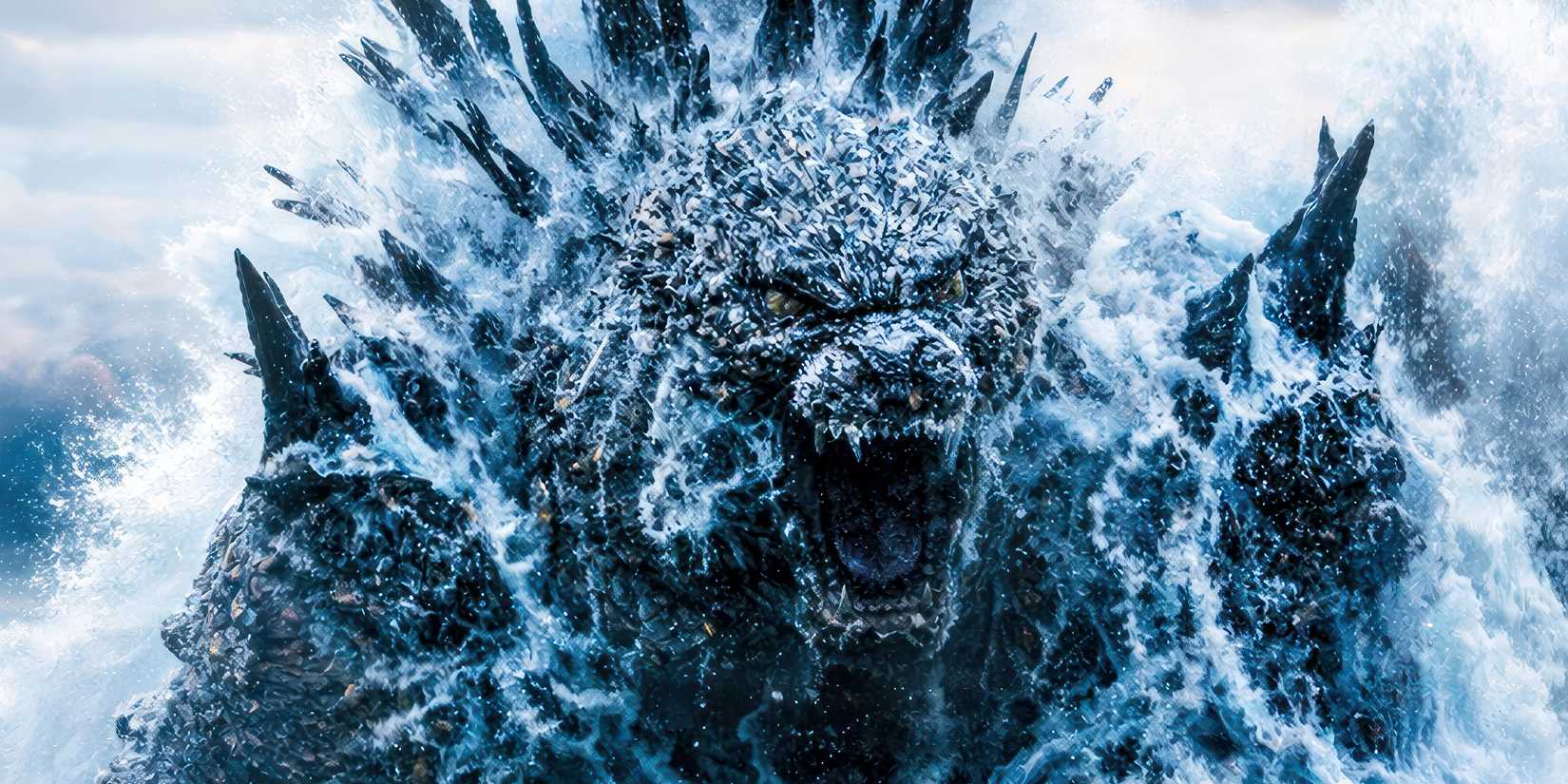
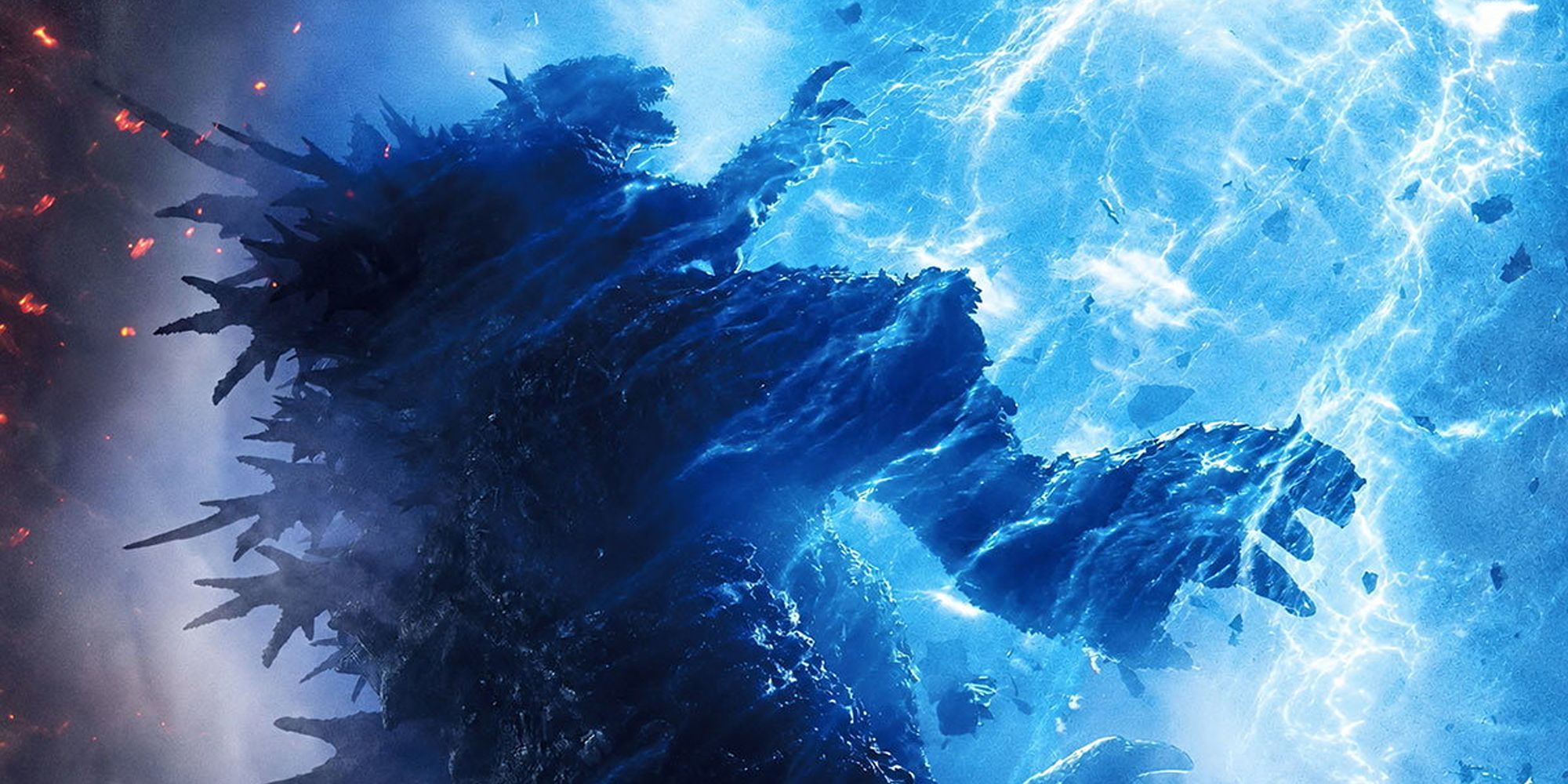
His transformation would be memorable on its own, but Minus Zero gives the completed creature an equally horrifying way to demonstrate his power. Ghidorah’s attacks lift buildings and other objects before sending them crashing back down to the earth. The ground itself stops offering the most basic reassurance imaginable: somewhere solid to stand. There is something especially cruel about that suspended moment. A building being destroyed is already frightening. Watching it become airborne creates another beat in which the audience can understand what is about to happen. People are trapped inside something that was supposed to shelter them, waiting for gravity to finish the attack.
This is where Yamazaki’s attention to human life makes an enormous difference. A monster movie hits harder when its director cares about the people inside the building being stepped on. Scale becomes meaningful through the lives caught within it. A spectacular effect can make us admire the work involved while the circumstances make us desperately want it to stop.
The destruction in Minus Zero carries that ugly contradiction. Ghidorah is astonishing to look at. His abilities are inventive, his transformation is thrilling, and his presence commands the screen. None of that makes being beneath him feel remotely entertaining. Yamazaki lets the audience experience the appeal of the monster without allowing that appeal to erase his victims. The director’s own explanation reinforces that connection. Speaking to Den of Geek, Yamazaki linked Ghidorah’s effects on the weather to the natural disasters that complicated Japan’s recovery after the war. His presence brings another catastrophe to people already struggling to rebuild.
Collider Exclusive · 8 Questions · 2 Minutes Which Iconic Fandom Should You Join? Harry Potter · Lord of the Rings · Star Wars · Star Trek
Eight honest questions about how you actually are: what you put on when you need cheering up, how deep you go into the things you love, what you argue about, what you keep on your shelf. Answer them and we will tell you where you belong. Four of the biggest fandoms on earth are taking new members, and they could not be more different from one another.
⚡Harry Potter(Wizarding World)
💍Lord of the Rings(Middle-earth)
⚔️Star Wars(A Galaxy Far Away)
🖖Star Trek(The Final Frontier)
01
What do you put on when you need cheering up? Nobody is brave about this one.
02
How deep do you go into something you love? There is no shallow end here, only different deep ends.
03
What do you and your friends actually argue about? Every fandom has one argument it has been having for years.
04
How do you feel about a room full of strangers? Every one of these comes with a very big room.
05
Where would you rather spend a week? Pick on instinct rather than on budget.
06
What do you believe about people, mostly? All four of these stories have an answer, and they disagree.
07
What is actually on your shelf? Look over at it before you answer.
08
What do you actually want from a story? Eight questions in, this is the one that picks your fandom.
Membership Confirmed Your Fandom Is…
Four of the largest communities on the planet, and four completely different reasons to belong to one. Here is yours, what it would give you, and the argument you would be having within a week.
Harry Potter
You belong to the fandom that is really about comfort. Hogwarts works on people because it is a place rather than a plot, and the pull is not the wizard war so much as the corridors, the food, the weather and the sense that somebody is expecting you.
- You are drawn to belonging, which is why this fandom sorted itself into houses within about five minutes and has never stopped.
- This is the most social of the four, and the one most likely to know which type every single person in your life would be.
- The books are built to be reread rather than analysed, and rereading is exactly what you do with things you love.
- The new HBO series is bringing the whole thing back one book at a time, which means the arguments are about to start all over again.
Lord of the Rings
You belong to the deepest fandom on this list, the one where somebody has always read further than you and is quietly delighted to say so. Middle-earth rewards patience more than any other world in popular culture.
- You like the sense that the story you are reading is only the visible part of something enormous, which is precisely how Tolkien built it.
- This fandom takes adaptation seriously to a degree that other fandoms find slightly alarming, and it has good reasons for that.
- Your favourite thing about the books is probably the bit that is not action at all, which is the walking, the songs and the long goodbyes.
- Nobody here thinks heroism belongs to the powerful, and the whole story exists to make that argument.
Star Wars
You belong to the loudest and largest tent of the four, the one where three generations are all watching the same thing and none of them agree about any of it. That disagreement is not a flaw in this fandom, it is the main activity.
- You want something you can share with absolutely everybody, from a six year old to a grandparent, and this is the only one on the list that really does that.
- Nobody argues like Star Wars fans argue, and the argument has been running since roughly 1980 with no sign of resolution.
- The pull here is sensory before it is narrative, since it is the sound design, the score and the look of a used and dented galaxy.
- You would be first in the queue, in costume, with strong opinions and a genuinely good time.
Star Trek
You belong to the thinking fandom, the one that turns up for the argument rather than the explosion. Trek has always been a series of ethical problems in space, and the people who love it love being asked what they would have done.
- You are an optimist in a way that is currently unfashionable, and this is the only major franchise still willing to say the future might be better.
- The best episodes are the ones where nobody fires anything, which is a sentence that makes perfect sense to this fandom and to nobody else.
- Starfleet Academy brought the franchise back to a classroom in 2026, which is appropriate, because Trek has always been a bit of a seminar.
- You would want the conversation afterwards more than the episode itself, and here you will always find somebody willing to have it.
Ghidorah Makes Godzilla a Terrifying Last Resort

Making Ghidorah this frightening also changes the anticipation surrounding Godzilla. After Minus One, the possibility of his return should inspire absolute dread. Now, another creature has made that return look necessary. That is an extraordinary position to put these survivors in. The monster responsible for their suffering becomes something they might need to survive the next disaster. Ghidorah does not make Godzilla trustworthy, he just makes the alternatives unbearable.
Yamazaki has been explicit about preserving that distance in interviews, reminding audiences, “He is not our friend.” Godzilla’s involvement offers the possibility of resistance, with no promise that humanity will be protected in the process. Consequently, the eventual confrontation carries more than the satisfaction of seeing two iconic creatures collide. Every blow comes with the knowledge that the people watching have almost no control over the outcome. Their best hope is another catastrophe moving in the right direction.
That is what makes this Ghidorah so effective. His design earns the awe associated with one of cinema’s greatest monsters, while his transformations and attacks restore the fear that familiarity can gradually wear away. By the time Godzilla confronts him, I wanted that fight as much as anyone, but I also wanted everyone beneath them to get out alive.
- Release Date
- November 6, 2026
- Runtime
- 135 minutes
- Director
- Takashi Yamazaki
-

Ryunosuke Kamiki
Koichi Shikishima
-
Minami Hamabe
Noriko Oishi
-
Min Tanaka
Kanji Murakami
-
Hidetaka Yoshioka
Kenji Noda
KioskNews shows a cleaned-up reading view extracted from the publisher’s page — the original always lives on their site, not ours.