Around 500 new jobs to be created as ST Engineering opens new aircraft maintenance facility
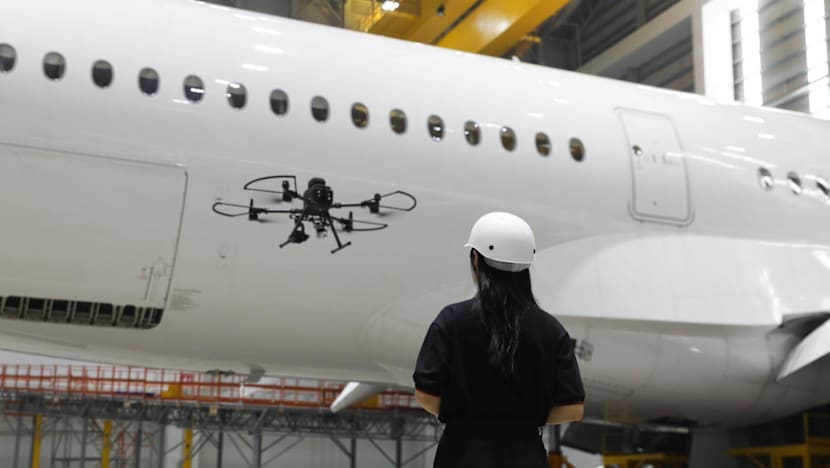
The Changi Creek facility will use drones and autonomous mobile robots to support operations.
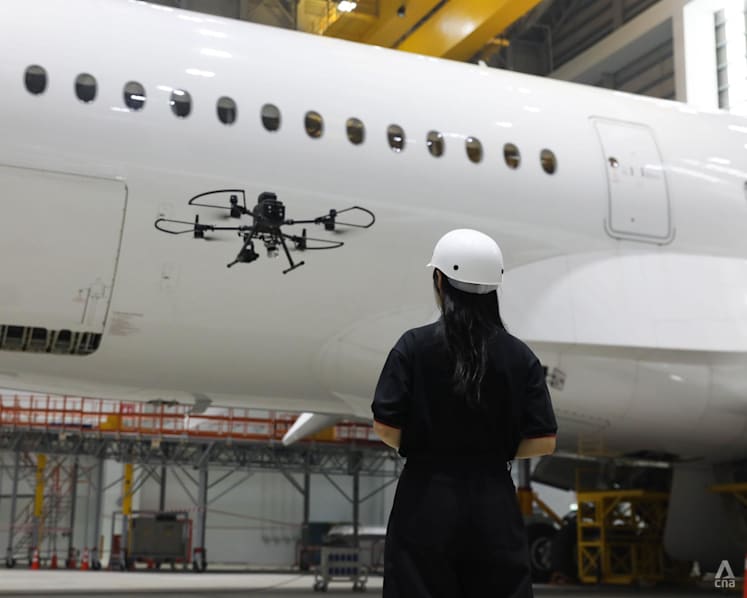
A drone conducting visual inspections on an aircraft at ST Engineering’s newest airframe maintenance, repair and overhaul facility along Changi Creek Way on Oct 9, 2026. (Photo: CNA/Mak Jia Kee)
New: You can now listen to articles.

This audio is generated by an AI tool.

09 Oct 2026 02:30PM
SINGAPORE: ST Engineering officially opened its fourth aircraft maintenance facility in Singapore on Friday (Oct 9), a site that will use drones and autonomous mobile robots and employ over 500 people when fully operational.
Most of the jobs will be newly created, including licensed aircraft engineers, planning and production control specialists, mechanics, and warehouse and logistics personnel.
The S$170 million (US$133 million) Changi Creek facility began operations in May and will ramp up over the coming year. It will be ST Engineering’s second-largest aerospace facility in Singapore, with four widebody aircraft bays at the 84,000 sq m site.
The facility adds 40 per cent capacity to the company’s widebody airframe maintenance, repair and overhaul (MRO) network in Singapore, potentially allowing 100 more widebody aircraft to be serviced each year.
ST Engineering said this gives customers greater flexibility and assured access to maintenance slots as airline fleets expand and aircraft stay in service longer.
President of commercial aerospace Kevin Chow said the facility reflects the company's confidence in Singapore as an air hub.
“We're investing in the future and we are serving the growth of the market through Singapore. This is not just another hangar,” he said, pointing to the technology-enabled operations.
Globally, airframe MRO demand is growing 1 to 2 per cent a year, but ST Engineering is seeing “multiples of that”, he said.
DIGITAL SOLUTIONS
The facility is a testbed for new technologies, with the company aiming to raise productivity by 25 per cent in the long term.
Drones will carry out visual inspections of the top of aircraft with greater speed and precision, said ST Engineering. This removes the need for technicians to reach the top of an aircraft by scaffolding or lifts, which is more dangerous for staff and risks damaging the aircraft.
Artificial intelligence models help to identify corrosion, paint defects and surface dents.
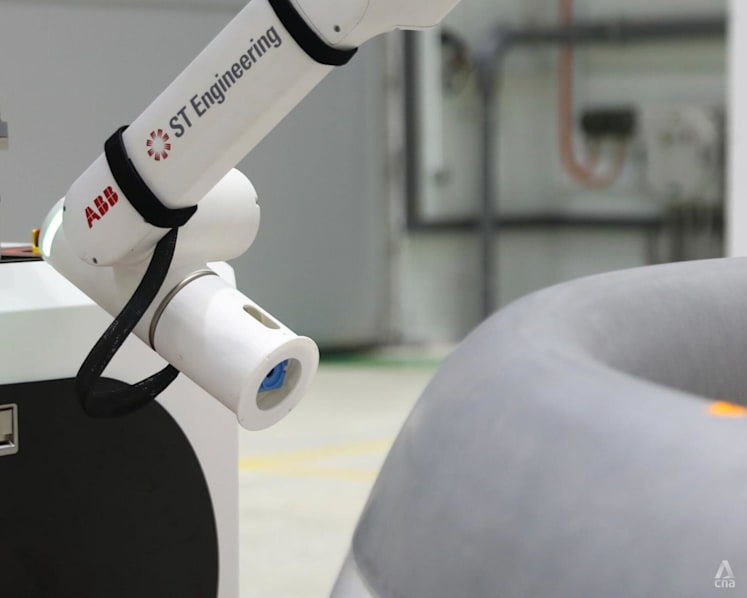
A camera mounted on a robotic arm is also used to inspect landing gear, reducing inspection time by up to 83 per cent.
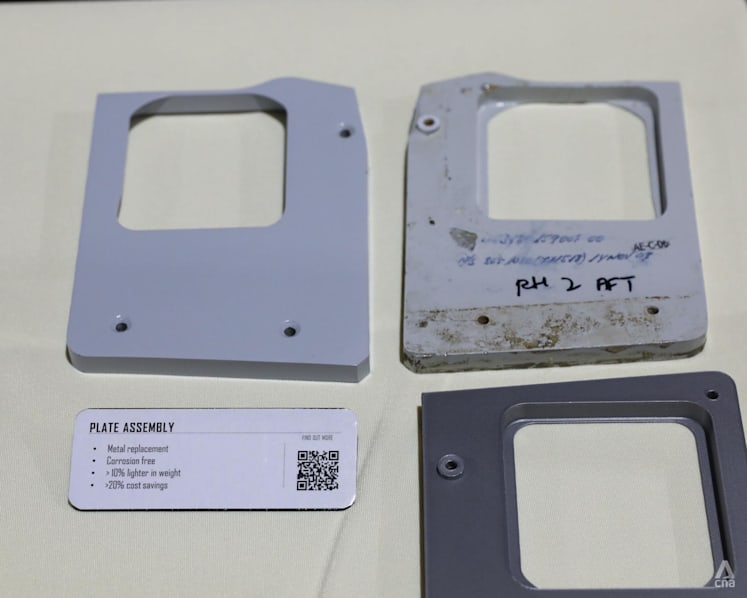
Airlines can order 3D-printed aircraft parts designed and developed by ST Engineering, which cuts wait times and improves operational efficiency.
“Some of our customers tell us when they want to order parts from the original equipment manufacturer, the lead time, the wait time, is just too long,” said Mr Chow.
Customers need the aircraft out the door in 10 days, so 3D-printed parts can help to fill a gap, he said.
To track the progress of maintenance work, the company has been using an AI-powered monitoring platform for about six months. Previously, teams relied on pen and paper, and the situation could change before the data was compiled.
The facility will also automate the movement of aircraft parts, tools and materials from storage to the hangar floor.
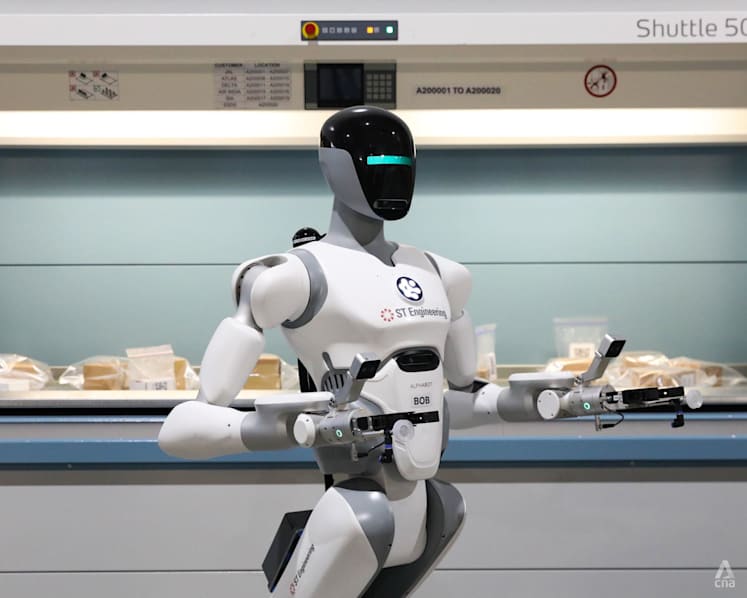
Humanoid robots will retrieve the items needed for each maintenance project and transfer them to autonomous mobile robots for delivery, while larger autonomous guided vehicles can move heavier items of up to 500kg around the hangar.
By reducing the need for workers to manually handle these items, the systems are expected to free up about 7,800 manhours per year.
ST Engineering hopes to scale the new technology solutions to other facilities, including those overseas, after they have been trialed.
“Once something has been tested and proven here, we can scale to our global operations in one to two years,” said Mr Chow.
KioskNews shows a cleaned-up reading view extracted from the publisher’s page — the original always lives on their site, not ours.