John Ivison: If Canada really is open for business, Carney needs to rein in labour strife
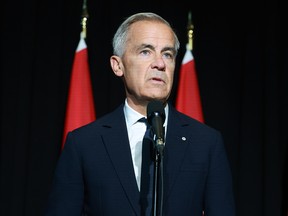
Mark Carney’s pitch to over 100 institutional investors from 11 countries, responsible for over $70 trillion, in Toronto this week is that Canada is open for business.
Sign In or Create an Account
The early signs from the Canada Investment Summit are that the Prime Minister is on track to raise $1 trillion in new spending commitments over the next five years. Eight Canadian financial institutions have already pledged more than $300 billion to finance and underwrite energy, critical mineral, defence, digital and infrastructure projects.
But what all those investors and potential investors want to know is: can Carney guarantee continued preferential access to the United States; and, what is the federal government going to do about labour and regulatory hurdles that make this country such a difficult place to do business in comparison to its peers?

Columnist Jesse Kline keeps you up to date with what’s happening in Israel and the effects of antisemitism on life here in Canada. Friday mornings.
By signing up you consent to receive the above newsletter from Postmedia Network Inc.
A welcome email is on its way. If you don't see it, please check your junk folder.
The next issue of Channel Israel will soon be in your inbox.
We encountered an issue signing you up. Please try again
On the first point, the signs point to a deal with the United States this year. According to people close to the negotiations, the U.S. Trade Representative, Jamieson Greer, would prefer to deal with a Republican-dominated Congress, something that is unlikely to survive November’s midterm elections.
The U.S. and Mexico are rushing to finalize an interim deal before the midterms. In August 2018, it was the preliminary deal between the two that was extended the following month to include Canada. Something similar may happen this time around, with Ottawa being invited to join an existing bilateral deal between Washington and Mexico City.
What shape that agreement will take remains to be seen, but the more U.S. President Donald Trump talks about Canada wanting a deal, the likelier it is that he is pushing for one.
Carney has to win over Ontario Premier Doug Ford, which means a lower effective tariff rate on autos than was on offer last month. But sources suggest the Americans want assurances that were not included in the August deal — namely, first right of refusal on critical minerals, the purchase of all 88 F35 fighter jets and participation in the Golden Dome missile defence shield.
I suspect we are likely to see the language soften in the next few weeks, as Carney pivots from talking about a “permanent rupture” in relations with the U.S., even as makes overtures to the European Union.
For all their sense of betrayal over America, I don’t think Canadians are ready to incorporate European laws and regulations (especially without voting rights), if that is what “associate membership” of the EU entails. We already have a trade deal with the Europeans that has not been fully ratified by 10 countries, including France and Italy.
The other concern for potential foreign investors is the business climate in Canada.
Strikes are a major concern. OECD statistics for 2011 to 2016 show Canada was third highest in terms of work stoppages among rich countries, behind France and Belgium. In 2023, the country lost 6.6 million person days of work, principally public servants, teachers and port workers — the highest since 1986, according to Statistics Canada.
The Carney government has been pretty clear that it plans to take measures to reduce irritants to its “building Canada strong” agenda.
It has already scaled back federal reviews for major energy projects. Changes published in the Canada Gazette shifted responsibility for environmental reviews to the Canada Energy Regulator, which will “simplify the decision process,” the government said. Environmentalists counter that the Liberals have washed their hands of protecting the environment.
But the Prime Minister is a man in a hurry and he apparently sees the labour and environmental lobbies as a drag on his ambitions.
Transport minister Steve MacKinnon is said to have been tasked with piloting an omnibus bill through Parliament this fall which will address many of these issues, including necessary legislation to prepare publicly owned assets for privatization.
It was no coincidence that the government began consultations on “modernizing” labour relations after securing its parliamentary majority in April.
Labour minister Patty Hajdu posted the findings of those consultations last week and it is understood that they will form the basis for moving forward.
The main concern of the unions is section 107 of the Canada Labour Code, which grants the federal Labour Minister the power to refer any dispute to the Canada Industrial Relations Board. The CIRB often ends up imposing binding arbitration and ordering striking workers back to work.
The government has used section 107 eight times since 2024, ending strikes at WestJet, Canada Post, the ports of Montreal and Vancouver and the CN and CP rail networks. Unions see section 107 as an attack on the right of workers to strike and want it repealed. In last summer’s Air Canada flight attendant strike, the government invoked section 107 and the CIRB ordered the CUPE union members back to work. CUPE directed its members to stay on strike, declaring the ruling unconstitutional.
But, while the unions want section 107 repealed, the government is likely to move in the other direction to expand protections for supply chains and critical infrastructure.
As part of the consultations, the government sought feedback on a proposal to create a new special mediator’s role, with new powers to intervene to resolve labour disputes.
The argument is that section 107, while is a reactive mechanism, a special mediator involved earlier in the process would be a more proactive tool.
It was no coincidence that the government began consultations on ‘modernizing’ labour relations after securing its parliamentary majority in April
Business has argued that the legislation should stipulate that during the negotiation process, the union cannot strike.
The second part that will upset the unions is that, if mediation doesn’t work, the next step is binding arbitration.
The legislation is bound to be controversial but it sounds very much like the Prime Minister is prepared to expend some of his accumulated political capital — including inside his own caucus — to push this bill through Parliament.
“Carney wanted this legislation done before June 30 and he was persuaded that with seven byelections coming up, it wasn’t a good idea. He blinked, he pushed this out to the fall but he’s not going to blink one more time,” said a source with knowledge of the situation.
If the legislation is introduced as billed, even the doubters will have to acknowledge that Carney is serious about restoring Canada to its former glories. One person pushing for these reforms has a catchy appellation for the bill: The Undo the Damage Act.
National Post
jivison@criffel.ca
Twitter.com/IvisonJ
Join the Conversation
This website uses cookies to personalize your content (including ads), and allows us to analyze our traffic. Read more about cookies here. By continuing to use our site, you agree to our Terms of Use and Privacy Policy.
KioskNews shows a cleaned-up reading view extracted from the publisher’s page — the original always lives on their site, not ours.