The 10 Most Ambitious Fantasy Books of All Time, Ranked

Luc Haasbroek is a writer and videographer from Durban, South Africa. He has been writing professionally about pop culture for eight years. Luc's areas of interest are broad: he's just as passionate about psychology and history as he is about movies and TV. He's especially drawn to the places where these topics overlap.
Luc is also an avid producer of video essays and looks forward to expanding his writing career. When not writing, he can be found hiking, playing Dungeons & Dragons, hanging out with his cats, and doing deep dives on whatever topic happens to have captured his interest that week.
Sign in to your Collider account
Fantasy authors like to get ambitious with their writing, creating entire worlds replete with cultures, religions, languages, and even laws of nature very different from our own. Into these settings, these talented storytellers drop sprawling casts of characters and plot lines that often span centuries, even millennia.
That said, fantasy books can also be ambitious in terms of their themes and messages, or the richness of their characters. With all that in mind, this list looks at some of the most audacious and epic fantasy novels ever written, from enormous modern epics to books that essentially built their own mythology from the ground up. Bangers, all.
10 'The Way of Kings' (2010)
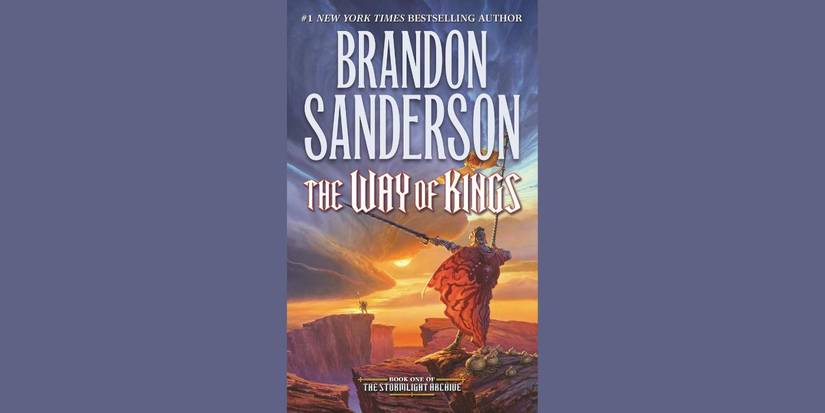
“Life before death. Strength before weakness. Journey before destination.” The Way of Kings introduced readers to Roshar, the setting of Brandon Sanderson's 10-volume Stormlight Archive, and immediately demonstrated just how enormous his intentions were. The world's ecology has adapted around devastating magical storms, enormous crustaceans lumber across stony landscapes, different cultures possess unique religions, social systems, prejudices, and histories, great supernatural forces operate from the shadows, and armies treat enchanted swords almost like nuclear weapons.
Sanderson then divides the story between soldier-turned-slave Kaladin, scholar Shallan Davar, and high prince Dalinar Kholin. Their individual narratives gradually reveal fragments of a much larger plot involving the Knights Radiant, Shardblades, ancient wars, and godlike beings. All in all, this book is already over 1,000 pages long, but it's mostly just the foundation for everything to come. It's a modern fantasy blockbuster, and fans responded: The Way of Kings has sold over a million copies.
9 'Lyonesse' (1983)

“Once there was an Elder Isles.” Lyonesse is one of the defining projects by author Jack Vance, a sci-fi and fantasy giant who influenced later writers like Dan Simmons and George R.R. Martin. In it, Vance draws on Arthurian legend, Celtic mythology, fairy tales, and his wonderfully peculiar imagination to create a setting that feels simultaneously ancient and completely original. Princess Suldrun's tragic story provides an emotional center, but the book's scope stretches far beyond any individual character as rulers maneuver for control of the Elder Isles.
The tale begins amid competing kingdoms and dynastic scheming, but continually expands outward. Soon, it involves political marriages, frightening sorcery, all-out warfare, fairies, curses, and ancient grudges. It all seamlessly blends historical realism with mythological whimsy, shifting gracefully from cold realpolitik to fairy-tale magic; a tricky balancing act. Vance's mastery of disparate tones is nothing short of impressive.
8 'The Name of the Wind' (2007)
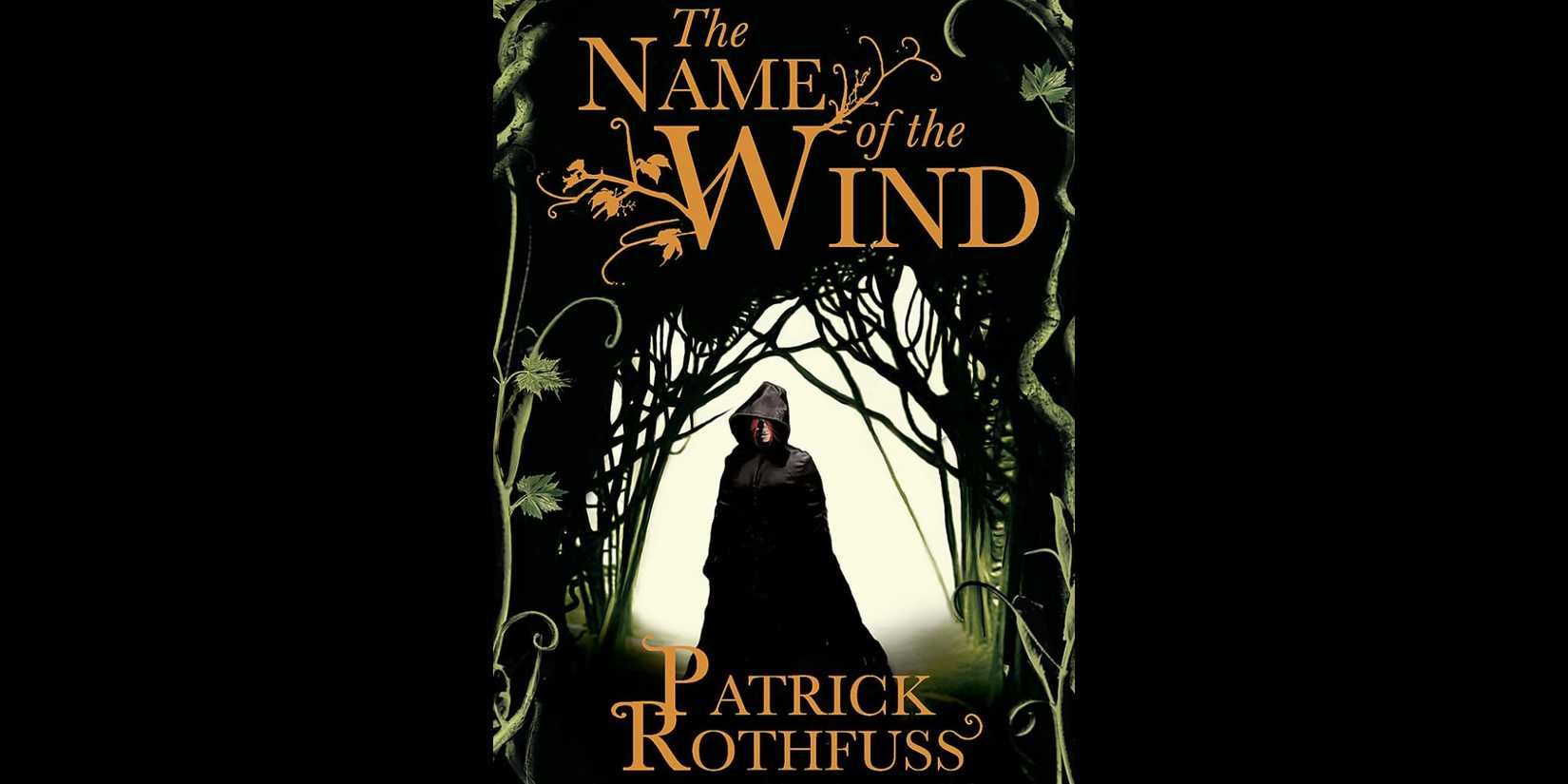
“It's like everyone tells a story about themselves inside their own head.” The Name of the Wind is one of the very best fantasy books of the 21st century to date, serving up rich character development and gorgeous prose without sacrificing any genre thrills. It's about the legendary Kvothe, a man who has already become the subject of stories, songs, rumors, and outright myths. He's an orphan and musician, a mage and a storyteller, allegedly a killer of kings and slayer of monsters.
However, piece by piece, the novel shows us how much more complicated the truth about his life really is. It moves from Kvothe's childhood among traveling performers to his years of brutal poverty in the city of Tarbean and eventually to his education at the University, where magic is approached with an almost academic rigor. Along the way, the book functions as a coming-of-age story, a university novel, a classic fantasy adventure, and a meditation on storytelling itself.
7 'A Dance with Dragons' (2011)
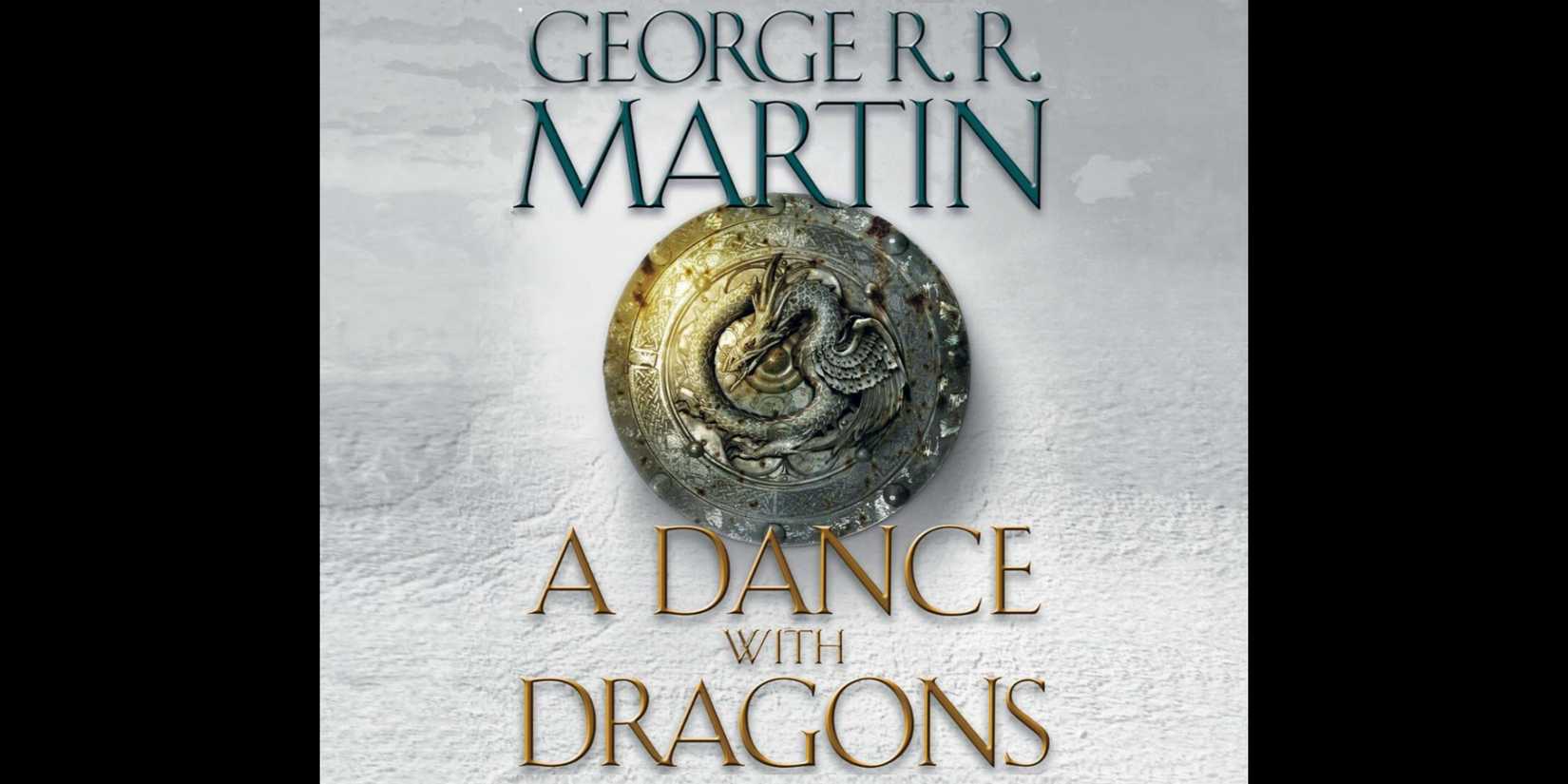
“A reader lives a thousand lives before he dies.” By the time A Dance with Dragons arrived, the Game of Thrones books had expanded far beyond the political conflict that originally drove the series. In the fifth installment, Daenerys is attempting to govern Meereen while multiple factions converge upon her. At the same time, Jon Snow struggles to balance the Night's Watch, Stannis Baratheon's forces, the wildlings, and the growing threat beyond the Wall, and Tyrion crosses Essos while becoming entangled with another potential claimant to the Iron Throne.
And that's without even touching on the many supporting characters. Indeed, A Dance with Dragons is a book where countless political, military, personal, and supernatural forces collide simultaneously; the stakes are constantly being raised, narrative switcheroos are upending the reader's expectations, and another shocker feels like it's perpetually around the corner. Unfortunately, though, GRRM has yet to publish the sequel.
Collider Exclusive · Game of Thrones Personality Quiz Which Game of Thrones House Do You Belong To? Stark · Lannister · Targaryen · Baratheon · Tyrell
Five great houses. Five completely different answers to the same question: how do you hold power in a world that will take it from you the moment you stop paying attention? Eight questions will determine where your loyalties — and your nature — truly lie.
🐺Stark
🦁Lannister
🐉Targaryen
🦌Baratheon
🌹Tyrell
01
Someone powerful is acting dishonourably and everyone knows it. What do you do? In Westeros, the answer to this question has ended more than one great house.
02
What is the source of your power? Every house endures because of something. What is it for yours?
03
Who do you truly fight for? Strip away the banners and the words. The honest answer tells you everything.
04
How do you deal with your enemies? A house's method reveals its character as clearly as its words ever could.
05
What kind of ruler do you believe in? Westeros is full of answers to this question. Most of them end badly.
06
You suffer a devastating loss. How does your house respond? How a house handles defeat tells you more about it than how it handles victory.
07
Which of these truths about Westeros do you most believe? Every house has a philosophy. This is yours.
08
The Iron Throne is within reach. What do you do? The answer reveals not just your ambition — but your character.
The Maester Has Spoken Your House Is…
Your answers point to the great house whose words, values, and way of surviving in Westeros match your own. Bend the knee — or don't. That's very much up to you.
🐺 House Stark
Winter is Coming — and you have always known it. You prepare not out of fear but out of duty, because the people who depend on you deserve someone who takes the long view.
- You lead with honour even when it costs you, because you understand that a reputation built on integrity is the only one worth having.
- Your loyalty to family and people runs deep — not as sentiment but as a code that doesn't bend when things get difficult.
- The North endures because Starks endure — not by being the cleverest players in the game, but by being the kind of people others are willing to follow into the cold.
- You are that kind of person. The pack survives. The lone wolf dies. You already know which one you are.
🦁 House Lannister
You understand the game — its rules, its exceptions, and exactly when the rules become the exception. You play it without illusions and without apology.
- You are sharper than most people realise, and you have learned to use that gap to your advantage.
- A Lannister always pays their debts — and you always keep your word, because your word is an instrument of power, and instruments must be kept in working order.
- You love your family with a ferocity that sometimes blinds you, and you know it, and you do it anyway.
- The lion doesn't concern itself with the opinion of sheep. Neither, in the end, do you.
🐉 House Targaryen
You carry a sense of destiny that is difficult to explain and impossible to ignore — the feeling that you are not simply participating in the world but meant to reshape it.
- You are capable of extraordinary things, and you know it, and that knowledge is both your greatest strength and your most dangerous quality.
- Fire and blood are not just words to you — they are a philosophy about what change requires and what it costs.
- The Targaryens at their best were transformative rulers who broke chains and defied the limits of what anyone thought possible.
- At your best, so are you. The dragon has three heads. You are one of them.
🦌 House Baratheon
You are a force — direct, powerful, and difficult to ignore when you enter a room or a conflict. You do not negotiate with challenges. You meet them.
- Ours is the fury — and yours is a kind of intensity that commands attention, respect, and occasionally fear from those who underestimate what's behind it.
- You value strength and straight dealing. You'd rather know where you stand in a fight than navigate a web of courtly whispers.
- The Baratheons built their house on the back of one of the greatest military victories in Westerosi history — and then struggled with what came after.
- The lesson of your house is that winning is not the end of the story. Governing is. You are learning that too.
🌹 House Tyrell
You understand that power does not always announce itself — that sometimes it arrives with flowers, good wine, and a smile that doesn't quite reach the eyes.
- Growing strong is your house's motto, and you live it: patiently, strategically, always investing in the relationships and resources that will matter most when it counts.
- You are charming by choice and calculating by nature — a combination that makes you one of the most effective players in any room you enter.
- The Tyrells fed King's Landing and shaped its politics without ever sitting on the Iron Throne — and they were arguably more powerful for it.
- You know that the person who controls the food controls the kingdom. And you always know where the food is.
6 'The Lion, the Witch and the Wardrobe' (1950)
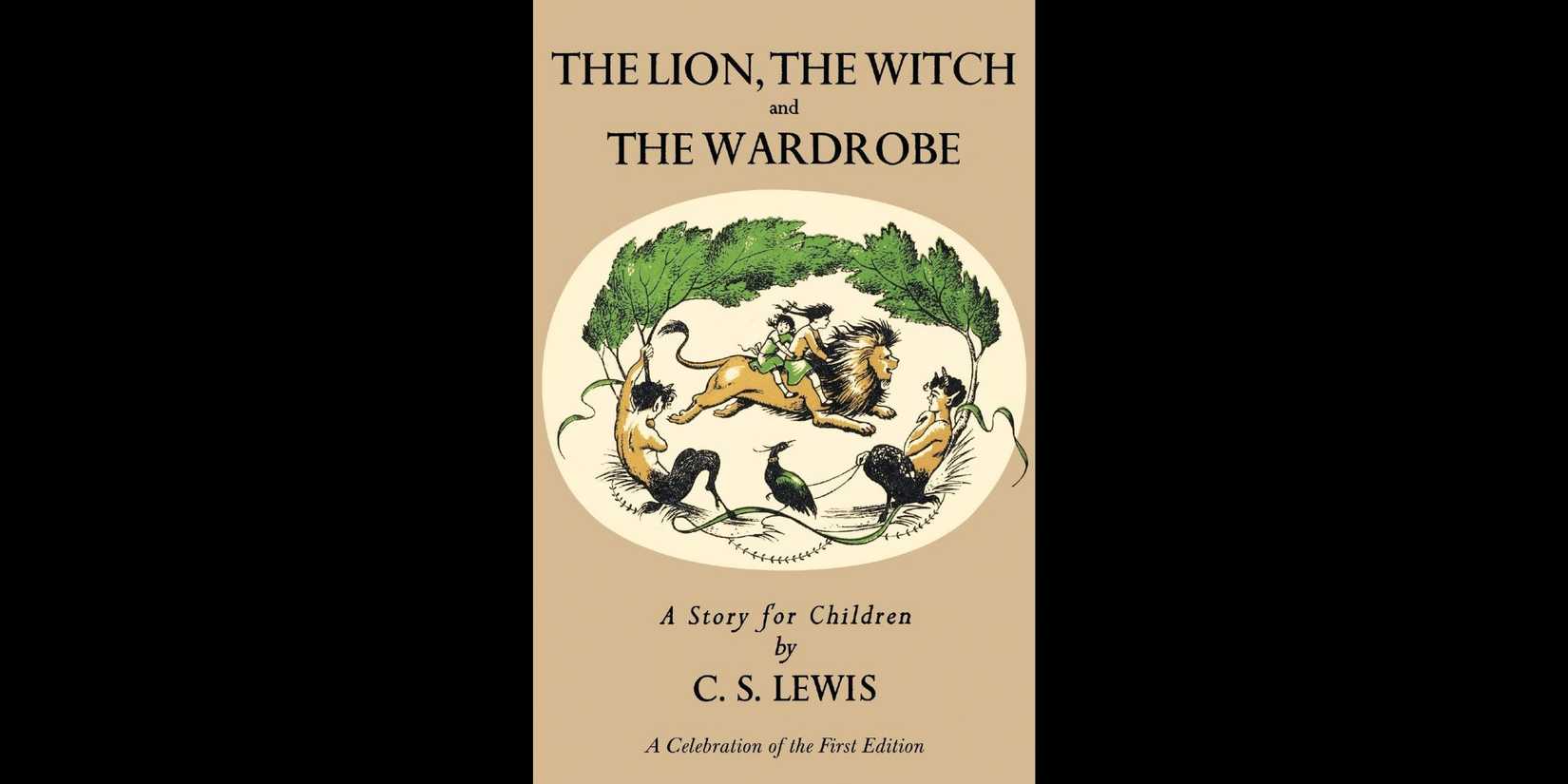
“Once a king or queen of Narnia, always a king or queen of Narnia.” It's easy to underestimate the ambition of The Lion, the Witch and the Wardrobe precisely because C.S. Lewis makes everything seem so simple. Here, four children walk through a wardrobe and discover a magical country ruled by an evil witch. On the surface, it's one of the most straightforward premises in children's fantasy. Beneath it, Lewis is attempting something much larger.
Narnia features talking animals, creatures from Greek mythology, medieval chivalry, European folklore, Christian theology, Father Christmas, and Lewis's own inventions. Aslan's sacrifice and resurrection give the story obvious religious dimensions, but Lewis doesn't simply translate Christianity into fantasy terminology, either. His world develops an atmosphere and mythology capable of supporting creation stories, apocalyptic endings, centuries of fictional history, and six sequels.
5 'Perdido Street Station' (2000)

“The city itself was a vast pollutant, a stinking secretion of industry and waste.” Perdido Street Station is a combustible melting pot of a book. China Miéville seems determined to cram every idea he possibly can into it, including insect-headed people called khepri, amphibious vodyanoi, birdlike garuda, artificial constructs, grotesquely modified criminals, literal demons, mind-warping moth-monsters, and interdimensional spiders. The result is a colorful mix of fantasy, steampunk, horror, sci-fi, political fiction, crime, and the grotesque.
Amidst all this sound and fury, scientist Isaac Dan der Grimnebulin's research into flight accidentally unleashes terrifying creatures onto the city, but that central storyline is only one part of what the novel is attempting. New Crobuzon has labor disputes, organized crime, authoritarian policing, racial tensions, scientific institutions, and detailed social structures. Rather than simply being a backdrop, the city feels like an enormous, unpleasant organism in its own right.
4 'Jonathan Strange & Mr Norrell' (2004)
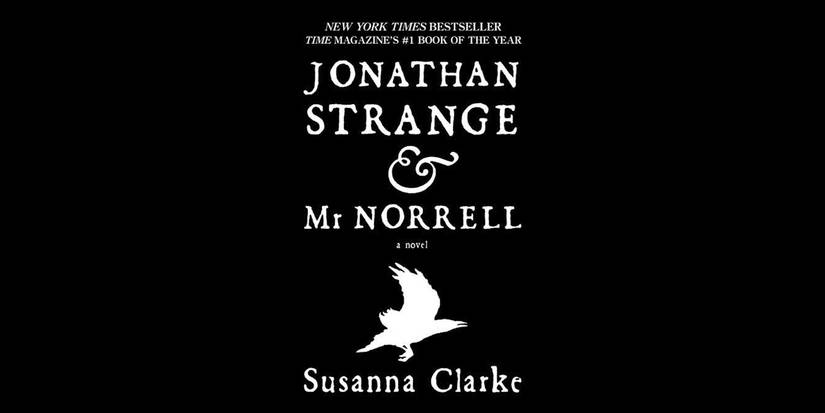
“Can a magician kill a man by magic?” Another modern fantasy classic. In this alternate history, the bookish Gilbert Norrell wants to restore respectable English magic while controlling who gets to practice it, whereas Jonathan Strange is adventurous, intuitive, and increasingly willing to explore the dangerous forms of magic his teacher distrusts. Their relationship develops against the backdrop of the Napoleonic Wars and the growing influence of the mysterious Gentleman with the thistle-down hair.
Author Susanna Clarke writes their intertwined stories as though she's documenting a forgotten branch of English history, complete with scholarly disputes, obscure magical traditions, historical anecdotes, and enormous footnotes explaining events that never actually happened. Even her prose is intended to evoke iconic writers of the era like Jane Austen and Charles Dickens. It's a real gem of a book, lovingly crafted, packed with memorable ideas and wonderful turns of phrase.
3 'The Crippled God' (2011)

“There is no struggle too vast, no odds too overwhelming, for even should we fail, should we fall, we will know that we have lived.” Ending a 10-book epic is difficult enough. Ending one containing hundreds of characters, multiple continents, countless civilizations, numerous magic systems, ancient races, gods, ascendants, and storylines stretching across hundreds of thousands of years sounds borderline impossible. Yet The Crippled God lands this jumbo jet of a fantasy series gracefully.
The Malazan Book of the Fallen is truly one of the most gargantuan sagas in the whole genre. Across its 11,000 total pages, armies cross continents, gods interfere with mortal affairs, and entire societies face annihilation. Yet the ambition isn't limited to sheer narrative sweep, because the themes deliver, too. The book has a lot to say about history, imperialism, suffering, cultural memory, compassion, and the way enormous historical events are experienced by ordinary people trapped inside them.
2 'The Golden Compass' (1995)

“You cannot change what you are, only what you do.” The Golden Compass (aka Northern Lights) is simultaneously a wonderful children's adventure and one of the most philosophical fantasy novels ever written. Protagonist Lyra Belacqua lives among scholars in an alternate Oxford, where every human possesses an animal companion called a dæmon. It seems like a solid but fairly standard fantasy setup. Then Philip Pullman starts revealing what he's actually building, and the scale of the story becomes considerably more audacious.
The disappearance of children leads Lyra toward twisted experiments, armored bears, the mysterious substance known as Dust, and eventually the discovery that her world is only one reality among many. Along the way, Pullman draws upon theology, physics, philosophy, and John Milton's Paradise Lost, laying the groundwork for a trilogy that will eventually concern free will, consciousness, organized religion, and a rebellion against divine authority. Talk about deep stuff.
1 'The Lord of the Rings' (1954–1955)

“Not all those who wander are lost.” Fantasy worldbuilding can essentially be divided into before and after The Lord of the Rings. It's the genre's center of gravity. With this doorstopper novel, J.R.R. Tolkien created whole languages, genealogies, legends, royal lineages, competing cultures, and thousands of years of fictional history, much of which never needed to appear directly in the story at all. In other words, while the plot is compelling, Middle-earth itself is also heavy with history.
Frodo's journey to destroy the One Ring takes place against the ruins of earlier civilizations and the consequences of events stretching back into ages he barely understands. Likewise, Aragorn carries the weight of an ancient bloodline, and the Elves are departing from a world whose greatest days they can still remember. Back in the early 1950s, The Lord of the Rings represented a massive leap forward for the genre and literature as a whole.
KioskNews shows a cleaned-up reading view extracted from the publisher’s page — the original always lives on their site, not ours.