Jim Chalmers’ bad week: an economic dumpster fire and Labor squabbling
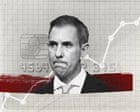
Jim Chalmers was in Bangkok on Thursday – meeting with finance ministers and central bank governors from around the world – during a 13-hour visit. A grim outlook hung over the talks, which came just days after the International Monetary Fund warned that the global economy “could soon test the limits of resilience”.
But even in Thailand’s stifling humidity, the treasurer might have been relieved to be anywhere other than Canberra.
Amid tough economic conditions at home and a fight to pass the remaining budget bills, Chalmers has faced criticism from across the parliament. Under pressure over stubborn inflation and rising interest rates, he was this week forced to deny being rolled by Anthony Albanese over a credit card payment ban by the tax office.
“The feeling of warmth that has existed for the government since the election is turning to heat,” a senior Labor figure told Guardian Australia.
That heat has been increasing for a while.
Labor had managed the global energy shock from Donald Trump’s Iran war and delivered the May budget just a week after the Reserve Bank handed down its third interest rate hike of the year. The government’s sales job for major reform proposals on capital gains tax and negative gearing faced huge resistance before a deal was agreed with the Greens. Drafting mistakes, like the so-called “widow’s tax” and the application of the changes beyond housing, complicated efforts to sell the message of intergenerational fairness.
But nervous Labor MPs say something shifted at the end of September, when the RBA lifted rates to a 15-year high. Chalmers and Albanese were forced to defend the rate of government spending – currently at a four-decade high (outside the pandemic), after increasing by 4.3% in real terms last financial year. The RBA governor, Michele Bullock, says inflation has been driven by “domestic capacity pressures”, describing price rises from the Middle East war as coming in addition to homegrown challenges.
The government continues to press the case for a new minimum tax on trusts, as well as changes to the private health insurance rebate for older Australians.
It’s now halfway through the parliamentary term, and some in the Labor caucus are quietly questioning the government’s political strategy, just as commentators compare the current slump to Labor’s malaise after the defeat of the voice to parliament referendum, three years ago this week.
Add in backlash against the ATO’s credit card ban and Labor’s slow response, and things felt particularly scrappy. Albanese was criticised for a smaller than expected pre-Cop meeting in the Pacific last week and has not held a press conference since 1 October.
“They should have seen this coming,” said a Labor MP, who added they have heard from angry small business owners across their outer suburban electorate. “The PM was happy to record videos about the surcharge ban but didn’t stop to think through all of the implications.”
Another was more blunt, insisting too much secrecy was attached to reform plans before the budget, at the cost of proper consultation.
“It seems like there is a mentality in the government of: announce things first and think through the details later,” they said. “That comes with a cost.”
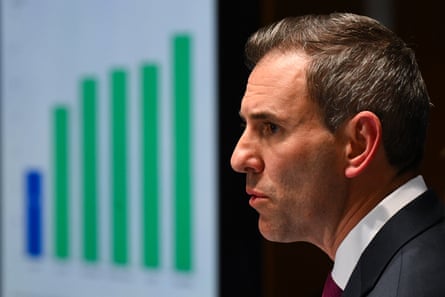
A difficult few weeks for Chalmers – one of the government’s best communicators and a possible successor to Albanese – coincided with an outbreak of internal criticism from within Labor.
Cohesion has been a calling card of the Albanese government’s first four years in power, and rare moments of ill-discipline take on heightened significance.
This week it was reported that members of Labor’s NSW right faction discussed the risk of alienating small business in a regular meeting at Parliament House. Among those expressing concern was the attorney general, Michelle Rowland, a senior member of cabinet. Other frontbenchers, including Kristy McBain and Andrew Charlton, participated in the discussion.
A small group of backbenchers have been prepared to speak out in recent months, including on an apparent intransigence from Albanese on the issue of online gambling advertising.
Privately some say the government bungled the ATO credit card ban, and handed a successful attack line to the Coalition and One Nation in parliament this week. The opposition leader, Angus Taylor, and Coalition frontbenchers targeted Chalmers in question time, calling him “hapless” and even suggested Charlton, the cabinet secretary, is “the de facto treasurer”.
“The treasurer is doing a great job,” Albanese said on Thursday, telling parliament he was “very proud” of Chalmers, who was absent for the G20 talks.
Last month, Taylor sledged Chalmers as “just a media adviser”, a reference to his time working for the former treasurer Wayne Swan. But the global financial crisis remains a formative moment in Chalmers’ career and Labor looks back with pride at its successful management of it. These days, Chalmers argues, long periods of stability punctuated by moments of crisis have been replaced by the opposite. He is fond of talking about the “churn and change” around the world.
The economist Saul Eslake assesses the success of treasurers on three questions: do they make good decisions, do they persuade the public about those good decisions, and do they occasionally earn the wrath of their prime minister for advocating important ideas that come with a political cost?
“Chalmers has got some things right and some things wrong,” Eslake says.
after newsletter promotion
“I think he has, until this year’s budget, been pretty good at the second test, that is persuading the public that he’s made good decisions. I think he has been fairly hesitant to push things that the prime minister might not like.”
Eslake says some of the government’s problems stem from broken promises in the budget, including on negative gearing and capital gains tax, as well as its unwillingness to take ownership of falling house prices.
“I haven’t really heard Chalmers arguing, other than in the budget speech itself, that the point of the tax changes is to answer the question: why should two people who earn the same amount of money pay different amounts of tax because they’ve earned it in different ways?”
This week, particular pressure came from the business lobby group, the Australian Chamber of Commerce and Industry (ACCI), which tried to tell the government that business owners use credit card payments to manage their cashflow.
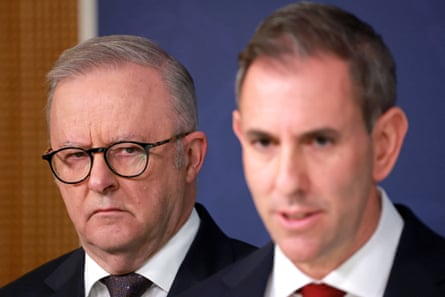
Albanese told an ACCI dinner in Canberra on Tuesday night that he moved to stop the credit card ban after lobbying from the chamber’s chief, Andrew McKellar, prompting suggestions he undermined Chalmers.
But one senior Labor source said media reports about a split missed the mark, suggesting that members of the powerful left faction were trying to weaken possible leadership contenders from the right, including Chalmers and the home affairs minister, Tony Burke. Such moves would benefit the left’s preferred successor, the health minister, Mark Butler.
But, they were scathing of Albanese’s command-and-control style and the lack of adequate consultation on the government’s policy plans.
“No way this cabinet is like the Hawke or Keating years,” the source said. “There is no thrashing out issues or debating the way forward. It’s a rubber stamp and not thinking through the consequences.”
Many of Chalmers’ colleagues praise his energy and political nous. One minister told Guardian Australia reports of a slump were exaggerated by the press gallery, noting recent polls don’t show huge costs for Labor. “Voters don’t seem to be feeling the same way as these very vocal critics,” they said. However, in a Redbridge poll last week, Albanese’s and Chalmers’ favourability ratings both slumped.
On Wednesday, the morning after a major speech in which he encouraged progressives not to lose their nerve against One Nation, Chalmers said he took seriously the criticism of him and the government.
“When you do a senior job in a government which is governing in difficult times, there will always be a range of views,” he told ABC radio.
“I try and take all of the feedback that I get – good, bad or indifferent – on board.”
As Chalmers heard in the talks in Thailand, none of the challenging economic conditions are likely to ease up in the short term.
December’s mid-year budget update will include spending cuts to offset higher debt repayments caused by conditions in international bond markets, and another interest rate rise remains a possibility in early November. High petrol prices are a constant reminder for voters of just how tough the economy is day-to-day.
The treasurer used his speech on Tuesday to point to improved forecasts from the RBA and Treasury towards the end of 2027.
“These difficult times test our people and they test their governments,” Chalmers said.
To pass the test, Labor must shake off the midterm blues in time to be competitive for the next election.
KioskNews shows a cleaned-up reading view extracted from the publisher’s page — the original always lives on their site, not ours.