Registration on both sides of border needed for Huanggang ‘joint clearance’
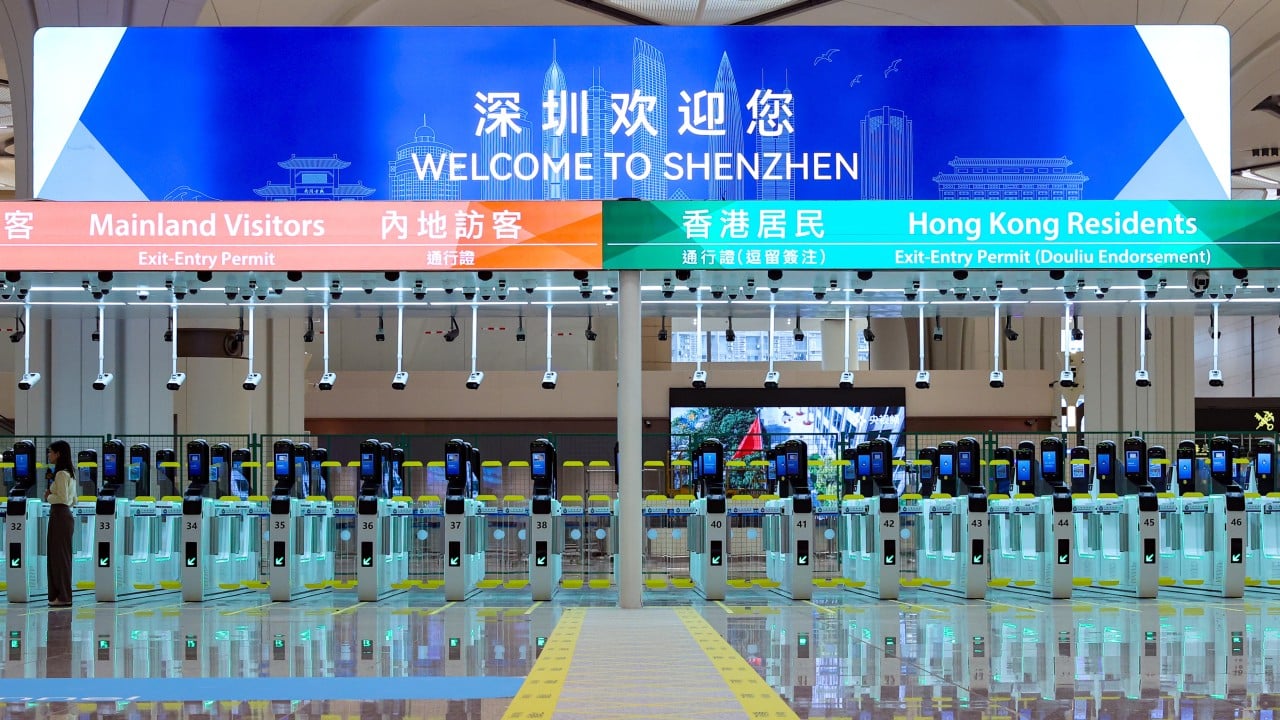
Hong Kong and mainland Chinese residents will have to register with immigration authorities on both sides of the border to use automated “joint clearance” channels at the revamped Huanggang Port crossing, with around 100,000 travellers a day expected to use the control point when operations begin.
Hong Kong’s Immigration Department would deploy sufficient manpower to help passengers register at the checkpoint, assistant director Jacky Wong Ki said on Tuesday.
“The whole registration process at the automated channel is very quick, it takes a few seconds to complete,” Wong said.
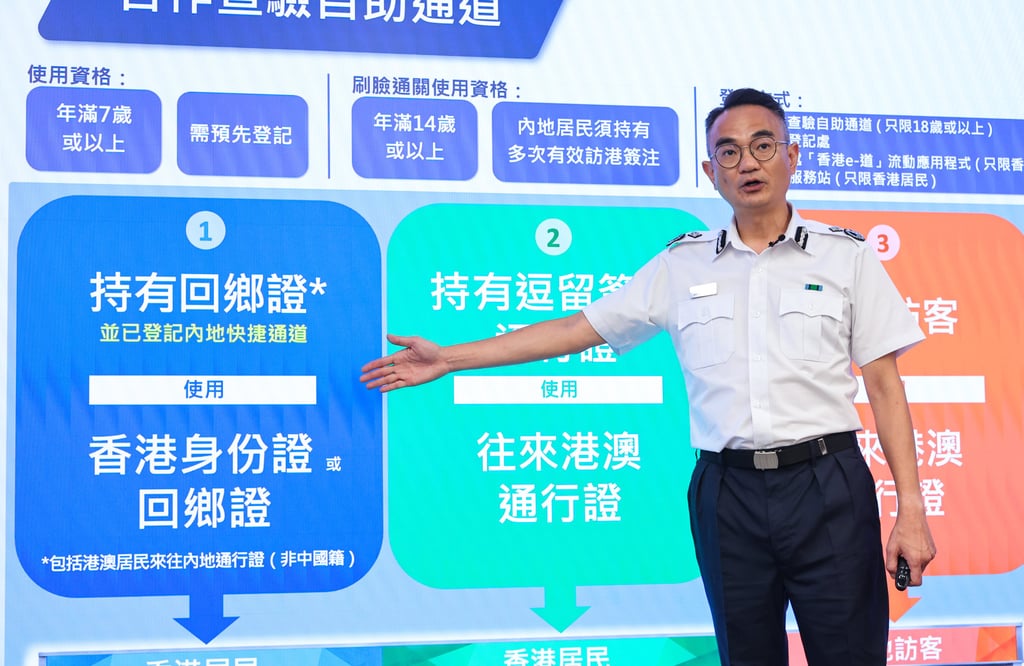
The “joint clearance” model will enable passengers to complete both departure and entry clearance procedures by presenting one identity document required by their destination and passing through a three-gated automated channel.
Authorities said the new system could reduce the typical clearance time from about 30 minutes at the existing Lok Ma Chau/Huanggang crossing to five minutes at the revamped Huanggang Port building. The passenger clearance facilities at the existing Huanggang control point will permanently cease operations when Huanggang Port opens.
A source earlier said the revamped checkpoint was expected to open on October 12.
Adult Hong Kong residents can register in several ways: via the department’s mobile app for e-channel services; at the first gate of the automated channels; at an enrolment office on the fifth-floor departure hall; or at kiosks on the fourth-floor arrival hall and on the fifth floor.
City residents must also ensure they have already registered with mainland authorities to use e-channels before they can use the “joint clearance” automated channel.
They will need to travel to the mainland via any other land checkpoint to complete registration there first, or they may also register at the existing Huanggang checkpoint before it closes.
Parents can also register children aged from seven to 17 to use the “joint clearance” automated channels via the e-channel app, the enrolment office and kiosks at the checkpoint. They will need to bring proof of parentage and their children’s identity cards to register.
Mainland residents can complete Hong Kong registration at the enrolment office on the fifth floor or at the gates of the “joint clearance” channels.
Drivers will use a “joint one-stop” vehicle clearance lane for departure and entry clearance at an “integrated information collection device”.
Those using the vehicle clearance lane for the first time will need to give permission for information collection after placing their identity documents in the device, but no other registration is required in advance.
A department spokesman said around 100,000 passengers were expected to pass through the revamped Huanggang Port each day in the early stages of operation.
Its capacity could reach handling 300,000 passengers a day when the northern line of the MTR enters service by 2034.
Passengers in cross-boundary vehicles will have to alight to complete clearance at an adjacent departure hall.
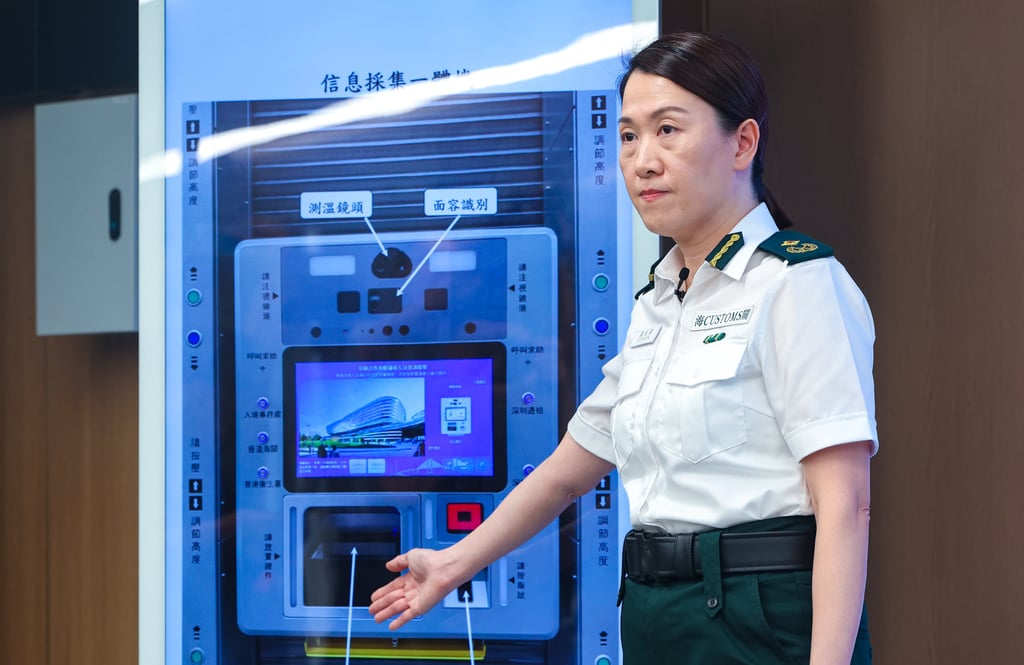
Chiang Yi-lee, assistant commissioner at the Customs and Excise Department, said clearance time for drivers at the revamped Huanggang Port would be cut to two minutes.
Currently, vehicles crossing the border via the Lok Ma Chau/Huanggang route take around 10 minutes to complete clearance.
Drivers first spend around two minutes completing Hong Kong customs procedures, take five minutes to cross the Lok Ma Chau bridge, and then complete mainland clearance at the current Huanggang crossing in another three minutes.
At the revamped crossing, drivers could pass through the customs kiosk and complete clearance at the information collection device within two minutes, Chiang said.
The average daily throughput this year at the Lok Ma Chau and Huanggang crossing was 8,000 vehicles a day, she said.
“With the commissioning of the new Huanggang Port, we expect more or less the same or a bit higher,” Chiang said.
KioskNews shows a cleaned-up reading view extracted from the publisher’s page — the original always lives on their site, not ours.