These 10 Horror Movies Still Hit Hard Over 20 Years Later

A New York native, Joe graduated from an avant-garde theater school upstate, where he was obsessed with sketch comedy. There, he and his lunatic friends founded The Sketchies — which still lives on at Skidmore College today. Living in New York City, a screenwriter friend of his then taught him how to write for film. This awakened a new passion in Joe. Since then his scripts have garnered over 200 festival selections, nominations, and wins all over the globe (including the BlueCat Best Feature award). Several of his screenplays have been made into feature films — some of them not that bad! Overall, he loves to create unique, hilarious, touching, and bizarre stories.
Sign in to your Collider account
Some horror films capture the collective fears of the moment and really make an impact when they are released. Unfortunately, these flicks don’t always age well, as the topics or themes they address can wither in relevance over time. But not these ten bangers, that’s for sure.
Spanning a wide swath of scary sub-genres, here are the ten horror movies that still pack quite the punch, two decades (or more) later. Some of these films feature classic monster tropes and figures, like werewolves, while others focus on even larger, looming creatures; others still explore the very monstrousness that resides in the hearts of humans. No matter which creepy category they fit into, all these movies still soundly resonate with viewers today, as their impact is eerily eternal.
10 'May' (2002)

Outcast movies are enjoyable for a variety of reasons. They let audiences peer into the lonely lives of eccentric people, and in some cases, allow for sympathy and an even deeper connection to the socially awkward souls onscreen. Writer-director Lucky McKee’s eerily entertaining May features just such a misfit, and her dreary descent into madness is a blast to watch.
Condemned to an early life of being bullied because of her lazy eye, May (the spookily authentic Angela Bettis) has found ways to assimilate; namely, contact lenses. While May could easily have lived as a recluse, she is weirdly enchanting enough to draw the attention of some others. Adam (Jeremy Sisto), who likes “fixing” mangled things, initially finds May’s bizarre ways charming. Eventually, she’s revealed to be too weird for even this oddball, and he bounces. This leaves a window open for May’s seemingly more insane co-worker Polly (Anna Faris, in an interesting departure from her normally overtly funny roles) to move in on May. This inevitably goes awry and May’s inner monologue of insanity takes over. From this point on, May’s quirkiness is replaced with psychosis, and we’re in real horror movie territory. This indie still makes an impact today, as the May character is truly a uniquely disturbing joy to watch.
9 'Ginger Snaps' (2000)

While director John Fawcett’s cult favorite film Ginger Snaps is not the first movie to use morphing into a werewolf as a metaphor for the change from adolescence into adulthood, it’s definitely one of the most memorable (and most likely the first feminist one). It’s a gloriously executed indie that explores the inherent love and jealousy of sororial relationships all while delivering some of the more elegantly devised werewolf visuals to hit the silver screen.
The story follows two Gothy teen sisters, Ginger Fitzgerald (Katharine Isabelle) and Brigitte Fitzgerald (Emily Perkins), who are a bit peculiar in their shared love of all things related to death. In fact, the close-knit siblings prefer death to growing old, and so they have a shared agreement to die before such aging can occur. On the very evening of Ginger’s first menstrual cycle, she’s bitten by a lycanthrope. Uh oh. Big changes all around. As Ginger shows signs of wolfing out, Brigitte frantically researches ways in which to reverse the curse. Yet Ginger suddenly feels the need to “fit in” with the popular crowd in school, further vexing Brigitte. Again, this film is one big hairy analogy for the brutality of growing up (especially as a young woman), and its clever dialogue and crafty cast really make it the go-to for modern teenage werewolf flicks.
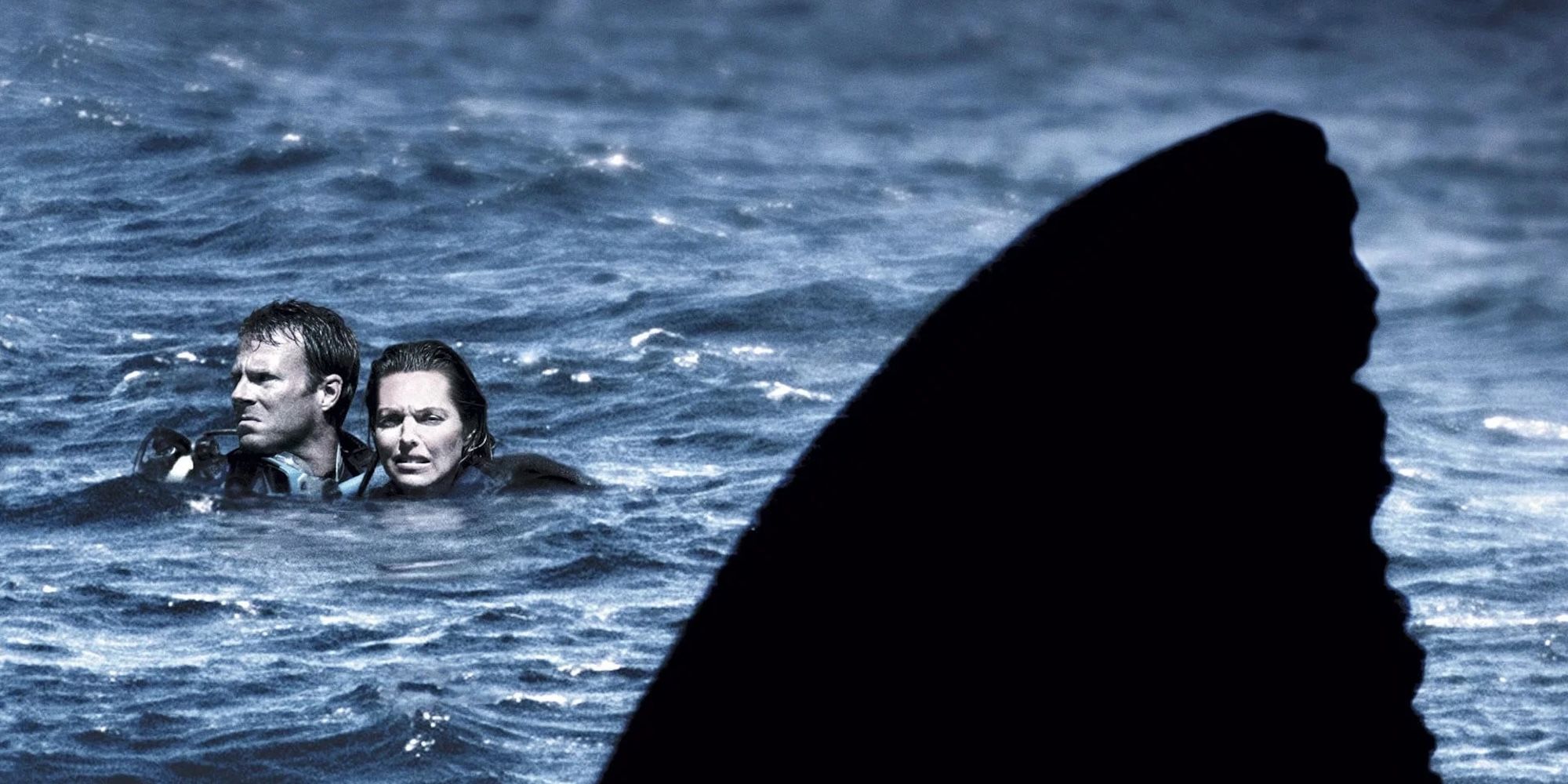
8 'Open Water' (2003)

It really says something about the “sharksploitation” sub-genre that one of the best shark movies to ever stalk through the dark cinematic waters was made for only 500k and doesn’t feature special effects of any sort. The moral is that all that scary shark movies need to be genuinely effective are a clever storyline, highly committed actors, and nuanced mood setting.
The story focuses on a vacationing couple, Susan Watkins (Blanchard Ryan) and Daniel Kintner (Daniel Travis), who go snorkeling in the Caribbean. Early on, we learn that they are struggling with some serious relationship issues, and may be using this trip as a figurative band-aid for their deeper problems. When they are mistakenly left behind by their boat in shark-infested waters (in a nod to some real-life accounts of this happening), Susan and Daniel have to use their wits to stay…afloat. Chris Kentis’s film is an intense examination of couple dynamics, and how, in the face of a true crisis, every little detail matters (for example, some forgotten, hidden mints give them enough energy to tread water for several hours). The scariest aspects of this movie almost entirely come from the dark, from below. While some real shots of sharks are used, the most terrifying thing is when we can’t see the ancient marine beasts. In a literal sea of sub-par shark flicks, Open Water still has tons of bite.
7 'The Descent' (2005)

The best horror movies often deal with very real, very human issues. Complicated characters that have undergone (or are about to undergo) intense trauma are often the most captivating ones. Director Neil Marshall’s The Descent is all too aware of this, as the tribe of women featured in this innovative horror are all multi-layered and thoroughly intriguing. Add some of the coolest, creepiest looking ghoul villains, and you’ve got one hell of a memorable movie.
The story is centered on six female friends who embark on a hiking expedition. The main character, the reluctant Sarah Carter (Shauna Macdonald), has been coaxed by some of the others to come along, since she is still recovering from a tragedy that took her husband and child’s lives. No worries, let’s go spelunking! The “alpha” of the intrepid crew, Juno (Natalie Mendoza), is a bit reckless and leads the group off-course to an uncharted cave. Sigh. Never go against the map. Here, the women become trapped and encounter a horde of pasty, voracious creatures (A+ to the special effects makeup team). These bat-like humanoids are blind, but that doesn’t make them any less deadly as they use echolocation to target and hunt their prey. In this instance, their intended meals are the six pals. Naturally, bonds are tested and people get eaten. The whole movie is a claustrophobic nightmare, with searing danger at every turn. It’s also a stark look at humanity; what (and who) we are willing to sacrifice in the (really, really ugly) face of adversity.
6 'The Host' (2006)

Academy Award-winner Bong Joon Ho’s sci-fi horror creature feature The Host is a cautionary tale about human carelessness and unregulated technology, the way many films in this sub-genre are. What makes it stand out, however, are the truly eye-popping special effects, the grounded performances (in the midst of madness), the satirical humor layered in throughout, and the sheer epic-ness of it all. It’s a highly entertaining and brain-stimulating horror movie, that manages to maintain a lot of (ginormous) heart.
The shrewd yarn follows two main plot lines. The first involves Park Gang-Doo (the extremely talented Song Kang-ho, Joon Ho’s go-to actor), a father who becomes separated from his adorable and surprisingly resilient daughter, Park Hyun-seo (Ko Asung), during a citywide crisis (and must try to relocate her, with the aid of his broken family). The second storyline is simply that of the creature, a slippery tadpole-fish-mutant that was subjected to copious amounts of formaldehyde (that was dumped by American scientists into the Han River) and grows to enormous proportions — and snags Park along the way. The two plot lines, which, on paper, shouldn’t have a lot in common, actually share a major similarity; living creatures doing their best to simply survive. The “monster” isn’t evil, not by a long shot; it’s just a poor, misguided behemoth. Two decades after it’s release, The Host still remains one of the most sophisticated creature features ever conceived.
Collider Exclusive · 8 Questions · 2 Minutes What Is Your Biggest Horror Nightmare? Elm Street · Chucky · Scream · The Conjuring
Four horror franchises. Four completely different ways of scaring you. One waits until you fall asleep. One makes sure nobody believes you. One is already in your group of friends. And one is in the house with your family. Answer eight quick questions about how you actually watch horror, and find out which nightmare was built for you.
😴Elm Street(Freddy Krueger)
🧸Chucky(Child's Play)
📞Scream(Ghostface)
🕯️The Conjuring(The Warren Files)
01
Which horror scene makes you cover your eyes? Four classic images. One of them is worse than the others for you.
02
You are home alone and you hear a noise. First thought? Everybody has one. It arrives before you have decided anything.
03
Which horror movie rule would you break first? Everybody thinks they would survive. Almost nobody actually does.
04
Something genuinely frightening happens. What do you do? Not in a film. In your actual living room, tonight.
05
How do you actually watch a horror film? Be honest about this one. Nobody is checking.
06
Somebody offers you serious money. Which do you still refuse? The amount does not matter. There is one on this list you are not doing.
07
Which feeling stays with you a week after the film? Good horror does not stop when the credits do.
08
Something wakes you at 3am. What is the worst possibility? Eight questions in, this is the one that decides your nightmare.
The Lights Just Went Out Your Nightmare Is…
Four franchises, four completely different ways of getting underneath your skin. This is the one built out of your particular fear, why it works so well on you, and what it would leave behind.
Elm Street
Your nightmare does not wait outside the door. It waits for you to close your eyes, which you are going to have to do eventually, because nobody has ever won that particular argument.
- Freddy is horror's cruellest idea: a threat that lives in the one place you cannot guard, cannot lock, and cannot avoid forever.
- You are the one who is fine during the film and wide awake at two in the morning. Your own head is where this does its damage.
- These films understood exhaustion as a horror engine. The kids on Elm Street do not lose because they are weak. They lose because they are tired.
- You can lock every door in the house. You still have to sleep.
Chucky
Your nightmare is not really the doll. It is the face of the person you tell, and the way they decide, very kindly, that you have imagined all of it.
- Chucky works precisely because he is absurd. That is the trap: the more accurately you describe him, the less anybody is going to believe you.
- You are the one shouting at the screen because the characters are not listening. You know that feeling from real life too.
- The franchise is at its best when the adults in the room are the real obstacle, and you have met those adults.
- By the time somebody finally believes you, you will have handled most of it on your own.
Scream
Your nightmare has your number, knows your name, and has almost certainly been inside your house before. The worst part is that you already know them.
- Scream is the only one of these where the killer takes the mask off and turns out to be somebody who was at the party.
- You are the person who calls the twist out loud before it lands. You watch people the same way you watch films.
- The franchise made the rules of horror part of the plot, which means the survivors are the ones paying attention. You would be paying attention.
- Everybody is a suspect, including the person who just offered to walk you home.
The Conjuring
Your nightmare is not really about you. It is about the people asleep down the hall, and the feeling that whatever is here is not interested in leaving.
- The Conjuring films are domestic horror. The house, the family, the perfectly ordinary room that quietly stops feeling ordinary.
- Your instinct is to get everybody into one room. Your fear is protective rather than personal, which is rarer than it sounds.
- This is the one franchise where belief is the weapon. The people who come through it are the ones who are not alone and refuse to be.
- Whatever is here did not come for you. It came for the household, and you are the one standing in the hallway.
5 'Shadow of the Vampire' (2000)

Movies about the making of movies are typically hit-or-miss. The inherent meta-theatricality can be a bit much for some people, who simply want to see a new story unfold. However, when the subject matter is cleverly subverted, and the fictionalized aspects become real, well, then you’ve got a real doozy of a flick on your hands. This is precisely how director E. Elias Merhige’s “period piece” exploration of the producing of the film Nosferatu plays out.
In Shadow of the Vampire, the eponymous Nosferatu character (played in real life by the eccentric method actor Max Schreck) takes on new life in the hands of Willem Dafoe. He actually plays Schreck in this film, and his brooding, brutal take on the character is inspired by the speculation that Schreck really was a bloodsucker (at least in his own mind). As the director of the Nosferatu moving picture, Friedrich Wilhelm Murnau (John Malkovich, at his blustering best) does everything in his power to steer the (at times) sinking ship of the production (derailed not just by rapacious producers but also by Schreck’s weird and sometimes lethal behavior), bodies begin to pile up. Friedrich is undaunted though, as he is going to get his masterpiece made, no matter what. This film is an often introspective look at how blind ambition can cost one their very soul, and at other times, it’s just a bloody blast of a good time.
4 'Frailty' (2001)

Family obligations can be tough. What’s one to do when they are certain that their daddy is completely off his rocker? This is the primary question posed by lead actor/director Bill Paxton in his hit psychological horror Frailty. The overall mood and atmosphere of this Southern Gothic masterwork are what give this flick legs, but it’s the oh-so-real-feeling performances by the cast that make this one of the more memorable examinations of alleged mental illness, unbridled faith, and the relentless determination to do what’s “right.”
The story is nicely framed by a confession that takes place in an FBI office. A rattled man (Matthew McConaughey, oozing intrigue) wants to finally get off his chest that he knows who the infamous “God’s Hand” serial killer is. Yup, you guessed it, it’s someone very close to him… The rest of the tale is told through flashbacks, starting in 1979, when McConaughey’s ostensible character was just a tyke. Here the boy Fenton is played by Matt O'Leary, and action demonstrates that he and his brother, Adam (Jeremy Sumpter), were unwilling accomplices in the atrocities committed by their father, Mr. Meiks (Paxton). Meiks believed that there were demons just chilling out in human form, and that God gave him a list of names to…deal with. Further making a mess of things, Adam believes their dad is on the path of righteousness, while Fenton is quite certain that their pop belongs in the loony bin. There’s no way to explain what ultimately happens without spoiling the entire brilliant twist ending, so just do yourself a massive favor and watch this film with an open mind…because it’s about to be blown.
3 'Cabin Fever' (2002)

Many die-hard horror fans consider Eli Roth’s first major motion picture his best. Yes, the vividly produced, hilariously horrifying homage to horror flicks of yesteryear is a bona fide classic in its own right. Roth has an absolute blast playing with all the tropes that make horror movies worth watching, and then goes above and beyond in delivering the creepy goods. With solid archetypical characters, the perfect setting, and freaky-deaky gore galore, Cabin Fever has become the quintessential cabin in the woods horror (even more so than the cleverly designed The Cabin in the Woods).
After surviving college, five chums elect to take a little vacay to a remote cabin for some R&R. These include the somewhat nebbish Paul (Rider Strong), the stunning Karen (Jordan Ladd), the slightly oafish Bert (James DeBello), the vibrant Marcy (Cerina Vincent), and the scheming goofball Jeff (Joey Kern). They’re all ready to party, but their revelry is paused when a bedraggled man, infected with the nastiest flesh-eating virus ever seen onscreen, contaminates the surrounding water — and then is shot by a panicked Bert. Sorry, kids, party’s over. As they all freak out in their own darkly comedic ways, little do they know that most of them are already infected and on a fatal path to agony and despair, and then…lights out. The most salient message in this film is that there’s nothing more terrifying than an invisible threat. The microscopic virus is the villain, and it quickly wreaks permanent carnage on its victims. Some of the horrific images in this film become indelibly seared into the viewer’s brain, and for true horror fans, that’s a very good thing.
2 'Saw' (2004)
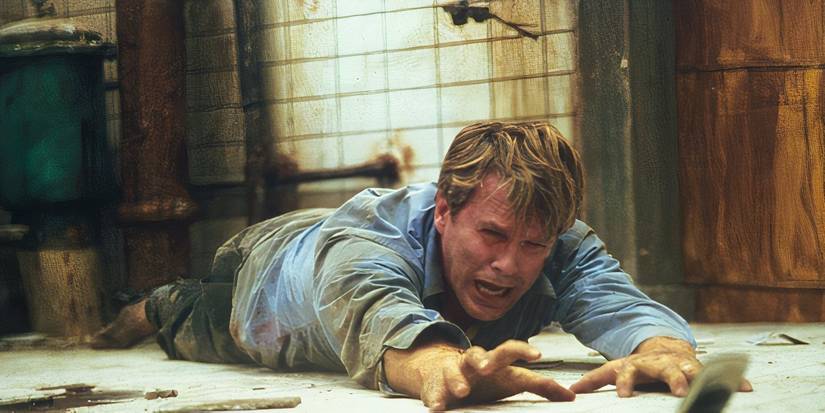
Horror maven James Wan’s touchstone Saw ushered in an era of “torture porn” (along with the Eli Roth catalog, of course), and kicked off one of horror’s longest-running franchises. While many films in this sub-set are poor imitators, and some of the later entries into the Saw universe were tepidly received, this first film was a nail-biting banger all the way through, and still resonates to this day. The introduction of Jigsaw into the horror zeitgeist was certainly a welcome one (especially in the shocking manner that he was ultimately revealed), with this crafty lunatic haunting the dreams of even the staunchest critic.
The nicely woven story focuses on a man, John Kramer, later known in the press as Jigsaw (Tobin Bell, in the role that would define his career), who was wronged by the system, and, in his mind, healthy and ungrateful people in general. In order to exact revenge on the folks who were directly (and indirectly) involved in a death in his family (we’ll keep this secret for now), he constructs an extraordinarily complex web of chicanery where the victims are given a “Sophie’s choice” of sorts (for example, watch your spouse die or saw off your own foot). The whole film is incredibly inventive, with edge-of-your-seat moments to spare. Great turns by Cary Elwes as the oncologist Dr. Lawrence Gordon, Leigh Whannell as the second-rate paparazzo, Adam, and Danny Glover as the indefatigable detective David Tapp also add to the overall chillingly well-thought-out experience. The jaw-dropping ending twist is one for the record books, as well. This original definitely deserves multiple viewings, no matter how many times you saw it.
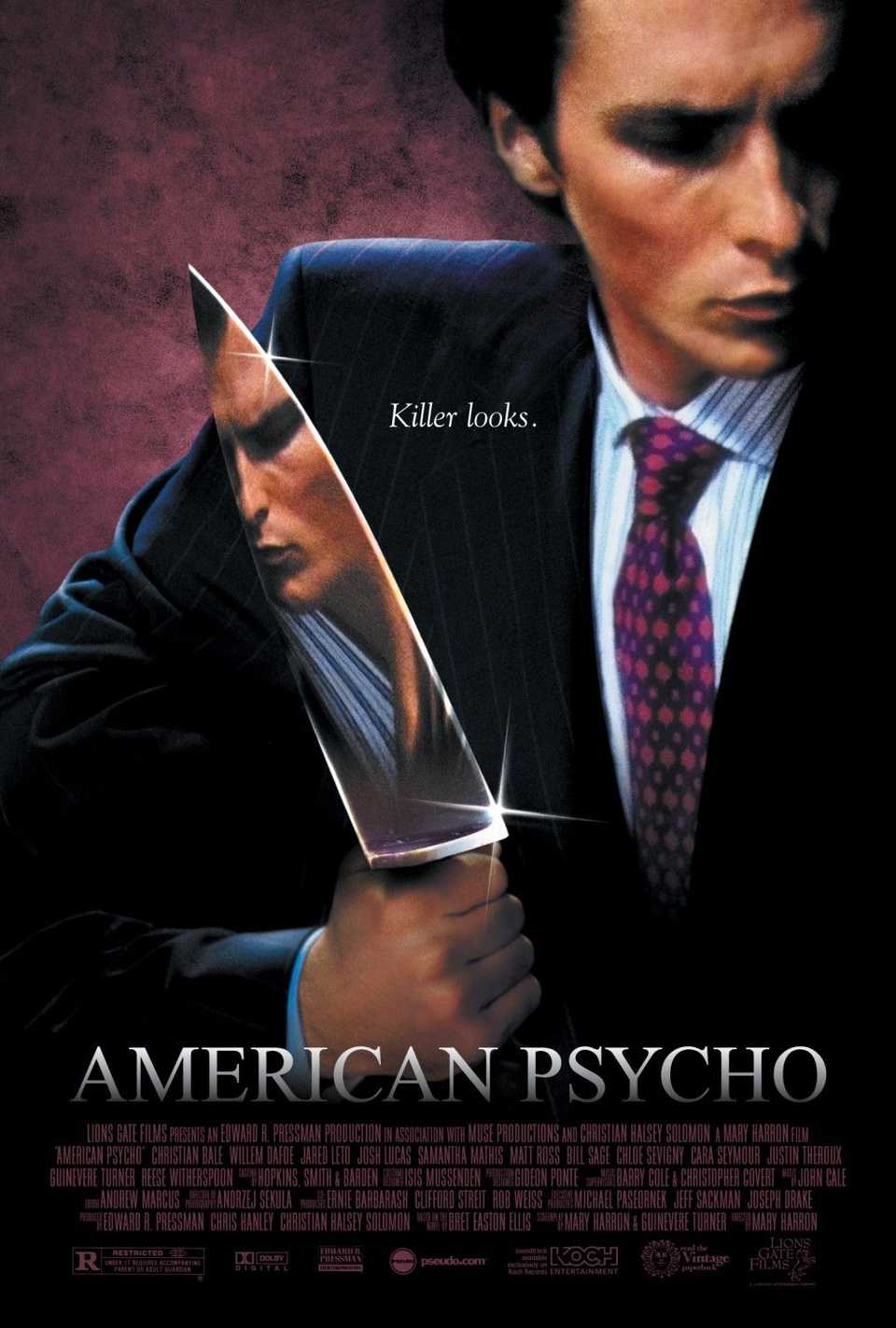
1 'American Psycho' (2000)

It may be hard to find the time to watch this film, what with all the returning of videotapes that need be done, but make no mistake, director Mary Harron’s American Psycho is one of the best slasher movies ever. It’s also one of the most bizarre and utterly unique ones as well, deviating wildly from virtually all standard slasher tropes. Fans of the novel by Bret Easton Ellis vehemently claim that this film is inferior to the source material in terms of satire, social commentary, and overall content, but there is definitely an argument to be made that the vivid character portrayals in this psychotic cinematic gem elevate this fun flick to dazzlingly devious heights of high art and pure entertainment.
Patrick Bateman (Christian Bale, in an iconic role that fans identify him with more than any other — yes, including Batman) is the quintessential narcissistic YUPPIE. With a coveted job in finance, Bateman is the picture-perfect image of the image-obsessed 1980s Wall Street professional. Yet, he’s a lot more interested in “murders and executions” than mergers and acquisitions. The freaky tale follows Bateman as he interacts with his amusing peers, notably his vapid lady friend, Evelyn Williams (Reese Witherspoon, brilliantly leaning into privileged blonde stereotypes), his slightly better regarded, smarmy rival, Paul Allen (Jared Leto, in a brief but unforgettable role), the smiling, gap-toothed, intuitive detective Donald Kimball (Willem Dafoe, phenomenal as usual with his subtextual delivery), and his soft-spoken secretary Jean (Chloë Sevigny, in a somewhat melancholic role). When Bateman executes Paul, in one of the most memorable murder scenes in film history (all while delivering a Wikipedia-like lesson on Huey Lewis and The News, no less), things spiral out of control. Bateman's antihero's journey culminates in a delirious ballet of insanity, with some of the downright funniest (and sickest) murders ever depicted. The ending is open for interpretation, which is really one of the more intriguing aspects of the overall story. This movie is amazing all around, anchored by Bale’s legendary performance; who knew investment banking could be this fun?
American Psycho
8 10
- Release Date
- April 14, 2000
- Runtime
- 101 minutes
- Director
- Mary Harron
- Writers
- Bret Easton Ellis, Mary Harron, Guinevere Turner
KioskNews shows a cleaned-up reading view extracted from the publisher’s page — the original always lives on their site, not ours.