8 Perfect Thriller Books That Pretty Much Anyone Can Enjoy

Luc Haasbroek is a writer and videographer from Durban, South Africa. He has been writing professionally about pop culture for eight years. Luc's areas of interest are broad: he's just as passionate about psychology and history as he is about movies and TV. He's especially drawn to the places where these topics overlap.
Luc is also an avid producer of video essays and looks forward to expanding his writing career. When not writing, he can be found hiking, playing Dungeons & Dragons, hanging out with his cats, and doing deep dives on whatever topic happens to have captured his interest that week.
Who doesn't love a good thriller? When handled right, it's one of the most entertaining genres in fiction. That said, there are only a select few thrillers with true broad appeal. They're so good, so gripping and strongly written, that almost anyone will be hooked from the opening pages.
If you're looking for a mystery or suspenseful story to dive into, the titles below have you covered. They run the gamut from sun-drenched psychological battles and dark character studies to tangled domestic dramas and gripping real-life investigations.
8 'Big Little Lies' (2014)
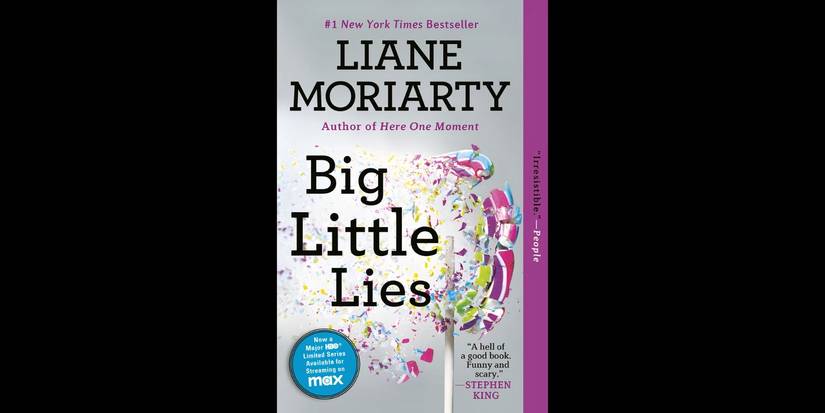
"All conflict can be traced back to someone's feelings getting hurt, don't you think?" This bestseller spawned a star-studded TV show as well as a sequel published earlier this year. Big Little Lies follows three women, Madeline, Celeste, and Jane, whose children attend the same primary school. Their lives are complicated by marital difficulties, schoolyard rivalries, and long-buried secrets, which begin to boil over after someone is killed during a school fundraising event (though the victim's identity is kept from the reader).
That's a juicy mystery to keep us hooked, and author Liane Moriarty fills it out with relatable domestic drama, sharp social satire, a welcome touch of dark humor, and a cast of flawed characters. They're all intense but believable, with their petty arguments and insecurities providing plenty of entertainment even when the central mystery temporarily takes a back seat.
7 'The Spy Who Came in from the Cold' (1963)
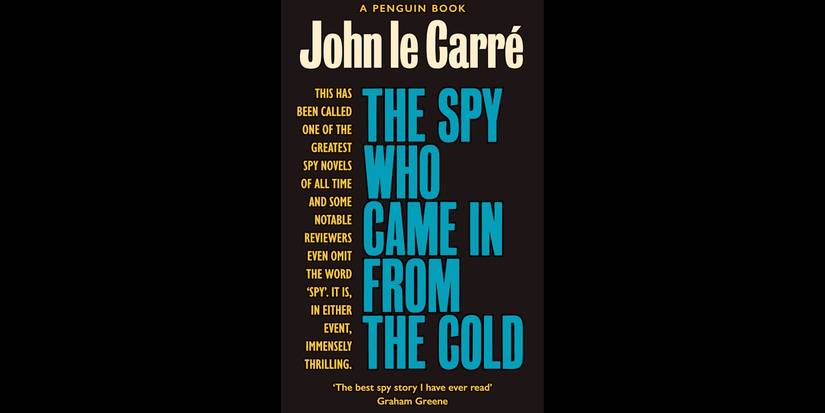
"Intelligence work has one moral law: it is justified by results." One of the most influential spy stories ever, offering a grimly realistic alternative to the glamorous adventures of James Bond. Set during the Cold War, The Spy Who Came in from the Cold centers on Alec Leamas, a disillusioned British intelligence officer whose network of agents in East Germany has been systematically destroyed. With his career seemingly approaching its conclusion, Leamas agrees to undertake one final mission to undermine a powerful East German intelligence official.
However, the operation involves an elaborate deception, forcing Leamas to navigate a dangerous world where loyalties are uncertain and practically everyone has something to hide. However, the tale that follows doesn't rely on fancy gadgets or spectacular action sequences. Instead, it's more psychological, leaning into moral complexity and a three-dimensional protagonist.
6 'The God of the Woods' (2024)

"To be a human is complex, and often painful." This atmospheric mystery is set in the Adirondack Mountains, where a teenager named Barbara Van Laar disappears from a summer camp in 1975. She belongs to the wealthy family that owns the camp, and her disappearance is particularly disturbing because her older brother, Bear, vanished from the same property fourteen years earlier. From there, the novel moves between different time periods and shifts between various characters, all of them exceptionally well-developed.
In the process, we gradually piece together the complicated history of the Van Laar family and the people whose lives have become entangled with theirs. There is social commentary and subtext here, but it's never heavy-handed or elevated above the mystery itself. Not to mention, the setting is immersive and memorable, vividly recreating the '70s and transporting us to an ominous, forested world.
5 'The Secret History' (1992)
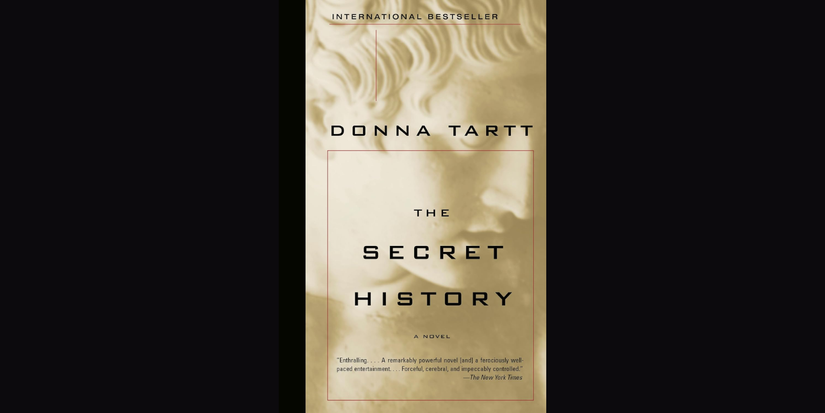
"Beauty is terror. Whatever we call beautiful, we quiver before it." The Secret History is an extraordinary literary thriller, delivering both suspenseful and sharp psychological insight. The main character is Richard Papen, a young Californian who enrolls at an exclusive Vermont college and becomes involved with a small group of eccentric classics students. However, their intellectual pursuits eventually lead to a horrifying crime, followed by another murder that Richard reveals in the novel's opening pages.
Here, author Donna Tartt creates an intoxicating atmosphere of intellectual ambition and moral decay, all of it unfolding against a darkly cozy backdrop of fire-lit common rooms and ornate old buildings. (In this regard, the book is a cornerstone of the 'dark academia' subgenre.) The characters are impressively realistic, and the writing itself is great the whole way through, pulling the reader from page to page.
4 'London Falling' (2026)

"The Thames is a tidal river, its powerful currents ebbing and surging twice each day with salt water from the North Sea." This is a work of nonfiction, but it's more gripping than pretty much any fictional thriller published this year. London Falling explores the mysterious death of Zac Brettler, a 19-year-old who fell from the balcony of a luxury London apartment in 2019. Following his death, Zac's devastated parents begin investigating the circumstances surrounding his final hours, gradually discovering that their son had been leading a secret life.
He had reinvented himself as the wealthy heir to a Russian oligarch, using his fabricated identity to infiltrate London's exclusive social circles. Writer Patrick Radden Keefe undertakes a brave, dogged search for the truth, in the process profiling a collection of criminals, socialites, unreliable witnesses, and violent men. However, the book's emotional center remains Zac's parents.
3 'Gone Girl' (2012)
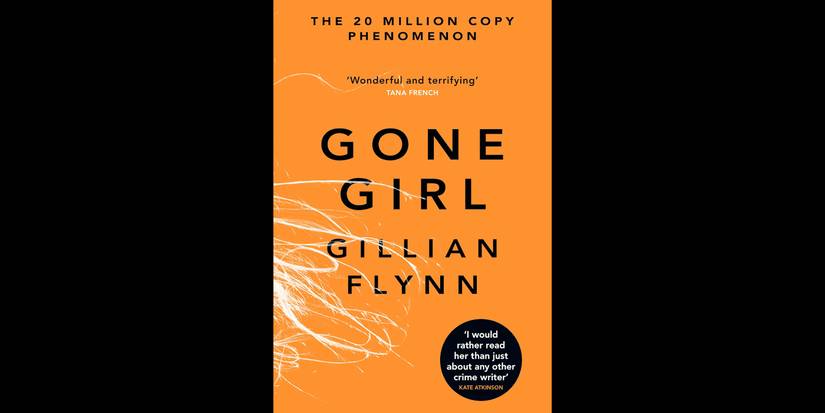
"There's a difference between really loving someone and loving the idea of her." While David Fincher's film adaptation is widely accepted as a modern classic, Gillian Flynn's original Gone Girl novel is fantastic, too, and worth reading if you're a big fan of the movie. When Amy Dunne mysteriously disappears, her husband, Nick, becomes the prime suspect, particularly as evidence emerges suggesting that their marriage was far from happy.
The novel alternates between Nick's account of the investigation and entries from Amy's diary. These twin perspectives shed light on a relationship riddled with resentment, dishonesty, and manipulation. However, this is just the start of the book's darkness and ingenuity. The plot twists and turns in shocking ways, challenging our assumptions and totally reframing how we understood earlier events. The psychological war between Amy and Nick becomes grimly gripping, even as each character reveals themselves to be loathsome to the core.
2 'The Talented Mr. Ripley' (1955)
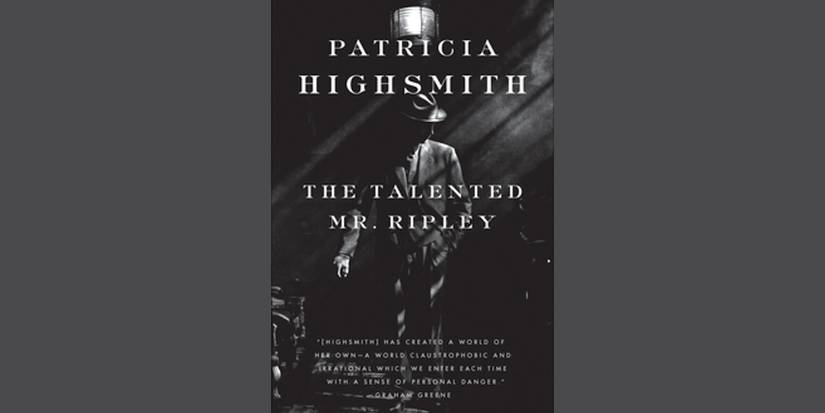
"His stories were good because he imagined them intensely, so intensely that he came to believe them." This brilliantly unsettling psychological thriller introduced the immortal character of Tom Ripley, a young American whose talent for deception leads him into increasingly dangerous situations. The plot kicks into gear when a wealthy businessman hires Tom to travel to Italy and persuade his son, Dickie Greenleaf, to return home. However, Tom quickly becomes infatuated with Dickie's luxurious lifestyle.
When their relationship begins to deteriorate, Tom resorts to increasingly desperate measures to preserve his newfound existence, setting off a chain of lies, impersonations, manipulations, and, eventually, murders. It's amazing how author Patricia Highsmith is able to make readers sympathize with such a thoroughly reprehensible protagonist. Despite his selfishness and capacity for cruelty, Tom's insecurities and desire for acceptance make him strangely compelling.
1 'And Then There Were None' (1939)
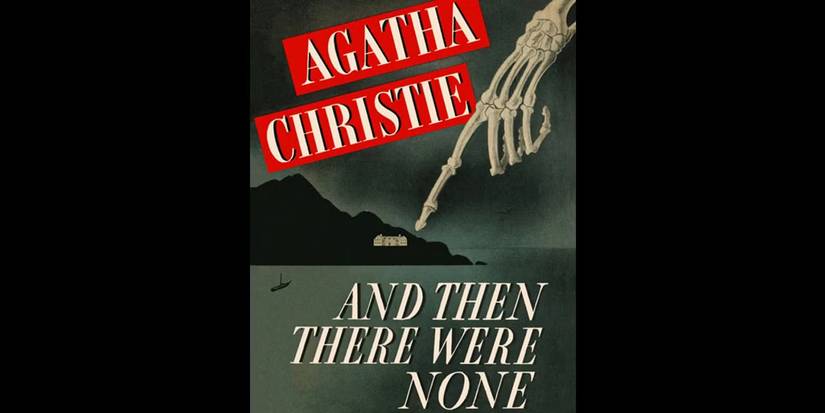
"Ten little soldier boys went out to dine; One choked his little self and then there were nine." And Then There Were None is Agatha Christie's magnum opus and arguably the greatest murder mystery ever written, period. The setup is almost like a proto-slasher: ten strangers are invited to a remote island, where a recorded message accuses each of them of having committed a murder for which they escaped punishment. One by one, the guests begin dying under increasingly suspicious circumstances.
Every death raises new questions and, because everyone is both a suspect and a potential victim, the paranoia escalates rapidly as the survivors turn on each other. It's a killer premise that has been copied endlessly in the decades since. That said, despite being published in the 1930s, the book's prose is crisp, direct, and easy to follow, making it surprisingly accessible today.
Collider Exclusive · 8 Questions · 2 Minutes Which Agatha Christie Character Are You? Poirot · Marple · Ariadne Oliver · Hastings
Answer eight quick questions and we will tell you which one you are. Christie is the best selling novelist in history and she only ever needed about four kinds of person to do it, all of whom are still turning up on screen a century later.
🥚Poirot(33 novels)
🧶Miss Marple(12 novels)
🍎Ariadne Oliver(8 novels)
🎖Hastings(8 novels)
01
How tidy is your home? Pick the one that sounds most like you.
02
How would your friends describe you? Be honest.
03
How do you work out what somebody is really like? One answer only.
04
Pick a snack. No wrong answers here.
05
How do you handle a long train journey? Pick the closest answer.
06
How do you feel about being underestimated? Pick the closest answer.
07
What is your role in a group project? Think about work.
08
How would you want to be described in a book? Last one. This is the one that decides it.
The Drawing Room, After Dinner You Are…
Toni Collette and Kit Harington are shooting a new Miss Marple and 20th Century has several more Christies in development, so the drawing room is busier than it has been in decades. Here is which of them you are, and the case for yours being the best.
Hercule Poirot
Order, method, and a quiet confidence that you are the cleverest person present. Poirot is a retired Belgian police officer who solves murders by sitting still and thinking, and who is vain enough to make the reveal a performance every single time.
- You need things to be in their right place and you are not remotely sorry about it.
- David Suchet played him for twenty four years and filmed every single Poirot story Christie wrote.
- Kenneth Branagh has made three as director and star, from Orient Express in 2017 to A Haunting in Venice.
- Your flaw is that the performance of being right can get in the way of simply being helpful.
Miss Marple
People tell you things because they cannot imagine you being a threat. Marple solves murders by comparing everybody to somebody she once knew in St Mary Mead, which sounds like a joke until you notice it works every time, because human beings are not as original as they think.
- You are the quietest person in the room and you leave knowing the most.
- Joan Hickson is still the definitive television Marple, and Christie herself wrote to her hoping she would one day play the part.
- Toni Collette and Kit Harington are making a new Marple film, announced this summer.
- Your risk is that people only work out how formidable you are once it is far too late.
Ariadne Oliver
You have far too many ideas and roughly a fifth of them are excellent. Ariadne Oliver is a successful crime novelist who is sick of her famous foreign detective and keeps saying so, which is Christie writing about Christie and getting away with it completely.
- You think out loud, change your mind twice, and arrive somewhere nobody else would have found.
- She was Christie's own stand-in, right down to being tired of the detective who made her rich.
- Tina Fey played her opposite Branagh in A Haunting in Venice and gave her the comic timing the part always wanted.
- Your flaw is that fourteen ideas take as long to sort through as they do to have.
Captain Hastings
You are steady, decent and the reason the difficult genius has anybody at all. Hastings narrates the early Poirot novels, misses most of the clues, and is the only character in the books that Poirot is unambiguously fond of, which tells you what he is really for.
- You are the one who turns up, which sounds small and is not.
- Christie gave him the narrator role so readers would have somebody to be as lost as they were.
- Hugh Fraser played him across the ITV series and made him warm rather than slow, which earlier versions never managed.
- Your weakness is taking people at their word, which is lovely right up until it is not.
KioskNews shows a cleaned-up reading view extracted from the publisher’s page — the original always lives on their site, not ours.