China slams Chile-Belgium bid to host High Seas Treaty body, pushes rival Xiamen proposal
China on Thursday criticised Chile and Belgium’s combined bid to host the secretariat of the High Seas Treaty, accusing the countries of “politicising the bidding process and dividing members into opposing camps”.
The three countries had previously submitted competing proposals to host the secretariat – the administrative headquarters of the treaty, also known as the Biodiversity Beyond National Jurisdiction (BBNJ) agreement – until Chile and Belgium announced their joint bid on Friday.
Chile and Belgium proposed establishing the headquarters in the Chilean port city of Valparaiso while locating the physical and technical infrastructure of the treaty’s clearing-house mechanism (CHM) – an information-sharing system – in Brussels, according to a statement from the Belgian foreign ministry.
The announcement effectively transformed the three-way contest into a competition between China’s Xiamen bid and the Chile-Belgium proposal.
“Belgium and Chile privately settle matters that should have been collectively determined by the parties to the agreement. This violates the stipulation of the agreement and is disrespectful to the authority of the Conference of the Parties,” said Mao Ning, spokeswoman for the Chinese foreign ministry, at a regular press conference on Thursday.
Mao said the information-sharing system should be managed by the secretariat, and the terms of the mechanism’s operation should be determined by the Conference of the Parties, the treaty’s highest decision-making body.
She said the announcement by Belgium and Chile was “inappropriate” in multiple aspects and failed to meet the requirement of geographical balance as the vast majority of international institutions are based in Europe, with none located in Asia.
“Brussels is already home to the headquarters of Nato and the European Union,” Mao said, adding that locating the CHM infrastructure in the city would “further widen the digital divide to the detriment of the shared interests of the Global South”.
She accused the two countries of backtracking on their initial commitment as Chile originally bid to host the secretariat on behalf of the Global South, but would no longer take on the secretariat’s substantive functions under the joint proposal. She added that Brussels only sought control of the information-sharing system and had “in essence abandoned” its bid for the secretariat proper.
Mao said the joint bid not only undermined the “principle of fair, friendly and healthy competition” but also ran counter to the “essence of multilateralism”.
The treaty was adopted at the United Nations in 2023 after nearly two decades of negotiations and entered into force in January this year.
It is the most significant ocean treaty since the 1982 United Nations Convention on the Law of the Sea (Unclos) as it establishes a legally binding framework to protect the unique marine biodiversity and ecosystems of the high seas.
SCMP Plus is a new premium news platform that gives you an
all-inclusive edge to stay ahead on China news.
To access our exclusive content you’ll need to subscribe.
Already a subscriber?
LOG IN
The first Conference of the Parties will take place from January 11 to 22 next year at the United Nations headquarters in New York, where the parties are expected to decide the secretariat’s location and other institutional arrangements.
The treaty covers around two-thirds of global waters, which hold a wealth of natural resources, including critical minerals essential for electric vehicle batteries and low-carbon technologies, as well as marine genetic materials prized for pharmaceuticals, biotechnology and broader scientific innovation.
As a rising maritime power, China has played an important role in advancing treaty negotiations over the past two decades. This is the first time Beijing has sought to host the secretariat of a multilateral environmental agreement.
Hosting the secretariat would give the selected city a prominent role in supporting the emerging framework for global ocean governance, although decision-making authority would remain with the treaty’s parties.
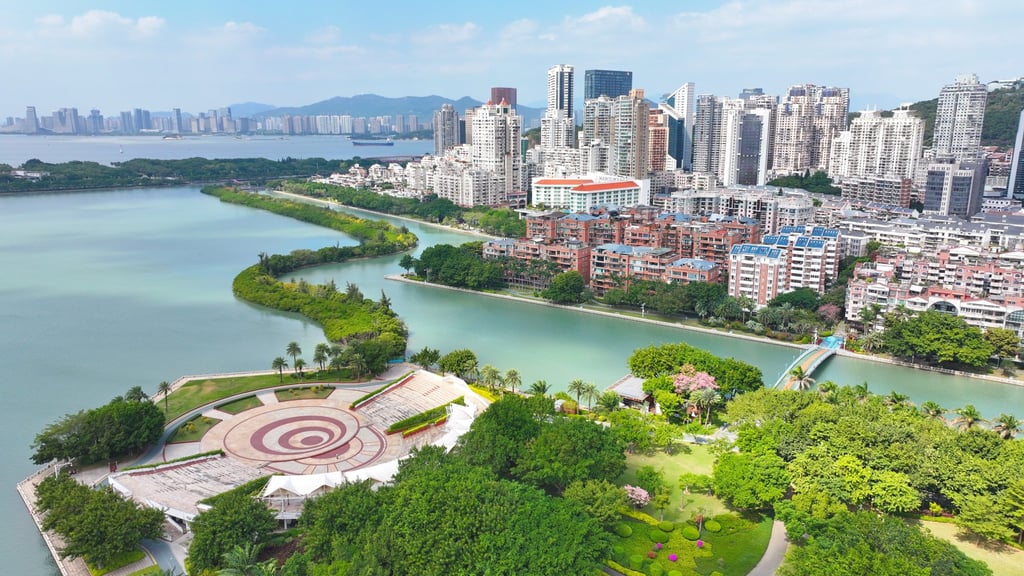
In March, Chinese Vice-Minister of Foreign Affairs Hua Chunying laid out Beijing’s offer at the third session of the BBNJ Preparatory Commission. The proposal includes a fully equipped office building and conference facilities in the coastal city of Xiamen free of charge on a long-term basis, along with a five-year waiver of utility fees, which Beijing estimates could save the secretariat at least US$70 million.
Hua said China also pledged an initial US$3 million to help developing countries attend treaty meetings, alongside visa facilitation and access to Xiamen’s marine research capabilities.
While the BBNJ agreement neither grants new rights to claimants nor governs the settlement of disputes, analysts warn it could still open a fresh front for legal and diplomatic friction in the South China Sea, where Beijing’s claims overlap with those of several Southeast Asian neighbours.
KioskNews shows a cleaned-up reading view extracted from the publisher’s page — the original always lives on their site, not ours.