Maharashtra gets tough on exam cheats, paper leaks; proposes Rs 10 crore fine, jail term
The high-level committee set up by the Maharashtra government to overhaul recruitment examinations has recommended much tougher punishment for paper leaks. Those involved in organised exam malpractice would face 7 to 10 years in jail and a minimum fine of Rs 10 crore, against 5 to 10 years and Rs 1 crore now. They would also have to pay for the losses caused, and their property could be confiscated.
The committee, headed by Additional Chief Secretary V Radha, has proposed these amendments to the Maharashtra Competitive Examinations (Prevention of Improper Means) Act, 2024, in its second report, submitted to the government on November 23. Service providers caught in malpractice would face fines of up to Rs 5 crore, five times the current cap, and be blacklisted for eight years instead of four. Their directors and managers, if involved, would face 5 to 10 years in jail and fines of up to Rs 5 crore.
Anyone caught using improper means in an exam would face 5 to 10 years in jail, up from 3 to 5, and a fine of up to Rs 50 lakh, up from Rs 10 lakh.
To make confiscation stick, the committee wants the Act to define “property” broadly, covering land, buildings, movable property, intellectual property and intangible rights, as well as digital and virtual assets.
The government has signalled it will act on the proposals. Chief Minister Devendra Fadnavis said on Tuesday that the state would bring a law to tackle malpractice in competitive exams, paper leaks and recruitment drives in the Winter Session of the legislature in Nagpur. “The government will enforce recommendations of the panel to effectively tackle malpractices in all competitive examinations. We will bring anti malpractices law and work towards its passage in winter session,” Fadnavis told reporters. Paper leaks, he said, would be dealt with ruthlessly through tougher laws. He also said the government would consider the committee’s proposal to refund exam fees, so that students do not have to bear the financial burden.
The committee has also recommended that such cases be investigated by more senior police officers and an independent Special Task Force. At present, exam malpractice cases are probed by officers of the rank of Deputy Superintendent of Police or Assistant Commissioner of Police. The panel wants them handed to officers of at least Additional Superintendent rank in districts and at least Deputy Commissioner rank in police commissionerates. The Special Task Force would get special jurisdiction to probe serious cases.
For trials, it has proposed special fast-track courts. All cases now pending under the Act would be moved to these courts and decided within three months.
Story continues below this ad
Beyond the law, the report proposes to reshape how exams are run. The committee has recommended a three-tier Exam Command and Control Centre which would include a central centre at the Maharashtra Public Service Commission (MPSC) headquarters, an independent centre in every district, and a control room at each exam centre on the day of the exam.
At the district level, it wants a permanent Examination Branch in every Collector’s office, and a permanent coordination committee chaired by the Collector. That committee would include the Superintendent of Police or Deputy Commissioner of Police, along with officers from the education, transport and treasury departments.
Each district would also maintain a “Venue Bank” of school and college buildings that can serve as exam centres, with details of seating capacity, infrastructure and access for disabled candidates. The committee has recommended that Collectors be empowered to take over these buildings for exams at rates fixed by the MPSC.
On security, the report calls for a separate security plan and guidelines for every recruitment exam, to be drawn up under the Additional Chief Secretary (Home) in consultation with Maha-Cyber. The plan would set out checks to stop candidates from using banned devices.
Story continues below this ad
The MPSC, it says, should set up a dedicated technology and cyber security cell with Maha-Cyber and specialist agencies. The cell would track the tools now used to cheat, including micro devices, wearable cameras and artificial intelligence, and work out ways to counter them. The commission should also appoint a Chief Information Security Officer and adopt a single information security policy, covering systems run by outside agencies on its behalf, to better protect candidates’ data.
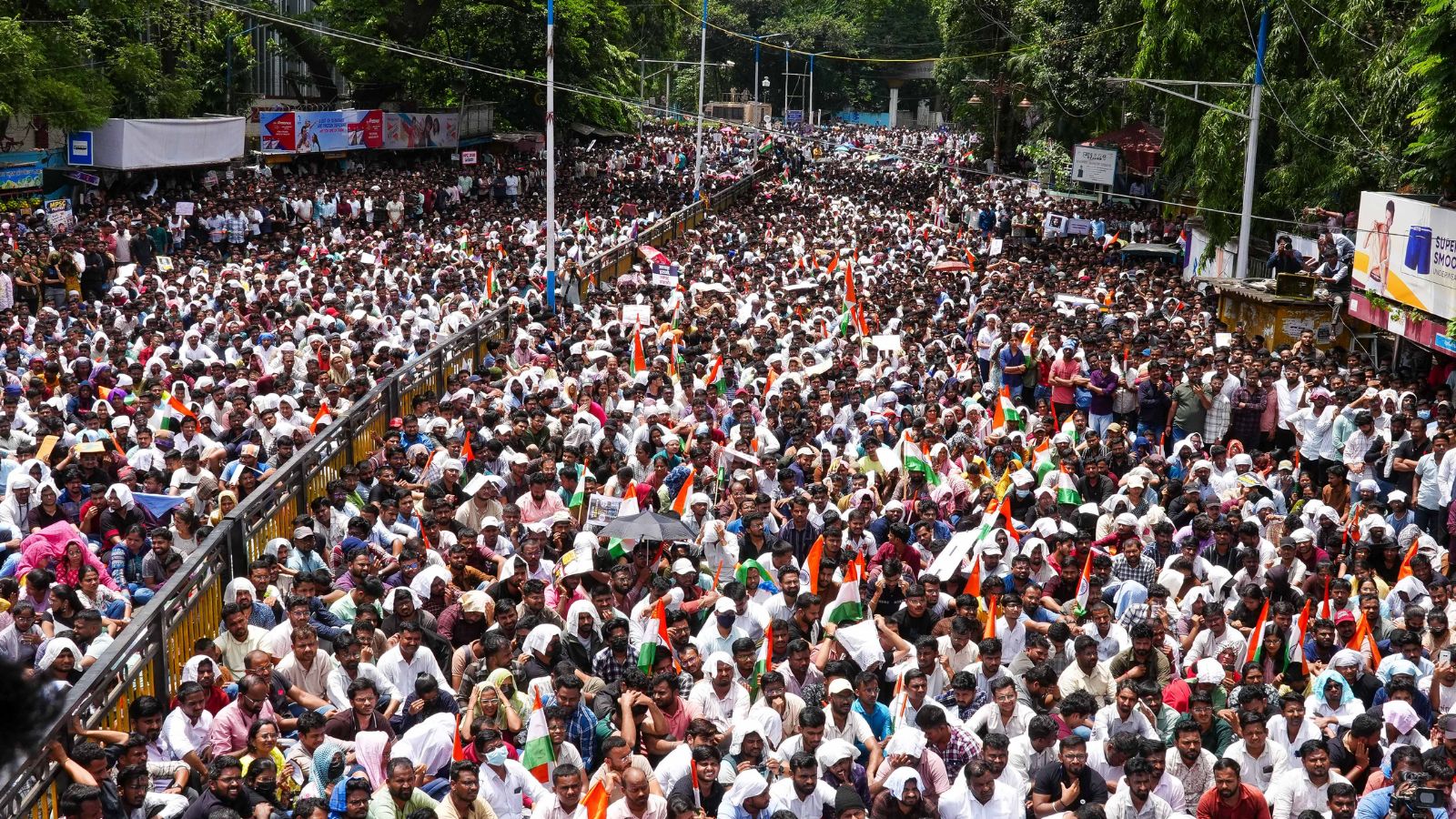
The seven-member committee was announced by the Chief Minister in August and formally constituted on September 4, amid allegations of paper leaks and malpractice in MPSC exams, and protests by aspirants. Besides Radha, it includes Director General of Police Sadanand Date, IT Secretary Virendra Singh, Nashik Divisional Commissioner Praveen Gedam and a professor from IIT Bombay. It held consultations with candidates and other stakeholders in all revenue divisions.
Since the MPSC conducts most of the state’s recruitment exams, much of the report is aimed at the commission. The committee will report in four phases. Its first report, submitted on November 4, recommended raising Group-C posts to more than 16,000 and a one-time, one-year relaxation in the upper age limit for all recruitment exams. The government granted the relaxation the next day.
The Centre is running a parallel effort. In July, Prime Minister Narendra Modi announced a high-powered task force under Infosys co-founder Nandan Nilekani to recommend the next phase of exam reforms. That came nearly two years after a committee under former ISRO chairman K Radhakrishnan, set up after the NEET-UG 2024 controversy, made 101 recommendations to reform the National Testing Agency.
KioskNews shows a cleaned-up reading view extracted from the publisher’s page — the original always lives on their site, not ours.