Pan's Labyrinth: The Real Meaning Of Guillermo Del Toro's Dark Fairytale

Updated
Andrew is a contributing features writer for Screen Rant Horror, as well as for Comic Book Resources. He enjoys trying to see what social commentary he can mine out of the latest horror films, as well as checking up on what's going on in the life of Spider-Man. He also plays bass guitar to exorcise his negative emotions, like the good Mr. Rodgers says you should.
Guillermo del Toro's Pan's Labyrinth follows a girl looking for an escape, only to find that its magical creatures can be as frightening as the people around her. Ofelia lives under the authority of Captain Vidal, her brutal stepfather, in Spain in 1944. A Faun offers her a way home to an underground kingdom, claiming she is its missing princess. To return, she must complete three tasks, but obeying him eventually means doing something she knows is wrong.
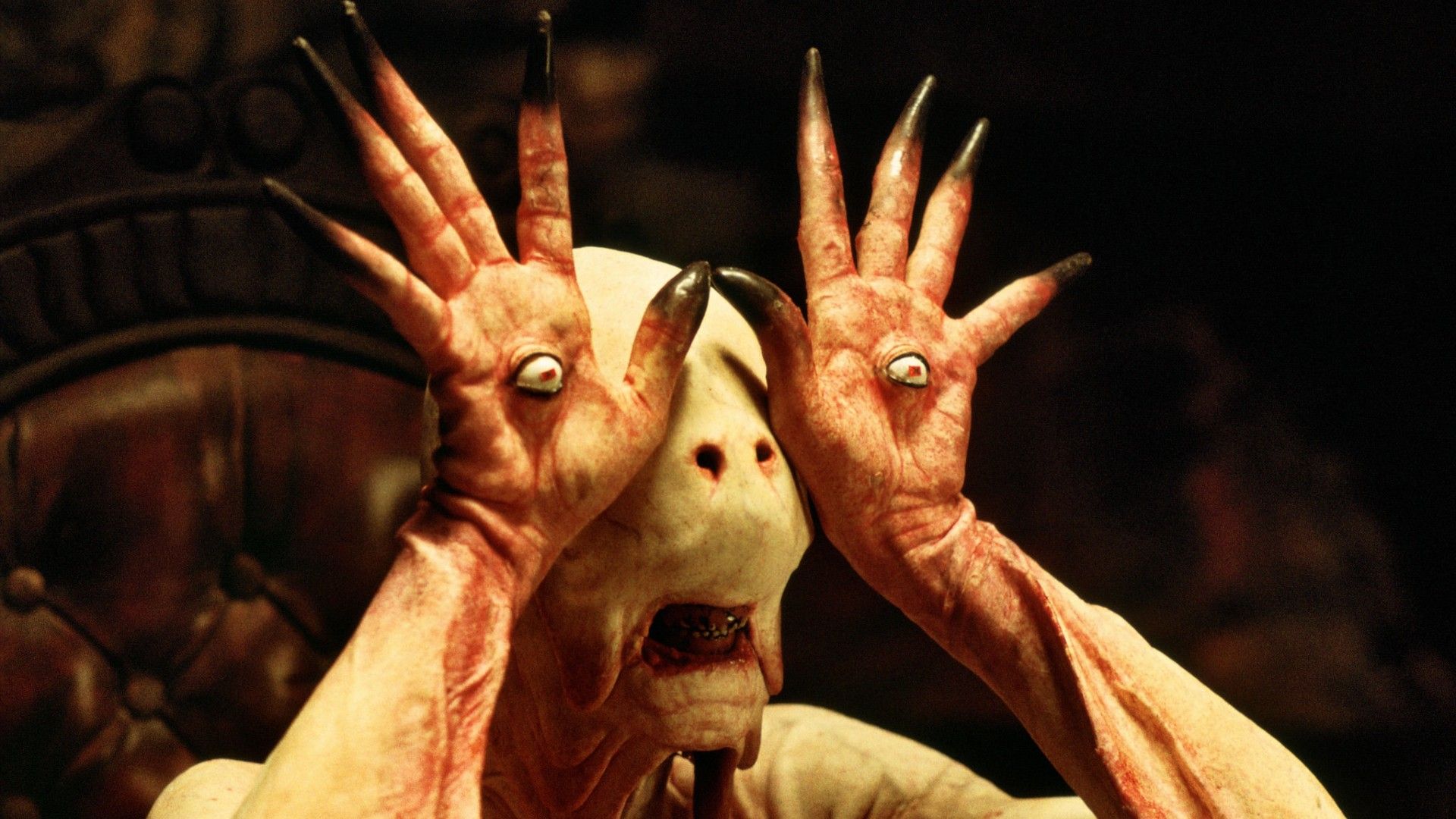
The monstrous Pale Man’s feast has an unsettling counterpart in Vidal’s dinner table. The Pale Man guards a banquet he doesn’t eat, while Vidal controls food supplies to force hungry villagers into submission. Neither tolerates anyone taking what he claims as his own. Ofelia eventually has to choose between returning to her kingdom and keeping her baby brother safe. Refusing the Faun means giving up the escape she has worked for, without knowing she will be rewarded for saying no.
Del Toro insisted on keeping Ofelia’s death, even when distributors wanted him to change it. Her homecoming to the underworld offers some comfort, but it doesn’t erase the sight of Mercedes mourning her. Ofelia cannot save herself, but she protects her brother despite what it costs her, which gives the ending of Pan's Labyrinth some considerable symbolic meaning.
Pan's Labyrinth's Meaning Explained — What Del Toro's Movie Is Really About
The Fairytale Elements Are Ofelia's Way Of Making Sense Of The World

Explaining Pan's Labyrinth's meaning involves looking at the symbolism driving the story. The characters are archetypes corresponding to their roles within folktale traditions, and they help to develop the main themes throughout the story. The protagonist, Ofelia, and the heroes and villains are defined in relation to their fairytale counterparts. For instance, del Toro points out that the rebels are like the woodsmen rescuing Little Red Riding Hood from the Big Bad fascist Wolf.
Similarly, the fantastical elements that Ofelia witnesses can be seen as her way of making sense of the world around her, the same way that fairytales are used to explain complex concepts in a more easily digestible manner. The Pale Man monster in Pan's Labyrinth, for example, symbolizes predatory authority figures who victimize those who are vulnerable — fitting in with the movie's allegory about fascism, and specifically making a thinly veiled criticism of the Catholic Church.
Pan's Labyrinth Is About Choice And Disobedience
Ofelia Often Makes Unsafe But Noble Decisions

Del Toro has stated that the themes of Pan Labyrinth can be traced throughout the narrative due to the symbolic repetition, a common trait of fairytales. The faun in Pan's Labyrinth gives Ofelia three tasks to complete to help her return to her place as queen of the underworld, but she often disobeys instructions and makes choices based on her own conscience. Her decisions are not always the safest, as in the case of eating the Pale Man's food, but her morality ultimately allows her the noblest and most heroic of endings.
Instead of spilling her baby brother's blood as requested by the faun creature in Pan's Labyrinth, Ofelia spilled her own to open the portal to the underworld. The rebels resist autocratic rule through disobedience, which is reminiscent of Ofelia's tendency to follow her own choices instead of blindly following orders. The housemaid Mercedes parallels Ofelia in her subversive behavior, undergoing her own trials against the monstrous Captain Vidal. Thus, the two intertwining narratives repeat the same patterns to prove that trusting personal feelings over authority leads to a purer sense of morality.
Del Toro talks about how the psychologist Bruno Bettelheim theorized that, throughout history, fairytales have been used to manifest enigmatic aspects of the world. At first, these stories were used to explain natural phenomena, but as science developed, they represented more psychological aspects related to human behavior. Pan's Labyrinth – Guillermo del Toro's best movie — continues this rich tradition in Del Toro's own way, employing specific iconography to bring fairytale elements to the real world and using monsters to express a tapestry of human morality.
Pan’s Labyrinth’s Meaning Has Changed For Its Cast Over 20 Years
Revisiting The Film As An Adult Changed How Ivana Baquero Saw Vidal

Ivana Baquero sees more in Pan’s Labyrinth now than she did while playing Ofelia as a child. In her twentieth-anniversary interview with The Direct, she said her own experiences of hardship and heartbreak had changed her response, particularly to Vidal’s brutality, which makes sense given how the character is depicted from his first meeting with Ofelia onward. She offers him her hand, and he immediately corrects her, showing how little patience he has for the child joining his household. On a rewatch, his insistence on the proper hand feels like a subtle warning of how he will treat her.
Doug Jones played both the Faun and the Pale Man, but told The Direct that "monsters don’t always wear rubber and glue." He highlighted the movie's exploration of people who abuse their authority, a danger Ofelia faces whether she is taking orders from Vidal or the creature promising to rescue her. The Faun offers help, but eventually demands her brother’s blood. She refuses without knowing that refusal is the test, and earns her place in the kingdom by refusing the very creature who offered to take her there.
In his 2026 interview with Deadline, del Toro discussed the pressure to give Ofelia a less tragic ending, showing how different the movie could have been. He recalled distributors demanding, "Don’t kill the girl at the end. Take out the violence." According to the director, Picturehouse’s Bob Berney supported the film without those changes. Letting Ofelia survive would have reassured viewers that doing right brings protection. Instead, the ending gives Ofelia the family she longed for, while letting Mercedes grieve the girl she couldn’t save, balancing its darker tone.
Why Pan's Labyrinth's Meaning Has Never Been More Important
The Scariest Characters In Pan's Labyrinth Are The Human Beings

Pan's Labyrinth's message still stands out today. For all of the chilling creatures in the Labyrinth itself, by far the most frightening characters in Pan's Labyrinth are the human beings, in particular Captain Vidal and the fascists. Ofelia survives her trials in the Labyrinth but is still killed for speaking out and defying fascist authority in the real world. Yet, for her bravery and for taking a stand, Ofelia is rewarded in the afterlife, while the adults who resisted authority in secret without taking action are also killed but without reward.
This simple message of morality in one of Guillermo del Toro's best movies clearly illustrates the imperative to take a stand against fascism in all its forms – a statement that is all the more important in the 21st century, in which fascist sentiments continue to hold sway but are often disguised or ignored. Because of this, Pan's Labyrinth's story, while released over a decade ago and set in a different historical period, is still incredibly relevant and enduring.

Pan's Labyrinth

10/10
- Release Date
- January 19, 2007
Directed by Guillermo del Toro, Pan's Labyrinth follows Ofelia, a ten-year-old girl living in 1940s Spain who learns she is actually a long-lost fairy princess. With the help of a faun, she is set a series of tasks to complete in order to return to her true home in the fairy underworld.
- Cast
- Sergi López, Ivana Baquero, Maribel Verdú, Doug Jones, Ariadna Gil, Álex Angulo, Roger Casamajor, Manolo Solo, César Vea, Ivan Massagué, Gonzalo Uriarte, Eusebio Lázaro, Francisco Vidal, Juanjo Cucalón, Lina Mira, Mario Zorrilla, Sebastián Haro, Mila Espiga, Pepa Pedroche, Lalá Gatóo, Ana Sáez, Chani Martín, Milo Taboada, Fernando Albizu, Pedro G. Marzo
- Runtime
- 118 minutes
- Director
- Guillermo del Toro
KioskNews shows a cleaned-up reading view extracted from the publisher’s page — the original always lives on their site, not ours.