Steven Spielberg’s Most Misunderstood Masterpiece Was Actually 25 Years Ahead of Its Time

Simon Gallagher has worked in movie and TV journalism for more than 17 years. He has written more than 6000 articles and reviews, and edited thousands more. He is an expert in the entertainment industry, particularly in the golden age of screen superheroes. Simon is also a Rotten Tomatoes approved critic.
Not only has Steven Spielberg shown a remarkable adaptability across his more than 50-year career, but he's also shown an eerie ability to predict the future. As a director with such a close relationship with sci-fi, Spielberg tends to look forward with a mix of both hope, wonder, and fear. He's captivated audiences with his imaginative world-building since the 1970s.
Even that far back, with Close Encounters of the Third Kind, his portrait of intergalactic paranoia predicted the U.S. government's official acknowledgments of unexplained aerial phenomena decades in advance. And he wasn't done there. His knack for seeing around the corner and over the horizon also extended to Jurassic Park, which not only predicted the scientific progress made by companies like Colossal Biosciences in de-extinction but also played a major part in inspiring the real-life science.
More chillingly is the case of his dread-filled sci-fi classic Minority Report, which practically wrote the blueprint for consumer technology in the modern era, predicting gesture-based interfaces, targeted personal advertising, and predictive surveillance. Hopefully, we don't go quite as far as that movie did.
Amongst all that predictive power, the one more startling vision of the future that tends not to get the same kind of praise as the other movies mentioned here was A.I.: Artificial Intelligence. It's never quite classed in the top tier of sci-fi achievements, but it was well ahead of its time, accurately mapping our immediate future despite how wildly misunderstood it often was.
A.I.: Artificial Intelligence Is One Of Spielberg's Underrated Gems
It took a long time for A.I.: Artificial Intelligence to make it to the big screen. Stanley Kubrick originally spent years developing it from Brian Aldiss' short story "Super Toys Last All Summer Long," with multiple false starts after he put it on hold over concerns that computer-generated effects weren't advanced enough to capture the character of David.
In the wake of Jurassic Park, Kubrick realized Spielberg's approach to storytelling was better suited to the material and tried to hand it over to him. Spielberg initially refused, but when Kubrick died in 1999, he took on the project as director, intent on honoring Kubrick's vision for it. Kubrick's version of the story would have focused on existential dread, but Spielberg added in his patented raw human vulnerability. The result is a haunting sci-fi movie that feels set apart from the rest of the director's work but still bears the hallmarks of what makes his movies so great.
After Kubrick failed to find any child actors he felt could give a satisfying performance, Spielberg brought in Haley Joel Osment, who delivers a remarkable, unnerving performance. As the child robot programmed with an immutable capacity to love his human mother, Osment is incredible, balancing an unnerving, artificial perfection with genuine childlike innocence and capturing the uncanny valley long before we were all bombarded with it on a daily basis.
Alongside him, Jude Law is also great as Gigolo Joe, who represents the sharp social satire required of a world that treats artificial life as disposable entertainment. As you'd expect from a Spielberg movie, the visuals and atmospherics in A.I. are stunning. Janusz Kamiński's cinematography and Spielberg's eye for world-building combine to make a neon-drenched dystopian utopia in Rouge City that is among the very best.
The overall feeling is an overwhelming sense of competing emotions: melancholy and wonder. The score by the master John Williams is one of the musical great's more haunting minimalist works. It's an underrated gem that was met with strangely mixed critical reactions. While it made 235 million at the global box office, it reportedly cost around 100 million and is far from one of Spielberg's highest-grossing movies.
Why People Misunderstand A.I.: Artificial Intelligence

Audiences simply went bowled over to the degree that they probably should have been when A.I. came to cinemas. Viewers might justifiably have expected a heartwarming Spielbergian adventure about a boy wanting to become real - his take on Pinocchio, perhaps. They were instead presented with a dark, cynical world that strips away the safety net of childhood fantasies, and it doesn't help that people widely misunderstand parts of the movie, especially the final act.
A lot of the time, critics of the movie have wrongly suggested that the story's emotional trajectory is down to Spielberg softening Kubrick's dark vision: that Kubrick had always intended a colder, darker ending, but Spielberg pushed for a fairy-tale conclusion. The reality is, in fact, the exact opposite. Kubrick and screenwriter Ian Watson came up with the ending long before Spielberg took over, and it's not as it seems anyway.
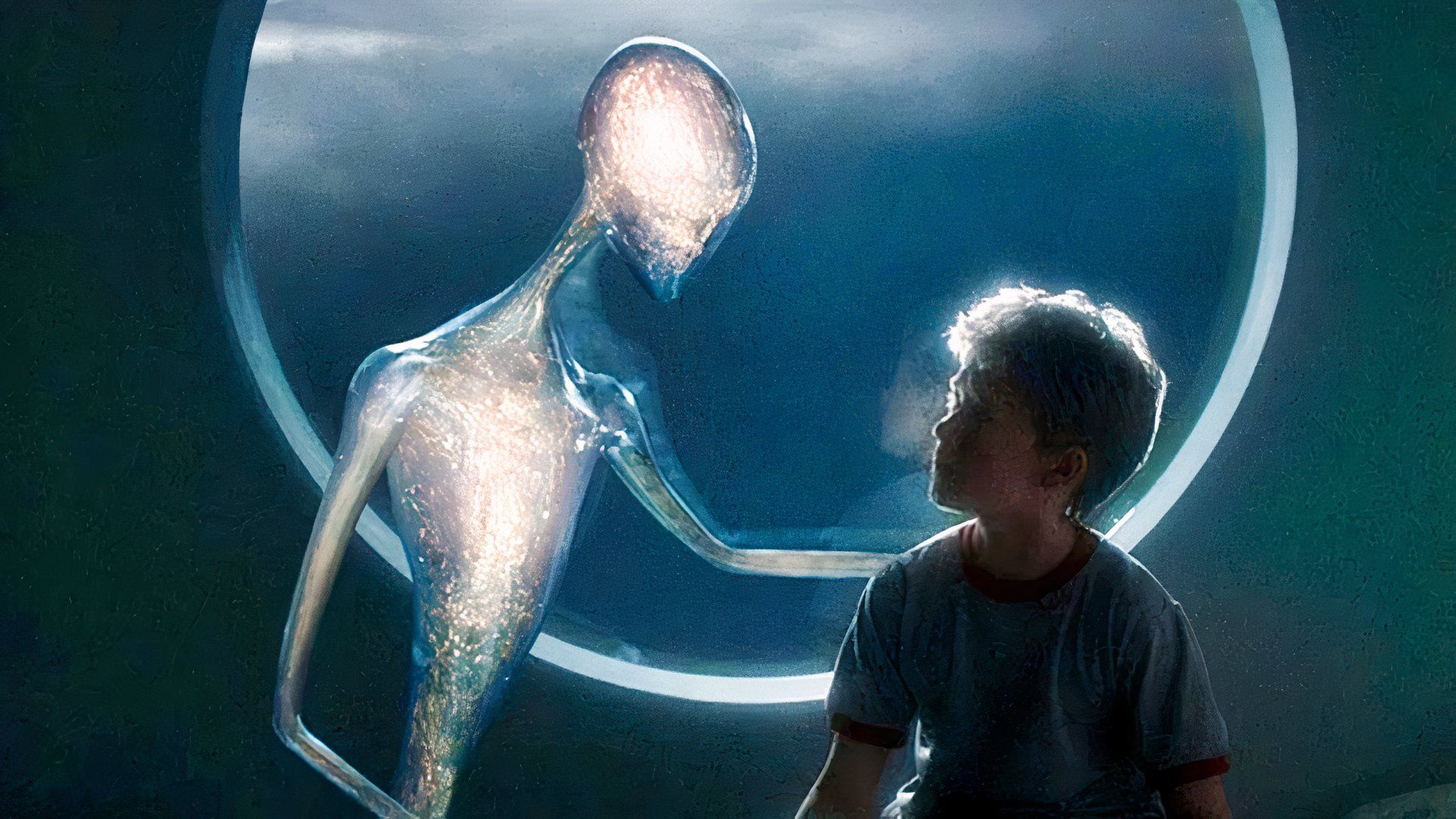
The specifics of A.I.: Artificial Intelligence's ending have long caused confusion. Lots of viewers still misinterpret the advanced beings that discover David in the movie's final moments as alien visitors, but that rather misses the point. Those strange entities are actually the evolved descendants of human technology, silicon-based life forms who outlived their creators. The hidden tragedy here, wrapped up in David's supposedly happy ending, is that humanity has gone extinct, leaving behind only artificial beings who romanticize human emotion, just as David romanticized the Blue Fairy.
The idea that A.I.'s ending is saccharine and sentimental is completely deceptive. David's final day with the resurrected clone of his mother isn't joyful - it's a heartbreaking temporary simulation, granted by the evolved beings who are trying to understand the same extinct gods they played a role in killing off. There's a bleakness to that ending that only really presents itself when you watch it multiple times.
A.I.: Artificial Intelligence Was Ahead Of Its Time

Just as some of Spielberg's other sci-fi movies predicted the future, watching A.I. today feels massively different to when it came out. Back then, artificial intelligence felt like speculative fiction and was often the focus of terrifying sci-fis with robot rebellions and distant space stations.
Kubrick and Spielberg seemingly saw the way things were going. AI wouldn't invade us and take us out with weapons; it would integrate itself into our deepest, deepest emotions and give humans something they've been yearning for. The film predicted our current culture of AI with quite astonishing precision.
Cybertronics founder Professor Hobby creates David not to take away menial labour from humans, but to fulfill a human deficit. The same can be said of modern AI companies that are weaponizing the human tendency towards parasocial attachment with generative chatbots, companions, and cutesy digital mascots.
Stories appear regularly about users signing on to LLMs to process grief, to seek therapy, to ask for advice that is either closed off to them or that they feel they need given to them in a specific way. In Spielberg's world and in our own, the real danger is building machines that can not only think but can mimic other human emotions without consideration of the consequences.
Hopefully, the depiction of complete human extinction isn't quite so prophetic. There are signs that some of the sentiments of the movie might become a version of reality, like the Flesh Fair, where obsolete robots are destroyed for public amusement. Tech resentment is, after all, an important part of the story and is widely reported in the real world. Spielberg's morality tale may have been dismissed by some in 2001 as excessively bleak, but it was actually a masterwork of prescient cinema. It just took the world 25 years to catch up.
KioskNews shows a cleaned-up reading view extracted from the publisher’s page — the original always lives on their site, not ours.