'Twilight Zone's Most Chilling Episode Was Officially Ruined by a Bad Performance

Collier Jennings is an entertainment journalist with extensive experience. Collier, or "CJ" to his friends and family, is a dedicated fan of genre films - particularly science fiction, fantasy, and comic book adaptations, not to mention all forms of animation. This stems from a close bond with his father, who introduced him to these genres via copies of X-Men comics and reruns of the original Ultraman series. With his near-encyclopedic knowledge and bottomless love of genre, he's tackled a wide variety of articles.
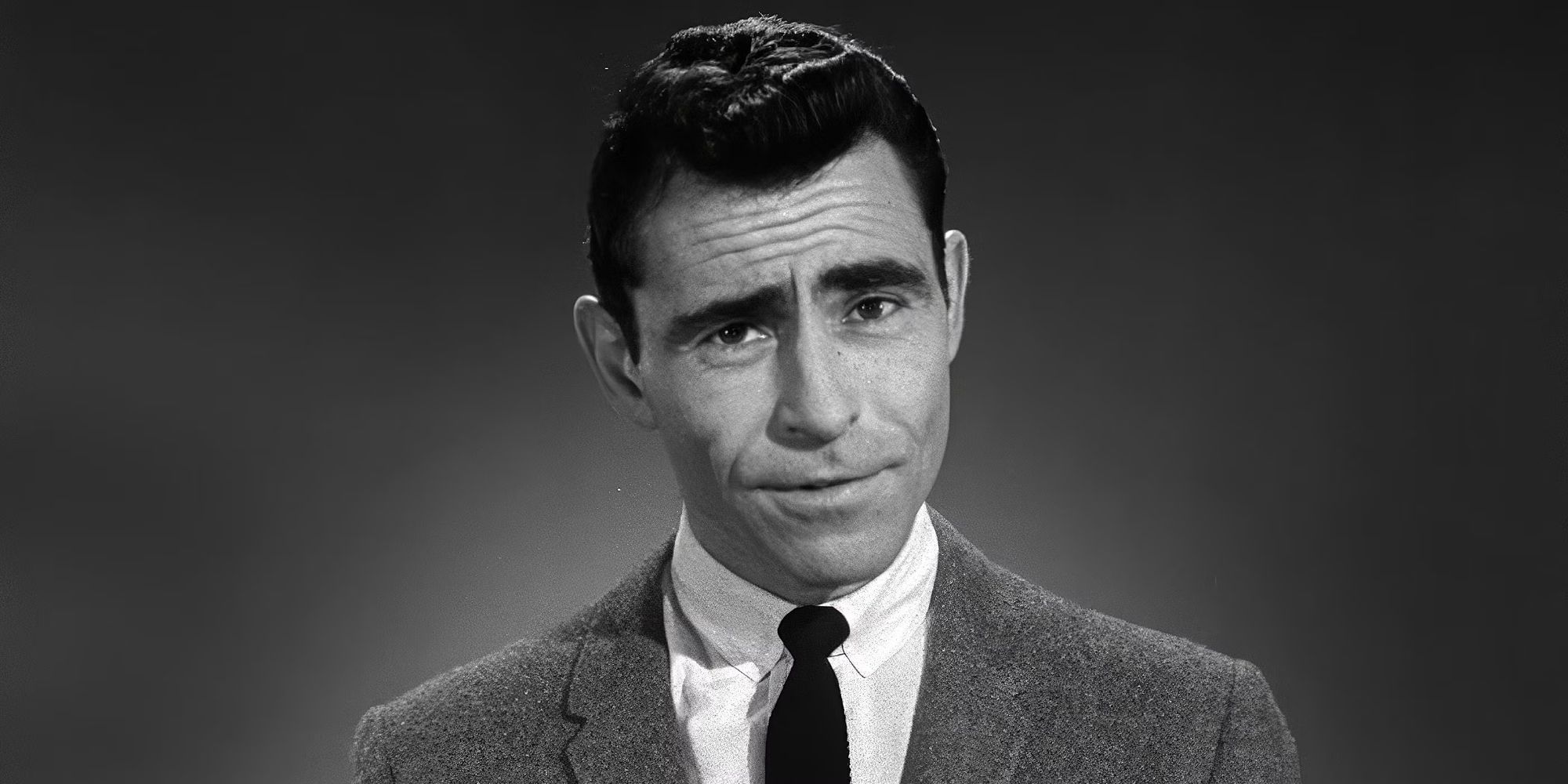
The Twilight Zone has inspired a number of filmmakers, from J.J. Abrams to Shawn Levy, and the show even had its own big-screen adaptation. But what most Twilight Zone fans may not know is that series creator Rod Serling originally intended for one episode to be a feature-length film. The Season 4 episode "He's Alive!" actually had a bona fide movie star, starring Dennis Hopper, but it was the subject matter that Serling felt was feature-film worthy, and it made the episode far more relevant than anyone intended.
"He's Alive!" stars Hopper as Peter Vollmer, who is attempting – and failing – to start a Neo-Nazi movement. His luck begins to change when he is visited by a shadowy figure who gives him advice on how to strengthen his speeches and draw in more followers. What makes "He's Alive!" all the more chilling is the fact that the shadowy figure is a resurrected Adolf Hitler (played by Curt Conway). Even though Serling sought to bring "He's Alive!" to the big screen, he ran into a major issue.
Rod Serling Hated Dennis Hopper's Performance in 'The Twilight Zone'
Serling actually wrote two versions of "He's Alive!": the one that eventually aired on television, and a feature-length script meant to be turned into a movie. Serling's film version of "He's Alive!" extends key scenes from the TV version and adds a subplot with an FBI agent who launches an investigation into Vollmer's activities. But the film never came to pass due to a major change in the show's structure. Following the show's brief cancellation and return for Season 4, episodes had been lengthened to a full hour, meaning that network executives were strict with the budget – and Serling's dream of a film version of "He's Alive!" would never get a chance to be on the silver screen. Serling was also stretched thin at that point, having taken up a teaching job in addition to writing Twilight Zone episodes.
Collider Exclusive · 8 Questions · 2 Minutes What Is Your Biggest Horror Nightmare? Elm Street · Chucky · Scream · The Conjuring
Four horror franchises. Four completely different ways of scaring you. One waits until you fall asleep. One makes sure nobody believes you. One is already in your group of friends. And one is in the house with your family. Answer eight quick questions about how you actually watch horror, and find out which nightmare was built for you.
😴Elm Street(Freddy Krueger)
🧸Chucky(Child's Play)
📞Scream(Ghostface)
🕯️The Conjuring(The Warren Files)
01
Which horror scene makes you cover your eyes? Four classic images. One of them is worse than the others for you.
02
You are home alone and you hear a noise. First thought? Everybody has one. It arrives before you have decided anything.
03
Which horror movie rule would you break first? Everybody thinks they would survive. Almost nobody actually does.
04
Something genuinely frightening happens. What do you do? Not in a film. In your actual living room, tonight.
05
How do you actually watch a horror film? Be honest about this one. Nobody is checking.
06
Somebody offers you serious money. Which do you still refuse? The amount does not matter. There is one on this list you are not doing.
07
Which feeling stays with you a week after the film? Good horror does not stop when the credits do.
08
Something wakes you at 3am. What is the worst possibility? Eight questions in, this is the one that decides your nightmare.
The Lights Just Went Out Your Nightmare Is…
Four franchises, four completely different ways of getting underneath your skin. This is the one built out of your particular fear, why it works so well on you, and what it would leave behind.
Elm Street
Your nightmare does not wait outside the door. It waits for you to close your eyes, which you are going to have to do eventually, because nobody has ever won that particular argument.
- Freddy is horror's cruellest idea: a threat that lives in the one place you cannot guard, cannot lock, and cannot avoid forever.
- You are the one who is fine during the film and wide awake at two in the morning. Your own head is where this does its damage.
- These films understood exhaustion as a horror engine. The kids on Elm Street do not lose because they are weak. They lose because they are tired.
- You can lock every door in the house. You still have to sleep.
Chucky
Your nightmare is not really the doll. It is the face of the person you tell, and the way they decide, very kindly, that you have imagined all of it.
- Chucky works precisely because he is absurd. That is the trap: the more accurately you describe him, the less anybody is going to believe you.
- You are the one shouting at the screen because the characters are not listening. You know that feeling from real life too.
- The franchise is at its best when the adults in the room are the real obstacle, and you have met those adults.
- By the time somebody finally believes you, you will have handled most of it on your own.
Scream
Your nightmare has your number, knows your name, and has almost certainly been inside your house before. The worst part is that you already know them.
- Scream is the only one of these where the killer takes the mask off and turns out to be somebody who was at the party.
- You are the person who calls the twist out loud before it lands. You watch people the same way you watch films.
- The franchise made the rules of horror part of the plot, which means the survivors are the ones paying attention. You would be paying attention.
- Everybody is a suspect, including the person who just offered to walk you home.
The Conjuring
Your nightmare is not really about you. It is about the people asleep down the hall, and the feeling that whatever is here is not interested in leaving.
- The Conjuring films are domestic horror. The house, the family, the perfectly ordinary room that quietly stops feeling ordinary.
- Your instinct is to get everybody into one room. Your fear is protective rather than personal, which is rarer than it sounds.
- This is the one franchise where belief is the weapon. The people who come through it are the ones who are not alone and refuse to be.
- Whatever is here did not come for you. It came for the household, and you are the one standing in the hallway.
Ironically, while Serling considered "He's Alive!" to be one of the best episodes he ever wrote for The Twilight Zone, he wasn't a fan of Hopper's performance. Serling even vented his frustration during a guest lecture at UCLA: "I thought it was one of the best-written scripts completely [destroyed] by the performance of Dennis Hopper...It was a most uncontrolled, undisciplined performance." Serling did eventually leave his mark on film, as he worked on the screenplay for the original Planet of the Apes, while Hopper would reunite with "He's Alive!" director Stuart Rosenberg for Cool Hand Luke.
"He’s Alive!" Remains One of the Most Chilling 'Twilight Zone' Episodes
Years after its debut, "He's Alive!" is one of the most bone-chilling episodes of The Twilight Zone ever put on screen. A large part of this horror stems from how Vollmer grows from a mere nobody to the figurehead of a fascist resurgence; he's even willing to sacrifice one of his own followers to further his agenda. But the most disturbing element comes toward the end. Throughout the episode, viewers see that Vollmer has formed a bond with Ernst (Ludwig Donath), who acts as the father figure he gravitated toward due to his real father being abusive. Ernst himself is Jewish and survived Dachau, so he's more than willing to call Vollmer out for his actions. It makes the end of of the episode all the more tragic: Hitler orders Vollmer to kill Ernst – and he goes through with it.
"He's Alive!" was also frighteningly spot-on with how easily fascism can rise. In one of his speeches, Hitler tells Vollmer to appeal to his followers by "giving them objects for their anger." Vollmer also tells his followers that "a free, white America is a minority opinion!" – a sentiment that's been the centerpiece of white supremacist rallies and political campaigns alike. Serling put it best in his closing monologue:
"Where will he go next, this phantom from another time, this resurrected ghost of a previous nightmare ...Anyplace, everyplace, where there's hate, where there's prejudice, where there's bigotry. He's alive. He's alive so long as these evils exist. Remember that when he comes to your town. Remember it when you hear his voice speaking out through others. Remember it when you hear a name called, a minority attacked, any blind, unreasoning assault on a people or any human being. He's alive because through these things we keep him alive."
While Rod Serling wasn't able to make "He's Alive!" into a movie, he still crafted one of the best Twilight Zone episodes ever, with a message that remains all too relevant today.
The Twilight Zone is available to stream on Paramount+ in the U.S.
KioskNews shows a cleaned-up reading view extracted from the publisher’s page — the original always lives on their site, not ours.