She had to rebuild her life after losing her husband. Now this mother of 3 helps others find their footing
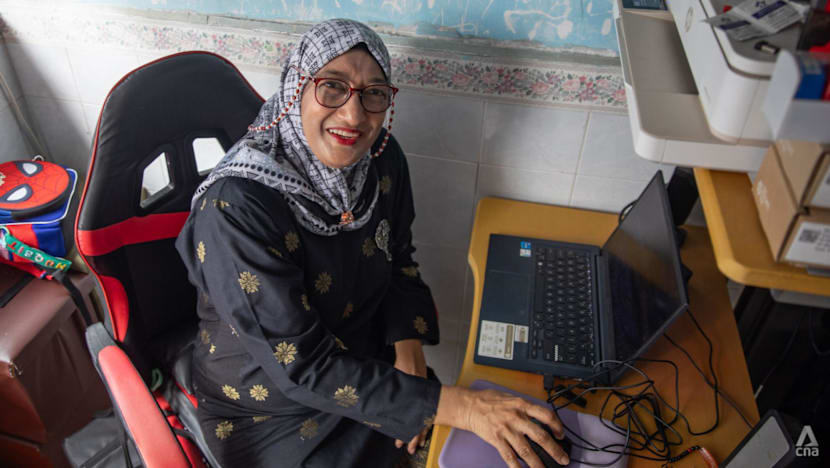
There are people who make you feel at home almost as soon as you meet them, and Ms Zarina Jaffar is one of them.
When I arrived at her home in Woodlands, the 58-year-old retiree was sitting on the couch, absorbed in her mobile phone. But the moment she heard me at the door, she looked up, broke into a smile and hurried to welcome me inside.
Her living room was sparsely furnished, but reminders of family were everywhere: photographs of her children receiving awards, toys belonging to her grandchildren, as well as their drawings decorating the doors.
Then, I saw the spread waiting on the dining table.
To my delight, Ms Zarina had cooked soto ayam for lunch. As a reporter, I am used to interviews across work desks and in meeting rooms, so getting to do one over homemade soup was a rare treat.
Ms Zarina, however, seemed more concerned about whether I was eating enough.
"Don't be shy, ah," she told me, keeping an eye on my bowl.
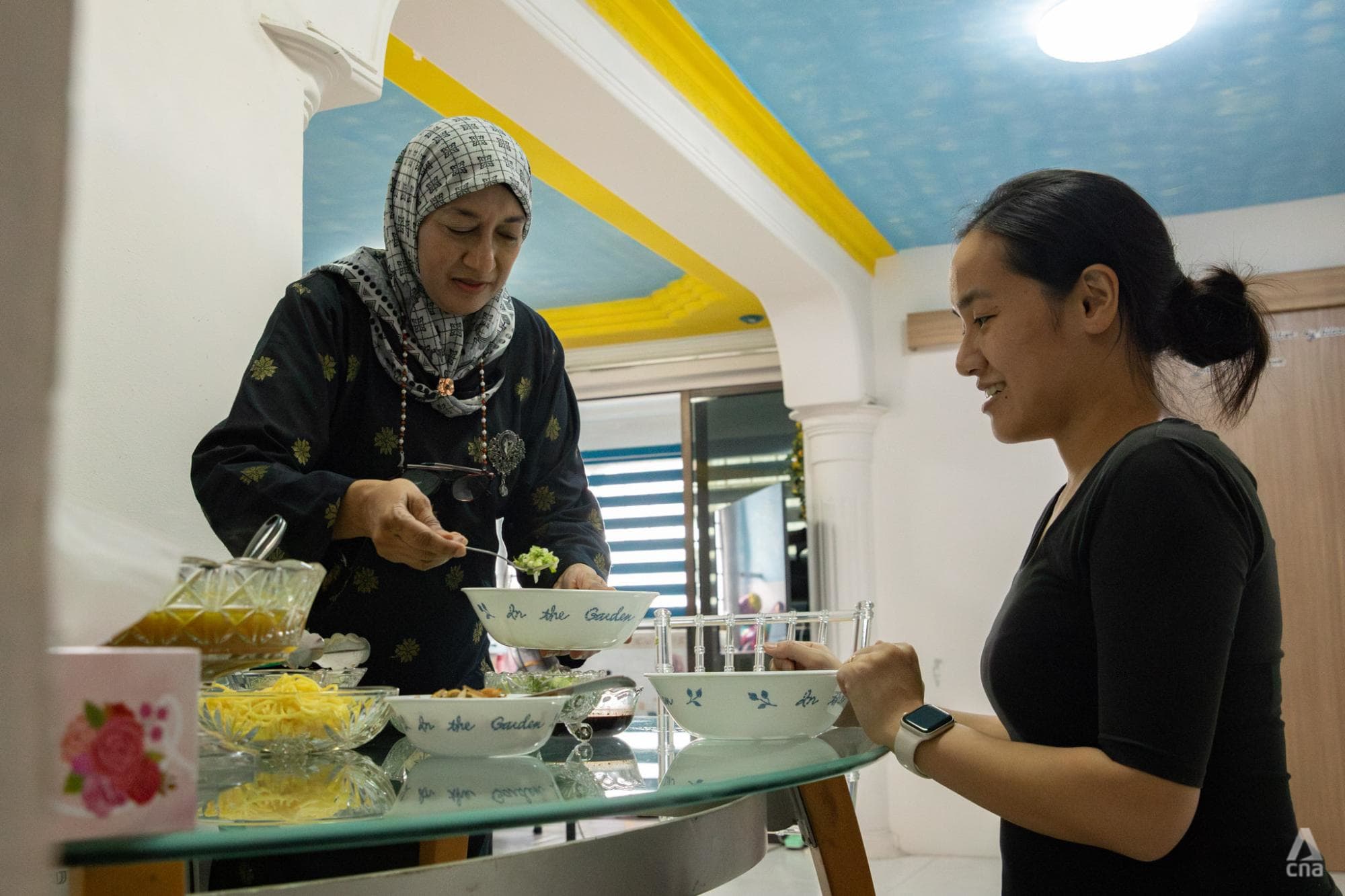
By the time lunch was over, I was full, but that did not stop her from packing more food for me to take home.
She told me that this was normal in her home. Whenever she cooks more than her family can finish, she posts on an informal Facebook community she co-founded in 2012, asking if there are any takers.
Sure enough, I spotted a stash of takeaway bags in her kitchen, ready for the next meal to be shared.
At first, it struck me as a sweet family habit. But the longer I spent with Ms Zarina, the more familiar the pattern became.
For the past 14 years, that instinct to share has extended far beyond her dining table.
Through her Facebook group, Ms Zarina and a small group of volunteers have helped hundreds of people with everything from groceries and utility bills to adult diapers and legal advice.
Yet Ms Zarina also knows what it is like to need help herself suddenly.
WHEN LIFE TOOK AN UNEXPECTED TURN
On Jul 14, 2008, Ms Zarina received a call telling her that her husband, a despatch rider, had been involved in an accident and that she should go to Tan Tock Seng Hospital.
"I was quite calm when I reached the hospital," she said, "but then we were told to go to the mortuary, and I realised he was gone."
On the day her husband was buried, her oldest child had to sit for an O-Level paper. There was barely time to grieve.
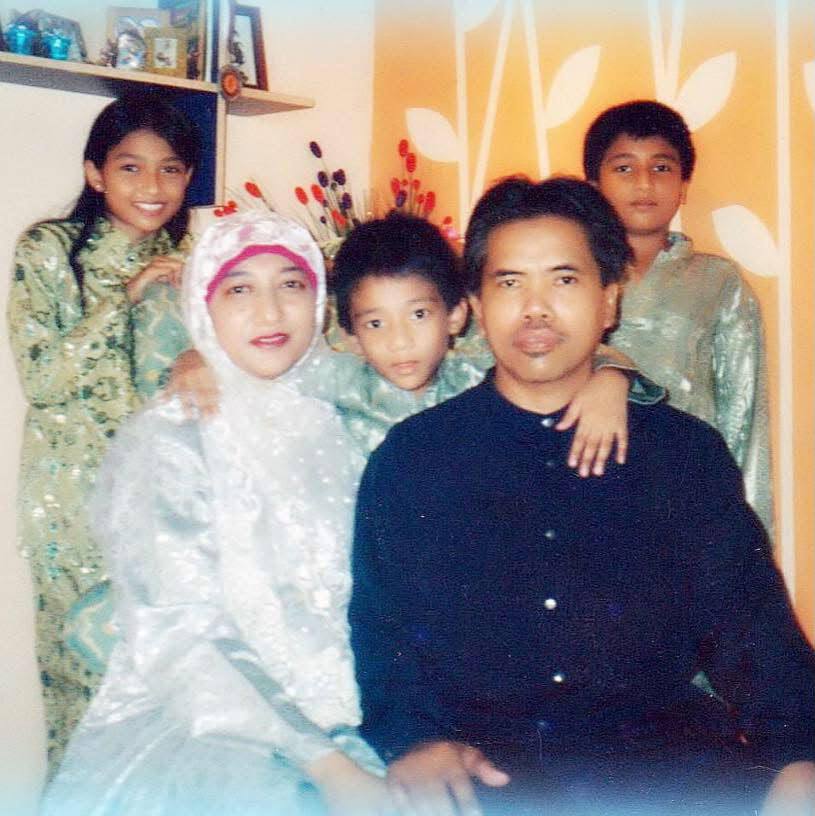
As her late husband was the family's sole breadwinner, Ms Zarina, who had been a housewife for about 15 years, suddenly had to raise their three children on her own. They were then aged 16, 14 and nine.
"Losing someone just like that, it took me three to six months to come to terms with what was happening," she said.
"I also had to reset my life and my priorities."
In the months that followed, she had to settle her husband's estate, wind down the delivery business they had been building and navigate paperwork she had never handled before.
More immediately, she needed an income. For the first time, she considered seeking financial assistance.
She had some savings and wanted only temporary help, but recalled being questioned about her home and the family's assets. She left without applying.
The experience would later shape her belief that people in crisis sometimes need help not indefinitely, but just long enough to regain their footing.
It wasn't until months later that Ms Zarina's grief hit her like a ton of bricks.
"One day, I opened a file belonging to my late husband and it came flooding back to me that he never failed to give me a card for my birthday and Mother's Day every year," she said.
"That's when I started crying uncontrollably."
Eventually, she found work as a relief teacher at a primary school, while her daughter received a Khoo Teck Puat Scholarship in 2011 for her undergraduate studies. After graduating and starting work as a financial analyst, her daughter helped to support her younger son's education.
Those early years after her husband's death, she added, were "very hard", but she had strong family support from her father and her four siblings.
"There are many families (who) do not have this," she said.
That realisation helped guide her approach to 3R Recycle Sharing is Caring, the Facebook community group she helped start in 2012.
FROM GIVING THINGS AWAY TO GIVING BACK
The 3R initiative began almost by accident. After seeing her sister-in-law packing some of her old belongings for an online "blessing" group, Ms Zarina jokingly suggested that she start one herself.
"Within half an hour, she called me and told me that she started her own group and that she would make me an administrative member," Ms Zarina recalled with a laugh.
What started as a platform for giving away unwanted items soon became something more.
The turning point came when Ms Zarina's sister-in-law encountered a cleaner living alone. The group visited the senior, but about a month later, he disappeared.
"Our administrative members started calling the police stations, hospitals ... and then we found out that he had a fall at the bus stop and was very ill, so he was placed in a nursing home," Ms Zarina said.
The episode showed them that their growing network could do more than pass on unused items.
Today, 3R has 14 administrators and a network of ad-hoc volunteers, who help those in need with everything from getting groceries and adult diapers to providing small sums for an EZ-Link fare card or utility bill top-up. Most of these are funded by donors contributing to individual cases.
"If you give me S$10, I make sure you know where your S$10 goes," Ms Zarina said.
By this point, I had seen plenty of Ms Zarina's softer side. She had fed me, packed food for me and spoken fondly about the families she had come to know.
So when I asked how she decided who genuinely needed help, her answer caught me slightly off guard.
As it turned out, she could also be very firm.
She said that some people expect 3R to help them because they are needy or poor, but she does not fully agree.
Her platform readily helps with a first request for a small amount of cash. But if someone keeps returning, she and the other administrators want to know more.
"Sometimes, you see people with the wrong mentality where they don't want to work or they don't want to work for themselves because they can get free money, easy money," she said.
"When they come to me, I will just tell them off. I have to be firm because I'm holding people's trust."
Ms Zarina recalled people questioning why 3R once helped a family living in an executive maisonette at a public housing estate. The family's 10-year-old daughter had leukaemia and both parents eventually lost their jobs after taking time away to care for her.
"Some of my beneficiaries might seem financially okay (compared to others), but everybody has, at some point in their lives, difficult phases or challenges," she said.
"Like, for me, I lost my husband when my kids were young, so I needed help that time."
In an unexpected way, 3R would also give something back to Ms Zarina.
Several years after the initiative began, a man posted on the Facebook group offering free deliveries to anyone who needed them.
Ms Zarina remembered thinking that he was crazy.
"I was sure many people were going to take advantage of him."
The 3R administrators reached out to him and invited him to volunteer. When another member pulled out of a grocery distribution at the last minute, Ms Zarina ended up meeting the man alone and making the deliveries together.
Expecting a much older man, she was surprised to learn that he was only a year older than her and was struck by how compassionate he was.
That was how Ms Zarina met her future husband Abdul Halim Sam, who worked as a tanker truck driver.
Even though they grew close over the next three years, she never imagined remarrying.
"My kids liked him, and they were the ones who told me that I should settle down with him," she said. "But I wanted to wait until they were older and married."
Shortly after her daughter got married, the pair tied the knot in January 2021.
It was a simple affair with just 20 guests due to the COVID-19 pandemic.
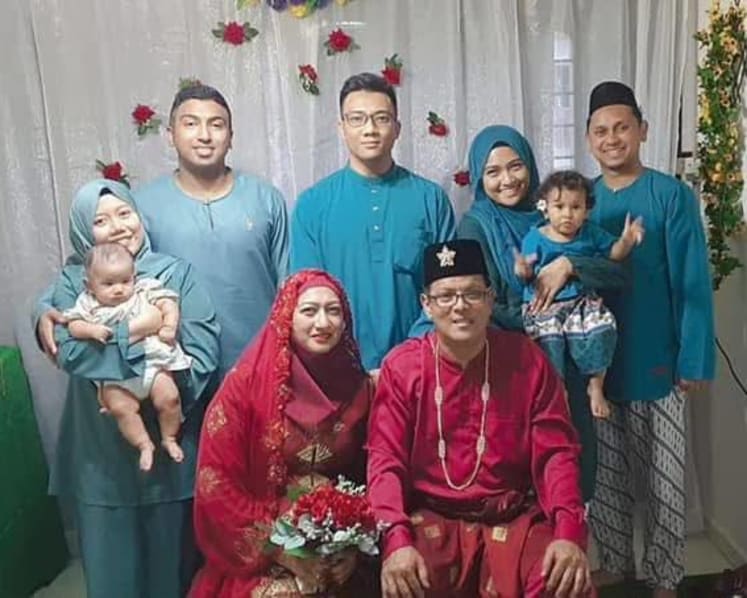
Today, Ms Zarina's children and grandchildren have formed a strong bond with her second husband – close enough to even go on holidays with him when she is not there.
After lunch, I accompanied Ms Zarina to visit someone she has known for more than a decade. Before we left her home, she put together a goodie bag with a whiteboard and some markers.
"Izwan is going to be so excited when he sees the goodie bag," she said, sounding excited herself.
Ms Zarina has known 26-year-old Huzairul Izwan Hussman, who has cerebral palsy, since he was 12, when his mother Zainon Arshad was among those she helped.
Although Madam Zainon died in 2019, Ms Zarina has remained a presence in Mr Izwan's life. Through donated funds, 3R also buys adult diapers for him every month and for many others with similar needs.
When we arrived, Ms Zarina was right about the gift – his eyes lit up as she showed him the bag.
She laughed, moved closer and gently patted his head as she spoke to him in Malay.
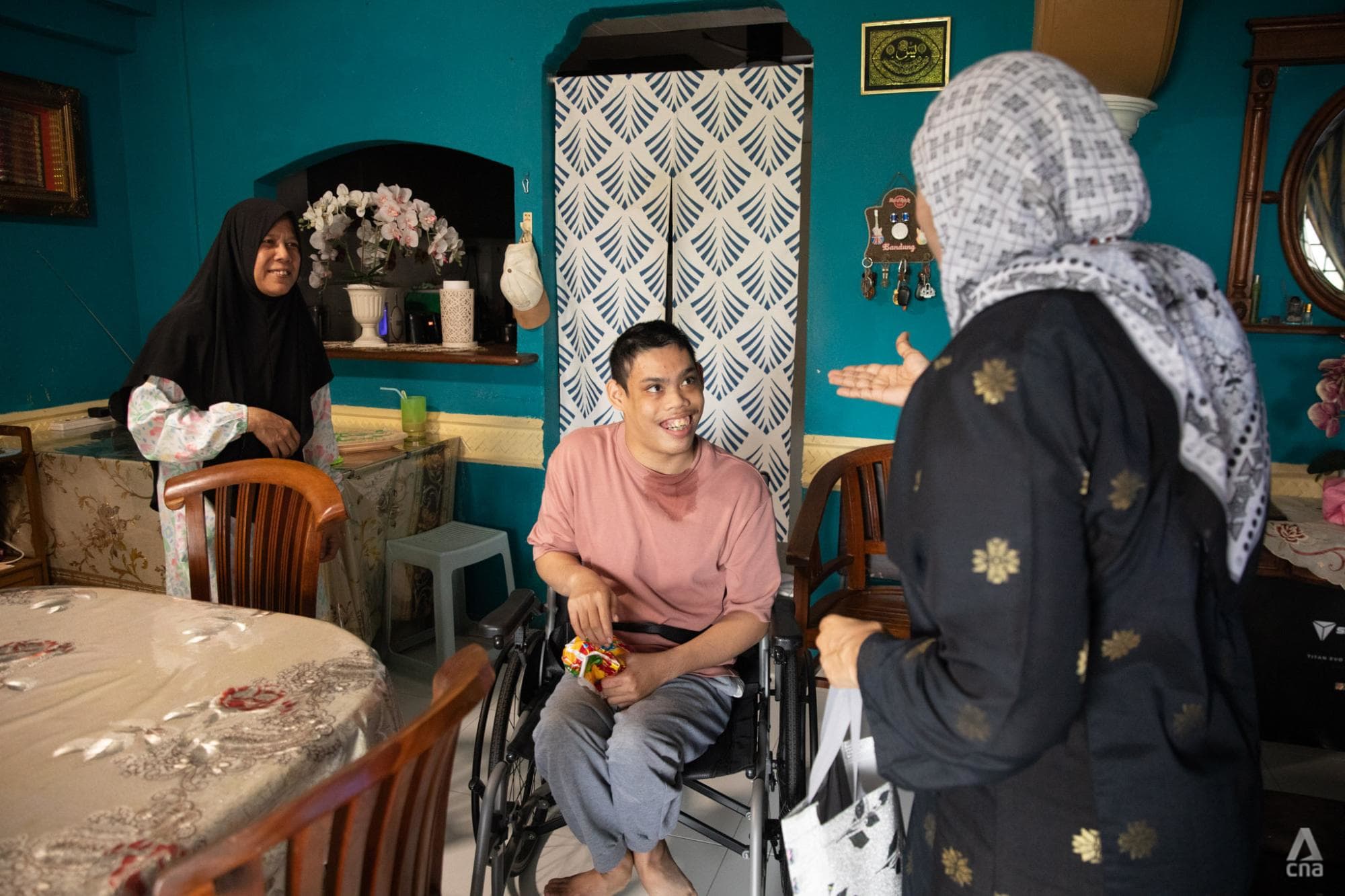
Soon, Mr Izwan's helper and Ms Zarina were deep in conversation, chatting with the familiarity of old friends.
I understood almost none of it, but Ms Zarina noticed. Every so often, she turned to translate for me before slipping back into the conversation.
A MOTHER'S LEGACY
Watching Ms Zarina with Mr Izwan, I could not help noticing how naturally she slipped into the role of caregiver.
Her caregiving ways were not only confined to 3R over the years. She held jobs in the education sector and served as a Residents' Committee manager looking after residents in Nee Soon.
Her own journey as a mother, however, had not always been easy.
After a difficult period in his youth following his father's death, Ms Zarina's oldest son had a brush with the law.
She declined to have details of his offence published, but what followed was a long road towards rebuilding his life.
Once she saw that her son was genuinely trying to turn over a new leaf, she became determined that his past should not define his future.
For about a decade, she wrote to employers, institutions and the authorities whenever his record became an obstacle. There were many rejections along the way, but they did not stop her from trying.
At one workplace, her son became a supervisor in the student care industry within nine months, only to lose the position because of his previous conviction.
"He made the effort to be a better person. I thought it wasn't fair that he wasn’t given a chance," she said.
She added that her son had been employed through the former Singapore Corporation of Rehabilitative Enterprises, now rebranded as Yellow Ribbon Singapore, and his employer knew about his past convictions.
"I refused to give up. So that kept me going and made me fight all the way for him to be where he is now."
Eventually, he found meaningful work at Rainbow Centre, working with children with special needs. He is now pursuing a diploma, hoping to become a full-time special education teacher.
"Now, he can fight for himself," she said proudly. "He can stand up for himself."
When Ms Zarina received the Exemplary Mother Award from Muslim non-profit organisation Jamiyah Singapore in 2025, she learnt that her daughter had secretly nominated her.
Her fight for her son's second chance was among the reasons she was selected.
As our interview wound down, I asked Ms Zarina which she was prouder of: her charity work or what she had done for her son.
Her response came without hesitation.
"Everybody can do charity. I mean, if you give someone in need just S$2, that's also charity, right?
"But what I did for my son … many mothers want to do something for their children, but they are just not sure or they give up easily when they fail. But I refuse to give up."
For all the families Ms Zarina has helped, she still sees herself first as a mother.
Looking back, however, she acknowledged that there were periods when she became so consumed by charity work that her own children may have felt neglected.
"I do kind of feel guilty about not spending enough time with my kids," she said.
"The work we do in 3R can be very overwhelming. I get a lot of messages from people asking for help, even at night, and I try to reply to as many as I can.
"And then, I'm also busy with house visits or making calls or emails on behalf of those who need help."
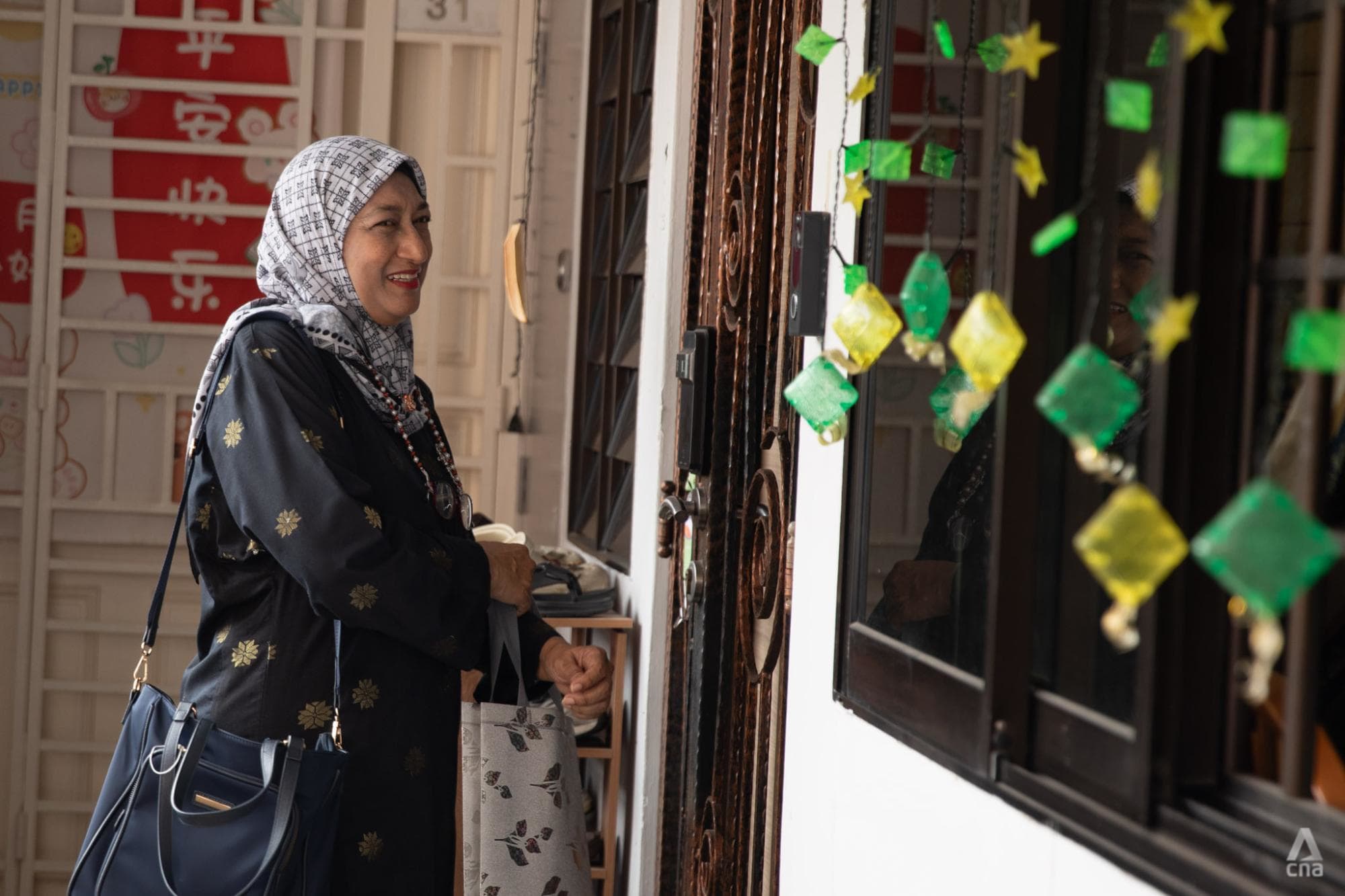
As her children grew older, they came to understand why the work mattered, Ms Zarina said, and her son also supported the charity work.
At 58, she is beginning to slow down, too.
In the early years of 3R, she could make 10 or 15 house visits in a day. Now, even five leave her exhausted.
She has told herself that she might stop when she turns 60.
When she said this, I wasn't entirely convinced, and Ms Zarina didn't sound convinced either.
There is no grand plan for 3R. It was never intended to become a formal organisation, and Ms Zarina does not know exactly what its future holds.
It has evolved with people's needs, and she expects that it will continue to do so.
"I started this to guide myself through my own personal pain, but helping people has really become my life's passion."
KioskNews shows a cleaned-up reading view extracted from the publisher’s page — the original always lives on their site, not ours.