'No PUC, No Fuel' Rule To Be Enforced Across Delhi-NCR From October 1
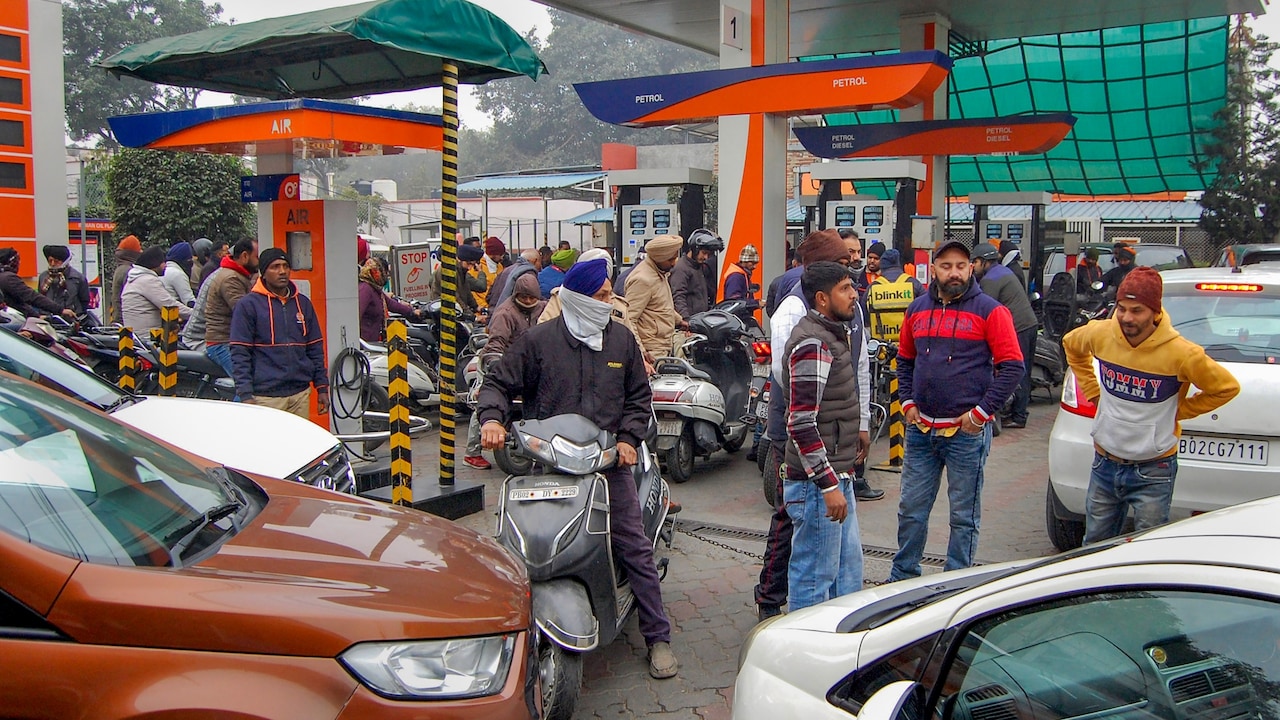
From October 1, no valid Pollution Under Control (PUC) certificate could mean no fuel for vehicles across Delhi-NCR.
In Delhi, the "No PUCC, No Fuel" drive will be enforced in "mission mode" at all 500 fuel stations equipped with Automatic Number Plate Recognition (ANPR) cameras, with action planned against pumps that fail to comply.
The aim is to make it harder for vehicles to stay on the road without a valid pollution certificate. The fuel restriction applies across the NCR from October 1 under the Commission for Air Quality Management's Direction 101.
But does a valid PUC actually mean your vehicle is a low polluter?
Not necessarily, according to Amit Bhatt, India Managing Director, International Council on Clean Transportation (ICCT).
Here's what the test checks, what it misses and why that matters.
What Does A PUC Test Actually Check?
For petrol, CNG and LPG vehicles, the PUC test measures carbon monoxide (CO) and hydrocarbons (HC). Diesel vehicles are tested for smoke opacity, simply put, how much the exhaust blocks light.
But some important pollutants are not directly measured.
"In short, the PUC test misses key pollutants such as PM or PN and NOx," Bhatt told NDTV.
PM means particulate matter, PN is particle number and NOx refers to nitrogen oxides. NOx matters because it can contribute to fine-particle pollution and ground-level ozone.
Put simply, a valid PUC means your vehicle passed what was tested. It does not mean every important pollutant coming from its exhaust was checked.
Can A Vehicle Pass PUC And Still Pollute?
Yes.
A vehicle can have a valid PUC and still produce high NOx or particle emissions because these are not captured by the test, Bhatt said.
What a vehicle emits on the road can also change with its age, mileage, maintenance, driving habits and load.
An ICCT-led study measured more than 100,000 vehicles across 20 sites in Delhi and Gurugram. BS-VI vehicles were significantly cleaner overall, but commercial vehicles stood out: BS-VI taxis and light goods vehicles emitted 2.4 and five times more NOx, respectively, than private cars.
The study also found high real-world emissions among CNG vehicles in some categories, challenging the idea that CNG automatically means "clean".
What About BS-VI Vehicles?
BS-VI vehicles generally pollute less. But their pollution-control technology is also more sophisticated.
Modern diesel vehicles use diesel particulate filters, or DPFs, to trap soot. Yet the regular diesel PUC test still relies on smoke opacity.
Bhatt said the test does not directly measure particle number or NOx and therefore cannot directly assess how well all the vehicle's advanced pollution-control systems are working.
That matters for newer diesel vehicles. The European Commission says even vehicles with defective or tampered DPFs can pass an opacity test without the problem being detected, and recommends particle-number testing for newer diesels fitted with these filters.
Bhatt added that a malfunction warning-light observation can be recorded during PUC testing, though this is not consistently followed in practice.
Will 'No PUC, No Fuel' Help?
It should make an expired certificate harder to ignore and improve compliance.
But more valid PUC certificates do not automatically mean the same reduction in pollution.
Bhatt said the benefit will depend on whether the system catches high polluters and gets them repaired or off the road. Some positive impact is expected, he said, but more investigation is needed to quantify it.
Testing quality is another issue.
A decoy-vehicle study covered 22 randomly selected PUC centres in Delhi and found deficiencies in adherence to standard procedures. Bhatt also pointed to large variations in readings for the same vehicle and under-reporting of failed tests.
Even a perfectly conducted PUC test, however, still does not directly measure NOx and particle emissions.
Is There A Better Way?
One option is roadside remote sensing.
Think of it as an emissions scanner. Vehicles drive past while equipment measures their exhaust, allowing authorities to screen large numbers of vehicles under actual road conditions and flag the biggest polluters.
Bhatt said remote sensing could be combined with on-board diagnostics and particle-number testing.
For him, better testing is only part of the answer. Delhi should move towards phasing out registration of new internal-combustion-engine vehicles, expand the EV transition to more vehicle categories and across Delhi-NCR, and use real-world testing to identify which vehicles pollute the most.
So, What Does Your PUC Really Tell You?
It tells you that your vehicle cleared the pollutants covered by the current test. It does not establish that the vehicle has low emissions across all major pollutants.
From October 1, keeping a valid PUC will become harder to avoid.
The bigger test is whether the system can identify the vehicles actually polluting the most.
KioskNews shows a cleaned-up reading view extracted from the publisher’s page — the original always lives on their site, not ours.