GROUNDUP: High court sets aside multibillion-rand ARV contracts over procurement irregularities
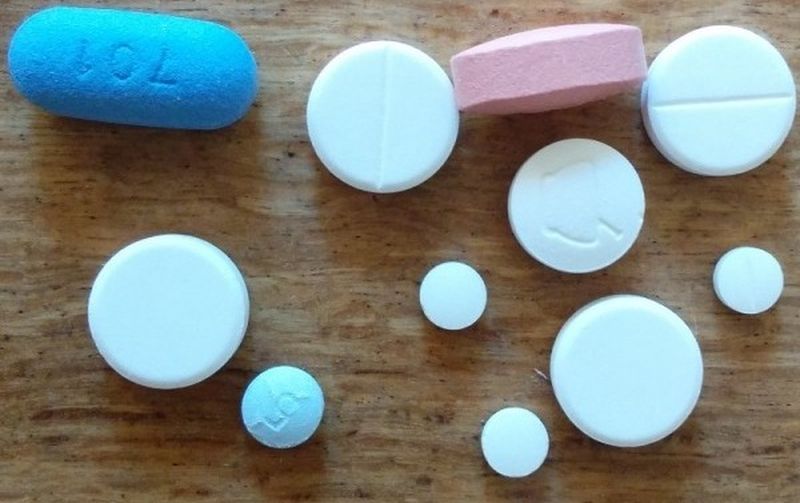
The national Department of Health has been ordered to reconsider the companies awarded “one of the largest and most significant tenders of its kind”.
Tenofovir, lamivudine and dolutegravir are arguably the three most important medicines in South Africa. They constitute the first-choice standard ARV regimen in the South African treatment guidelines for adults. Millions of South Africans take these three drugs, usually one pill every day. If there were to be stockouts of these medicines, it would potentially be life-threatening for many people.
The total tender for ARVs, which came into effect in December 2025, is worth R15.5-billion, of which R12.6-billion is for fixed-dose combinations of the drugs packed in one-month and three-month packages.
The tender was split between various pharmaceutical companies. Local manufacturer Cipla Medpro Manufacturing, which has a strong track record of supplying drugs in the market, did not receive an award to provide the one-month or three-month packs, and only scored three smaller awards worth R215-million.
Cipla, along with another unsuccessful bidder, Hetero Drugs South Africa, approached the Gauteng Division of the High Court in Pretoria. Cipla wanted some of the tender awards to be set aside, and Hetero wanted its own bid to be reconsidered.
In a judgment handed down this week, Acting Judge Graham Girdwood ruled that there had been several irregularities in the awards handed out for the one-month and three-month packs.
‘Unlawful and unconstitutional’
He set the awards aside, finding they were unlawful and unconstitutional, and directed the Department of Health to redo the split and award of the two items within 120 days. In the meantime, current suppliers would keep delivering to avoid a drug shortage.
The setting-aside will also only take effect 90 days after the department finalises the new awards, so that current suppliers keep delivering until the companies chosen in the redone award are ready.
In terms of his order, the adjudication scores for the manufacturers not implicated in any irregularity would not be affected by the review of the “splits” (to several companies) and overall awards.
The judge specifically ordered that the bids of Innovata Pharmaceuticals and Viatris Healthcare be excluded from reconsideration, because he found they had not qualified to pass the first stage of the bidding process.
He also said the final bid prices of Barrs Pharmaceuticals and Aurobindo Pharma had to be “restored to their pre-negotiation prices” insofar as they did not qualify for local manufacturing preference.
He ordered that the scores of Innovata and Barrs be adjusted because they had been given historically disadvantaged individual (HDI) points without proving the ownership they claimed.
Innovata and Barrs are subsidiaries of Avacare and went into business rescue in December 2025. Days later, Barrs was out of stock of both items it was supposed to supply. They exited business rescue this year.
The judge ordered the department to conduct an investigation to determine if Innovata and Barrs had colluded in their bids.
Judge Girdwood, in his lengthy ruling, addressed each of Cipla’s challenges, which raised issues of non-responsive bidders, poor past performance, wrongful granting of local manufacturing status, failure to substantiate HDI claims, and possible collusion.
No valid licence
On the issue of the bids by Innovata and Viatris, he said it was common cause that they did not have a valid licence for their Isando-based manufacturing site at the time of bid closure.
“A licence that has expired is not, and was not on bid closure date, a valid licence,” he said.
This meant that they should not have progressed beyond the first stages of the adjudication process.
Cipla had contended that Innovata’s past performance should have been taken into account. The company had been unable to perform under a previous contract, which it had asked the department to cancel.
The Bid Evaluation Committee had treated this history as “materially relevant”. But the Bid Adjudication Committee, which makes a final recommendation for the awards based on the evaluation committee’s recommendations, said there was no evidence that Innovata had been prohibited or restricted from doing business with the state. It directed that Innovata be considered, with reduced volumes, and awarded it an 11.38% allocation.
Judge Girdwood said: “Formal debarment is reserved for the most serious cases of established wrongdoing and is not a precondition for, nor a proxy for, an assessment of ordinary supply-performance risk.” He found this was a ground to review the tender.
Double standard
He also found that bidders had not been judged on the same standards in conferring local manufacturing status. The department had simply accepted claims of historically disadvantaged individual status from Innovata and Barrs without investigation, which had pushed up their scores and rankings in the pool of bidders.
With regard to the alleged collusion between Innovata and Barrs, he said the department should have investigated further before awarding “substantial volumes” to both bidders.
Judge Girdwood dismissed Hetero’s application, saying the department had a “reasonable, rational suspicion of collusive bidding” with other companies, but “the review is not the occasion to determine, conclusively, whether Hetero in fact colluded”.
He noted the company had not participated in the hearing. He ordered it to pay the costs of the respondents on a punitive scale for having to “meet a case that was never argued”.
He ordered the minister and director-general to pay Cipla’s costs. DM
KioskNews shows a cleaned-up reading view extracted from the publisher’s page — the original always lives on their site, not ours.