SCHOOL VIOLENCE: Under fire: Gun in a school backpack — why search-and-seizure operations aren’t enough
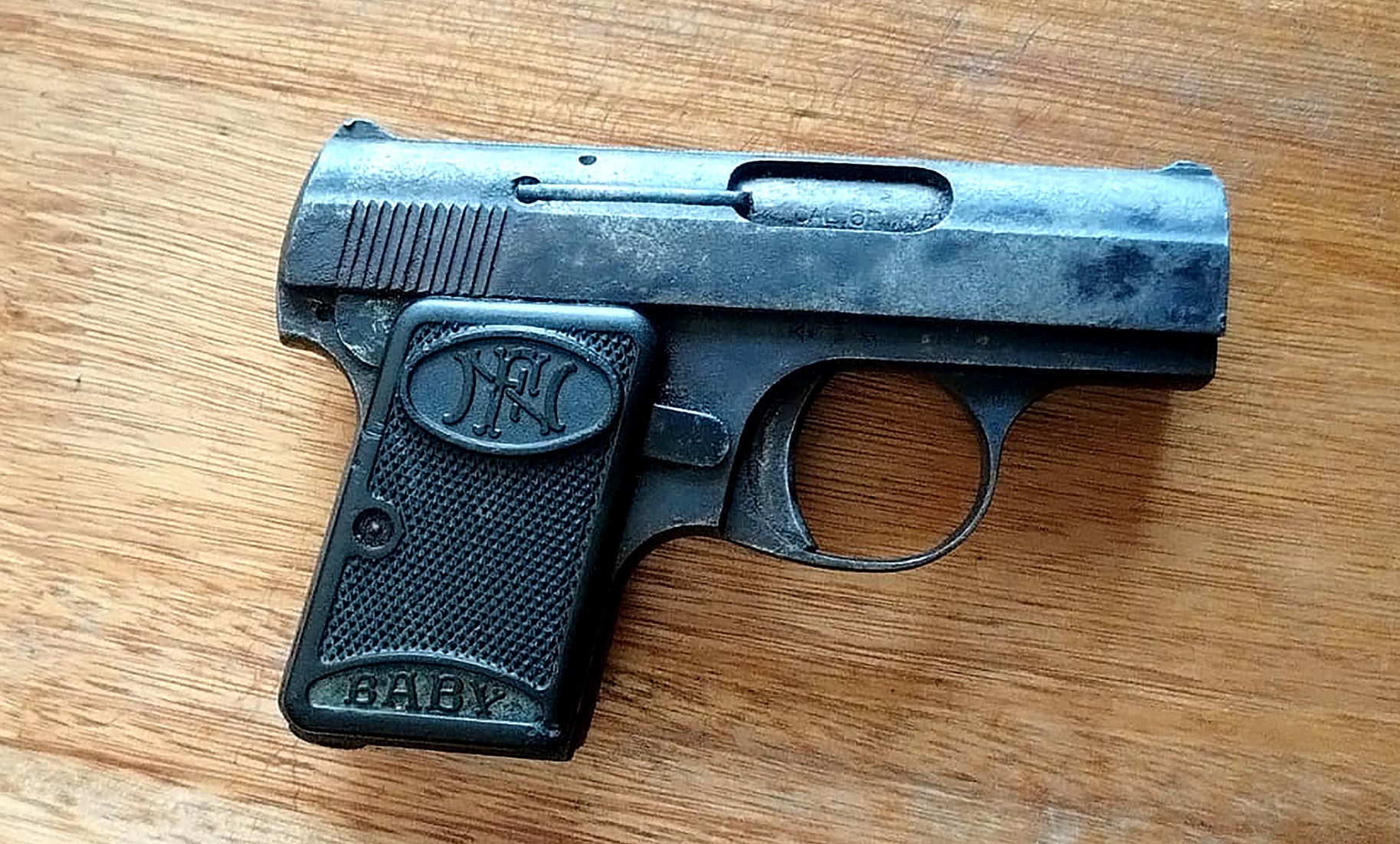
On 28 August 2026, two learners at Saxonsea Secondary School in Atlantis were arrested after a firearm was found in a backpack. Police later said the firearm belonged to a deceased person, highlighting how unsecured firearms can easily end up in children’s hands.
Western Cape Education Department (WCED) spokesperson Bronagh Hammond said the learners had since been withdrawn from the school by their parents, meaning disciplinary procedures could not proceed.
A similar incident occurred in Macassar in November 2025, when two teenagers were arrested after police found modified imitation firearms and live ammunition, following reports that a firearm had been brought into a school.
But these incidents cannot simply be reduced to learner misconduct or a failure of school security.
“While the overwhelming majority of learners comply with school rules, there are unfortunately occasions where learners bring weapons onto school premises,” said Hammond.
“This may occur for a variety of reasons, including perceived self-protection while travelling to and from school, attempts to intimidate others, or other inappropriate motivations. Regardless of the reason, the possession of weapons at school cannot be tolerated and must result in appropriate intervention and disciplinary action.”
/file/attachments/orphans/Vince-learners-guns-atschool3_448039.jpg "Bronagh Hammond, WCED Spokesperson speaks to the media after the meeting with Milnerton High School on October 23, 2025 in Cape Town, South Africa. This comes after community members protested over a video showing a pupil being brutally assaulted. (Photo: Gallo Images / Die Burger / Theo Jeptha)")
The problem of dangerous weapons in schools is not new. In its May 2025 response to the national budget, the South African Democratic Teachers’ Union (Sadtu) warned that school safety was being overlooked in the government’s funding priorities.
Sadtu said the budget made “no mention of school safety” despite schools being vandalised and robbed and learners bringing “all assortments of dangerous weapons” onto school premises.
More weapons at schools
The Atlantis incident is not isolated. Across provinces, official figures and parliamentary records point to a problem extending beyond the Western Cape, although the national scale remains unclear.
/file/attachments/orphans/Vince-learners-guns-atschool1_924142.jpg "SaxonSea Secondary School in Atlantis. (Photo: Supplied/Source)")
In April 2026, then DA Eastern Cape (EC) Shadow MEC for Community Safety Yusuf Cassim (now the Deputy Minister of Higher Education and Training) said 70 learners had been arrested for carrying firearms between 2021/22 and 2025/26, including 21 in the latest financial year. Police also recovered 46 firearms from schoolchildren during the five-year period.
The figures were contained in a written reply to parliamentary questions submitted by the DA in the EC legislature, highlighting the extent to which firearms have become part of the security challenges confronting schools.
Access and control
The figures point to a broader question: How are firearms reaching learners, through family members, criminal networks or gang associates? And what is being done to stop them?
In February, EFF National Council of Provinces MP Khanya Ceza questioned Basic Education minister Siviwe Gwarube about unsafe schools in Mpumalanga. Gwarube acknowledged that violence in and around schools threatens learners’ constitutional right to basic education and undermines teaching and wellbeing.
/file/attachments/orphans/Vince-learners-guns-atschool5_977365.jpg "Siviwe Gwarube, Minister of Basic Education, during a Daily Maverick interview in Johannesburg on Jul 28, 2026. (Photo: Leon Sadiki)")
On 24 June, DA MP Ciska Jordaan asked Gwarube about search-and-seizure operations after the SAPS recorded eight murders, 33 attempted murders and 93 rapes involving 69 learners on educational premises in the fourth-quarter crime statistics.
Gwarube said during the first term of the 2026 academic year, 498 search-and-seizure operations were reported by provinces that submitted data. She did not say what was found during the searches.
Guns then criminal recruitment
The picture emerging in some provinces suggests that school safety is no longer simply about individual learners carrying weapons or drugs. Repeated searches are exposing how criminal activity outside the school gates is penetrating classrooms, and, in some cases, drawing learners into those networks.
In Gauteng, the Education Department has increasingly relied on hard-security measures, including SAPS search-and-seizure operations, private security and CCTV. By early September, searches had been conducted at 23 schools, with private guards deployed at 422 schools and CCTV cameras installed at 606 sites.
Earlier operations had uncovered knives, pangas, drugs and vapes. In one case, a learner was found with a substantial quantity of dagga, while another learner allegedly told authorities he had been recruited by a local drug dealer to sell the drug.
By 26 August 2026, authorities had conducted search-and-seizure operations at 17 schools, targeting drugs, weapons and other prohibited items. Searches were conducted at Baleseng Junior Secondary School, Tiyelelani Secondary School, Ngaka Maseko Secondary School, Holy Trinity Secondary School and FR Smangaliso Mkhatshwa Secondary School, bringing the total to 17 schools.
Mpumalanga presents a similar picture. Repeated multi-agency searches have uncovered knives, a panga, hammers, dagga, illicit cigarettes and crushed pills.
In March 2025, an operation at two secondary schools in Masoyi recovered 60 packets of dagga, two knives and two toy plastic guns. Police also received information about a house allegedly selling drugs to learners. Two months later, six people were arrested for allegedly selling drugs to learners.
By May 2026, Mpumalanga Premier Mandla Ndlovu said the province had recorded 25 incidents involving stabbing and gun-related violence at schools during 2025, including two murders on school premises.
Cause and effect?
Academic Philangenkosi Shabangu, a lecturer in the Department of Curriculum Studies and Higher Education at the University of the Free State, and a joint PhD Fellow under the Wits-Edinburgh Sustainable African Futures Doctoral Programme, says that school violence is too often reduced to the behaviour of “recalcitrant” learners.
But he argues that it would be better understood as an expression of structural violence, poverty, unemployment, inequality, substance abuse, community violence and social exclusion that shape young people’s lives long before they enter the classroom.
Shabangu’s perspective is particularly relevant to the Atlantis case. The discovery of a firearm allegedly belonging to a deceased person raises questions that go beyond the two learners arrested: What kind of environment allows an illegal firearm to reach a schoolbag? Who has access to these weapons? And what pressures might lead a learner to carry one into a classroom?
/file/attachments/orphans/Vince-learners-guns-atschool4_539654.jpg "Academic Philangenkosi Shabangu, a lecturer in the Department of Curriculum Studies and Higher Education at the University of the Free State, says school violence should be understood as an expression of structural violence, including poverty, unemployment, inequality, substance abuse, community violence and social exclusion that shape young people’s lives beyond the classroom.
<br>(Photo: University of Free State)")
Shabangu points to more than 800 learners in Mangaung who have been profiled as potential gang members, and 245 schools in Gauteng identified as high-risk for violence. The figures illustrate how schools are increasingly being forced to confront social problems that extend far beyond the classroom.
Searches, seizures, police patrols, metal detectors and learner profiling can prevent immediate harm, Shabangu argues. But they cannot address the conditions that make violence, gang involvement or carrying a firearm seem necessary to vulnerable young people.
Without confronting those conditions, South Africa (SA) risks treating the symptoms while leaving the causes untouched. A structural-violence lens therefore requires asking not only why learners become violent, but why some communities continue to experience chronic underinvestment while others have safer neighbourhoods and better-resourced schools.
Creating safer schools, Shabangu argues, requires more than surveillance and policing. It demands investment in social justice, community engagement, psychosocial support, restorative justice, trauma-informed teaching and meaningful opportunities for young people.
“Until structural injustices are addressed with the same urgency as security deployments, school violence is likely to remain a recurring symptom of deeper structural failures. Safe schools cannot be built on surveillance alone; they must be built on justice,” Shabangu explains.
Wider failure to control firearms
Claire Taylor, a research and policy analyst at Gun Free South Africa (GFSA) who has worked on gun-violence prevention for more than 15 years, said the problem of firearms in schools cannot be separated from SA’s wider gun culture.
She said persistent myths portray guns as effective tools of self-defence or as symbols of respect and power. These perceptions are reinforced by gun lobbyists and the firearms industry, despite evidence from SA and internationally suggesting that firearm ownership does not necessarily make people safer and can increase risks in homes and communities.
/file/attachments/orphans/Vince-learners-guns-atschool2_235532.jpg "Yolande Baker (L) and Claire Taylor (R) from Gun Free South Africa during the launch of a class action lawsuit over Prinsloo weapons on May 10, 2023 in Cape Town, South Africa. According to Gun Free South Africa (GFSA), a total of 1066 murders, 1403 attempted murders and 315 other crimes can be linked to firearms that Christiaan Prinsloo and David Naidoo stole from police possession and sold to among other things, gangs on the Cape Flats. (Photo: Gallo Images / Die Burger / Jaco Marais)")
In the Western Cape alone, more than 30,000 firearms are effectively outside the licensing system because their owners have died and heirs have failed to regularise ownership, Taylor said. Such firearms risk being lost or stolen and entering the illegal market.
Taylor said proposed amendments to the Firearms Control Act 60 of 2000 would strengthen controls over firearms in deceased estates but argued that other loopholes also needed to be closed.
She also pointed to Section 140, which allows schools to be declared Firearm Free Zones. The GFSA piloted the approach at 27 schools with the SAPS in 2002, with 70% of participants reporting that they felt safer.
But perhaps the biggest gap is what we don’t know.
There is no reliable national picture of how many learners carry firearms, how they obtain them or how many are caught up in illicit supply chains.
“We don’t have data on how many learners carry guns or are drawn into the illegal [firearms] trade, and South Africa has no system tracking firearm incidents in schools nationally,” said Taylor. DM
KioskNews shows a cleaned-up reading view extracted from the publisher’s page — the original always lives on their site, not ours.