Far from home, close to grief: why millions of Filipino migrants dread Undas
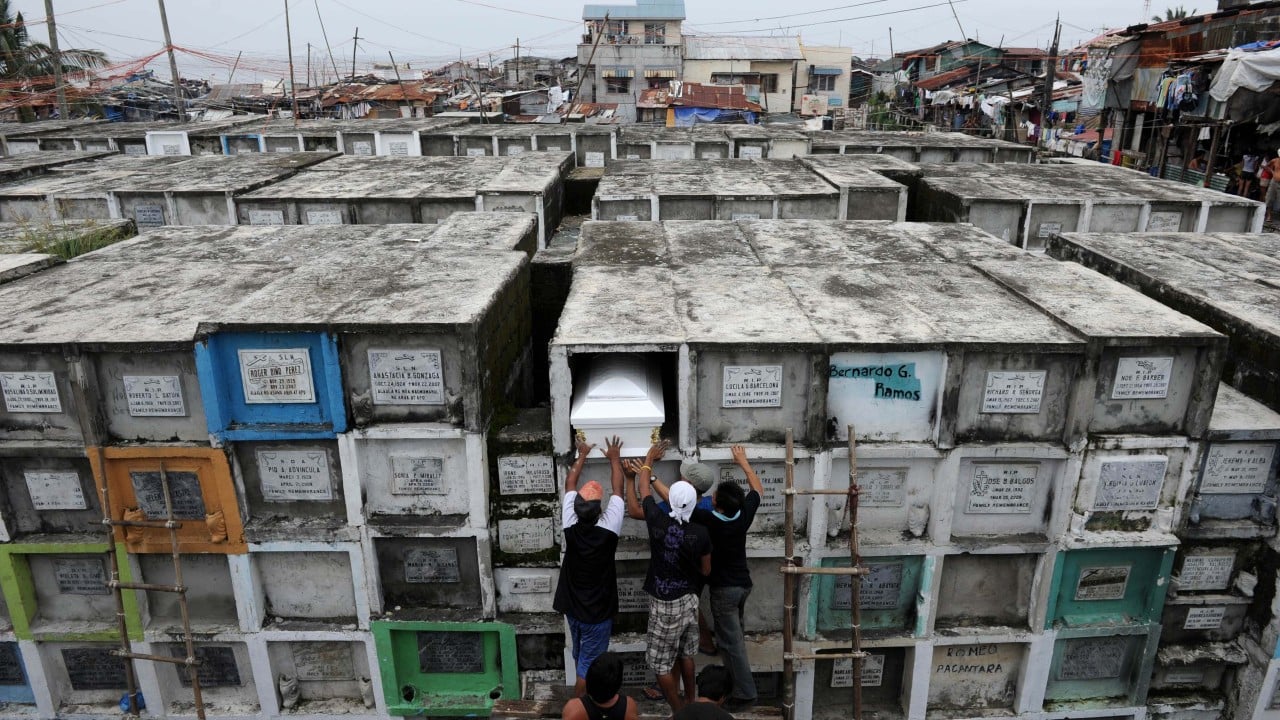
For over three decades, Dolores Balladares Pelaez has lived and worked in Hong Kong without once returning to the Philippines for Undas, the annual two-day observance honouring the dead.
This year, she is arranging prayers from afar for her late father and four siblings, but will once again miss the gathering back home.
On Thursday morning, the 56-year-old domestic helper called her mother and niece in Laguna province to discuss hiring a prayer leader to visit the family home. Her sisters-in-law were also invited to remember their deceased husbands.
Such gatherings usually lasted four to five hours, Pelaez said, after which the family provided food and drinks to the prayer group. Pelaez will watch it all through a screen in Hong Kong.
“During the pandemic, I wished to go home and see my siblings, but [because of] uncertainties at work and difficult conditions, I decided not to leave Hong Kong,” she said.
Observed on November 1 and 2, Undas combines All Saints’ Day and All Souls’ Day. The tradition sees millions of Filipino families visit cemeteries, offer prayers and hold family gatherings. Rooted in the Catholic calendar, the occasion is as much a celebration of family unity as a solemn remembrance.
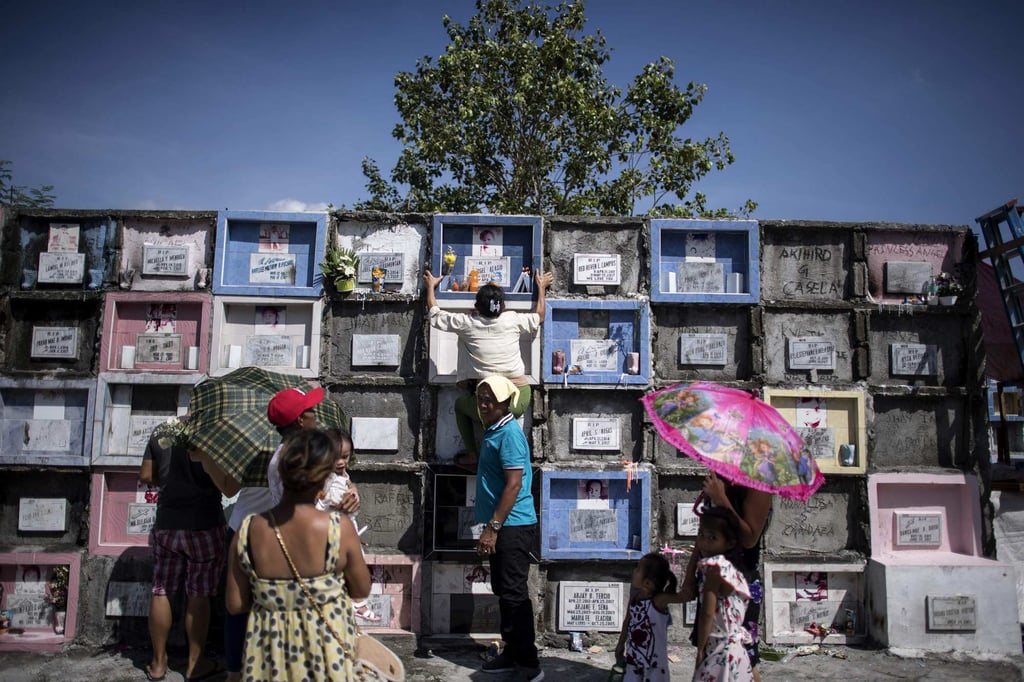
For Pelaez and countless other overseas Filipino workers, the occasion carries a dual heartache: mourning the departed while separated from the living relatives who gather to keep their memories alive.
From abroad, migrant workers send money, coordinate preparations and pray quietly on their own. But recreating the shared meals and stories that animate the tradition remains nearly impossible.
Pelaez, who chairs the migrant alliance United Filipinos in Hong Kong, said her trips home usually coincided with Christmas or the end of a two-year employment contract rather than Undas.
“In my 32 years in Hong Kong, I didn’t spend Undas in our country,” she said.
Her prayers fit around her single rest day each week, lighting candles at a local church and calling home.
Age and grief have also shaped how her family marks the holiday. Her 93-year-old mother now leads prayers at home with help from younger relatives. Visiting the cemetery would take between three and four hours, Pelaez said, making the journey too physically demanding.
The ashes of one of Pelaez’s sisters, who was cremated during the Covid-19 pandemic, are kept at the family home, where relatives plan to gather and light candles on Saturday.
In Kuala Lumpur, Salve “Den” Hertez-Esta begins preparations a week in advance, sending money to her siblings in Bula, Camarines Sur province in the Bicol region.
“I send money for paint, candles, food and the electricity and water bills,” she said.
Hertez-Esta and her family pooled money to build a permanent covered shelter with electric lights and a toilet for her parents’ tombs. Before each Undas, relatives clean and repaint the graves, light candles and lay fresh flowers.
Her memories of Undas back home are lively: relatives bringing food, staying overnight and buying food from stalls set up around the cemetery.
“The scene is like a Malaysian pasar malam [night market],” Hertez-Esta said. As children, she and her cousins and friends would wander around the graves, occasionally taking leftover, melted candle wax to use or resell.
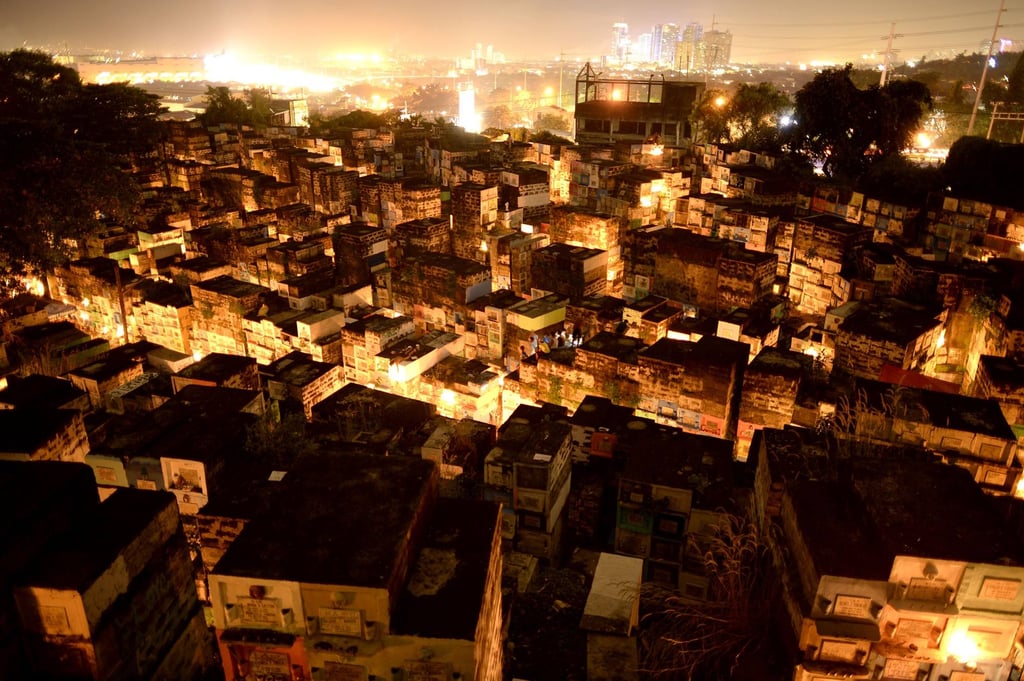
From Malaysia, her role has changed – sending money home to help her siblings prepare. Her own observance is more limited: “Only to attend [church] service and send money.”
That sense of Undas as a family reunion is equally familiar to Mario Rivera, a senior designer at the South China Morning Post.
Growing up in Manila, prayers were always balanced with catching up on family gossip and sharing fond memories.
“I mention celebration,” Rivera said, because being together was such a large part of the occasion. “It sometimes made for colourful stories, especially if the one who passed was quite a character when they were living.”
Rivera has not returned home for Undas in years. Overseas relatives typically send money to maintain family plots, while those in the Philippines generally take care of the physical upkeep.
“Sadly, because of the Filipino diaspora, some graves can be left unattended if there’s no one left to tend to them back home,” he said.
“Far from home, what my family and I do is light candles next to keepsake photos of the person who has passed, and offer a prayer.”
For long-term migrants like Pelaez, reunion and mourning often come together in unexpected ways.
During a visit home last year, her father-in-law died. Part of her 20-day leave was spent attending his funeral with her husband’s family, leaving little time to see her son, mother and other relatives.
“We could not do celebrations,” Pelaez said. “We were grieving.”
KioskNews shows a cleaned-up reading view extracted from the publisher’s page — the original always lives on their site, not ours.