6 Sci-Fi Books So Great That They Became the Blueprint

At any given moment, Scott Simone has at least three books jockeying for his attention. He’ll never turn down a campus novel with a literary bent, nor will he hesitate to add yet another mystery to his Leaning Tower of Pisa-inspired to-be-read pile — which is built upon the bedrocks of too many short story collections, how-are-these-real true crime books, and classics waiting to be cracked open again. Topics that have him ripping through pages the fastest include closed-circle murders, unhappy professors, life-questioning philosophical deep dives, so long as they feature sharp sentences, a dark sense of humor, and at least a little malice.
He’s spent so much time in book shops over the years he is, to his wife’s chagrin, continuing to build a library that doesn’t quite respect the dimensions of the apartment meant to contain it.
There's an old saying: Good writers borrow, great ones steal. Some science-fiction writers, though, flip that script. These are the writers who created worlds, who invented technology, who morphed everyday anxieties into novel discovery. Their works were the gems generations of writers plucked and poached.
And that's the downside of printing the blueprint. The more those plans are copied — no matter if it’s for the scaffolding used to build or entire rooms — to create something new, the resemblance becomes all-too-recognizable. So much so that no one tends to stop and wonder how that came to be. But once you return to the originals, you’ll come across works so imaginative it boggles the mind. Some of the best works of sci-fi are those that have been copied so often, they could almost be mistaken for knock-offs.
1 'The Time Machine' (1895)

Let’s get this out of the way up front: H. G. Wells’ The War of the Worlds practically wrote the rules for alien-invasion fiction. But The Time Machine was arguably more influential on the sci-fi genre as a whole, influencing how science fiction itself tells stories. In it, the Time Traveller treks more than 800,000 years into the future. There he finds that humanity has split into two species: The Eloi live comfortably above ground, and the Morlocks dwell in a subterranean world of machinery. But it’s what the Morlocks have been eating that makes the future so grotesque.
With this work, Wells gifted future writers the mechanics of time travel. But more so, he demonstrated how to use it as a tool to examine how far today’s decisions can reach. And that influence pops up again and again: Connie Willis churned similar soil with Doomsday Book, and Stephen Baxter even wrote The Time Ships, an authorized sequel, a century later. Wells' greatest achievement, though, is the repulsive picture he painted of the remains of class division, which has grown to a point where one group is helpless, and the other becomes predators.
2 'Foundation' (1951)

Isaac Asimov’s oeuvre could very well be this entire list. I, Robot alone impacted generations of writers. What Foundation did, though, was on another scale. It showed how science fiction could be built upon history’s foundation. The impetus of the novel is Hari Seldon’s math showing that the Galactic Empire will collapse, and that it’ll take humanity 30,000 years to claw its way back to civilization. But Seldon also developed psychohistory, which allows him to predict how enormous populations will behave. So he establishes a Foundation on a remote planet, hoping to preserve enough knowledge to shorten the coming dark age to a mere thousand years.
And Asimov had inspiration of his own: Edward Gibbon's account of the Roman Empire's decline. He took that and transposed it onto a galactic civilization, which suffered the same political infighting and religious manipulation and similarly weighed the influence of economic dependence against military might. That same machinery would turn up in later galactic epics like Frank Herbert's Dune, where controlling what people need can be far more valuable than commanding the largest army. Asimov’s greatest achievement with this novel was entirely inventing a future recognizable through the very real struggles of the past.
3 'Starship Troopers' (1959)

Starship Troopers has plenty of the machinery that hooks sci-fi addicts. There’s powered armor that can carry enough weaponry to flatten buildings, and soldiers dropped from orbit in individual capsules to fight swarms of giant alien bugs. But it also centers on the horrors of war and how ordinary citizens get trapped within it. Johnny Rico joins the military, all because his friends were doing it, only for an interstellar war to break out shortly after his boot camp ends.
Robert A. Heinlein wrote the modern vocabulary for military science fiction, from mechanized infantry to the painstaking details of training soldiers for futuristic combat. His influence runs deep in John Steakley's Armor, which pushes the powered-suit concept into even bloodier territory. John Scalzi has acknowledged modeling parts of Old Man's War on Heinlein's recruit-to-veteran narrative. But Starship Troopers has another legacy, because Heinlein didn't merely imagine how soldiers might fight in the future. He used the novel to argue for a society where citizens must earn the right to vote through federal service, giving later science-fiction writers a political philosophy to challenge alongside all that military technology to borrow.
4 'Dune' (1965)

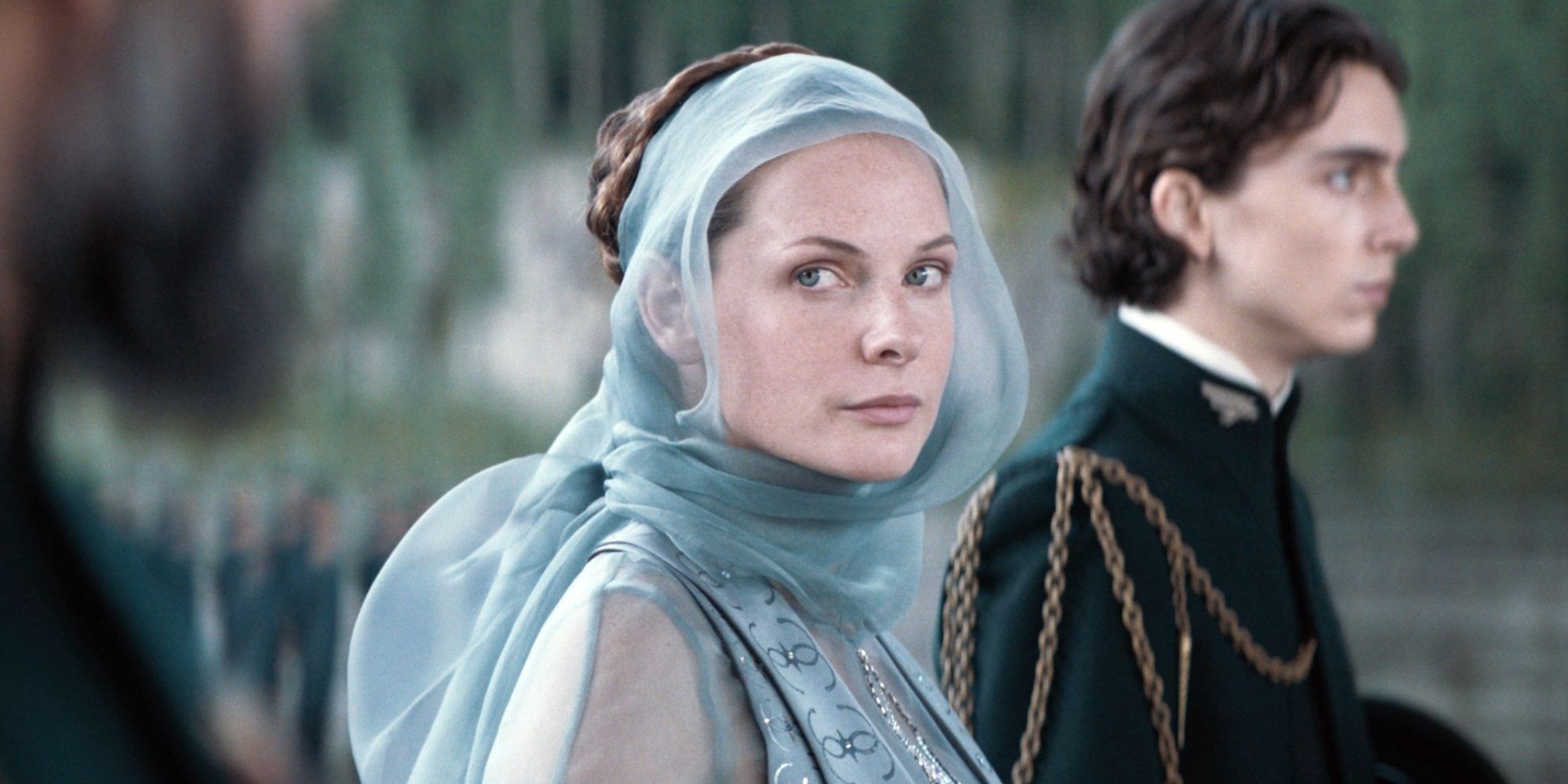
Frank Herbert may have borrowed Asimov's galactic empire, but he wanted to know what kept the whole thing running. Arrakis is an awful place to live, but everybody wants a piece of it for the resource it provides: spice, a substance essential to interstellar navigation. But there’s also such a scarcity of water that its native Fremen wear suits that recycle their bodily moisture, and there are giant sandworms that can swallow just about anything. Then comes Paul Atreides, whose family has just been handed control of the planet, but who gets caught in a political conspiracy. And the Fremen suspect he's the messiah they've been awaiting.
Herbert worked out how control of a single resource could determine the balance of power across the universe and how the struggle to survive would shape an entire civilization. The Fremen even have rituals for reclaiming water from their dead. That extraordinary attention to detail became a model for later writers. Arkady Martine, for one, borrowed Herbert's use of fictional historical excerpts for A Memory Called Empire. But there's another reason Dune deserves its place here: Herbert gives readers a reminder that the person promising to save civilization might be the one you should be most afraid of.
5 'The Left Hand of Darkness' (1969)
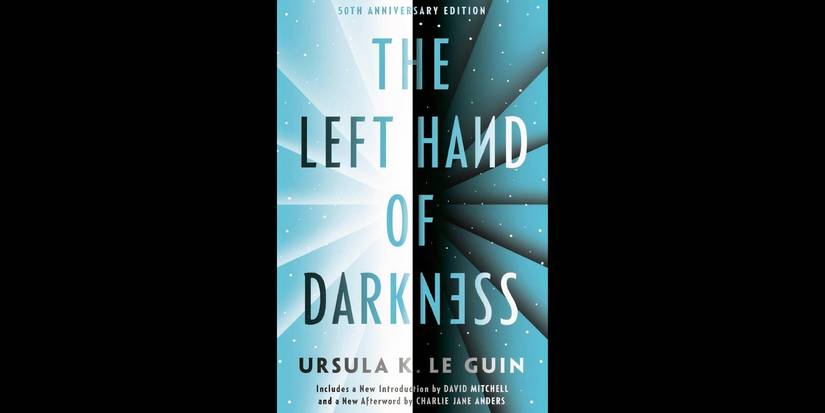
There were plenty of alien civilizations inhabiting science fiction novels by 1969, but Ursula K. Le Guin questioned something other writers hadn’t: How sex and gender manifest themselves within those societies. So in The Left Hand of Darkness, she gave us Gethen, a frozen planet where inhabitants have no permanent biological sex — they only assume male or female characteristics during periods of fertility. She then uses Genly Ai to explore the topic further. The diplomat comes from a society that has fixed genders, and while he’s there to negotiate with the Gethenians, he can’t stop judging them. He even mistrusts Estraven, a politician who may be his greatest ally.
Le Guin made important use of language as well, assigning masculine pronouns to characters that didn’t reflect conventional gender categories. Ann Leckie acknowledged Le Guin's influence when she wrote Ancillary Justice, in which she adopted feminine pronouns as the default. But Le Guin's achievement goes deeper than playing with gender conventions: She challenged science fiction to stop treating humanity's customs as universal truths. As Genly and Estraven struggle to survive a journey across a vast ice sheet, the diplomat slowly discovers how much his own prejudices have blinded him.
6 'Neuromancer' (1984)

William Gibson didn't invent cyberpunk, but Neuromancer did give the genre much of its identity. It dealt with a future in which corporations had more power than governments, and hackers could steal information from cyberspace for the highest bidder. One of them is Case. But his employers damaged his nervous system after he stole from them, leaving him unable to access the digital world, so he's wasting away in the criminal underworld of Chiba City until a mysterious benefactor offers to repair the damage. There's a catch, of course: Case has to pull off one last job.
Gibson had already coined the term "cyberspace" in an earlier story, but he made it somewhere characters could actually inhabit in Neuromancer. Neal Stephenson would develop a similarly immersive digital world in Snow Crash; Richard K. Morgan borrowed Gibson's marriage of futuristic technology and crime fiction for Altered Carbon. But one of the most lasting effects is how Gibson spent so little time explaining his own inventions. He throws readers into a world of unfamiliar slang and technology, where nobody bothers explaining how anything works. And that's what makes Neuromancer so convincing: Gibson imagined a future so thoroughly that even its inhabitants had grown tired of it.

- Release Date
- January 22, 2027
- Network
- Apple TV+
- Showrunner
- Graham Roland
-

Henry Case
-

Briana Middleton
Molly
-

Mark Strong
Armitage
-

John Ashpool
- Directors
- J.D. Dillard
- Writers
- Graham Roland, JD Dillard
- Creator(s)
- J.D. Dillard, Graham Roland
KioskNews shows a cleaned-up reading view extracted from the publisher’s page — the original always lives on their site, not ours.