Handshakes, hugs and subtle power plays: decoding the Xi-Trump-Putin dynamic in Shenzhen
After weeks of intense speculation, this year’s Asia-Pacific Economic Cooperation (Apec) summit in Shenzhen delivered an unscripted diplomatic spectacle – where every lingering handshake, pat on the back and side-by-side stride carried as much weight as the closed-door talks.
As Trump stepped off Air Force One, he extended his hand before opening his arms – a gesture Xi readily reciprocated as their handshake dissolved into a brief embrace. Overhead, five J-10C fighter jets roared across the sky, trailing ribbons of red, yellow and blue smoke.
According to US-based body language expert Lillian Glass, the tarmac embrace immediately broke through diplomatic stiffness, projecting “warmth, respect, attentiveness and a remarkable degree of physical harmony”.
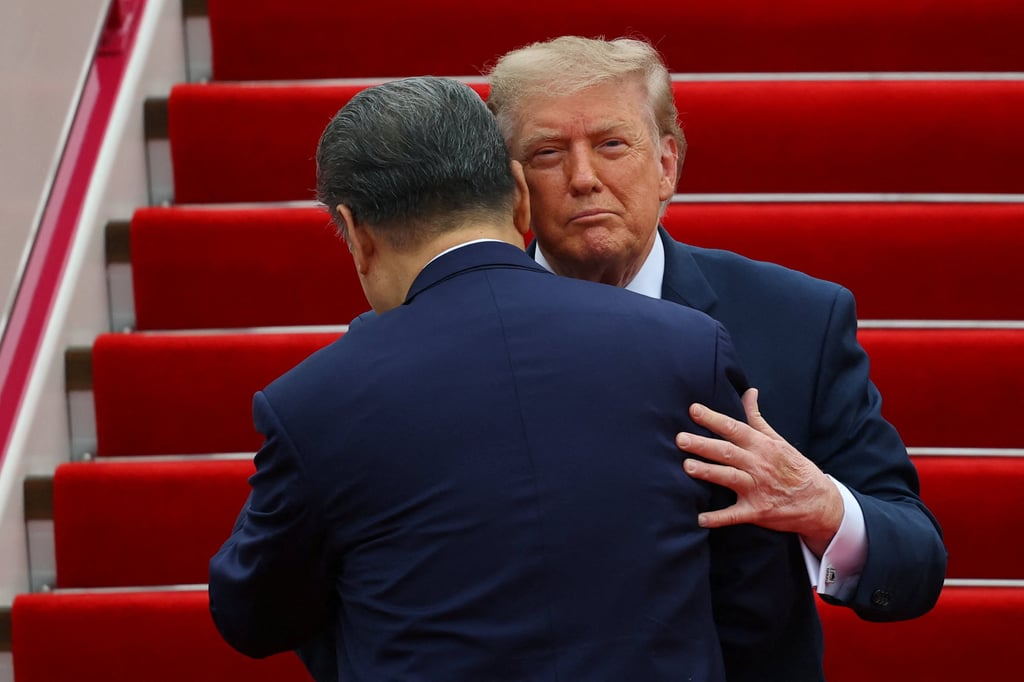
Yet Leow Chee Seng, a body language expert and co-founder of Malaysia-based behavioural intelligence organisation Humanology, saw calculated positioning behind Trump’s public friendliness and assertive physical contact.
“His embrace of Xi, accompanied by a tap on the back, creates an exaggerated impression of personal familiarity. Rather than demonstrating clearly reciprocated warmth, Trump’s behaviour appears overly demonstrative and intrusive, particularly in the context of a formal diplomatic encounter between two heads of state,” Leow said.
That tension between outward warmth and subtle power play surfaced repeatedly over the next 24 hours, turning routine summit logistics into viral moments.
At Wednesday’s welcome banquet, Xi and his wife, Peng Liyuan, greeted Trump with broad smiles. Xi nodded warmly as Trump turned to chat with Peng.
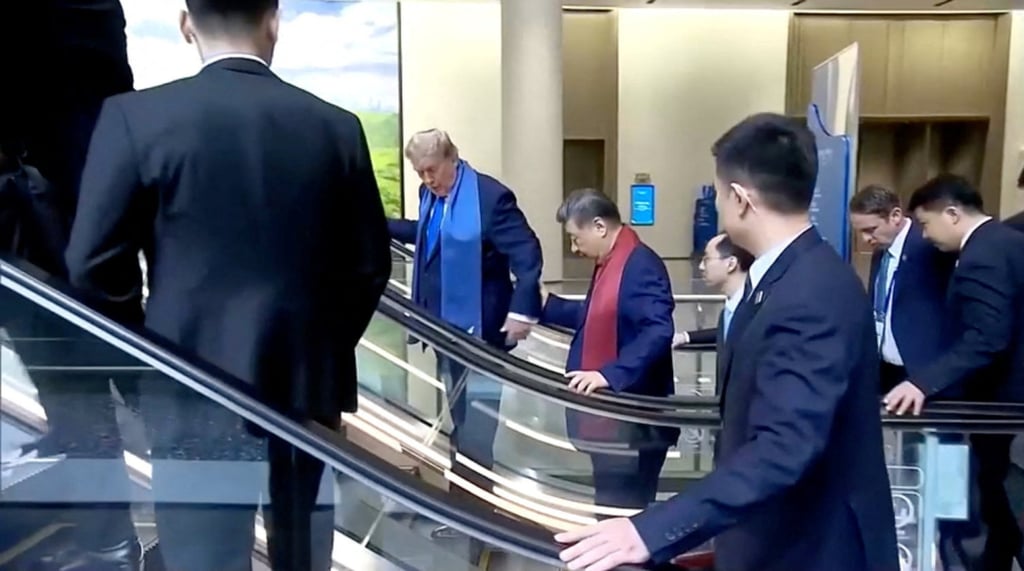
Unguarded instinct occasionally broke through the choreography. In a widely shared clip from inside the venue, Trump extended a steady hand towards Xi at the base of an escalator, with the Chinese leader briefly resting a hand on Trump’s shoulder for support as he stepped aboard.
By Thursday morning, the optics shifted again. Ahead of their bilateral talks, Xi and Trump locked into a nearly 10-second handshake, standing almost shoulder to shoulder for the cameras before walking into the venue together. Leow noted that Xi extended his arm while keeping his torso upright to maintain subtle upper-body distance, contrasting with Trump’s posture.
“In the observed interaction, Trump presents his hand in a submissive orientation, creating a visual impression of deference and accommodation towards Xi,” Leow said.
When Russian President Vladimir Putin entered the frame, the dynamic settled into a noticeably different register.
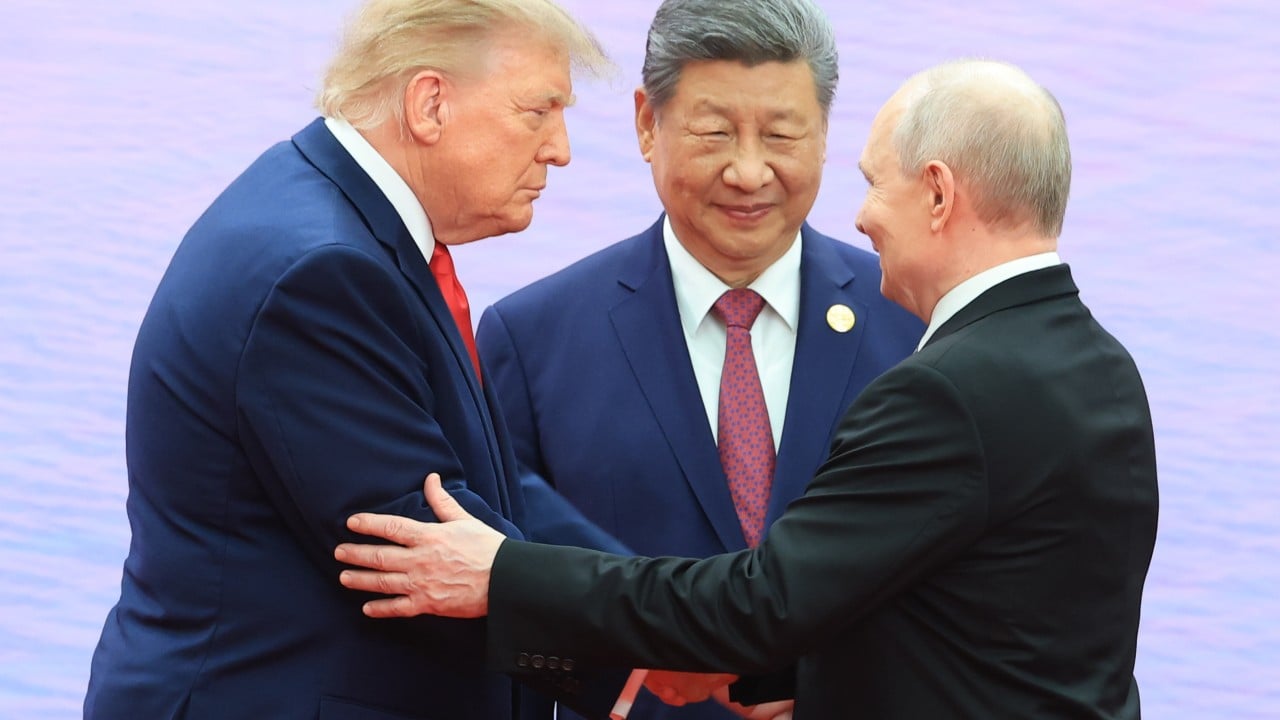
Ahead of the welcome banquet’s “family photo”, Trump warmly greeted the Russian leader right in front of Xi – shaking his hand, patting his back and resting his right hand on Putin’s shoulder before Xi stepped in to guide Putin towards Peng.
Later, as Putin walked into the room for their bilateral meeting, Trump pointed at him with a grin and announced: “Who’s he? … He’s my friend.” He then leaned in for a firm, open-palmed handshake, his free hand brushing Putin’s arm.
Xi’s interactions with Putin appeared more restrained and conventional, with the two exchanging handshakes and smiles.
The differences were also visible when the three leaders walked into the venue for their trilateral meeting. Xi gestured for Trump, who was on his left, to move forward, before walking alongside Putin towards the photo opportunity.
After the trilateral meeting, Xi also accompanied Putin to his car as the Russian president departed.
KioskNews shows a cleaned-up reading view extracted from the publisher’s page — the original always lives on their site, not ours.