10 Intense Thriller Shows You Need To Watch Again To Fully Understand


Sign in to your Collider account
The following article contains spoilers.Most people would assume that a thriller story is pretty much over after the final reveal. That’s because the genre usually depends on not knowing something and misleading the audience until the perfect moment to hit them with the shocking truth. Now, there is a big difference between rewatching a thriller for entertainment value and rewatching it to start putting the puzzle together right from the start.
Once the audience already knows what’s coming, their understanding of the narrative can shift in unexpected ways. The intense thriller shows on this list are perfect examples of that because their twists don’t just surprise viewers; they completely change the meaning of everything they thought they understood.
10 'Vladimir' (2026)

Vladimir is one of Netflix’s most interesting recent titles. The eight-episode series follows an unnamed English professor (Rachel Weisz) whose personal and professional life is already falling apart when Vladimir (Leo Woodall), a handsome younger novelist, joins the faculty at her college. Her husband John (John Slattery), who also teaches there, is facing scrutiny over previous affairs with students, while her own writing career has stalled. Vladimir quickly becomes an escape from it all. However, her attraction to him quickly turns into an all-consuming obsession. The interesting thing about the series is that the audience experiences much of Vladimir through the protagonist’s imagination.
Her fantasies regularly interrupt ordinary life, and she constantly addresses the audience to explain what is really happening. The only problem is that she isn't exactly reliable. The more her obsession grows, the more difficult it is to distinguish between what is actually happening and what she wants to happen. That is exactly what makes Vladimir extremely entertaining on a second viewing. Once the audience knows how the story ends, they can finally see Vladimir as he is instead of looking at him purely through the protagonist’s eyes.
9 'The Boroughs' (2026)

The Boroughs presents an interesting take on the concept of aging, without turning it into a pity party. The series follows grieving widower Sam Cooper (Alfred Molina), who moves into The Boroughs, an idyllic New Mexico retirement community shortly after losing his wife Lilly (Jane Kaczmarek). His dreams of starting fresh take a terrifying turn, though, when he discovers strange creatures roaming the neighborhood at night. Sam eventually joins fellow residents Renee (Geena Davis), Judy (Alfre Woodard), Art (Clarke Peters), and Wally (Denis O’Hare) to investigate, especially when the residents begin developing unexplained medical problems. They have no idea that this will lead them to discover things that will completely change the way they view the place.
Turns out that strange creatures living beneath The Boroughs have been draining brain fluid from sleeping residents, which is then fed to a supernatural being known as Mother. The people running the community harvest Mother’s blood in return because consuming it can freeze them in time. Sam and his friends are then up against forces that are quite literally stealing their remaining years from them. Knowing that from the beginning makes The Boroughs extremely rewarding to watch. The series spends most of its first half encouraging the audience to dismiss strange events for the same reasons its characters do. The finale, though, reveals that all their hunches make sense in retrospect. The series uses aging, memory problems, physical weakness, and confusion as perfectly ordinary explanations for things that are actually clues to something much bigger. That is what brilliant storytelling really is.
8 'We Were Liars' (2025–Present)

We Were Liars is one of those shows that stay with the audience long after the credits roll. The series, based on E. Lockhart’s novel, follows Cadence Sinclair Eastman (Emily Alyn Lind), a teenager from the wealthy Sinclair family who spends her summers on their private island, Beechwood. She is joined there by her cousins Johnny (Joseph Zada) and Mirren (Esther McGregor), as well as Gat Patil (Shubham Maheshwari), the boy she falls in love with. Together, the four call themselves the Liars. However, their unforgettable adventures take a turn when something terrible happens during Cadence’s sixteenth summer, when she is left with a serious head injury and almost no memory of what really happened. When she returns to Beechwood the following summer, everything has changed, and her family refuses to give her straight answers about anything.
That only makes the show’s big revelation all the more devastating. Turns out that Johnny, Mirren, and Gat died in a fire the Liars themselves started, and Cadence has spent the summer interacting with them without understanding that they are ghosts. That twist obviously makes a second viewing unavoidable because it’s interesting to see how the show places the truth directly in front of the audience without revealing it until the right moment. All of a sudden, The Liars’ strange absences and Cadence’s family’s behavior start to make sense because the audience is finally standing outside of the protagonist’s denial and seeing everything she refuses to. We Were Liars is heartbreaking and thrilling all at once, a balancing act that is no easy feat.
7 'Severance' (2022–Present)
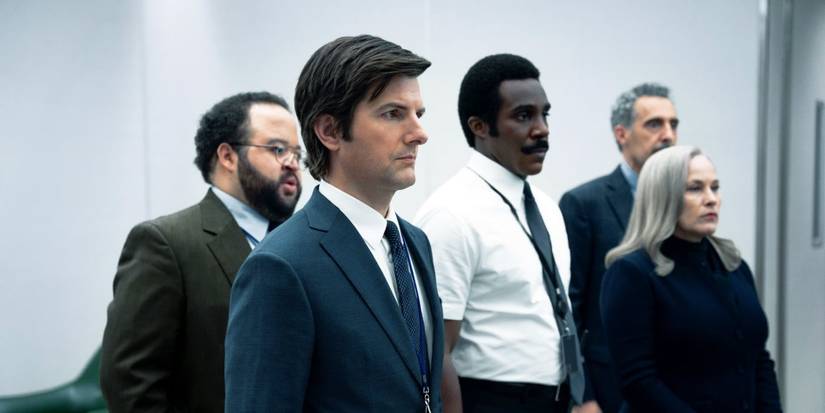
Severance explores the nightmare that is going to work, and it does so in the most fascinating way ever. The series follows Mark Scout (Adam Scott), an employee at Lumon Industries who has undergone the company’s severance procedure, which surgically separates his work memories from his personal ones. His “innie” knows nothing about the outside world, while his “outie” has no idea what happens during the eight hours he spends inside Lumon. The arrangement doesn’t really seem that bad, especially for Mark, who is grieving his dead wife. However, things begin to change when his coworker Helly (Britt Lower) starts rebelling against her life as an innie and pushing Mark, along with Irving (John Turturro) and Dylan (Zach Cherry), to question everything around them.
The group works at the Macrodata Refinement department at Lumon, but the audience realizes that they don’t even know what their work is. That’s not the strangest part, though, because Lumon is full of strange rules, bizarre rewards, and meaningless corporate rituals. However, that ambiguity is exactly why Severance becomes better the second time around. On a first viewing, so much of Lumon is meant to be confusing, but once the audience understands more about the company and the lives of the people working there, the details begin to look much less random. Severance is brilliant in how it withholds information to let the audience experience just how suffocating Lumon is, and a second viewing only makes one appreciate the Apple TV show’s genius on a new level.
6 'Mr. Robot' (2015–2019)
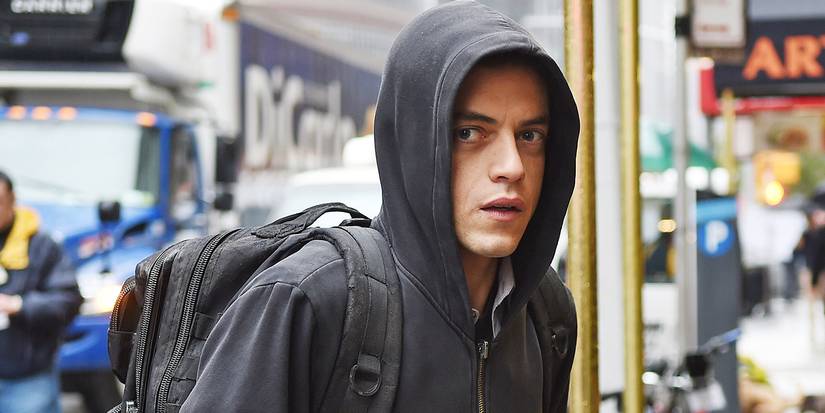
Mr. Robot practically demands a rewatch because its central character is entirely unreliable. The series follows cybersecurity engineer Elliot Alderson (Rami Malek), who spends his nights hacking the people around him. His life changes when he is recruited by an underground group called fsociety, led by the mysterious Mr. Robot (Christian Slater), to help take down the enormous conglomerate E Corp. Now, Elliot is already dealing with severe isolation, drug use, and gaps in his own perception, but the audience initially accepts his version of events because he is the one guiding them through the story.
That trust wavers, though, when the show starts to reveal how much Elliot himself doesn’t understand. One of the biggest twists in the show is the truth behind Mr. Robot, which immediately forces viewers to rethink everything that has come before. Mr. Robot keeps building on that idea by hiding parts of the protagonist’s memory, identity, and even the world around him. Of course, once all those major revelations are known, the audience gets to watch everything unfold in a completely different way. Mr. Robot turns perspective itself into part of the mystery, so the second viewing is less about discovering what happens and more about noticing how carefully the show convinces people to believe the wrong version of it.
Collider Exclusive · Sci-Fi Survival Quiz Which Sci-Fi World Would You Survive? The Matrix · Mad Max · Blade Runner · Dune · Star Wars
Five universes. Five completely different ways the future went wrong — or sideways, or up in flames. Only one of them is the world your instincts were built for. Eight questions will figure out which dystopia, galaxy, or desert wasteland you'd actually make it out of alive.
💊The Matrix
🔥Mad Max
🌧️Blade Runner
🏜️Dune
🚀Star Wars
01
You sense something is deeply wrong with the world around you. What do you do? The first instinct is often the truest one.
02
In a world of scarcity, what resource do you guard most fiercely? What we protect reveals what we believe survival actually requires.
03
What kind of threat keeps you up at night? Fear is useful data — if you're honest about what you're actually afraid of.
04
How do you deal with authority you don't trust? Every dystopia has a power structure. Your approach to it determines everything.
05
Which environment could you actually endure long-term? Survival isn't just tactical — it's physical, psychological, and very much about where you are.
06
Who do you want in your corner when things fall apart? The company you keep is the clearest signal of who you actually are.
07
Where do you draw the line — if you draw one at all? Every survivor eventually faces a moment that tests what they're actually made of.
08
What would actually make survival worth it? Staying alive is one thing. Having a reason to is another.
Your Fate Has Been Calculated You'd Survive In…
Your answers point to the world your instincts were built for. This is the universe your temperament, your survival instincts, and your particular brand of stubbornness were made for.
The Matrix
You took the red pill a long time ago — probably before anyone offered it to you. You're a systems thinker who can't help but notice the seams in things.
- You're drawn to understanding how the system works before figuring out how to break it.
- You'd find the Resistance, or it would find you — your instinct for spotting constructed realities is the machines' worst nightmare.
- You function best when you have access to information and the freedom to act on it.
- The Matrix built an airtight prison. You'd be the one probing the walls for the door.
Mad Max
The wasteland doesn't reward the clever or the well-connected — it rewards those who are hard to kill and harder to break. That's you.
- You don't need comfort, community, or a cause larger than the next horizon.
- You need a vehicle, a clear threat, and enough fuel to outrun it — and you're good at all three.
- You are unsentimental enough to survive that world, and decent enough — just barely — to be something more than another raider.
- In the wasteland, that distinction is everything.
Blade Runner
You'd survive here because you know how to exist in moral grey areas without losing yourself completely.
- You read people accurately, keep your circle small, and ask the questions others prefer not to answer.
- In a city where humanity is a legal designation rather than a feeling, you hold onto something that keeps you functional.
- You're not a hero. But you're not lost, either.
- In Blade Runner's world, that distinction is everything.
Dune
Arrakis is the most hostile environment in the known universe — and you are precisely the kind of person it rewards.
- Patience, discipline, and political awareness are your core strengths — and on Arrakis, they're survival tools.
- You understand that the long game matters more than any single victory.
- Others come to Dune and are consumed by it. You'd learn its logic and earn its respect.
- In time, you wouldn't just survive Arrakis — you'd begin to reshape it.
Star Wars
The galaxy far, far away is vast, loud, and in a constant state of violent political upheaval — and you wouldn't have it any other way.
- You find meaning in being part of something larger than yourself — a cause, a crew, a rebellion.
- You'd gravitate toward the Rebellion, or the fringes, or whatever pocket of the galaxy still believes the Empire's grip can be broken.
- You fight — not because you have to, but because standing aside isn't something you're capable of.
- In Star Wars, that willingness is what makes all the difference.
5 'Shining Girls' (2022)

Shining Girls is another show that weaves confusion into the very fabric of its narrative. The Apple TV thriller series follows newspaper archivist Kirby Mazrachi (Elisabeth Moss), who survived a brutal attack years earlier and has struggled with her grip on reality, especially since it seems to change around her without warning. All of a sudden, her apartment looks different, people remember things differently, and even parts of her personal life shift from one moment to the next. Kirby has no explanation for any of it, but she begins catching on to something after learning about another murder that closely resembles her own attack.
She begins investigating alongside reporter Dan Velazquez (Wagner Moura), and their search eventually leads them to Harper Curtis (Jamie Bell), a killer who has been targeting women across different decades. Harper can move through time using a mysterious house, which means Kirby’s unstable reality isn’t just her trauma. That big reveal makes Shining Girls fragmented, disorienting premise a lot easier to understand the second time around. The story starts to follow a much clearer logic when the audience knows about Harper’s movements and changes in Kirby’s reality can finally be connected to alterations in the original timeline.
4 'Mousetrap' (2026)

South Korean storytelling remains unmatched, and Mousetrap is no different. The thriller series takes identity theft to an almost absurd extreme. It follows reclusive novelist Je Moon-jae (Ryu Jun-yeol), who has spent years hiding from society when pieces of his life suddenly stop belonging to him. His fingerprint no longer unlocks his phone, his passwords have changed, and eventually he discovers another man who looks exactly like him living under his name. Now, Moon-jae has practically no way to prove his identity.
In a desperate attempt to do so, he reluctantly joins forces with ruthless loan shark Noja (Sul Kyung-gu) while detective Park Sun-yong (Lee Kyu-hyung) investigates the increasingly bizarre case from another direction. For most of the series, that setup makes Moon-jae the obvious victim. The audience wants him to expose the mysterious rat, reclaim his life. More than that, they want to understand why someone has gone to such extraordinary lengths to replace him. The finale makes that assumption considerably harder to defend when the impostor’s identity is revealed. Mousetrap uses its big twist to change the central question of the story and forces the audience to see Moon-jae in an entirely different light, which definitely calls for a rewatch right after the credits roll.
3 'Servant' (2019–2023)
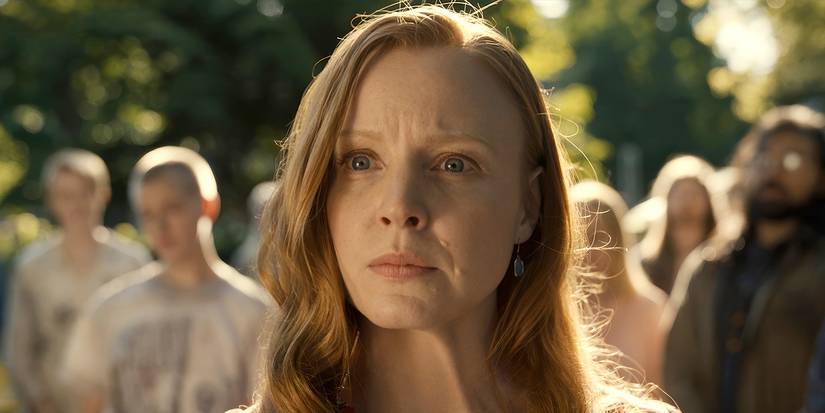
Servant wraps up a true family tragedy into one of television’s strangest psychological mysteries. The series follows Dorothy (Lauren Ambrose) and Sean Turner (Toby Kebbell), whose infant son Jericho dies after Dorothy accidentally leaves him in a hot car. She is now unable to cope with the trauma. She begins treating a lifelike reborn doll as if it were Jericho, while Sean and her brother Julian (Rupert Grint) go along with the illusion to keep her from getting hurt all over again. Things become considerably stranger when they hire Leanne Grayson (Nell Tiger Free) as a nanny. Not only does Leanne treat the doll like a real child, but an actual baby soon appears in its place.
From there, Servant spends every episode making the audience question who Leanne is and what she is capable of, especially because of her connection to the mysterious Church of the Lesser Saints. The finale eventually reveals that members of the Church believe they have themselves been resurrected and strongly suggests that Leanne really did bring Julian back. That practically calls for a rewatch because knowing where the story ends doesn’t completely solve the mystery. In fact, a rewatch only lets the audience ponder which moments were genuine evidence of something supernatural and which ones only looked that way because the Turner household desperately needed something to believe in.
2 'Orphan Black' (2013–2017)

Orphan Black deserves way more recognition than it gets because it starts with one impossible coincidence and just keeps building on that. The story begins with con artist Sarah Manning (Tatiana Maslany) standing on a train platform when she sees a woman who looks exactly like her step in front of an approaching train. Sarah discovers that the woman was police detective Beth Childs, and she quickly assumes her identity in the hopes of stealing her money. That decision instead leads her to Alison Hendrix and Cosima Niehaus, two more women with her exact face.
These events eventually reveal that all of these women were created as part of an illegal cloning experiment known as Project Leda. That is only the beginning, though, because Sarah soon discovers that the institute leading the project has been secretly monitoring their lives. On a first watch, Orphan Black can feel a bit disorienting with so many characters and conspiracy webs to keep track of. All of that is much easier to appreciate the second time around. The show spends every episode filling in gaps to a mystery that Sarah barely understands herself. Her relationship with the other clones, and Helena specifically, is a turning point in the story. After having to process all these revelations at exactly the same speed as Sarah, a rewatch makes the smaller details much easier to catch.
1 'Dark' (2017–2020)

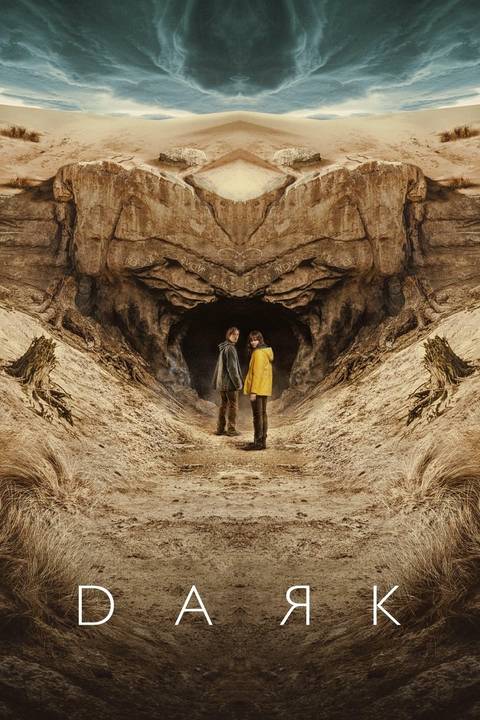
Dark is probably the best example of a show that has to be watched twice to be fully experienced. Netflix’s first-ever German original begins in the small town of Winden, where the disappearance of a young boy pulls four families into a mystery that seems to have no end nor beginning. The search leads teenager Jonas Kahnwald (Louis Hofmann) and his friends into the caves beneath Winden’s nuclear power plant, where a wormhole connects different periods exactly 33 years apart. That is how the missing Mikkel Nielsen (Daan Lennard Liebrenz) ends up trapped in 1986, where he grows up as Michael Kahnwald and eventually becomes Jonas’ father.
That storyline alone would be enough to complicate most shows, but for Dark, it is only the starting point. The deeper Jonas digs, the more the families of Winden begin folding into one another. Characters who initially seem unrelated turn out to be connected by blood, marriage, and time travel, while younger and older versions of the same person can appear in completely different parts of the story. The series keeps pushing that idea further. The whole concept is extremely enjoyable on the first watch, but its complexity starts to make a lot more sense on a second viewing. Initially, the audience’s energy goes into remembering names, faces, and timelines. Once those connections are familiar, though, everything starts carrying a different meaning, to the point where one almost feels like they’re watching an entirely different show.
Dark
- Release Date
- 2017 - 2020-00-00
- Network
- Netflix
- Showrunner
- Jantje Friese
- Directors
- Baran bo Odar
KioskNews shows a cleaned-up reading view extracted from the publisher’s page — the original always lives on their site, not ours.