‘Can only manage violence’: Manipur crisis takes a turn, Delhi stuck in more difficult terrain
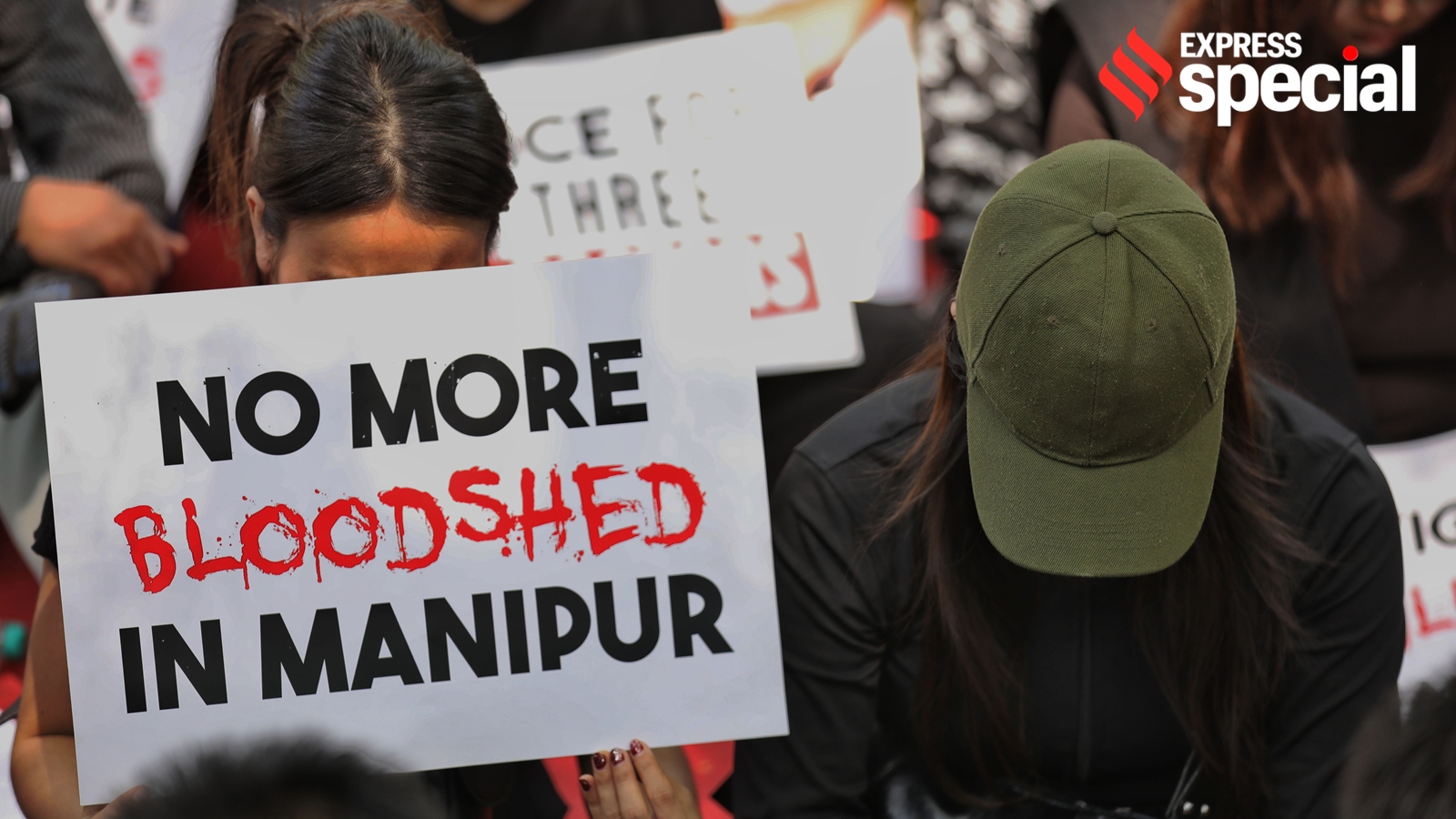
With the latest killings, in Kamjong and Senapati, the death toll in clashes between the Nagas and Kukis since the recast BJP government took over in Manipur in February has risen to over 50, marking a shift away from the conflict centred around the Meiteis and Kukis since May 2023.
Like that cycle of violence, the Naga-Kuki tensions too appear to have entered a self-perpetuating loop now, with each side seeking to avenge the killing of its own. Containing this conflict poses a more difficult challenge geographically.
An officer of the Manipur Police says, “When Meitei-Kuki clashes began, the two communities got geographically separated within months. Kukis withdrew to the hills and Meiteis came to the valley. So a buffer zone was created and security forces were placed there. It is not so in the Naga-Kuki clashes. In the hills, the populations are mixed. It is nearly impossible to guard every village.”
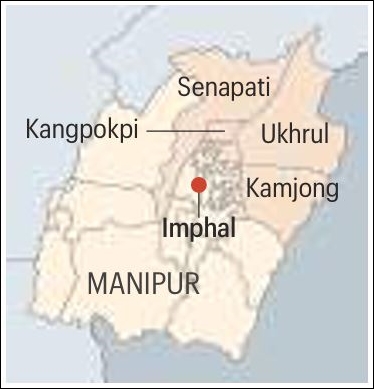
The clashes have been reported across Ukhrul, Kamjong, Senapati and Kangpokpi, with the geographical proximity of the two communities meaning the conflict is playing out over roads and highways. Consequently, security agencies must deal not only with gunfights and killings, but also the disruption of supplies and movement.
Not long after the Yumnam Khemchand Singh-led BJP government came to power in Manipur, after a stint of President’s Rule, tensions flared up in and around Litan-Sareikhong in Ukhrul over an altercation between Kukis and Nagas. This “local” dispute escalated into firing, arson and attacks on homes, with the violence first spreading through Ukhrul and later into Kamjong and Kangpokpi.
On March 11, 21 Nagas were “abducted” near Mongkot Chephu, and released only after negotiations. The same day, the bodies of two Kuki men suspected to have been abducted by Naga volunteers were recovered in Kamjong. Gunfights followed in Sirarakhong, Sinakeithei and Mongkot Chephu, and by late April, the violence had spread to Mullam and Shongphel. The entry of armed groups based in Myanmar widened the conflict.
Then came the killing of three Kuki church leaders in Kangpokpi on May 13, which prompted retaliatory abductions by both sides and culminated in the killing of six Naga men, abducted from the Leilon Vaiphei area. The incident has since become a rallying point for Naga civil society.
Story continues below this ad
Security establishment sources say the conflict can’t be understood solely through the history of Naga-Kuki hostility or competing territorial claims. An economic contest over the illicit drug trade may be helping sustain the violence.
Until recently, Moreh in Tengnoupal was the principal transit point for narcotics and other illicit goods entering Manipur. Since the ethnic conflict began in 2023, Moreh has largely come under Kuki control, with the disruption of access to Imphal affecting the old trafficking chain. While routes through Kamjong have emerged as an alternative, it is a predominantly Naga area. “So there is now a competition between groups over access, routes and money,” a security officer says.
The fact that some of the most serious recent attacks have taken place close to the Myanmar border has strengthened the suspicion that the conflict is intersecting with cross-border militant and trafficking networks. Earlier attacks on Naga villages had raised concerns over the involvement of a Myanmar-based Kuki armed group, KNA-B.
So far, efforts to open a political channel between the two communities have failed. One of the more significant attempts came in July, when Church leaders from Mizoram and Nagaland brought together Kuki and Naga representatives in Aizawl to explore a dialogue. The Mizoram Kohhran Hruaitute Committee and Nagaland Joint Christian Forum agreed to facilitate direct talks between Naga and Kuki-Zo church bodies in Manipur. The initiative, however, did not translate into a direct political dialogue.
Story continues below this ad
Accusing the Nagas of ignoring overtures for peace, Henlianthang Thanglet, chairman of the Kuki Zonal Council, told The Indian Express, “Church leaders can hardly do anything as the whole thing is done by the NSCN-IM… We had apologised for the killing of six Naga men in May. But they refused to accept it. Twenty-seven of our own people have been killed.”
The United Naga Council (UNC), in turn, blames Kuki militant groups for the dialogue’s failure. “It depends on the intent of the leadership. If they don’t want peace, what can we do?” UNC chief Ng Lorho said.
The decision to have two deputy CMs in the government — Nemcha Kipgen representing the Kuki-Zos and Losii Dikho the Nagas — was intended to create a political mechanism for managing competing ethnic interests. Instead, the two have emerged as opposing voices in the Naga-Kuki conflict.
Dikho and other Naga legislators have accused Nemcha and her husband, Thangboi Kipgen, chairman of the Kuki National Front-Progressive, of having links to the killing of the six Naga men abducted from Leilon Vaiphei in May. “Initially, it was thought the two could be engaged to defuse tensions. But now that is out of the question,” a Manipur official says.
Story continues below this ad
The issue has also acquired an electoral dimension, with Assembly polls due early next year. The UNC has made the abrogation of the Suspension of Operations pact with Kuki armed groups, action against those responsible for the killings of six Nagas and the removal of Nemcha from the deputy CM’s post, its Central demands. For the past three months, the UNC managed to impose an economic blockade of highways through Naga-dominated Senapati. The blockade was suspended on September 26 after a meeting between UNC, Union Home Ministry and Manipur government. The Centre assured the UNC its demands would be addressed.
For the security establishment, the immediate task has become one of “managing” the violence, rather than ending it.
A security establishment officer says, “We are largely responding to incidents. If there is violence, we rush forces to stop it from escalating… But there is no effective way to find a solution.”
However, there has been one unexpected shift due to the new tensions — Kuki leaders are reaching out to Meiteis. No major clashes have been reported recently. Kuki residents are increasingly being allowed into Imphal to access healthcare and other services, or to travel out of the state by air. Forty-fifty Kukis enter Imphal daily for such purposes without facing resistance, security officials say.
KioskNews shows a cleaned-up reading view extracted from the publisher’s page — the original always lives on their site, not ours.