At the 1904 Olympics, a marathoner took rat poison to win gold
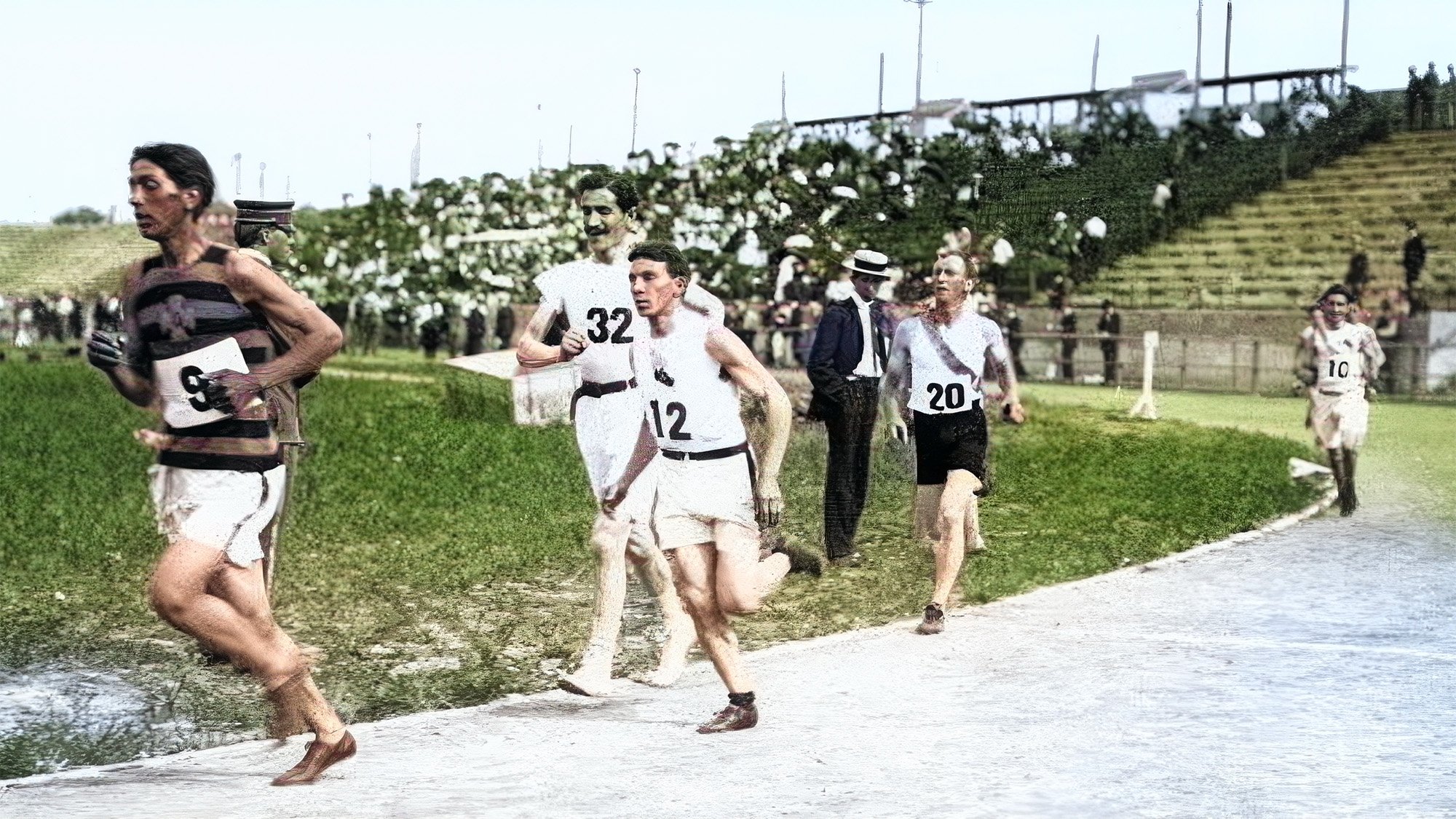
When the gun blasted announcing the start of the 1904 Olympic marathon, 32 hopefuls bolted into action. However, the start was the only thing typical about the race. On a day of extreme heat and humidity, just 14 of the athletes were able to complete the hilly, dusty 24.85-mile course (26.2 miles only became standard in 1921).
Aggressive dogs chased South Africa’s Len Taunyane, one of the first Black athletes to ever compete in the games, almost a mile off course. Cuban postman Felix Carvajal, who had to run in street clothes after losing his athletic attire in a dice game, stopped in an apple orchard midway through the course for a snack and a nap. American Frederick Lorz, a bricklayer who was favored as a top competitor, gave up at mile nine and took a car back to the stadium. When it broke down at the 19th mile, he jogged the rest of the way.
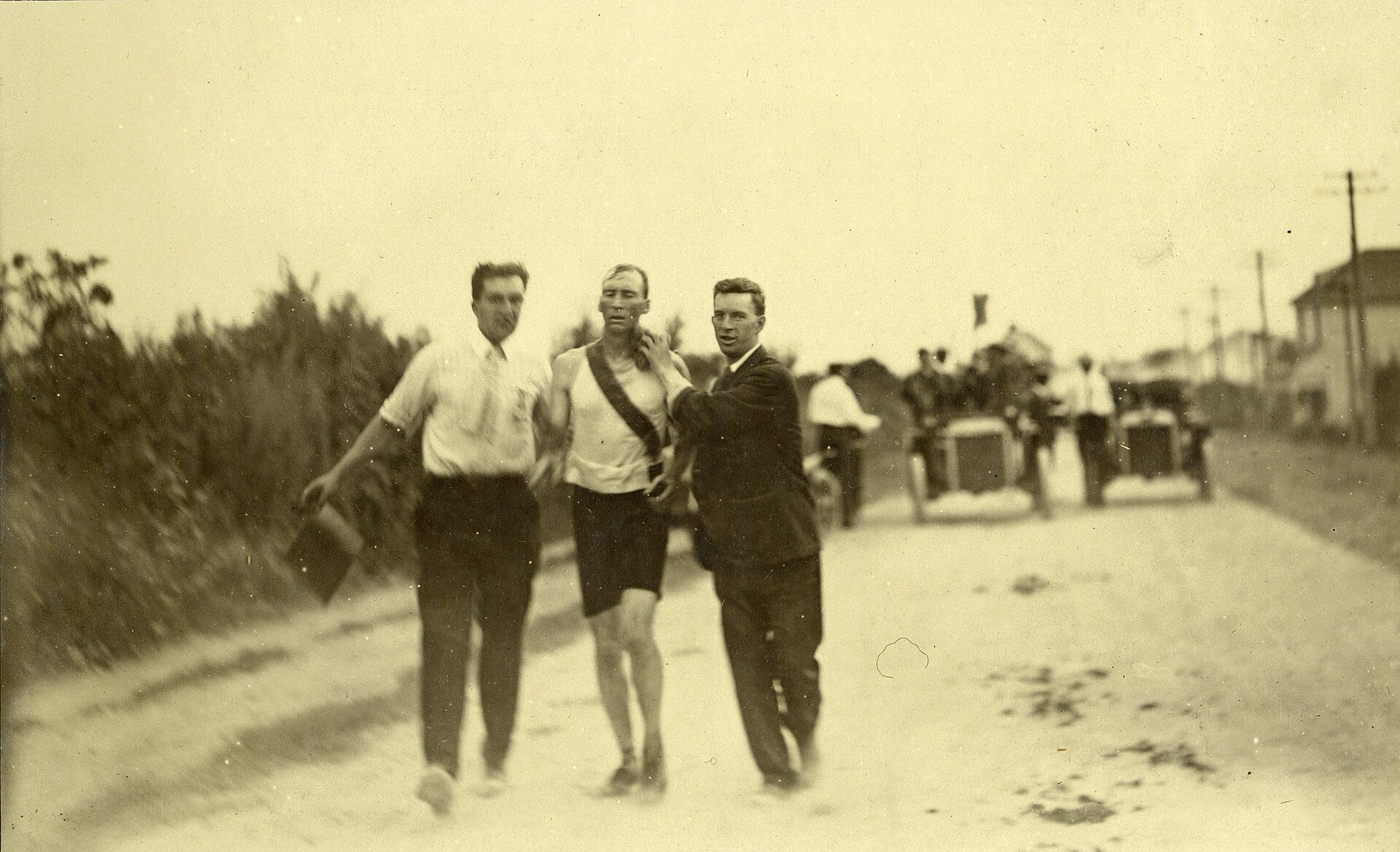
Technically Lorz crossed the finish line first—though organizers stripped him of the gold medal when they discovered his vehicular ruse. They awarded it instead to the second-place finisher, American Thomas Hicks, who was so weak by the time he reached the finish line, he had to be held up by two men just to cross it.
The roughly 25 miles Hicks had run that punishing August day was only partially to blame. He had been the unlucky subject of an early experiment in the science of athletic optimization, an experiment in a substance that’s perhaps best known as rat poison today. Welcome to the 1904 Olympics!
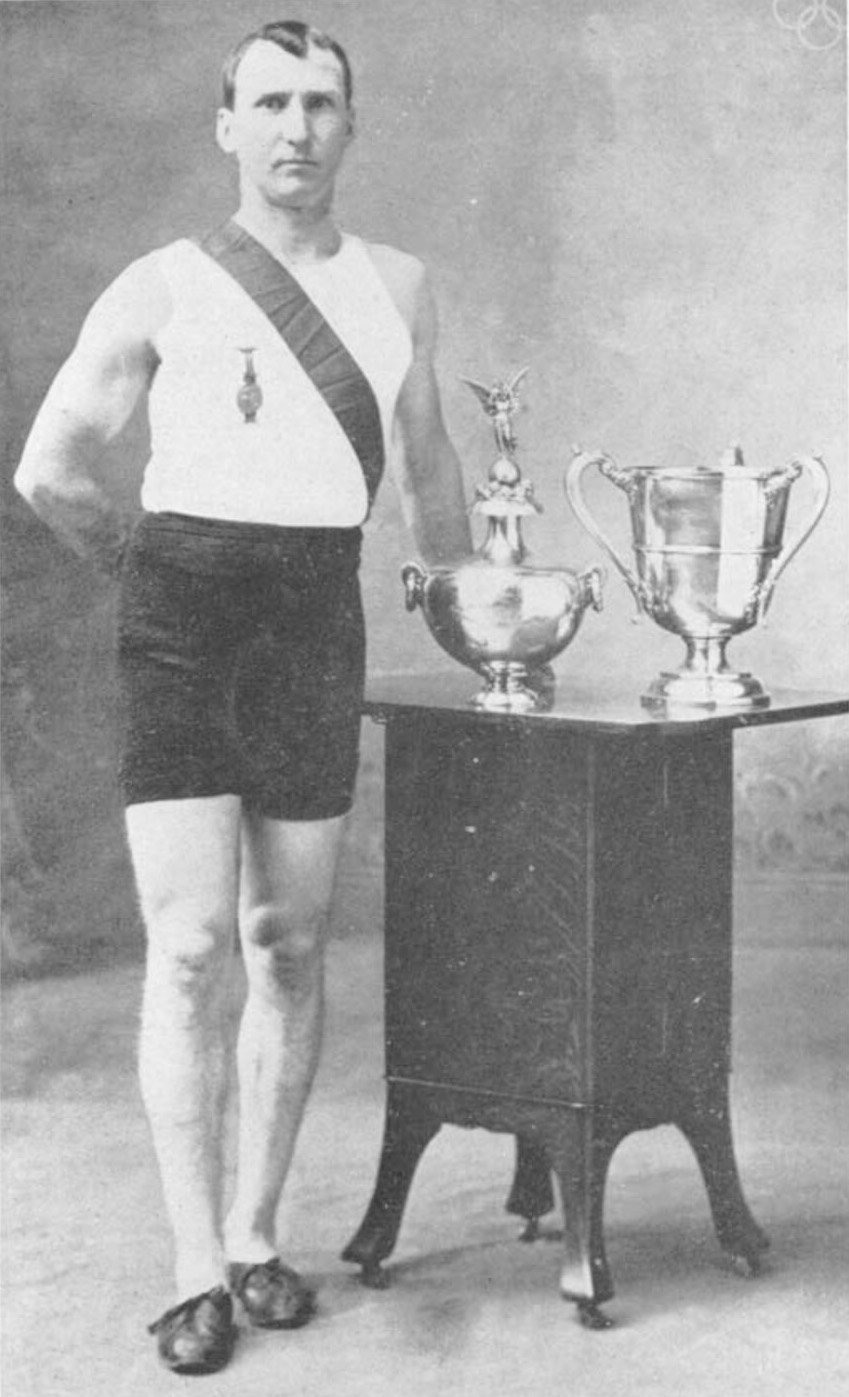
_1st_and_the_winner%27s_trophy.jpg#/media/File:Saint-Louis_1904_-_athletics_-_HICKS_Thomas_(USA)_1st_and_the_winner's_trophy.jpg)
Substances weren’t always banned from the Olympics
Around the turn of the 20th century, scientists argued over whether athletic ability was the result of biological inheritance or whether it could be improved on by training and chemical enhancements.
James E. Sullivan, director of the 1904 Olympics in St. Louis, Missouri, believed both were true—that those who were gifted with biological abilities (in his opinion, white Americans were the world’s best athletes) could be even better if they followed specific conditioning regimens and had a little pharmaceutical help. (Keep in mind that the Olympics hadn’t banned doping yet.)
How the Olympics became a testing ground for strychnine
The marathon was an ideal laboratory to test whether one of these little pharmaceutical helpers, strychnine, reenergized an exhausted athlete. At the time, the substance was popularly marketed as “a tonic for fatigue, a digestive aid, a respiratory stimulant, and a treatment for paralysis and rheumatism,” Vincent Lee, assistant professor of emergency medicine at the Zucker School of Medicine at Hofstra/Northwell in New York, tells Popular Science.
In tiny doses, he says, strychnine produced “a jittery, ‘revved-up’ sensation that 19th-century medicine mistook for restored vitality.”
So, when Massachusetts brass worker Thomas Hicks’ energy was flagging at the race’s 17th mile, his trainers gave him approximately a milligram of strychnine sulphate and an egg white. The prescription seemed to revive the runner, at least at first.
Three miles later, when Hicks once again began to struggle, they gave him a second dose, along with two more egg whites and a slug of brandy.

Marathoner Thomas Hicks also wasn’t allowed water
Games director Sullivan, who was simultaneously running his own experiment on dehydration at the marathon, wouldn’t let Hicks or any of the other runners have any water before or after passing a single official hydration station near the 12th mile.
Exhausted and desperate for a drink, 18 of the competitors dropped like flies out of the race well before the finish line. Hicks, who completed the marathon in three hours, 28 minutes, and 53 seconds, still holds the slowest record in Olympic history.
How strychnine went from Olympic performance enhancer to rat poison
Decades later, scientists figured out just how poisonous strychnine is. A few grains (50 to 100 milligrams) of the substance is enough to kill an adult within 30 minutes.
“At toxic doses, you’ll see violent, whole-body muscle contractions with the back arched and limbs rigid (called opisthotonus),” Lee explains.
“Death comes from the diaphragm and chest muscles locking up, causing suffocation, in addition to extreme overheating and muscle breakdown.”
But even at low doses, the poison that is, today, most often used to kill rodents can cause the body to twitch, spasm, or become stiff, and develop lockjaw or a fixed grin-like expression (known as risus sardonicus). By the time he reached the finish line, Hicks was in such agony, he had to be essentially carried over it before collapsing in a heap.
With all of the dropouts, mishaps, and experimentation, many who’d seen the race agreed that marathons were too dangerous and should be abolished from the Olympics. Even Sullivan called the event “indefensible.” The 1904 race is still considered one of the most unusually chaotic, poorly executed sporting events in modern history.
Related 'That Time When' Stories
The beginning of the end of doping
Thomas Hicks never ran another marathon but his experience left an indelible mark on the Olympic Games. At the next event in London in 1908, organizers introduced the first anti-doping regulation in sports.
A long list of substances banned from the Olympics now includes everything from steroids and growth hormones to diuretics (which lower blood pressure by expelling water from the body) and amphetamines (stimulants) but that hasn’t stopped athletes or their trainers from using them in secret.
Even strychnine has made an appearance at the games in modern times: In 1992, a Chinese volleyball player at the Barcelona Olympics tested positive for the substance, despite the fact that “strychnine does not build muscle, increase oxygen delivery, or improve endurance,” says Lee. “It just makes nerves hyperexcitable and causes the muscles to fire involuntarily.”
The International Olympic Committee chose to keep the marathon as part of the 1908 London games and it’s been an event ever since. Sullivan’s experiment on dehydration did, at least, put the debate over one athletic question to rest: Water is now considered so important that marathons have as many as 15 different replenishing stations along the course.
In That Time When, Popular Science tells the weirdest, surprising, and little-known stories that shaped science, engineering, and innovation.
KioskNews shows a cleaned-up reading view extracted from the publisher’s page — the original always lives on their site, not ours.