‘I would be happy if prices came down’: the older Australians wanting house prices to fall for their kids’ sake

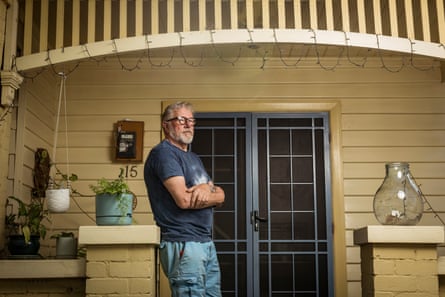
Pete Muskens, a 71‑year‑old retired architect from Melbourne, has watched Australian homes transform from places to live in to money-making assets pushing younger generations to the brink.
He bought his first terrace house in Melbourne in the early 1980s for about $30,000 – less than three times the average annual wage at the time – a level of affordability that is unimaginable for his two adult children.
Muskens worries that the decades-long housing crisis has reshaped family life and delayed milestones for younger people, like independent living and starting a family.
“It distresses me to see that so many of my kids’ contemporaries are in their 30s and still living at home. It’s an unhealthy social effect of what we have in the housing market,” says Muskens.
He says the government’s recent property tax reforms to negative gearing and capital gains tax were long overdue, and represent a crucial step in transforming a house back into a home by reducing investor incentives.
“The supercharging of housing as an asset rather than a place to live should never have happened in the first place and had to be unwound to help our society become more equitable.”
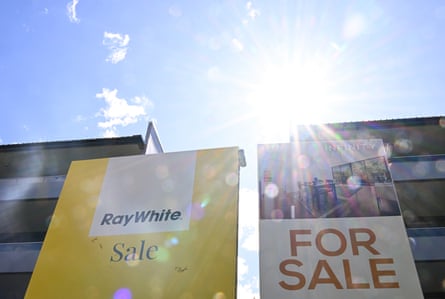
The government has faced fierce criticism from political opponents, conservative commentators and parts of the property sector for its budget reforms that has broadly made real estate less lucrative for new investors.
The Coalition has vowed to repeal the changes if it wins government, while One Nation wants to overhaul the reforms.
Across Australia, older parents, grandparents, and great-grandparents are looking back at the ease with which they bought their first homes, and questioning whether the country’s decades-long slide in affordability can be reversed for the sake of younger generations.
‘It would make it easier for my kids’
Charlie Bell, a retired scientific researcher, bought his first house in Canberra in the mid 1980s for less than three times his annual income.
“Money was fairly tight when we first bought the house, but it didn’t take too long before we became comfortable because [our] pay increased more than the cost of repayments,” says Bell, who says he has supported the Greens and the Australian Democrats at different points.
“That doesn’t seem to happen now because house prices have gone up faster than salaries.”
Australian house prices started to decouple from wages in the late 1980s, before a surge in the 90s and early 2000s propelled the country into an epoch of unaffordable housing.
The Howard-era decision to halve the rate of capital gains tax made dwellings even more attractive to investors, while a string of state and federal governments failed to plan for supply shortages.
“I would be happy if prices came down – I would lose a bit, but it would make it easier for my kids and grandkids to buy houses,” says Bell, 76.
Labor’s budget reforms were enacted at a complicated time, given they have magnified property price falls triggered by rising interest rates and a tepid economy.
Sydney’s property market has led the declines, down about 7% from its peak recorded earlier this year according to Cotality data, with the largest falls reported in the high end of the market. Other state capitals, such as Perth and Adelaide, remain robust.
The price pullback has nonetheless created a political firestorm raising questions over whether Australia is really comfortable making any housing reforms that could take heat out of the market.
‘We are now sitting on all this wealth’
Richard Jones spent his career watching his property surge in value alongside those owned by his generational peers.
But the 60-year-old Melbourne marketing manager says the price rises have come at a steep cost.
While Jones’s three adult children, aged in their 20s and early 30s, are all well educated with good job prospects, they have collectively abandoned the idea of affording a place of their own.
after newsletter promotion
One of his children is even considering moving overseas, in part to escape Australia’s high housing costs.
“My generation had a bit of a dream run with free tertiary education and house prices going through the roof,” says Jones, who bought his first home in the early 1990s for about four times his annual salary.
“We were able to get in at the low end, and we are now sitting on all this wealth, whereas younger generations are not getting that opportunity.
“It’s not because I’m some sort of genius. Yes, I’ve worked hard, but no harder than anyone else. Why shouldn’t that be available to everyone?”
In the early 1990s, it took roughly six years for an average household to save a 20% deposit for a typical dwelling, according to analysis by the Grattan Institute. By 2025, that had doubled to 12 years.
Australia heading towards ‘inheritocracy’
An Anglicare Australia report released in August described the property reforms as “the most significant shift in the taxation of wealth in decades” that will begin the process of rebalancing an unfair system.
The social advocacy organisation found that the country’s economic and social systems have not been distributing opportunity fairly, putting young people at risk of becoming the first generation in modern Australia to be worse off than the one before them.
Kasy Chambers, executive director at Anglicare Australia, says without reform, Australia is heading towards being an “inheritocracy”, where a person’s ability to buy a home depends far more on the wealth of their parents than on their own hard work.
“Home ownership really matters in Australia because we are a society that says it is the only way to have secure housing,” says Chambers.
“We have diminished the supply of public housing to an extent where they are a residual form of housing and we structure the private rental market as if everybody in it is just there for a short term.”
Home ownership for 25 to 34-year-olds is now below 40%, which is back to 1940s levels, according to Anglicare analysis, and the rental market is broadly unaffordable.
Dave Sansom, a 68-year-old retired construction project manager in Brisbane, says a house he bought in 2017 had already tripled in value, making any price pullback very modest in comparison.
He is particularly concerned that his grandchildren, who are young adults working in modest-paying jobs such as aged care and retail, have “basically given up” on ever owning a home.
He hopes that if Australia can start reversing the fall in home ownership, his three great-grandkids might have a chance.
“I just find it troubling as an advanced, wealthy economy that we have not built enough social or affordable housing,” says Sansom.
“We need to build smaller, cheaper houses that people on lower wages can have a chance of owning.
“It would be great one day if our grandkids could get into their own home, but I fear it might be too late. Perhaps the great-grandkids might have a chance.”
KioskNews shows a cleaned-up reading view extracted from the publisher’s page — the original always lives on their site, not ours.