US ends visa waiver for Chinese over birth tourism, people smuggling allegations
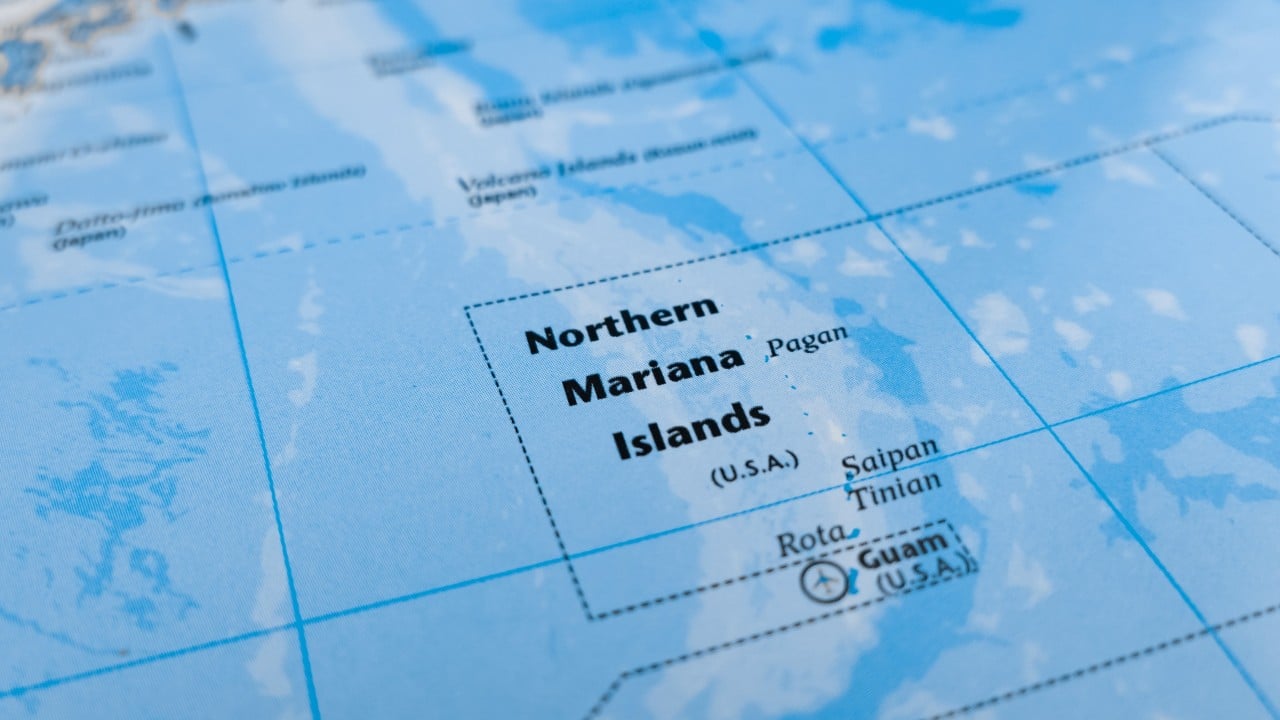
Washington has suspended visa-free entry for Chinese visitors to the Northern Mariana Islands amid allegations of birth tourism and people smuggling in the US territory.
The Department of Homeland Security (DHS) announced on Monday the suspension of the Commonwealth of the Northern Mariana Islands Economic Vitality and Security Travel Authorisation Programme.
US Senator Mike Lee hailed the move on social media, calling the programme a “Biden-era loophole for Chinese birth tourism” and praising the Trump administration for having “closed” the pathway.
The programme, also known as EVS-TAP, allowed pre-screened Chinese nationals to visit the islands for up to 14 days without a US visa. Under the new decision, existing authorisations will be cancelled from October 30, although Chinese nationals already in the Pacific Ocean territory may complete their authorised stays.
More than 3,000 Chinese nationals entered under EVS-TAP in financial year 2025.
The DHS said it had found “good cause” to suspend the programme as “PRC [People’s Republic of China] nationals are almost certainly exploiting EVS-TAP”.
It cited potential espionage and intelligence gathering near US military installations, unauthorised travel from the islands to Guam, birth tourism and past cases involving criminal activity and money laundering linked to Chinese-connected enterprises.
Trump open to nuclear talks with Xi and Putin
The decision followed an April letter from Lee and several other Republican senators.
In recent years, US prosecutors have charged several Chinese nationals with being smuggled to Guam by boat from Saipan, the capital of the Northern Mariana Islands, including cases involving people found near Guam’s military sites.
Chinese nationals have paid thousands of dollars for boat trips from CNMI to Guam in search of higher wages and job opportunities, according to court records in recent smuggling cases.
Saipan’s Chinese-linked Imperial Pacific casino has also faced investigations over money laundering, labour abuses and human trafficking.
While DHS acknowledged in Monday’s notification that some businesses may have developed plans based on travel under EVS-TAP, it concluded that “the identified acute risks … outweigh any countervailing personal or economic interests”.
SCMP Plus is a new premium news platform that gives you an
all-inclusive edge to stay ahead on China news.
To access our exclusive content you’ll need to subscribe.
Already a subscriber?
LOG IN
Yet the suspension may have economic consequences for a territory already struggling to bolster its declining tourism industry, which was once reliant on Chinese visitors.
Since around 2009, Chinese nationals have been allowed to enter the Northern Mariana Islands under special arrangements intended to support its economy, even after China was excluded from a broader visa waiver programme that included Guam on security grounds.
In 2024, under former president Joe Biden, the US introduced a more structured visa-free entry programme for Chinese tourists, replacing an earlier system that allowed stays of 14 or 45 days, depending on the period. EVS-TAP took effect in February 2025, after Trump returned to power.
In pre-pandemic years, China accounted for around 40 per cent or more of total visitor arrivals. In 2017, the islands welcomed about 234,000 Chinese visitors out of a total of 660,000. In 2019, Chinese arrivals still stood at around 185,000.
01:42
Trump’s new press secretary Katie Zacharia raises eyebrows over legal credentials
But by 2025, Chinese visitors only accounted for about 7 per cent of the roughly 160,000 total visitors to the territory – well below the 500,000 annual visitors which local tourism stakeholders say are needed for the industry’s viability.
The region’s economic difficulties are closely tied to the collapse of its traditional industries.
After the garment industry mostly moved to China, the Northern Mariana Islands “turned to Chinese tourism, and also to Chinese casino gaming”, then-governor Arnold Palacios said in 2023.
At its peak, the Saipan casino reported “billions of dollars in rolling chip volumes generated at just 16 VIP tables,” Palacios said. But “this was short-lived and had unfortunate consequences”.
By 2023, the situation had deteriorated further. “Chinese tourism has dried up and the casino has shut down. The Commonwealth economy continues to struggle, and the government is in deep fiscal distress,” he said.
At the same time, he acknowledged the unique and “tenuous” nature of the Chinese entry pathway.
Despite these concerns, local business groups, the hotel association and officials have pushed to keep some form of easier entry for Chinese visitors.
Governor David Apatang has urged lawmakers to preserve EVS-TAP, describing it as “critical” to the island’s economy.
Trump rejects working with China on AI despite Xi’s recent visit
But Apatang may find this a hard sell, as the issue has become part of the wider US immigration debate ahead of the November midterm elections. Trump has repeatedly highlighted his administration’s tough immigration enforcement as a reason for voters to keep Republicans in power.
Births to tourist mothers, overwhelmingly Chinese, peaked at 581–582 in 2018, according to the Commonwealth Healthcare Corporation, at times exceeding local births, before collapsing to 58 in 2024 and roughly 47 in 2025, according to CHCC data and Kimberlyn King-Hinds, the Northern Mariana Islands’ delegate to Congress.
Republican lawmakers have cited estimates that more than 3,300 babies have been born in Saipan to visiting Chinese mothers since 2009.
While the Trump administration has continued to pursue engagement with Beijing, the president has targeted China over birthright citizenship, which he has sought to eliminate.
“I would like to congratulate President Xi, and the Great Country of China, on their massive Birthright Citizenship WIN!” Trump said in June after the Supreme Court upheld the rule.
In August, Trump signed an executive order titled “Ending Birth Tourism”, directing agencies to crack down on travel intended to give birth on US soil.
The administration has since established a Birth Tourism Prevention Task Force that has revoked the visas of hundreds of Chinese nationals.
Trump will be meeting Xi for a third time this year on the sidelines of the Asia-Pacific Economic Cooperation Summit in Shenzhen, China, in November.
KioskNews shows a cleaned-up reading view extracted from the publisher’s page — the original always lives on their site, not ours.