President urges opposition to drop NT$20,000 cash handout proposal
Taiwan’s President William Lai (賴清德) yesterday urged opposition parties not to press ahead with a plan to pass a bill tomorrow to distribute NT$20,000 (US$607.28) in cash to each member of the public.
Lai, also chairman of the Democratic Progressive Party (DPP), said the proposal would undermine fiscal balance, divert funds from other priorities, and increase government debt, burdening future generations, according to party spokesperson Wu Cheng (吳崢).
Lai made the remarks at the DPP’s central standing committee meeting amid reports that the opposition-dominated legislature would try to pass the bill on Friday.
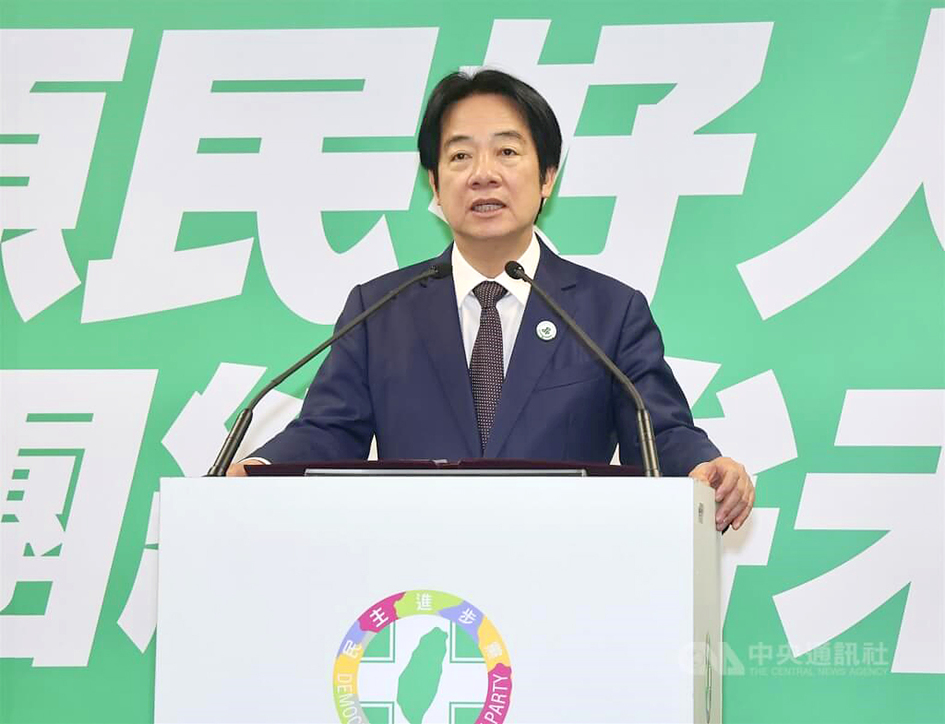
President Lai Ching-te.
Photo:CNA
The Executive Yuan proposed a NT$10,000 cash payout in its 2027 budget in August to share economic gains with the public, allocating NT$235.7 billion for the program.
The main opposition Chinese National Party (KMT) subsequently proposed doubling the amount.
The KMT bill calls for the handout to be funded through a special budget, arguing that higher-than-expected tax revenue in 2026, driven largely by the AI boom and high- tech industries, has provided sufficient fiscal room for the payout.
Lai, however, argued that the opposition’s bill would encroach on the Executive Yuan’s constitutional authority over budgetary matters, according to Wu.
With tax revenue exceeding expectations, the Executive Yuan has proposed a supplementary budget covering welfare programs, public-sector pay raises, defense, disaster recovery, and subsidies to help stabilize fuel, electricity and transportation costs.
Wu quoted Lai as saying that the items covered by the supplementary budget, which is pending legislative review, are pressing national priorities.
The smaller opposition Taiwan People’s Party (TPP) voted in mid-October to fast-track the bill to a second reading, bypassing committee review.
Local media widely reported that opposition parties could seek a vote on the bill as early as Friday.
KioskNews shows a cleaned-up reading view extracted from the publisher’s page — the original always lives on their site, not ours.