Fish reveal their winter hideouts

In the heat of the summer, lake trout (Salvelinus namaycush) descend into cooler and deeper waters. However, their preferences during the winter aren’t quite as straightforward. Researchers in Ontario, Canada noticed that while lake trout in Lake Simcoe typically hung out close to the lake bottom in winter, the fish in smaller lakes frequently stayed in the upper water column. The team probes these differences in a study recently published in the journal Proceedings of the National Academy of Sciences (PNAS)
“We were curious about what caused these differences,” Lidi Shi, co-author of the study and a postdoc fellow at the University of Toronto Scarborough’s Hydro-Environmental Research Lab, tells Popular Science.
Shi and his colleagues investigated the matter by tagging a bunch of lake trout with acoustic tags equipped with depth sensors so that they could track their whereabouts beneath the ice. With underwater receivers the team could understand how deep the fish were swimming, and they also collected data about water temperature at different depths.

“Our study provides a new physical explanation for where Lake Trout spend the winter. We found that fish tend to select water near 2 degrees Celsius [35.6 degrees Fahrenheit], but the depth of this preferred temperature varies among lakes depending on their size, shape, and wind,” Shi explains.
The team was surprised by this temperature preference, according to Mathew Wells, a co-author of the study who leads the University of Toronto Scarborough’s Environmental Fluid Dynamics Group. They don’t know why these long-lived North American fish prefer it, though it could be because this temperature helps the species conserve energy. Additional research is required to solve this mystery.
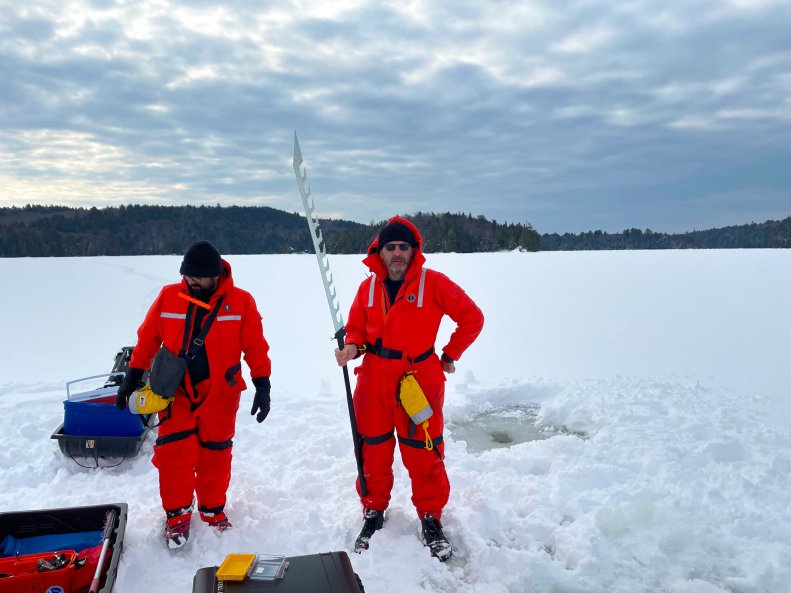
socks and steaming mugs of cocoa? Shi says that the team’s findings could help fisheries managers understand how winter water conditions and their shifts may affect fish habitats and pinpoint some of the risks that assessments conducted during the summer may miss.
“As winters become warmer and ice cover changes, the underwater temperature regimes may also change, potentially shifting where fish can live,” Shi says.“Understanding these changes is increasingly urgent for protecting cold-water fish populations and managing lake ecosystems.”

2026 Popular Science Home of the Future Awards
39 products that will improve your everyday life.
KioskNews shows a cleaned-up reading view extracted from the publisher’s page — the original always lives on their site, not ours.