Sir William Heseltine obituary
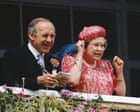
Sir William Heseltine, who has died aged 96, has a strong claim to have been one of the most consequential royal courtiers during the reign of Queen Elizabeth II, and was perhaps her favourite. Not only was he the first Australian to enter the tweedy aristocratic atmosphere of the royal household, but during his 27 years at the palace, rising from an assistant information officer to being the queen’s private secretary (1986-90), he initiated changes that have shaped public perceptions of the family firm ever since.
In the words of the royal biographer Ben Pimlott, whereas Heseltine’s predecessors had done everything to keep the press out, he “saw it as his job wherever and whenever possible to let them in”. Heseltine, said Pimlott, “was the first press secretary who recognised a need to sell royalty to the public and, if necessary, to shape its behaviour accordingly”.
It was he who suggested and organised the groundbreaking 1969 Royal Family documentary, watched by an estimated 68% of the British public and many millions abroad. He also instigated the concept of the first royal walkabouts on public visits. And he might have persuaded the royals to pay income tax well before they chose to do so in 1993, if his support for the idea had not been deemed a step too far at the time. Heseltine said later: “While it was not the business of the monarchy to be too avant garde, it could not afford to be too far behind the times either.”
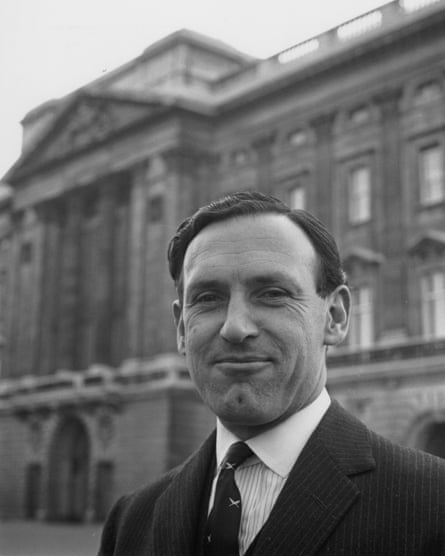
He was born in Fremantle, Western Australia, the elder son of Louise (nee Payne) and Henry Heseltine, who were both teachers and both from families long settled in the country – he claimed his ancestors arrived on convict ships. Part of his childhood was spent in the small town of Wyalkatchem deep in the bush, 100 miles east of Perth, where his father was a headteacher. Later William was educated at Christ Church grammar school in the Perth suburb of Claremont, before obtaining a first-class history degree at the University of Western Australia.
As a young high flyer he began his civil service career in the private office of the conservative prime minister and arch-royalist Sir Robert Menzies, and it was from there in 1960 that he was seconded for two years to Australia House in London, then to Buckingham Palace as a junior press officer.
It was a surprise posting as far as Heseltine was concerned: “I have never had anything to do with the press,” he told the recruiting officer, who replied: “They will probably consider that an advantage.” Indeed, at that time the palace press office was under the command of Cmdr Richard Colville, who was anything but welcoming to the media. Colville, known to correspondents as the Abominable No Man, had been in post since 1947 and saw little need to transmit any information to journalists whatsoever.
Even some members of the royal family had begun to notice the need for change. After a two-year posting, Heseltine returned to Australia as official secretary to the governor general, but within four years he was called back to become assistant press secretary to Queen Elizabeth II. Possibly apocryphally, when he put his new job description in his passport he was told bluntly by an immigration officer at Sydney airport: “Mate, there’s no T in courier.”
With a more informal Aussie style, Heseltine actually liked journalists and also transmitted that informality in his dealings with the monarch. He even got on well with Colville. One member of the entourage on a trip to South America in 1968 told Pimlott: “Bill had such as easy manner with the queen. He would come up from the back of the plane and plonk himself down to go over the newspapers with her. But he was never disrespectful.” The queen rather approved, especially as she had not got on particularly well with his civil service predecessor, Philip Moore, seen by colleagues as “stuffy”.
It was an era of innovative royal stunts, such as the knighting of the around-the-world yachtsman Francis Chichester by the queen in public at Greenwich in 1967, with the same sword Elizabeth I had used to knight Sir Francis Drake in 1581. Two years later came the ersatz inauguration of Prince Charles as Prince of Wales at Caernarfon Castle.
Heseltine became press secretary following Colville’s retirement in 1968 and was one of the instigators of the Royal Family documentary that depicted the royals semi-informally at breakfast, cooking a barbecue by a Scottish loch during their annual holiday at Balmoral and chatting to dignitaries. Heseltine told the author Valentine Low: “I shall set modesty aside here and make the claim to have been essentially the person who came up with the idea and brought it into being.”
Another innovation was the royal walkabout, which originated during a tour of New Zealand in 1970, when the queen and Prince Philip left their official car and met the waiting crowds. It was an idea now commonplace on royal visits but revolutionary then: it has certainly helped to boost the numbers of enthusiastic spectators at royal public appearances.
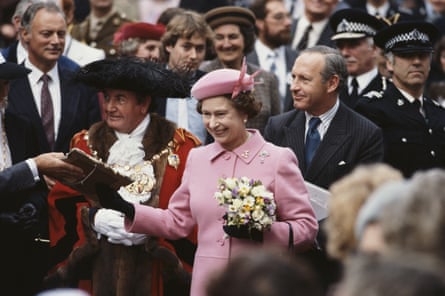
Heseltine progressed up the court hierarchy: assistant private secretary for five years from 1972, then deputy private secretary for nine and finally private secretary for four years until his retirement in 1990. Although he missed the royal upheavals of the 1990s, his own period had its ups and downs, notably the sacking of the Australian Labor prime minister Gough Whitlam by Sir John Kerr, the queen’s representative as governor general, in 1975 – an event that took Heseltine and the palace by surprise and which gave one of the most significant boosts to Aussie republicanism. Heseltine later said that he would not have advised it, and rebutted allegations that it was a stitch-up by the queen’s advisers.
Shortly after becoming private secretary in 1986, Heseltine was confronted by a Sunday Times story claiming that the queen was out of sympathy with the hardline policies of Margaret Thatcher, especially during the miners’ strike. The story was the result of a lunch between a journalist from the paper and the then press officer Michael Shea. It forced a denial from Heseltine, unusually through the letters column of the Times, in which he wrote that any suggestions the queen had suddenly departed from “34 years unvarying adherence to constitutional principles” were “preposterous”. Some indiscretions were beyond the pale, though, and Shea was effectively sacked a few months later without the customary knighthood. It was, Heseltine said, the worst problem he had to deal with at the palace: “It carried a threat to our relationship with No 10,” he told Low.
The report that he compiled in the 80s suggesting the queen should pay income tax proved to be a plan too toxic to be considered, until a decade later in the wake of the Windsor Castle fire, which caused a public furore when taxpayers were expected to pay for the repairs.
Heseltine retired to Western Australia after nearly three decades working for the queen, though he always dropped in for tea at the palace with her on subsequent visits to London. He was made a Knight of the Order of the Bath (KCB) in 1986 (later advanced to GCB), to add to an earlier appointment as Knight of the Royal Victorian Order (KCVO) in 1982 (later advanced to GCVO).
His first two wives, Ann (nee Turner) and Audrey (nee Nolan), predeceased him, in 1957 and 2013 respectively. He is survived by his third wife, Diana (nee Loftus), whom he married in 2016, and two children, John and Sophy, from his second marriage.
KioskNews shows a cleaned-up reading view extracted from the publisher’s page — the original always lives on their site, not ours.