JUST TRANSITION: Connecting the crises and putting health at the heart of Africa’s energy future
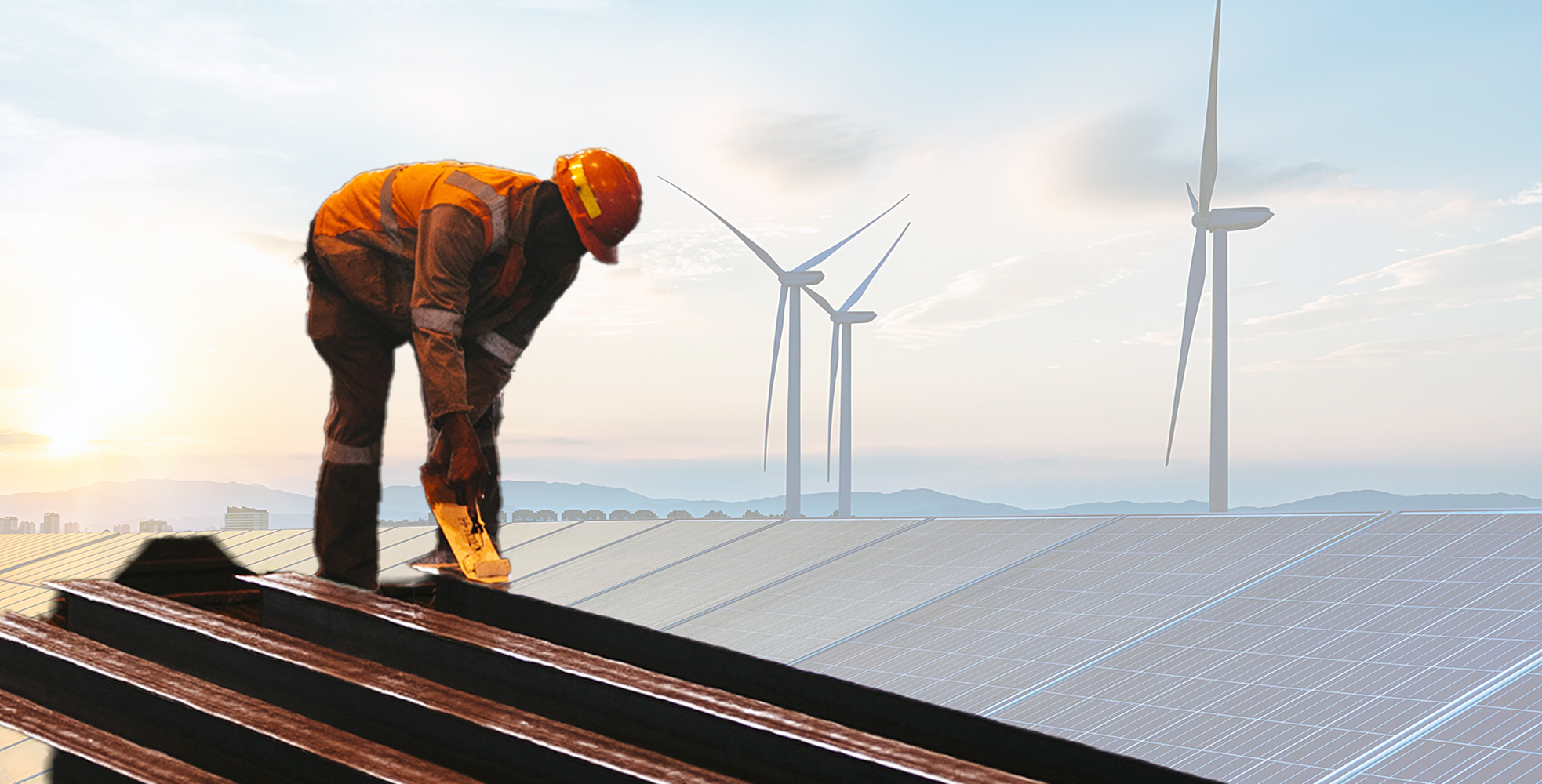
When the global public health community meets in Cape Town this September for the 18th World Congress on Public Health, delegates from the global public health community will bring expertise and experiences shaped by crises.
Some will come from regions affected by war, conflict or displacement. Others will share accounts of floods, drought, failed harvests, extreme heat, toxic air or failing public services. Many will care for patients whose illnesses are linked to unsafe work, poverty, pollution or political neglect. Every participant and those they serve will have been affected by one crisis or another while dealing with and preparing for the super El Niño – conditions that will influence global temperature and rainfall patterns, increasing the risk of extreme weather.
The congress’ theme, “Health Without Borders: Equity, Inclusion, and Sustainability”, must be more than a slogan. It calls us to understand this moment, connect often-separated crises, and lead a justice-based response. The congress, to be held from 6-9 September 2026, is a unique opportunity for the public health community to address the forces driving ill health across borders.
The crisis around the Strait of Hormuz highlights these connections. The ongoing conflict between the United States and Iran, along with attacks on shipping and reduced tanker traffic, threatens a key route for about one-fifth of global oil supplies. The effects extend far beyond the Gulf: oil prices rise, transport and food costs increase, and fossil fuel-importing countries face greater fiscal strain. Health systems already under pressure from shortages and debt are further stretched. Families that are not involved in the conflict bear the burden through higher bills, lost livelihoods and reduced access to care.
This is the reality of fossil-fuel dependence: a regional conflict escalates into a global public health emergency because the energy system relies on hazardous resources, vulnerable shipping routes and geopolitical power. Those who bear the highest costs rarely control the wells, tankers, or profits. UN Secretary-General António Guterres said we should treat El Niño as the urgent climate warning that it is, and that the only effective response is climate action equal to the crisis – ending the addiction to fossil fuels, accelerating the shift to renewables, protecting the most vulnerable and delivering early warning systems for all.
Shared systems
This is why the World Congress on Public Health is so important now. Cape Town should be where the public health community links emergencies often seen as separate – conflict, energy insecurity, rising costs, pollution, climate change and inequality – and identifies the shared systems behind them.
Public health provides both the perspective and the responsibility to act. At its best, it examines not just the direct causes of disease, but also the underlying political, commercial, social and environmental factors that determine access to clean air, safe work, food, housing, crisis survival and representation. As the World Health Organization (WHO) has long emphasised, these conditions often influence health more than medical care or individual choices.
By uniting professionals, advocates and communities from diverse regions and disciplines, the congress offers more than a diagnosis of current challenges. It can foster shared understanding, solidarity and collective leadership to change the systems that create these crises. Public health is more than a profession; it is a tradition of social action.
/file/attachments/orphans/health_279363.jpg "Health services are delivered by national, provincial, and local governments, which work together to ensure access to healthcare. (Photo: Shutterstock)")
From advocating for safer workplaces and tobacco control to reproductive justice and HIV treatment access, its greatest achievements have come when health professionals challenged the status quo. They identified harmful structures, supported affected communities, and used their expertise and public trust to demand change. This history is not only to be celebrated in Cape Town; it is a responsibility we must continue to uphold, especially now.
The climate, environmental, and pollution crises are interconnected. Today’s conflicts and economic shocks are also linked to struggles over land and resources. At the core is an economic system based on the extraction and burning of coal, oil and gas. Fossil fuels harm health throughout their lifecycle: at extraction sites, along pipelines and transport routes, in refineries, ports and power stations, and through air, water, and soil pollution, as well as the warming caused by their burning. Air pollution is linked to about seven million premature deaths each year.
False choices
Let us also remember that fossil-fuel harm extends beyond health and the environment. It influences democratic institutions and information systems. Lobbying, political influence, greenwashing and disinformation obscure accountability and create false choices: jobs or health, energy access or clean air, development or climate action. As public health learned from tobacco, we cannot treat those harmed while allowing the industry responsible to shape evidence, diagnosis and policy. Health workers should not be expected to care for those affected by pollution while political and commercial interests maintain their sources. Especially since there are globally reported health workforce shortages.
Africa is familiar with this injustice. Despite contributing the least to global warming, it faces some of the most severe consequences. Millions lack reliable, affordable energy, which is often used to justify further fossil-fuel expansion, as if the continent must accept more extraction, pollution and debt for development. However, this is not energy justice. It continues an unequal model under a new justification.
For Africa, any serious conversation about energy justice and a transition away from fossil fuels must therefore begin with the continent’s realities: widespread energy poverty, deep economic inequality, dependence on extractive industries, limited fiscal space, and the need to create dignified livelihoods at scale.
It must also respond to the mounting health impacts of the climate crisis, from extreme heat, floods and drought to food insecurity, infectious disease, displacement and growing pressure on already overburdened health systems. A just transition cannot simply mean replacing one energy source with another while leaving existing patterns of ownership, exploitation and exclusion intact. It must reduce the drivers of climate change while strengthening the resilience of communities and health systems to the harms that are already unfolding.
/file/attachments/orphans/ED_233331_164597.jpg "Connecting the Crises: Why Health Must Shape Africa’s Energy Future. (Photo: Gallo Images/Sharon Seretlo)")
It must deliver affordable and reliable energy while protecting workers, communities and ecosystems. It must repair past harms, create secure livelihoods, strengthen public and community ownership, and give affected people meaningful power over the decisions that shape their futures. Africa must not become the final market for obsolete fossil fuel infrastructure, nor a new sacrifice zone where critical minerals are extracted under the same unjust rules.
Health must therefore be the measure of whether this transition is truly just: whether it delivers cleaner air, safer work, stronger communities, greater equality and the conditions in which everyone can live and thrive. This is not an abstract ambition. Across Africa, communities, workers and health systems are already demonstrating what a more just and health-centred energy future can look like.
In SA, the Vukani Environmental Justice Movement and groundWork’s landmark “Deadly Air” case affirmed that toxic air in the Highveld violates constitutional rights. In Zimbabwe, solar power in health facilities is helping clinics keep lights, essential equipment and vaccine storage running. Kenya, meanwhile, has emerged as a regional renewable energy leader, with geothermal, hydro, wind and solar providing nearly 90% of its electricity generation, demonstrating that cleaner energy can be developed at a national scale. Across the continent, communities are resisting destructive extraction, workers are demanding protection through the transition, and health professionals are making the case for clean air, resilient healthcare and energy democracy.
These are not isolated victories or side stories. They are practical foundations for African leadership, and evidence that a just transition can be built around health, rights and dignity.
Fossil fuel phase-out plans
The Cape Town congress should provide participants with more than conversations. Public health organisations must support fossil fuel phase-out plans grounded in health and equity, defend communities and workers, expose conflicts of interest, challenge climate disinformation, and advocate for grant-based finance rather than increased debt. Health professionals should use their trusted voices to explain both the causes of illness and the necessary changes.
The path from Cape Town leads to Addis Ababa, where Ethiopia will host COP32 in 2027. Africa has the opportunity to present not another list of vulnerabilities, but a shared vision for energy justice, public health and economic transformation.
Each congress participant brings personal experience from their life, work, or community. Cape Town is our chance to unite these perspectives, understand the broader system, and act with collective courage.
Public health should not only help the world endure the crises of the fossil-fuel era, but also lead the way out with dignity and justice. DM
Azeeza Rangunwala is a Medical Scientist and Africa Coordinator of the Global Green Healthy Hospitals programme based at groundWork, an environmental justice organisation and the strategic partner of Health Care Without Harm. Shweta Narayan is Campaign Lead at the Global Climate and Health Alliance (GCHA), where she leads global advocacy on fossil fuels, health, just transition and climate justice.
KioskNews shows a cleaned-up reading view extracted from the publisher’s page — the original always lives on their site, not ours.