Could data help decode women’s low workforce participation? Why the govt thinks so
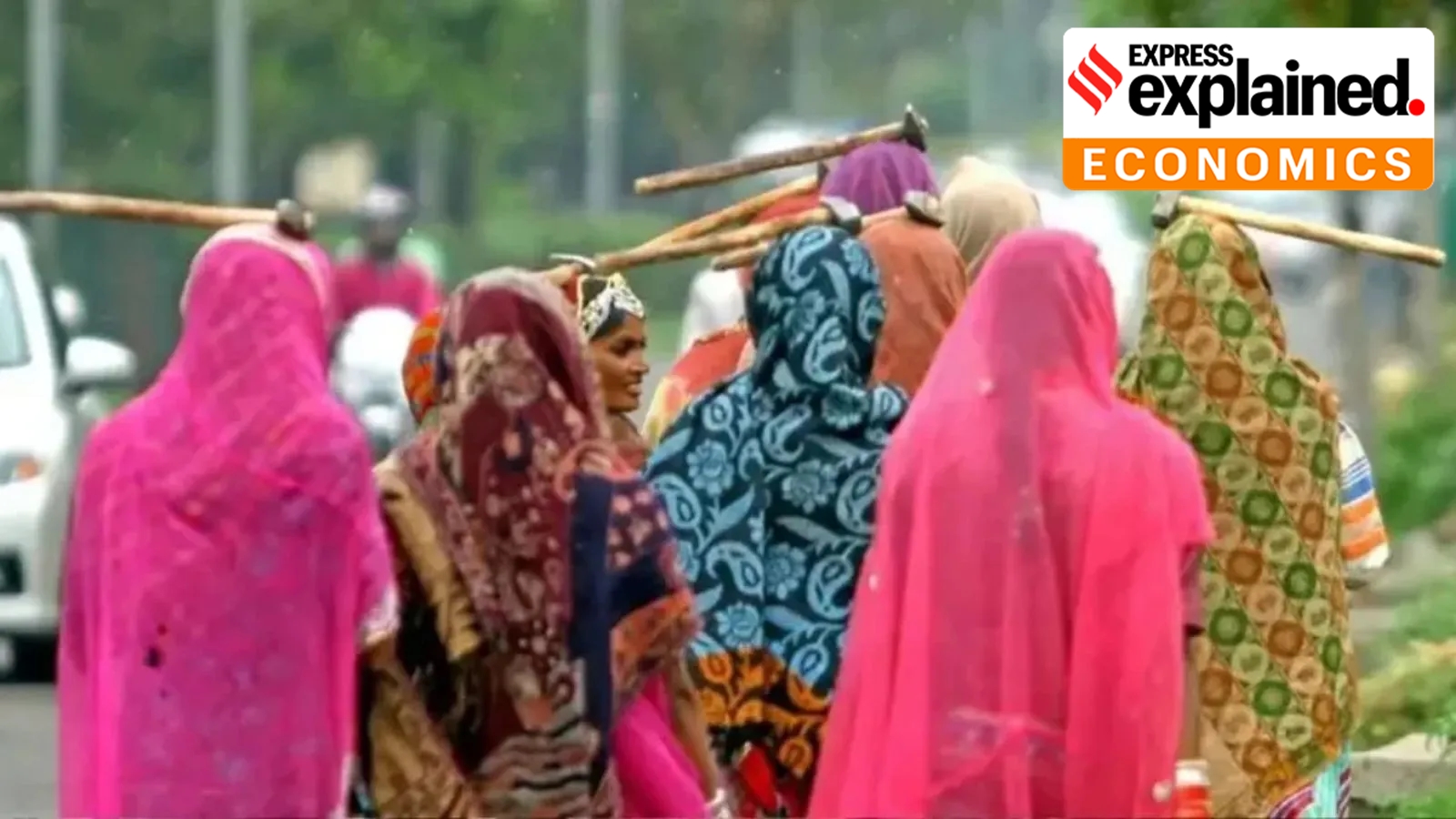
The government’s target to make India a developed nation by 2047 faces a major hurdle: getting enough women into the workforce. According to the World Bank, raising the female Labour Force Participation Rate (LFPR) to 50% — it was 34.6% in September — “could be the best way” for India to raise its GDP growth rate closer to the 8% needed to become a high-income country by 2047.
“The argument that women don’t take up employment because of care duties, that there is a direct relationship between the two, has to be established first,” said Professor Neetha N of Centre for Women’s Development Studies. “So far, only broad analysis and claims have been made as there is not enough macro data that can establish this link.”
And so, the government is now looking for this data, with the Ministry of Statistics and Programme Implementation (MoSPI) proposing changes to its flagship job and informal sector surveys following requests from academics, the Ministry of Micro, Small & Medium Enterprises, the Ministry of Skill Development and Entrepreneurship, and the government’s top economic advisers.
According to a statistics ministry official, the new questions will help capture the “magnitude of care work being performed”. And because care work can overlap with formal employment, they should also show how much domestic and caregiving work employed individuals undertake. “Among the unemployed, we also need to know how many are primary caregivers, or conversely, how many caregivers are unable to take up employment specifically due to care responsibilities.”
New questions
Last month, MoSPI suggested adding new questions to the Periodic Labour Force Survey (PLFS) to get more detailed answers on the unpaid work done by household members. This includes asking if the things they make and services they provide — such as cooking, feeding and taking care of children, and helping elders — are for their own consumption or for selling. It also proposed asking if people actively sought paid work in the previous 30 days, whether they want to do such work at present, and the main reason why they have not looked for such work. One of the answer options for the last question is family and household responsibilities.
The PLFS already asks people not looking for work what the main reasons are, with the options including not being qualified, health and age, wanting to continue studies, and child care or personal commitments in home making. In response to this question, which experts say is “too generic”, 44.4% of women in 2025 cited child care or personal commitments in home making as the main reason for not looking for work.
This generic question also does not show “how many women take on unpaid household work by choice and how many because they feel it is their duty to do so”, said Pooja Sharma Goyal, Founding Chief Executive Officer of The Udaiti Foundation, a non-profit working on improving the availability and accessibility of quality work for women.
But will people answer honestly?
Story continues below this ad
“When it comes to work, respondents never give false answers or refuse to respond,” a MoSPI official said. “People think that when government officials inquire about their work, some government benefit or scheme will be provided. Consequently, respondents either report accurately or exaggerate slightly; they don’t underreport.”
Choice or duty
Unpaid domestic and care work is one of the major factors preventing women from taking up paid jobs. According to the government’s Time Use Surveys, working-age men (aged 15-59 years) spent 62 minutes a day on various unpaid activities in 2024, down from 74 minutes in 2019.
In comparison, women in the same age bracket saw their time spent on unpaid activities — which includes caring for children and the elderly — go up slightly from 364 minutes per day in 2019 to 366 minutes in 2024. And yet, the female LFPR rose from around 26.5% to 43.6% over the same period.
According to Professor Neetha of the Centre for Women’s Development Studies, the new PLFS questions, in conjunction with data from the Time Use Survey, will provide the data needed for detailed analysis, “and help us understand women’s work better”.
Story continues below this ad
“A lot of policymaking and policy advisory happens at a macro level,” said economist Mitali Nikore, Founder of Nikore Associates. “But we need to be able to say what is happening in rural and urban areas of each state, the youth versus older persons. If a national survey shows there is interest in working, it would be completely against the stereotype we hold right now that ‘wahan pe toh unko kaam hi nahi karna hai’.”
Hurdles to work
It’s not just the PLFS that MoSPI is looking to add questions to.
Through its Annual Survey of Unincorporated Sector Enterprises (ASUSE), the ministry wants to ask female business owners if restrictions on time available for entrepreneurial work, on women’s mobility outside the home, and household or caregiving responsibilities affect the participation of women at work.
These seem rather obvious hurdles to work. And yet, very few states have managed to solve for them, chief among them being Tamil Nadu. The state employs four out of every 10 directly-employed female factory workers in the country, having replicated the Chinese model of providing dormitories to house women workers to power its manufacturing sector. With migrant workers crucial for southern states, whose population has begun ageing, dormitories close to factories or on campuses are important policy interventions as they solve two key obstacles for women who want to work: distance from place of work and living arrangements.
Story continues below this ad
“Elder care, child care… it all adds up. These are one of the first factors that drive you out (of the labour force),” said Nikore. “But when you have to drive yourself back in, you need everything to fall in place — the pay, employment location has to be appropriate, a safe way to get to work, the care support. And all this hardly ever happens in an environment where jobs are scarce anyway.”
KioskNews shows a cleaned-up reading view extracted from the publisher’s page — the original always lives on their site, not ours.