EXPLAINER | Duterte at ICC: The legal feud ahead of the trial
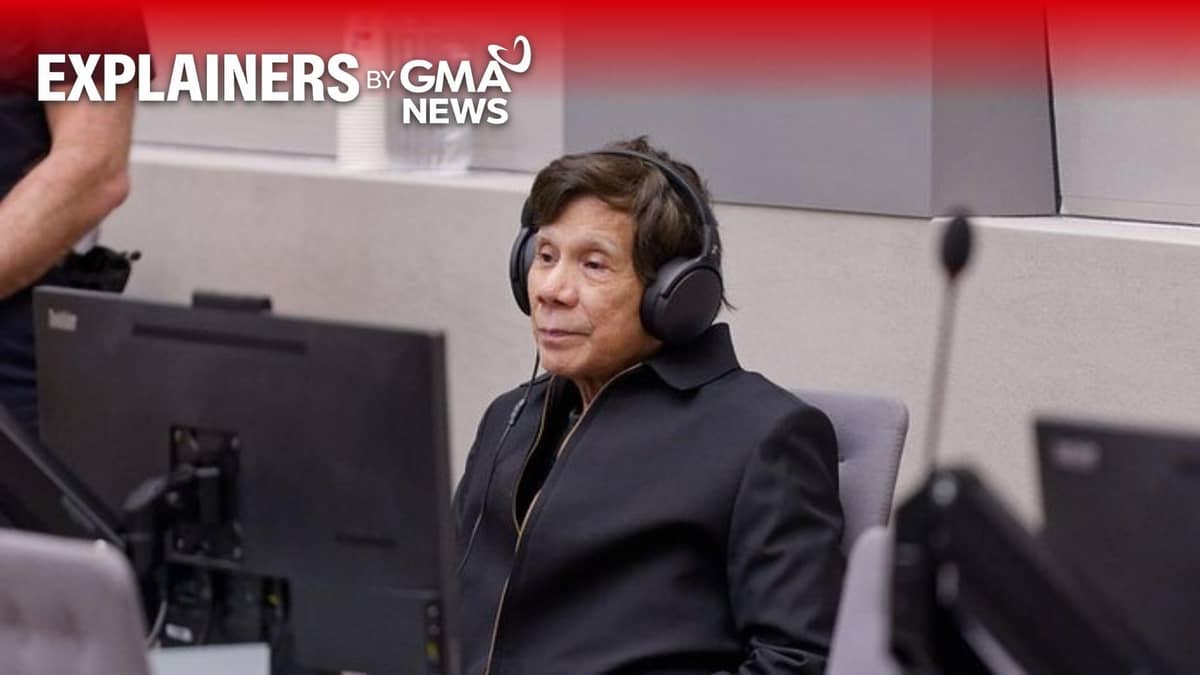
THE HAGUE – Former president Rodrigo Duterte is set to stand trial before the International Criminal Court (ICC) for his crimes against humanity case. Now, with the Office of the Prosecutor, the Defense, and the Common Legal Representatives of the Victims (CLRV) having submitted their formal trial briefs, the ICC Trial Chamber III is ready to open proceedings in a trial projected to last for months, if not years.
This GMA News Online Explainer series breaks down the legal developments in the nine months leading to the trial’s opening on November 30, the Prosecution’s allegations against the former president, the Defense’s arguments for dismissal or domestic jurisdiction, and the hopes of the 539 victim families participating in the trial.
Where the proceedings are now
After Pre-Trial Chamber I rejected the Defense’s appeal on May 21, 2026, the case was transferred to Trial Chamber III, composed of Presiding Judge Joanna Korner, Judge Keebong Paek, and Judge Nicolas Guillou.
Even before Duterte’s trial began, the ICC courtroom saw intense arguments over evidence, procedure, and the former president’s fitness.
On June 19, 2026, Trial Chamber III issued its first Directions on the Conduct of Proceedings, which established rigid filing schedules for trial briefs, evidence rosters, witness sequences, and prior recorded testimony applications under Rule 68.
Prosecutors, Duterte’s defense, and victims’ legal representatives have been locked in legal disputes over the volume of evidence, protected witness testimony, and the procedural boundaries governing which victim families may participate in the proceedings.
Why did the Defense challenge Duterte's fitness to stand trial?
In a formal request filed on May 25, Duterte’s counsel, Peter Haynes, cited a previous medical expert who found that the former president had “a partial understanding of the accusations,” and requested a comprehensive medical re-examination. On June 12, Trial Chamber III appointed a panel of three independent experts—specializing in forensic psychiatry, geriatric and behavioral neurology, and neuropsychology.
The Defense further argued on September 14 that Duterte suffered from “significant memory impairment,” preventing him from retaining recent information or reliably recalling his Lead Counsel’s name or whether he had previously pleaded guilty.
However, both the Prosecution and the CLRVs noted that the expert panel unanimously found no evidence of cognitive decline since pre-trial assessments, attributing poor test results to test underperformance and inconsistent effort.
On September 28, Trial Chamber III ruled that Duterte is fit to stand trial. To ensure his fair participation, the Chamber instructed the Registry to make special courtroom accommodations, including over-ear noise-canceling headphones, flexible sitting schedules to accommodate time-zone differences for Philippine witnesses, options for remote video-link attendance from the ICC Detention Center, and continuous health monitoring by the Court’s Medical Officer.
Why is the Defense challenging the Prosecution’s charges and evidence volume?
On August 31, Duterte’s defense team filed a sweeping challenge to the form of the charges. Haynes argued that the Prosecution’s practice of relying on “non-exhaustive illustrative incidents” subjected Duterte to charges that he described as a “literal moving target,” violating Article 67(1)(a) fair trial rights to be informed promptly and in detail of the charges.
The defense challenges the sheer volume of electronic disclosure, including an August 5 notification from the Prosecution, in which it delivered 6,909 items containing incriminating, Rule 77 defense preparation, and exculpatory records between January and July 2026. Haynes complained that combing through thousands of electronic files placed an unmanageable burden on them and infringed on Duterte’s right to adequate time and facilities to prepare a defense under Article 67(1)(b).
How is the Prosecution streamlining its evidence and witness lineup?
In response to defense objections and judicial directions, the Prosecution submitted a restructured List of Evidence on October 12, organizing its repository into seven distinct categories, with Category 1 concerning material cited in its Trial Brief.
Crucially, prosecutors offered a procedural compromise: the OTP revealed it had already removed 253 items and offered to drop nearly 7,000 additional items from its formal evidence list if the Defense agrees to stipulated facts regarding the collection of a still-redacted category of evidence.
The Prosecution filed its trial presentation strategy in an Updated List of Witnesses on November 6, providing the number of key witnesses to testify via secure audio-video link (AVL). In a previous submission, the Prosecution informed the Chamber that it intended to call witnesses through Rule 68 applications. — VDV, GMA News
KioskNews shows a cleaned-up reading view extracted from the publisher’s page — the original always lives on their site, not ours.