7 Most Universally Loved Sci-Fi Movies Of All Time, Ranked

Senior Music Editor at Screen Rant, Sarah's love of sound and story drive the beat. A globetrotting brand whisperer and award-winning journalist, she’s built cross-cultural narratives around the world—but music has always been her true north. She launched DJ Mag North America, successfully introducing the iconic UK brand to the U.S. market. Previously, she carved a space for EDM inside the pages of VIBE, blending electronic and hip-hop culture long before it was trendy.
Science fiction has produced some of cinema's most extraordinary achievements, but the movies audiences admire most aren't always the ones they want to watch again. Films like 2001: A Space Odyssey and Blade Runner are rightly celebrated for their artistic ambition, yet there's something equally impressive about a sci-fi movie that practically everybody loves.
The most universally beloved sci-fi movies appeal to audiences well beyond dedicated genre enthusiasts. They're the films families revisit together, introduce to younger generations, and quote decades after their original releases. Even viewers who rarely seek out science fiction can find themselves completely captivated by the right story, whether it involves time travel or a friendly visitor from another planet.
Some of the most rewatchable sci-fi movies ever made became cultural phenomena because their characters and stories were immediately accessible. Others developed enormous affection over time, proving that commercial success and lasting popularity aren't necessarily the same thing. Either way, their ability to entertain audiences across generations is what makes them special.
Of course, no movie is literally loved by everyone, and even the biggest Hollywood favorites have their detractors. However, these seven films have earned extraordinary goodwill among audiences and critics alike. Like the best comforting sci-fi movies, they offer the kind of entertainment people happily return to again and again. Ranked by their enduring popularity, emotional appeal, and sheer rewatchability, these are science fiction's ultimate crowd-pleasers.
7 Men In Black (1997)
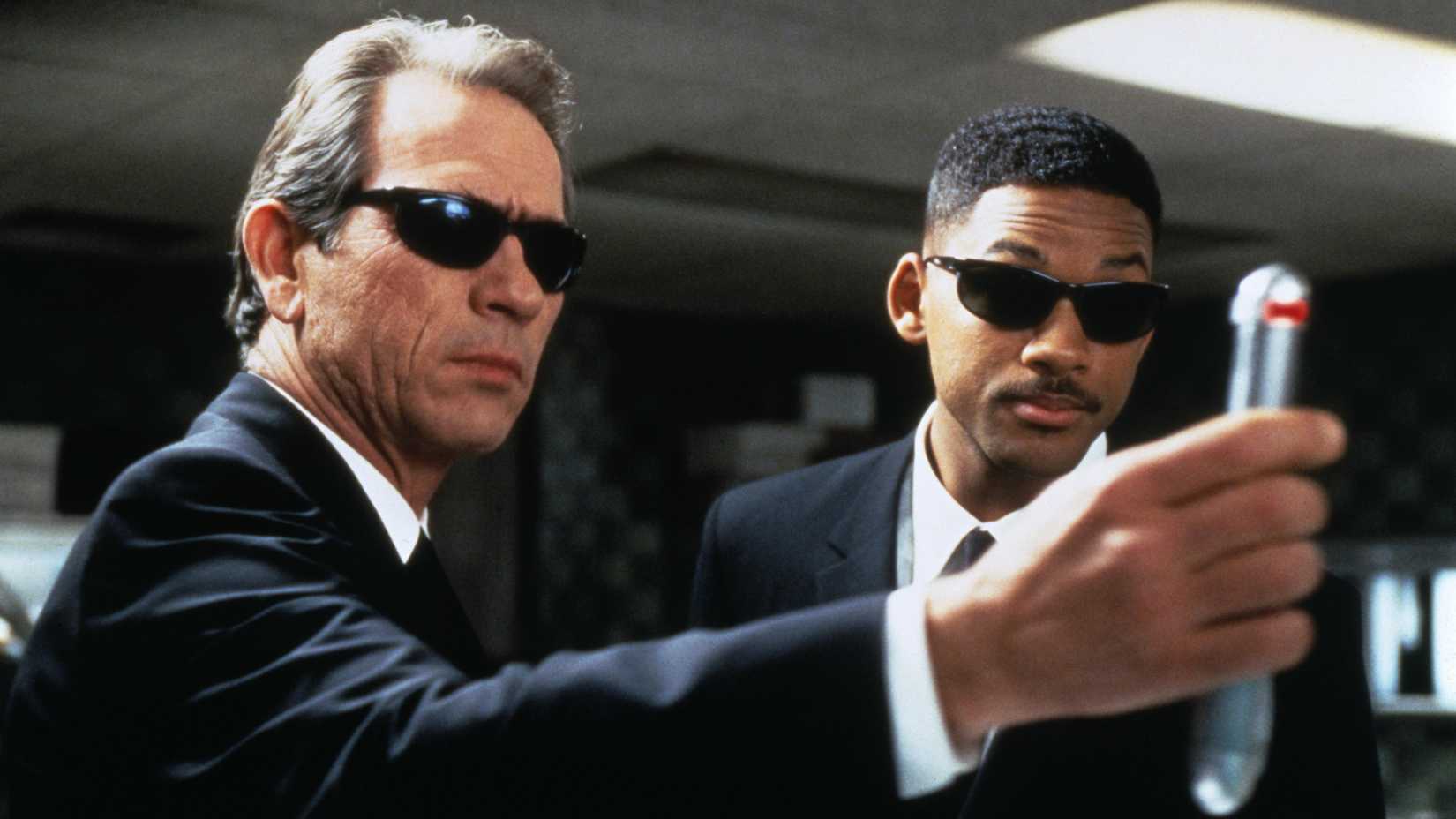
Few movies make an alien invasion seem as entertaining as Men in Black. Barry Sonnenfeld's 1997 blockbuster pairs Will Smith's wisecracking Agent J with Tommy Lee Jones' perpetually unimpressed Agent K, creating one of the great buddy-comedy duos of the decade. Their mission to secretly police extraterrestrial activity on Earth provides the perfect excuse for imaginative creatures and hilarious encounters.
Much of the film's enduring appeal comes from the chemistry between its stars, with Smith's infectious energy playing beautifully against Jones' deadpan delivery. The special effects remain impressive, but it's the humor that makes the original Men in Black so rewatchable. The franchise has produced several sequels, yet the first movie remains a crowd-pleasing favorite.
6 The Martian (2015)

Ridley Scott's The Martian turns the terrifying prospect of being stranded on another planet into a surprisingly uplifting adventure. Matt Damon stars as Mark Watney, an astronaut accidentally left behind on Mars who must use his scientific knowledge to survive while NASA attempts to bring him home. The stakes are enormous, but Watney's humor keeps the story remarkably entertaining.
Where many science fiction movies emphasize humanity's darker tendencies, The Martian celebrates ingenuity and cooperation. Its optimism feels refreshing, particularly in a genre frequently preoccupied with catastrophic futures. The movie's enormous appeal also helped establish it as one of Ridley Scott's most accessible sci-fi films, proving that a survival story can be thrilling without sacrificing its sense of humor.
5 WALL-E (2008)

Pixar has created plenty of beloved characters, but few are as immediately endearing as the lonely little robot at the center of WALL-E. Directed by Andrew Stanton, the animated science fiction film follows a waste-collecting robot left behind on an abandoned Earth. His monotonous existence changes when he encounters EVE, a sophisticated robot sent to investigate signs of life.
The opening stretch contains remarkably little dialogue, allowing expressive animation and physical comedy to carry the story. Children can appreciate WALL-E's adorable personality and amusing adventures, while adults recognize the film's environmental concerns and surprisingly moving romance. Its heartwarming science fiction love story gives the movie an emotional appeal that extends far beyond Pixar's usual audience. Few animated characters inspire such immediate affection.
4 Star Wars (1977)

George Lucas changed popular cinema forever with Star Wars, introducing audiences to a galaxy filled with extraordinary worlds and unforgettable characters. The original 1977 film, subsequently subtitled A New Hope, follows Luke Skywalker as he joins Princess Leia, Han Solo, and Obi-Wan Kenobi in their struggle against the Galactic Empire. Its enormous success helped establish modern blockbuster filmmaking.
The wider Star Wars franchise has inspired plenty of heated arguments, but the original movie retains a remarkable sense of adventure. Harrison Ford's charming performance, John Williams' unforgettable score, and the instantly recognizable characters helped make science fiction accessible to an enormous audience. Nearly 50 years later, the film continues to introduce new generations to one of cinema's most beloved fictional universes.

Steven Spielberg understood something essential about audiences when he made E.T. the Extra-Terrestrial: an alien doesn't need to be frightening to become unforgettable. His 1982 blockbuster tells the story of Elliott, a lonely young boy who befriends a stranded extraterrestrial and attempts to help him return home. Their unlikely friendship remains one of cinema's most affecting relationships.
Much of E.T. unfolds through a child's perspective, capturing the excitement of discovering something extraordinary while navigating the uncertainty of growing up. Henry Thomas delivers an astonishingly natural performance as Elliott, while John Williams' soaring music makes the famous bicycle sequence practically irresistible. The film's combination of wonder and emotional honesty has helped it remain a cherished family favorite for generations.
2 Jurassic Park (1993)

Dinosaurs have fascinated audiences for generations, but Steven Spielberg's Jurassic Park made them feel astonishingly real. Adapted from Michael Crichton's novel, the 1993 blockbuster follows a group of visitors touring an ambitious theme park populated by genetically engineered prehistoric creatures. Naturally, the extraordinary attraction becomes considerably more dangerous when its security systems fail.
Part of the movie's brilliance is its ability to deliver genuine terror while preserving the excitement of seeing dinosaurs brought to life. The first appearance of the Brachiosaurus remains breathtaking, while the T. rex attack is among cinema's most memorable action sequences. Thanks to visual effects that still hold up remarkably well, Jurassic Park has lost little of its magic. Its combination of spectacle, suspense, and adventure makes it one of Hollywood's most enduring crowd-pleasers.
Question 1 of 3
1 Back To The Future (1985)

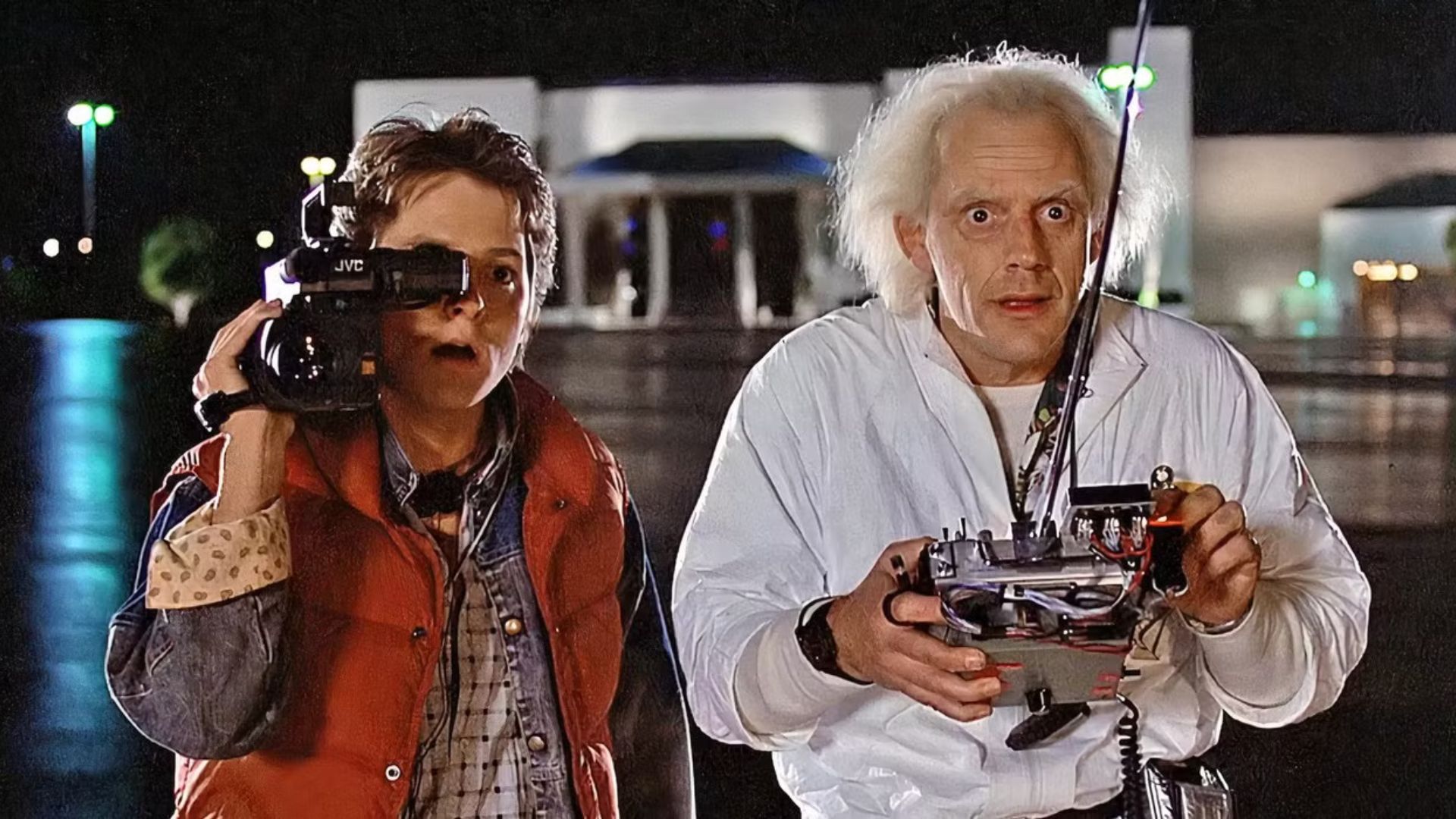
If there's one science fiction movie that seems capable of winning over practically any audience, it's Back to the Future. Robert Zemeckis' 1985 classic stars Michael J. Fox as Marty McFly, a teenager accidentally transported to 1955 in a time machine invented by eccentric scientist Doc Brown. When Marty inadvertently interferes with his parents' first meeting, he risks erasing his own existence.
The film's appeal extends well beyond its clever time-travel premise. Fox and Christopher Lloyd have extraordinary chemistry, while the screenplay effortlessly balances comedy, suspense, and genuine emotion. Nearly every scene contributes to the story, building toward a thrilling clock tower finale that remains enormously satisfying even after repeated viewings.
Unlike science fiction movies that rely heavily on elaborate worldbuilding, Back to the Future makes its central concept instantly understandable. Audiences become invested in Marty because his problems feel relatable, even when they're complicated by time travel. More than four decades after its release, the movie's remarkable rewatchability remains one of its greatest strengths. For sheer entertainment value and enduring affection, Back to the Future is difficult to beat.
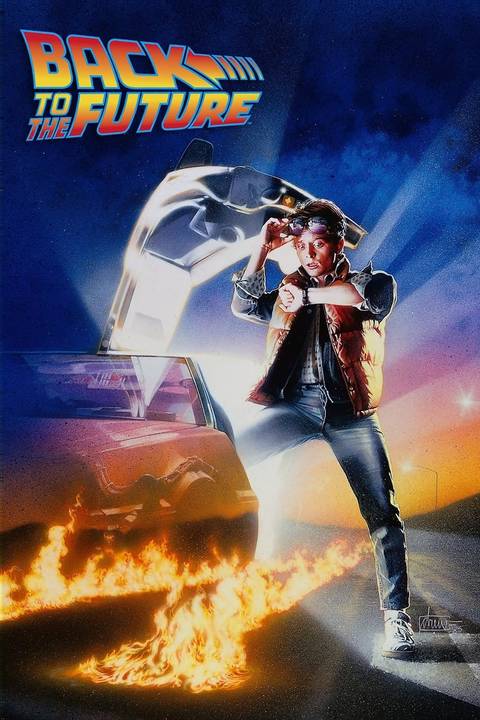
- Release Date
- July 3, 1985
- Runtime
- 116 minutes
- Director
- Robert Zemeckis
- Writers
- Robert Zemeckis, Bob Gale
- Producers
- Bob Gale, Frank Marshall, Kathleen Kennedy, Neil Canton
KioskNews shows a cleaned-up reading view extracted from the publisher’s page — the original always lives on their site, not ours.