Officially Ranking Every Original Star Wars Trilogy Theatrical Cut

Samuel is Collider's List Flex Editor (previously Lead List Editor), which means he's pretty much always hovering around Collider's List department. A writing and editing automaton based in Nashville, Tennessee, and sometimes Los Angeles, Samuel has been working in entertainment journalism for over 10 years.
Samuel is the guy who talked to Betty White about vodka and hot dogs. Chaz Ebert once pinched Samuel's cheeks after a screening of Beyond the Valley of the Dolls, when Samuel told her that Roger was and forever is his hero. William Friedkin once jokingly called Samuel "dad" at a screening of Samuel's favorite movie, The Babadook. Forbes once called Samuel a "sneering critic" because he disliked Don't Look Up.
Two major brands have trusted Samuel with curating their respective lists of the 100 Best Movies of All Time. Samuel wrote one of these lists in its entirety.
Other career highlights include appearing on KCRW and meeting Joe Morgenstern, and also spending 50 minutes talking to Tommy Wiseau on a landline (which was awesome).
Samuel loves his job and is rarely actively not doing it.
Sign in to your Collider account
Ask the nerdiest person in your circle about the drama surrounding the theatrical versions of the original Star Wars trilogy, and it's possible you'll get an earful of about three decades' worth of history. In the absolutely deafening lead-up to the prequel trilogy (if you lived through that, you remember), George Lucas released much-publicized and enormously successful re-cuts of the films that made him, christened the Star Wars "Special Editions." Released in succession in 1997, this trio of blockbusters, enhanced with deleted scenes and then-state-of-the-art CGI visual effects, the Special Editions grossed what would be equal to nearly $900 million in 2026. Not bad for movies that had been in theaters and on home video for decades.
Back in 1997, the Special Editions were viewed neutrally to favorably, treated as a fun alternate way to watch the most iconic films ever made. Over time, their reputation has become far more polarized, perhaps even plummeted. There are many reasons for this, from CGI effects that have ironically aged far worse than the Oscar-winning practical effects of the '70s and '80s, to the simple fact that Lucas long refused to make the original cuts available alongside his preferred edits. Lucas even refused a negative of the original cuts to the Library of Congress, and since a Special Edition print was refused, this means the National Film Registry bears no archival print of what could arguably be the most famous American film.
Major news broke last month, a long-rumored wide release of the original cut of the 1977 masterpiece Star Wars. As conversations and hype around this release and what it could mean for the future of the historic—and, let's face it, troubled, these days–IP, the following ranks every original trilogy movie, strictly by the theatrical cuts, which haven't been officially available to fans since a 2006 DVD release.
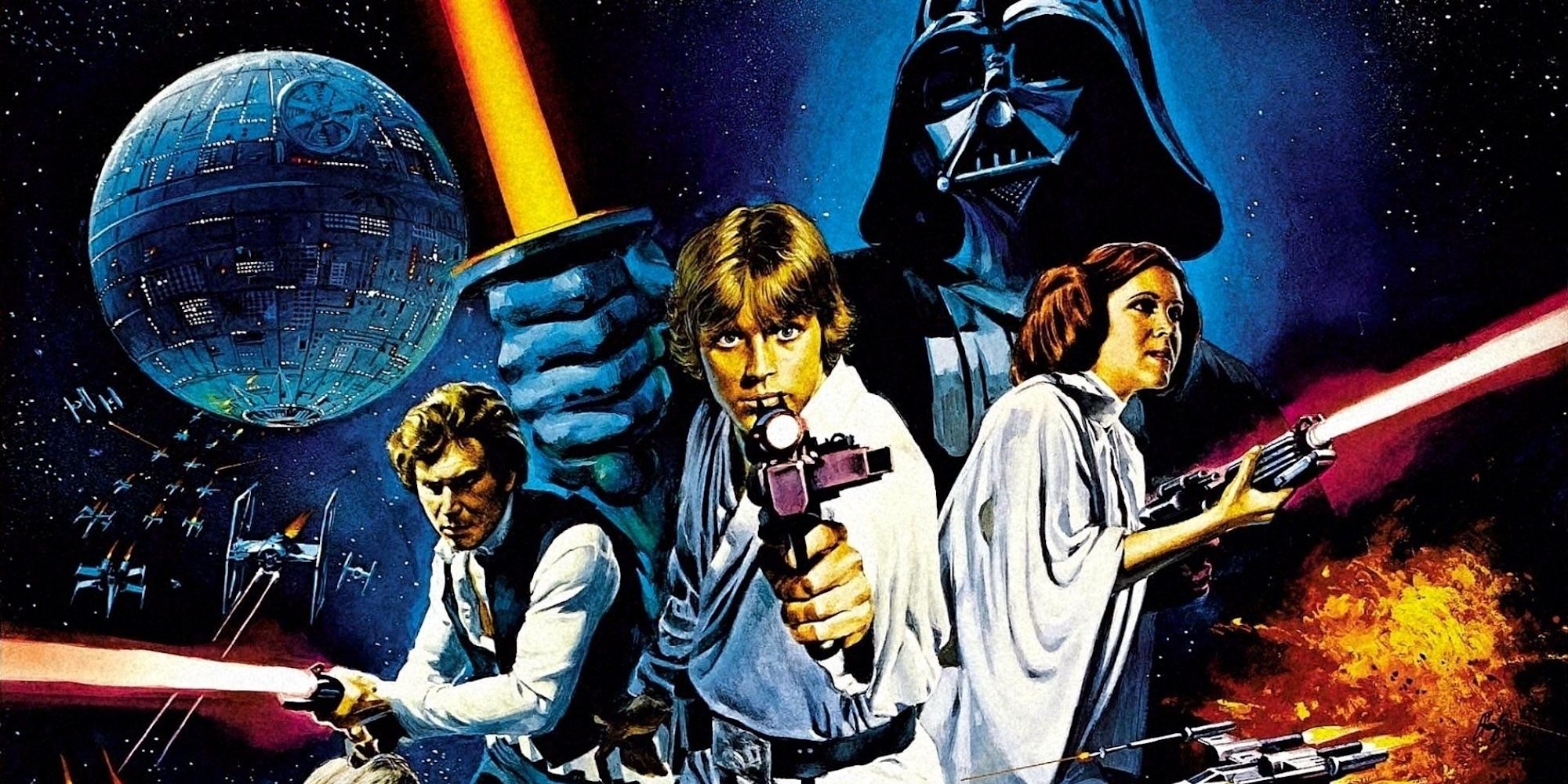
3 'Return of the Jedi' (1983)

Return of the Jedi is, almost objectively, the weakest of the original trilogy, but that's also a bit like saying something is the worst thing you ate at Nobu. Made with a bigger budget than its predecessors, and surely a considerable amount of confidence on the part of Lucas given the astounding success of its predecessors, Return of the Jedi is one of the most impressive and thrilling blockbuster movies ever made, even if it admittedly can't quite match the power of the previous, too. The thing is, it comes awfully close, especially with the drama between Luke (Mark Hamill) and Vader (James Earl Jones, David Prowse). Their final confrontation in the throne room of Emperor Palpatine (Ian MacDiarmid) is the peak of the saga for many, all culminating the redemption of Vader by his son's mercy, a final act that restores peace to the galaxy. You could easily make a case for Luke Skywalker having the greatest character arc in cinema, and it all
culminates here, spectacularly.
This is the movie that was most harmed by Lucas tinkering from 1997 onward. The most infamous additions include a god-awful musical number, yeah, a musical number, that stops the film in its tracks in the first act, a Sarlacc beak that looks like crap and clashes with everything around it, and a slicker ending that many prefer, but arguably isn't as pleasurable as the original cut's "Yub Nub." The worst change Lucas has made to any of his movies came with the Blu-ray release of Jedi in the 2010s, adding a comical "Noooo!" to the aforementioned redemption of Darth Vader, undermining nothing less than the most important moment of the entire franchise. Honestly, it's hard to not get worked up just recounting these changes. Thank God we're getting a re-release of the original film. The original cut of Return of the Jedi, however you can find it, is imperfect but genuinely magnificent.
2 'Star Wars' (1977)
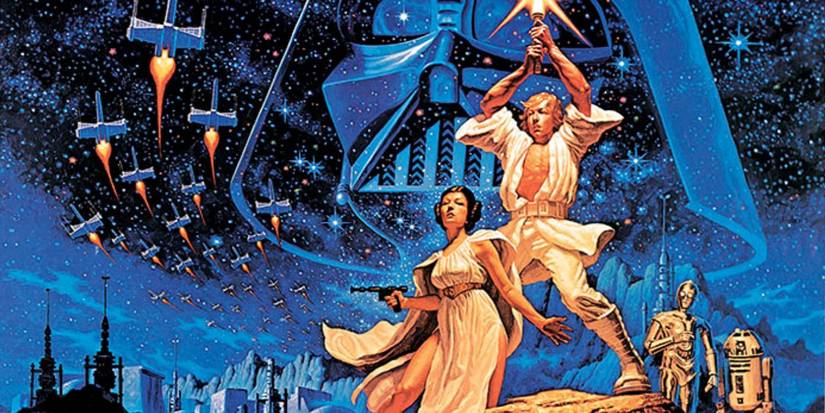
Rejected by virtually every studio before 20th Century Fox reluctantly moved on the goodwill generated by American Graffiti, Lucas' take on the movie serials of his childhood seemed to pretty much any executive or other observer to be box-office poison in the making, so much so that Lucas pulled off one of the most infamous power moves in entertainment history by retaining the merchandising rights. Released smack-dab in the middle of the pessimistic, nihilistic New Hollywood era, Star Wars was dazzling, fun, hopeful, deep in a way that's easy for pretty much anyone to access. Taking cues from the aforementioned serials as much as Westerns and samurai pictures, most specifically Akira Kurosawa's The Hidden Fortress, from which the framing device of the droids' plight and the celebratory final scene are directly homaged, Star Wars is a perfectly measured 121 minutes that, even more than inaugural summer blockbuster Jaws two years before, has been the blueprint for tentpole filmmaking for about a half-century now. All the more remarkable for the fact that tentpole films weren't really something we thought about back then. Star Wars is a scrappy $11 million B-movie at heart that came from nothing, apart from the genuine genius mind of George Lucas and astonishing contributions across all technical departments and some great acting performances.
The pacing of one of the best-paced movies ever made was completely thrown off in the Special Edition and future edits. Greedo shooting first—easily the most infamous change ever made to the series but as outright terrible as Vader screaming in Return of the Jedi—is terrible, but these days it's just one of countless baffling changes made to the originals that have blurred together. Truly the worst part of this is that, for many, especially younger viewers, there's surely a widespread assumption that this vastly inferior product is the real Star Wars, which is an enormous disservice to them as well as the many collaborators who bettered Lucas' bold original vision at the time. The original cut remains one of the greatest marvels of film editing ever, period. It should be studied as long as moving pictures are a thing. However cinema continues to evolve, this is year zero for so many aspects of audiovisual storytelling.
Collider Exclusive · 8 Questions · 2 Minutes Which Star Wars Faction Do You Belong To? Rebels · Empire · Mandalorians · Crimson Dawn
Eight honest questions about how you actually are: how you feel about rules, where your loyalty goes first, what you do when somebody criticises you in front of other people. Answer them and we will tell you whose side you would really have ended up on. Four factions are recruiting: the believers, the organisation, the ones with a code, and the ones with a price.
✊Rebel Alliance(Andor)
🛰️The Empire(Original Trilogy)
🪖Mandalorians(The Mandalorian)
🌅Crimson Dawn(Solo)
01
How do you feel about rules at work? This one sorts people faster than anything else.
02
What is your relationship with money? Nobody answers this the way they think they will.
03
What makes you respect somebody? Whatever you pick, you apply it to yourself too.
04
How do you behave under real pressure? Your friends would probably answer this for you.
05
Where does your loyalty go first? Everybody has an order, even if they never say it out loud.
06
Somebody criticises you in front of other people. What happens? Be honest about the first thing you feel.
07
What does a good life look like in ten years? Pick the one you would actually be happy with.
08
What do you want more than anything else? Eight questions in, this is the one that picks your side.
The Transmission Is Decoded Your Faction Is…
Four sides, four completely different answers to the same question about how a galaxy should work. Here is where you would have signed up, what it would ask of you, and what it would give you back.
Rebel Alliance
You belong with the side that has almost nothing and keeps going anyway. The Rebellion is not a glamorous posting, and anybody who tells you otherwise has not seen what it actually costs the people inside it.
- You are wired to notice when something is wrong and to say so, which makes you useful here and awkward almost everywhere else.
- Andor is the best thing Star Wars has made in years precisely because it shows the unglamorous half, which is the meetings, the paperwork and the people who never get a medal.
- Your kind of courage is the ordinary kind, done repeatedly, by somebody who is fully aware of the odds.
- The Alliance wins because enough people decided separately that they were finished being quiet about it.
The Galactic Empire
You belong to the machine, and the uncomfortable truth is that the machine mostly runs on people who are competent, orderly and convinced they are doing their job properly. Very few of them think of themselves as villains.
- You want structure, clear expectations and a way to measure whether you are doing well, none of which the other three factions can offer you.
- The Empire is frightening because of how ordinary it is on the inside, which is the single smartest thing Star Wars has ever done with it.
- Your risk is the quiet one, which is looking at something wrong and deciding it is somebody else's department.
- You would be genuinely good at this, and that is exactly the part worth thinking about.
The Mandalorians
You belong to the people who lost their planet and kept their code anyway. Mandalorian culture is not a nationality so much as a promise, and anybody who makes that promise and keeps it is one of them.
- You are loyal to people rather than to institutions, which is why an organisation chart has never once told you who you actually owe.
- A code only counts when it costs you something, and you are the sort of person who would pay rather than bend it.
- Mandalorians spend the whole saga arguing about what being one even means, and that argument is far more interesting than the armour.
- The Mandalorian and Grogu took the creed to cinemas over Memorial Day 2026, the first Star Wars film in seven years.
Crimson Dawn
You belong to the syndicate, where nobody wastes your time pretending the galaxy runs on ideals. Crimson Dawn deals in leverage, and it is the only faction on this list that would tell you so to your face.
- You read a room for who owes what, and you are usually right, which is a talent that makes people slightly wary of you.
- Qi'ra is the most interesting thing to come out of Solo, because she is the one character who learned the actual lesson about power.
- You would rather be the person setting the terms than the person being told what the terms are.
- The catch is simple enough. In a syndicate, everybody is leverage, including you, and the smart ones never forget that part.
1 'The Empire Strikes Back' (1980)
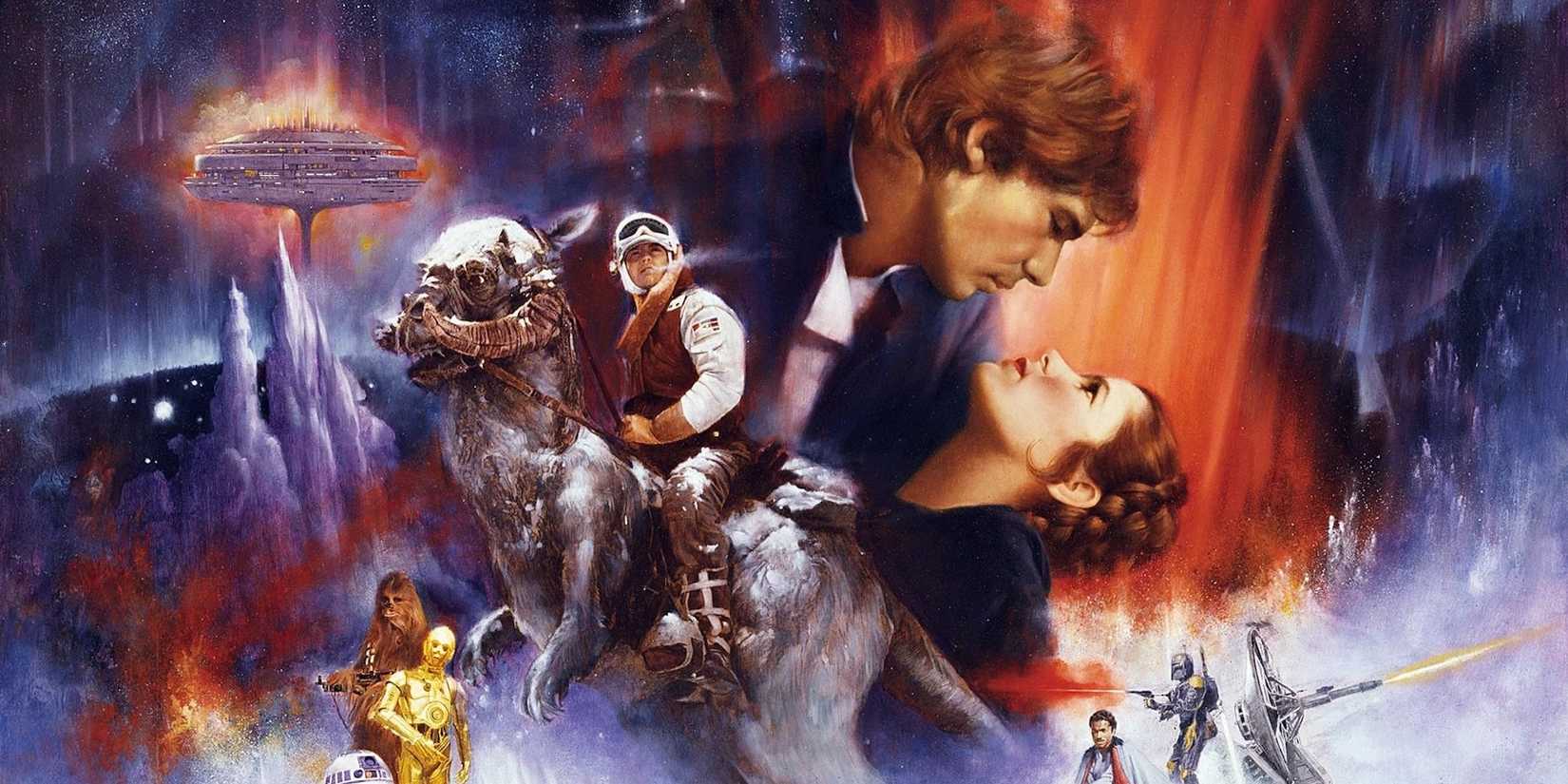
The production of Star Wars nearly killed Lucas (he was hospitalized critically during its production), and the sequel saw a distribution of responsibilities; most notably multiple writing credits and the installment of Lucas mentor Irvin Kershner as director. This even more collaborative approach, as well as far more resources (the picture was famously, independently produced from Lucas' own fortune for the sake of creative control), resulted in the pinnacle of the franchise, a dark and complex work of art that's also a hilarious and exhilarating blockbuster for all ages. Luke steps into a larger world here, with the help of Yoda (Frank Oz gives the best performance in the franchise). The romance between Han (Harrison Ford) and Leia (Carrie Fisher) organically takes cues from Gone With the Wind. It's extraordinarily effective in its lack of schmaltz, and for its placement in the story, a good thing to come from the darkest of times. The characters of 1977's Star Wars were lovable archetypes; they're flesh and blood here, and the stakes are impossibly high.
This may be a bit of a hot take, but the Special Edition treatments of The Empire Strikes Back were pretty inoffensive, in some ways even an improvement. It mostly just meant improved special effects, from removing compositing lines around speeders and walkers in the Battle of Hoth to a greatly expanded Bespin. Then there's also the addition of McDiarmid as the Emperor for the sake of continuity. You can watch the Disney+ version of this masterpiece and still get a pretty unadulterated, complete experience of one of the best movies ever made. The original cut has rougher edges and, for many, including myself, that is the ideal way to truly experience Star Wars, specifically The Empire Strikes Back. Star Wars is at its best and most accurate, it's closest to what audiences fell in love with decades ago, when it's gnarly and weird. But virtually every way you approach this movie, you're in for one of the most transporting, unforgettable cinematic experiences imaginable.
KioskNews shows a cleaned-up reading view extracted from the publisher’s page — the original always lives on their site, not ours.