Is Malaysia’s subsidy tsar next to leave Anwar Ibrahim’s cabinet?
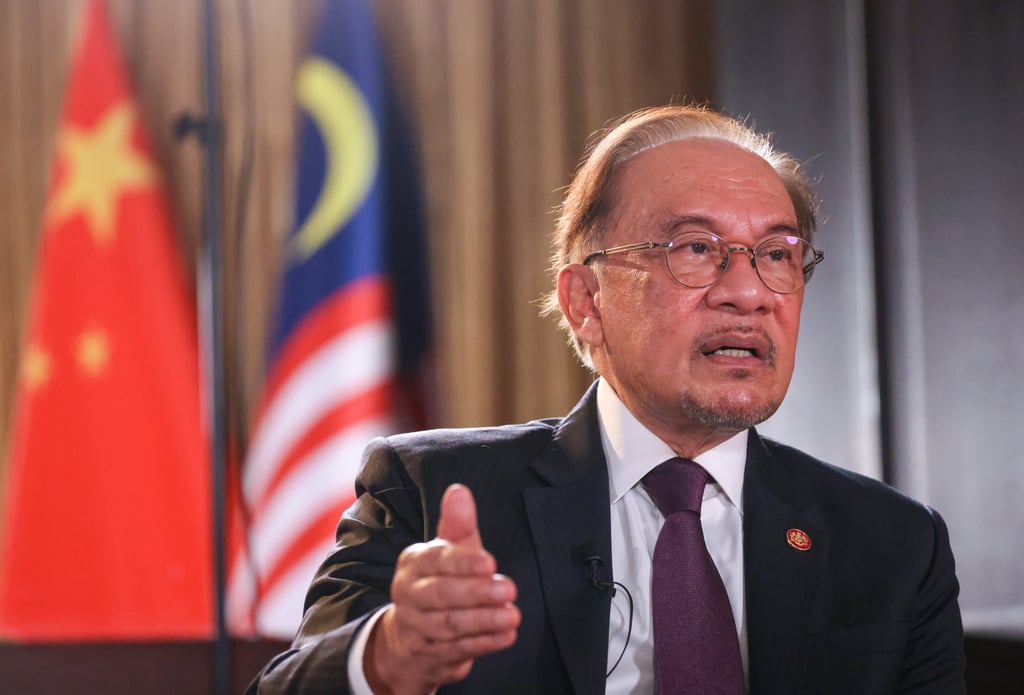
Malaysian leader Anwar Ibrahim could lose another trusted ally in his cabinet next month, increasing pressure on the prime minister as he tries to shore up support for his administration while a surging Malay nationalist wave threatens to derail his chances of winning a second term.
Anwar, who marked four years in office on Tuesday, has seen three senior ministers exit – or face exits – from his ruling Pakatan Harapan (PH) coalition over the past 17 months as they struggled to win back a multicultural voter base disillusioned by what critics call unfulfilled reform pledges.
The latest potential departure is Amir Hamzah Azizan, a technocrat Anwar hand-picked as second finance minister in December 2023.
Amir Hamzah, 59, is due to finish his term as a senator on December 11 and has remained coy about whether he will stay on.
“My focus is to finish my job. Let’s finish the job and cross the bridge when we get there,” Amir Hamzah said in a televised interview with Bloomberg on Wednesday.
Malaysia’s constitution allows an unelected individual to serve in cabinet provided they are first appointed a senator, a role capped at two three-year terms.
However, a source close to the minister said Amir Hamzah did not want to remain in office beyond his current term as senator.
“He has done what he needed to do and what he wanted to do,” the source said, speaking on condition of anonymity due to the sensitivity of the matter.
Speculation over Amir Hamzah’s future gained momentum after Anthony Loke, leader of key PH member the Democratic Action Party (DAP), submitted his resignation earlier this month in protest against disgraced former leader Najib Razak’s release into house arrest to serve out his prison sentence for corruption tied to state fund 1Malaysia Development Berhad (1MDB).
Anwar on Wednesday said he had refused to accept Loke’s resignation, asking him to go on leave instead.
“When we met, he gave his reasons, which I am already aware of, and I told him to take some time off first,” Anwar was quoted as saying by local English daily The Star.
In 2025, two senior members of Anwar’s People’s Justice Party (PKR) – Rafizi Ramli and Nik Nazmi Nik Ahmad – quit the cabinet and the party over allegations of nepotism in PKR’s party polls that year.
Anwar said on Monday last week there was no pressing need for a cabinet reshuffle despite Loke’s decision to quit, arguing that the government remained stable and able to roll out policies benefiting the public.
Loke’s move came days before PH was nearly wiped out by a Malay nationalist pact between Umno and the opposition Pan-Malaysian Islamic Party (PAS) in the Melaka state election, echoing earlier setbacks in the Johor and Negeri Sembilan state polls in July and August.
In an interview with the SCMP on Friday, Anwar said he was “not oblivious to the stark realities” of Malaysia’s fractious politics, while insisting that he was “still in good shape” to serve out his full term.
Still, experts say a cabinet reshuffle may be the only way for Anwar to shore up confidence in his administration if Amir Hamzah steps down.
Amir Hamzah is widely seen as the architect of Malaysia’s subsidy rationalisation programme, which has helped trim an estimated 15.5 billion ringgit (US$3.8 billion) in annual spending, according to the government’s own estimates – particularly on costly fuel subsidies that kept pump prices well below market rates.
Economists credit the subsidy cuts with helping drive Malaysia’s quick rebound after the pandemic-era slump, as well as its resilience during the recent energy shock following the Iran war.
“Reshuffling the cabinet to strengthen the team could be the best thing Anwar could do before the next general election,” said Adib Zalkapli, managing director of geopolitical advisory firm Viewfinder Global Affairs.
“He needs to show a credible line-up if he is serious about re-election,” he said of the next national polls, due by February 2028.
Even so, Anwar remains constrained by the political resurgence of former ruling party Umno, which has repeatedly called for a snap general election to capitalise on rising support among Malaysia’s Malay-Muslim majority in recent state contests.
Umno is unlikely to quit Anwar’s cabinet – a move analysts say would cut the party off from public resources – but its role as the de facto Malay voice in government will continue to constrain the prime minister.
“Three issues will shape the rest of his term: managing PH and Umno relations as both court voters, delivering visible gains on cost of living and keeping partner confidence after electoral setbacks and ministerial departures,” said Kamles Kumar, associate director and Malaysia country lead at strategic advisory firm Asia Group Advisors.
“The question is less whether Anwar stays in office than how much room he has to govern before the next general election.”
KioskNews shows a cleaned-up reading view extracted from the publisher’s page — the original always lives on their site, not ours.