MND Local Guadalajara: New water protest draws thousands, Zapopan officials scrutinized over abandoned pet euthanasia
This week, we take a look at local authorities in Zapopan who have come under fire for the city’s heavy reliance on euthanasia of homeless cats and dogs. But first, we have details on the second mega-march for clean water in Guadalajara this past weekend.
Guadalajara residents turn out in force for second clean water march
The second march for clean water on Sunday, Oct. 18, drew thousands of residents from across the metropolitan area.
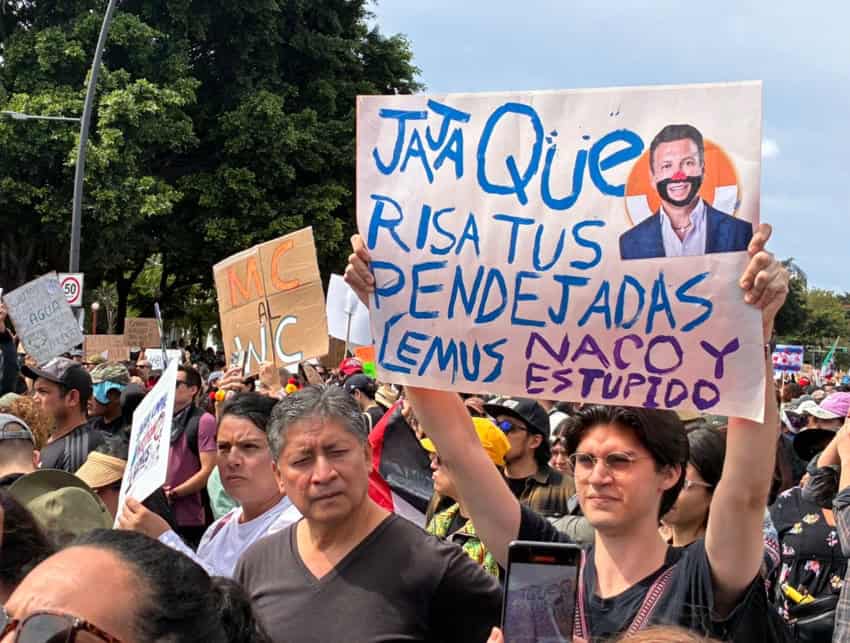
Protesters for the latest rally gathered at Parque Rojo along Avenida Vallarta and marched to the Government Palace in Guadalajara’s historic center in yet another attempt to pressure the city to improve the public water supply.
The vibe Sunday was more political and defiant than at the march a week earlier. There were notably fewer elderly and child attendees this past week in light of the violence that broke out at the protest on Oct. 11.
In addition to calling for improvements to the city’s water, attendees were vocal in demanding justice for those detained during the Oct. 11 march. Numerous signs called for the ouster of Governor Pablo Lemus.

Second march monitored for human rights abuses
Many have condemned aggressive policing of protesters at the Oct. 11 rally. Officers’ use of tear gas, water cannons and brutal tactics on unarmed attendees resulted in numerous serious injuries.
The National Human Rights Commission (CNDH) sent staff to monitor Sunday’s march while calling on the Jalisco state government to guarantee citizens’ rights to free expression and peaceful demonstration.
Protesters’ signs shared a mixture of sentiments. Some expressed anger over the prior week’s violence and vitriol toward Lemus. Others chanted for Lemus’ ouster, while many more signs simply decried the continued poor quality of public water supplies and warned that privatization was not an acceptable solution to the crisis.
At various times, march organizers called on attendees to support those who had been detained and beaten for speaking out against the failure to deliver clean water by the Inter-Municipal Services for Water Supply and Sewerage (SIAPA). Many raised their fists in solidarity, while others knelt in a display of respect and gratitude.
Organizers could also be heard reminding the crowd that they were gathered in peace. Still, numerous attendees brought gas masks and goggles, not knowing what to expect.
The latest protest also included a handful of masked people — a so-called “black bloc” — who started throwing firecrackers and Molotov cocktails near Parque Rojo amid the gathered protesters. Organizers briefly paused the march while those individuals were expelled from the group. I personally witnessed numerous explosive devices detonating on Avenida Vallarta.

Some of these masked people later reportedly vandalized and looted several area businesses.
Instead of addressing the root causes of pet abandonment, Zapopan punishes animals
Zapopan’s city government earlier this month confirmed that it has euthanized 14,016 dogs and cats over the past four years, citing the need to eliminate health risks and remove aggressive animals from city streets.
This amounted to nearly 10 animal exterminations per day, every day, between 2022 and 2026, at the ironically named Zapopan Comprehensive Animal Health Center (CISAZ) located in the Jardines del Vergel neighborhood.
Amada Yamile Lofte Galán, director of animal protection for Zapopan, stated that euthanasia is carried out only on homeless animals exhibiting aggressive behavior, based on citizen reports. She also confirmed that Zapopan assists nine other municipalities with euthanasia. While not publicly identified, these cities most likely include neighboring Guadalajara, Tlaquepaque, Tlajomulco and Tonalá.
Low adoption rates trigger fierce legislative backlash
Galán also stated that the animals create trash and pose a risk to other animals, as most are not sterilized or vaccinated. While these observations are generally true, she has not addressed why the city has put so little effort into sterilization and adoption.
Since 2022, Zapopan has completed fewer than 150 adoptions annually. Unsurprisingly, Zapopan’s pitiful adoption record has fueled an outcry from several public officials and animal activists. One prominent critic is state legislator Tonantzin Cárdenas Méndez, who recently offered a new initiative to Jalisco’s State Congress.

Citing ongoing activities at CISAZ, Méndez condemned its practice of prioritizing euthanasia over adoption. “Article 39 of the Zapopan Regulations states that euthanasia is permitted after five business days (in city custody) if an animal has not been claimed,” she noted.
This amounts to a death sentence for nearly all of the animals taken into custody, as the statistics confirm. Since 2022, Zapopan has adopted just 4% of the animals city workers have taken off the streets, while killing the other 96%.
Critics demand structural reforms to animal welfare laws
Moreover, because there is no transparency in CISAZ’s system as to when animals are acquired or exterminated, independent observers cannot verify whether the city is even complying with its own minimum standards.
Méndez also called out the City Council’s published goal (it appeared within the administration’s budget matrix) of euthanizing 3,300 animals in 2026. She questioned why they set a death goal rather than something more humane, such as an adoption goal.
Underscoring the city’s seeming indifference to animal welfare, others have faulted CISAZ’s lack of proper hygiene, food and shelter for the animals in its care, as well as its failure to address any of the causes of animal homelessness, namely pet abandonments and low sterilization rates.
Méndez’s initiative to standardize the Federal Animal Health Law seeks to integrate with other previous animal welfare proposals, including a measure by legislator Itzul Barrera.
Their reforms call for new restrictions on euthanasia, limiting it to cases of animal illness, injury or serious untreatable conditions.
KioskNews shows a cleaned-up reading view extracted from the publisher’s page — the original always lives on their site, not ours.