Senate impeachment court is not under SC -- ex-SC Justice Puno
Make this your preferred source to get more updates from this publisher on Google.
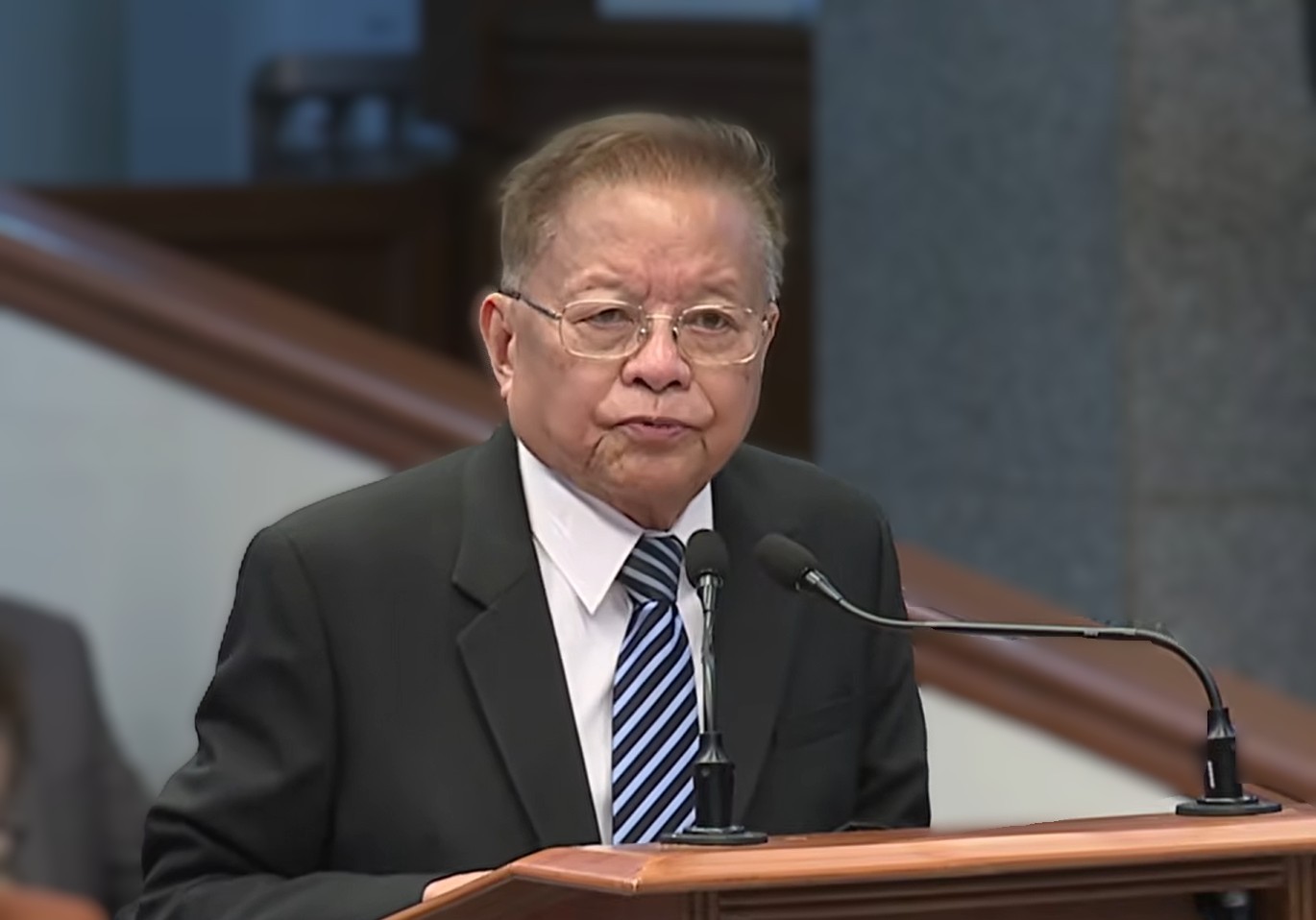
Retired Supreme Court (SC) Chief Justice Reynato Puno said Wednesday that the Senate impeachment court is not under the Supreme Court (SC) and that there is no provision under the 1987 Constitution explicitly allowing the SC to review the rules of the impeachment court.
Puno was one of the experts invited as an amici curiae or friend of the court to provide his expert opinion on the vote threshold needed to convict an impeached official.
“The impeachment court is not under the SC. The senator-judges are not like the judges of the regular courts of law who are all under the supervision of the SC,” he said during the impeachment trial of Vice President Sara Duterte.
“It is for this reason, your honors, that the Senate impeachment court was granted judicial power,” he added.
He cited Article XI, Section VI of the Constitution, which states: “The Senate shall have the sole power to try and decide all cases of impeachment.”
“Please note the use of the word sole, which means the only body that can try and decide all cases involving impeachment,” he said.
“The sole power to try and decide necessarily includes the lesser power to promulgate the rules that will govern the trial and decision of impeachment cases,” he added.
Puno stressed that the impeachment court’s judicial power was not granted under Article VIII of the Constitution, which covers the powers of the High Court.
“Nowhere does it explicitly appear in Article [VIII] that the SC can review the rules of the Senate impeachment court. Nowhere does it appear in Article [VIII] that the SC can review how the Senate should conduct its trial,” he said.
“Nowhere does it appear in Article [VIII] that the SC can review the evidence of the parties given in the impeachment court. Nowhere does it appear in Article [VIII] that the SC can review how the Senate impeachment court should decide impeachment cases,” he added.
According to the retired chief justice, it is up to the senator-judges toe decide whether they will change the number of judges needed for a conviction.
“In general, all these questions are to be resolved alone by the Senat e impeachment court because it is the sole judge to try and decide impeachment cases,” he said.
The 1987 Constitution states that "no person shall be convicted without the concurrence of two-thirds of all the Members of the Senate."
According to Puno, there are two schools of thought in interpreting a constitutional provision. He said one follows the principle verba legis non est recedendum, which means “from the words of the law, there shall be no departure.”
However, he said another school of thought adopted the contextual or holistic approach.
Puno said this approach requires the interpretation of other related and relevant provisions of the constitution to determine the intent and purpose of the people. — RSJ, GMA News
KioskNews shows a cleaned-up reading view extracted from the publisher’s page — the original always lives on their site, not ours.