BRIN develops high-yield cocoa varieties to boost productivity
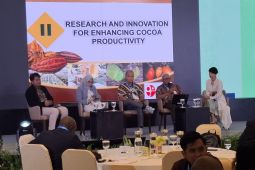
Jakarta (ANTARA) - Indonesia's National Research and Innovation Agency (BRIN) is developing high-yield cocoa varieties resistant to pests and diseases and adaptable to different environments to boost national productivity and sustainability, a BRIN researcher said Thursday.
Rubiyo, a principal researcher at BRIN's Research Center for Plantation Crops, said the varieties are being developed to meet farmers' needs and be easily adopted across Indonesia's cocoa-producing regions.
"Innovation in technology that can be easily adopted by Indonesia's cocoa community," Rubiyo said during a panel discussion at the Regional Learning Forum on Sustainable Commodities.
BRIN is targeting varieties that can produce about 2-3 metric tons of dry beans per hectare per year, with good quality and resistance to pests and diseases.
Agriculture Ministry data shows Indonesia has about 1.37 million hectares of cocoa plantations, with average productivity of about 715 kilograms per hectare per year.
In 2026, the Agriculture Ministry is targeting cocoa development across 174,260 hectares through the provision of seedlings for plantation rejuvenation and expansion.
Rubiyo said improved varieties are a key foundation for increasing production because planting material determines yield potential, resistance to crop threats and cocoa's ability to adapt to local conditions.
The breeding process includes collecting genetic resources and germplasm, selecting parent plants, crossing, selecting clones or hybrids, and testing candidates to obtain the desired traits.
A full cocoa breeding cycle can take about 15-20 years because candidate varieties must undergo selection and testing, Rubiyo said. He did not specify the current stage of the research.
The breeding program also uses molecular approaches to study genetic diversity and genetic distances, helping researchers identify parent combinations that could produce offspring with desirable traits.
The importance of adaptation is reflected in the performance of Masamba Cocoa Clone (MCC) 01 and MCC 02, which can differ across regions, Rubiyo said.
"Clones such as MCC 01 and 02 are very specific. When planted in Sulawesi, their yields differ from those in Sumatra," he said.
BRIN is also developing cocoa planting material through collaboration with research institutions, industry and other stakeholders.
"Research collaboration is important," Rubiyo said.
Research should consider the needs of farmers, producers, consumers and industry so innovations can move beyond the research stage and be adopted sustainably.
"If innovation only comes from researchers, researchers will have to carry it themselves," he said.
Rubiyo said strengthening cocoa research was strategically important because cocoa provides income and employment for communities while contributing to Indonesia's foreign exchange earnings.
Related news: Coffee, cocoa a livelihood for millions of Indonesians: Bappenas
Related news: Indonesia pushes agricultural downstreaming to boost farmers’ income
Translator: Aria Ananda, Martha Herlinawati Simanjuntak
Editor: Primayanti
Copyright © ANTARA 2026
KioskNews shows a cleaned-up reading view extracted from the publisher’s page — the original always lives on their site, not ours.