Asian Games open in Nagoya with celebration of solidarity and Japanese culture
This is the first time in 32 years that Japan is hosting the Asian Games.
New: You can now listen to articles.

This audio is generated by an AI tool.

19 Sep 2026 07:12PM (Updated: 19 Sep 2026 07:17PM)
NAGOYA: A ceremony celebrating Asian solidarity and local history marked the start of the 20th Asian Games in Aichi Prefecture’s capital city of Nagoya on Saturday (Sep 19).
At the 30,000-seater Paloma Mizuho Stadium, a low-key ceremony heralded the return of the region’s biggest sporting meet to Japan for the first time in 32 years.
The Games will take place from Sep 19 to Oct 4, with some sports such as volleyball, basketball and football already underway.
A contingent of 304 athletes across 27 sports will represent Singapore.
Most of the events at the meet will take place in Aichi Prefecture, with a number of competitions held elsewhere, including Japan's capital Tokyo.
The build-up to the Games has been overshadowed by complaints from teams about the quality and availability of accommodation.
Signs of tepid public interest were apparent on Saturday, with sections of the stands left empty during the opening ceremony amid a rather muted atmosphere.
Some teams were also stranded at the airport for hours on arrival, while record rainfall flooded Nagoya last week.
On Friday, the North Korean national anthem was mistakenly played ahead of a men's hockey match between Bangladesh and South Korea.
More than 17,000 athletes and officials are expected at the Games - more than at the Olympics.
“HEARTBEAT OF TRADITION”
Hours before the opening ceremony, locals were treated to a spectacular performance marking the start of the Games.
The Blue Impulse - the aerobatic demonstration team of the Japan Air Self-Defense Force - knifed through the skies, carving out a large heart above downtown Nagoya.
In front of dignitaries such as Japan’s Emperor Naruhito, Empress Masako and International Olympic Committee president Kirsty Coventry, the ceremony began with a violin solo from Japanese musician Taro Hakase atop a heart-shaped central stage.
Below him, 240 citizen dancers grooved to upbeat music, eventually forming the word “Welcome”.
This was followed by a rendition of the Japanese national anthem by singer Keiko Toda, and the raising of the national flag.
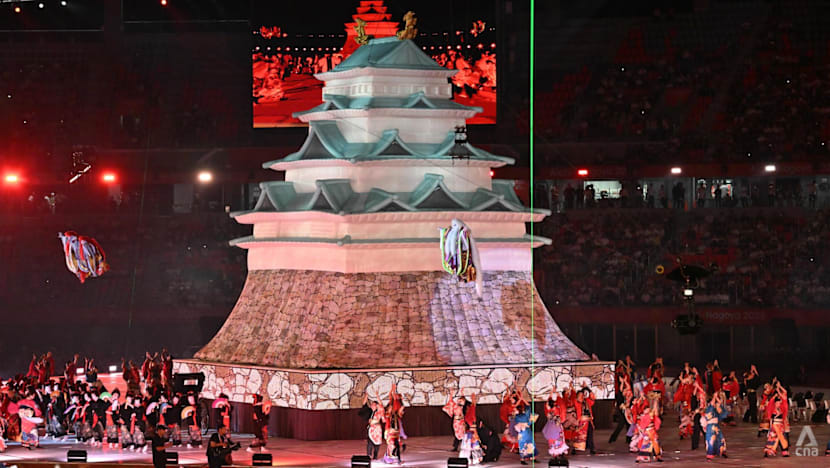
After the Games were officially declared open by Emperor Naruhito came two segments spotlighting the region - the first of which showcased Aichi-Nagoya’s “heartbeat of tradition”.
It featured a giant Nagoya castle balloon, a flying lion dance by Kabuki actors, and an AI-created on-screen singer.
Another performance paid tribute to Aichi-Nagoya’s role as a manufacturing hub, with various performers including dancers in business suits, as well as futuristic Toyota mobility vehicles motoring on stage.
In a special moment, five time Games gold medalist Murofushi Shigenobu and his son Koji Murofushi (2004 Olympic champion) then lit the Games cauldron together.
“Sports have the tremendous power to bring people together across languages, cultures, and national borders,” said Games president Hideaki Ohmura.
“The Games slogan embodies the hope that although there are still regions in the world where conflict and discord persist, through the Games, people will come to understand and respect one another, foster friendships, unite as one, and move forward together toward
the future.”
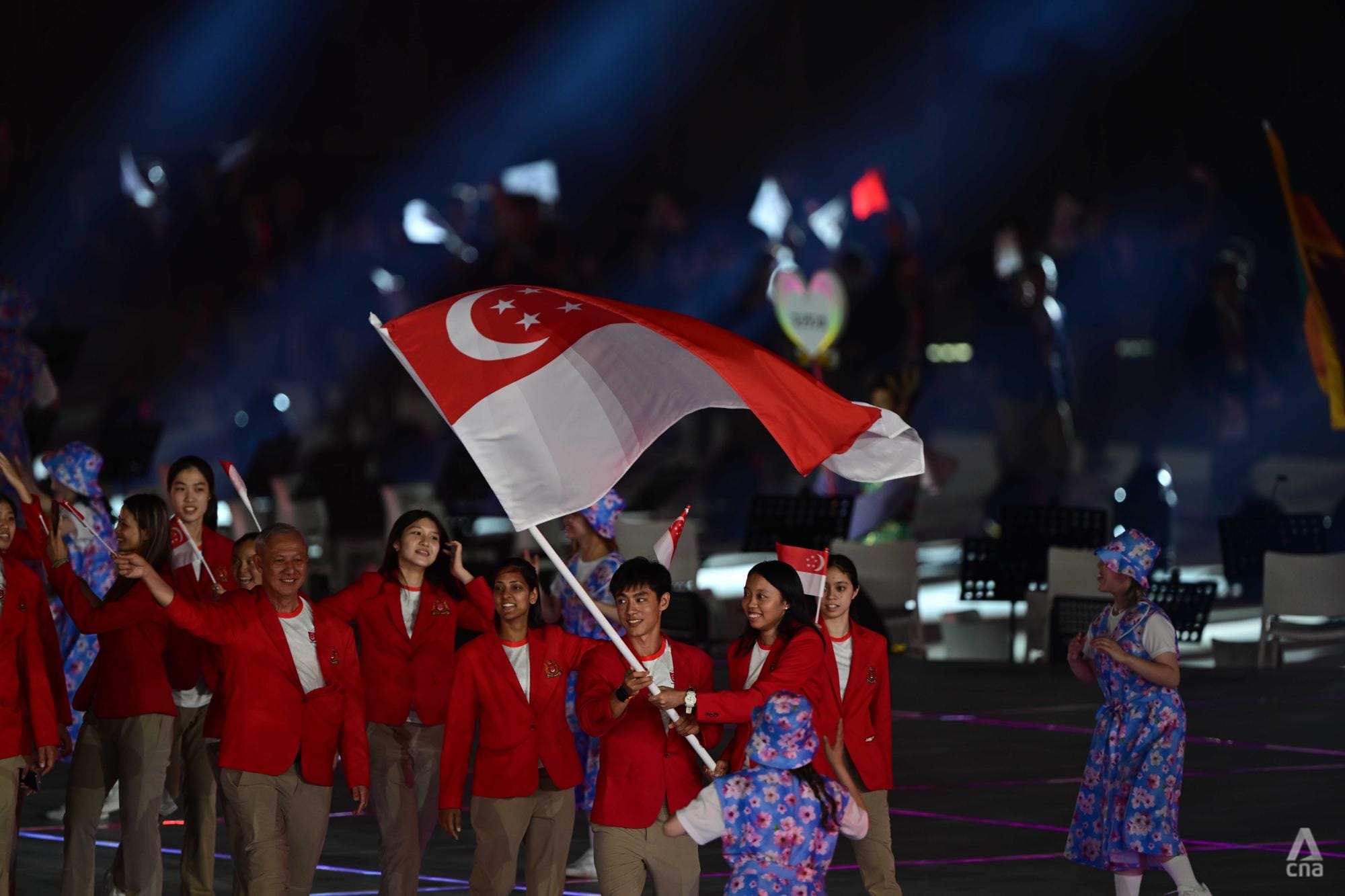
During the parade of nations, Singapore’s athletes and officials were led out by kayaker Brandon Ooi and fencer Kiria Tikanah.
“Walking into the stadium carrying the Singapore flag was honestly quite emotional. I felt very proud, but also a little nervous because it made everything feel very real and that we’re finally here,” said two-time Olympian Kiria.
“I was really honoured and proud to carry the flag and lead the contingent out. The canoe team doesn’t always get the opportunity to march at the opening ceremony, as we often arrive at the Games after the ceremony,” added Ooi.
Nearly two-thirds of Singapore’s athletes are making their Asian Games debut.
At the previous Games in Hangzhou, Singapore won 16 medals, including three golds from Shanti Pereira in athletics, Maximilian Maeder in kitefoiling and Ryan Lo in sailing.
KioskNews shows a cleaned-up reading view extracted from the publisher’s page — the original always lives on their site, not ours.