Inside HCMC's $400M flood defense system to protect 6.5 million residents
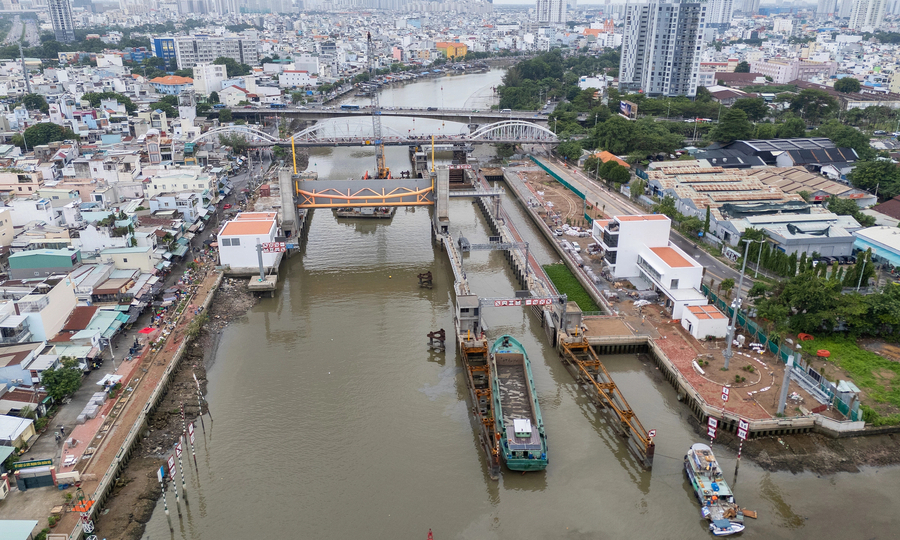
After a decade of construction, Ho Chi Minh City’s ambitious VND10 trillion (US$400 million) flood control network is reaching the finish line, expected to be completed in November to shield around 6.5 million residents from urban flooding.

Launched in 2016 by private investor Trung Nam Group, the Ho Chi Minh City Tidal Flood Control Project is designed to protect 6.5 million residents across 750 sq.km along the Saigon River's right bank and the city center.
Initially budgeted at nearly VND10 trillion under a build-transfer contract, the three-year initiative has faced repeated delays due to legal hurdles.
The system features six tidal-control sluice gates: Ben Nghe, Cay Kho, Muong Chuoi, Phu Dinh, Phu Xuan, and Tan Thuan. Overall construction is currently 95% finished, with completion targeted for November.
The pictured Muong Chuoi sluice gate, on the Muong Chuoi River near the Ben Luc-Long Thanh Expressway, is the largest of the six. Stretching more than 200 m, the 96%-complete facility has had all four of its tidal-control gates successfully installed.
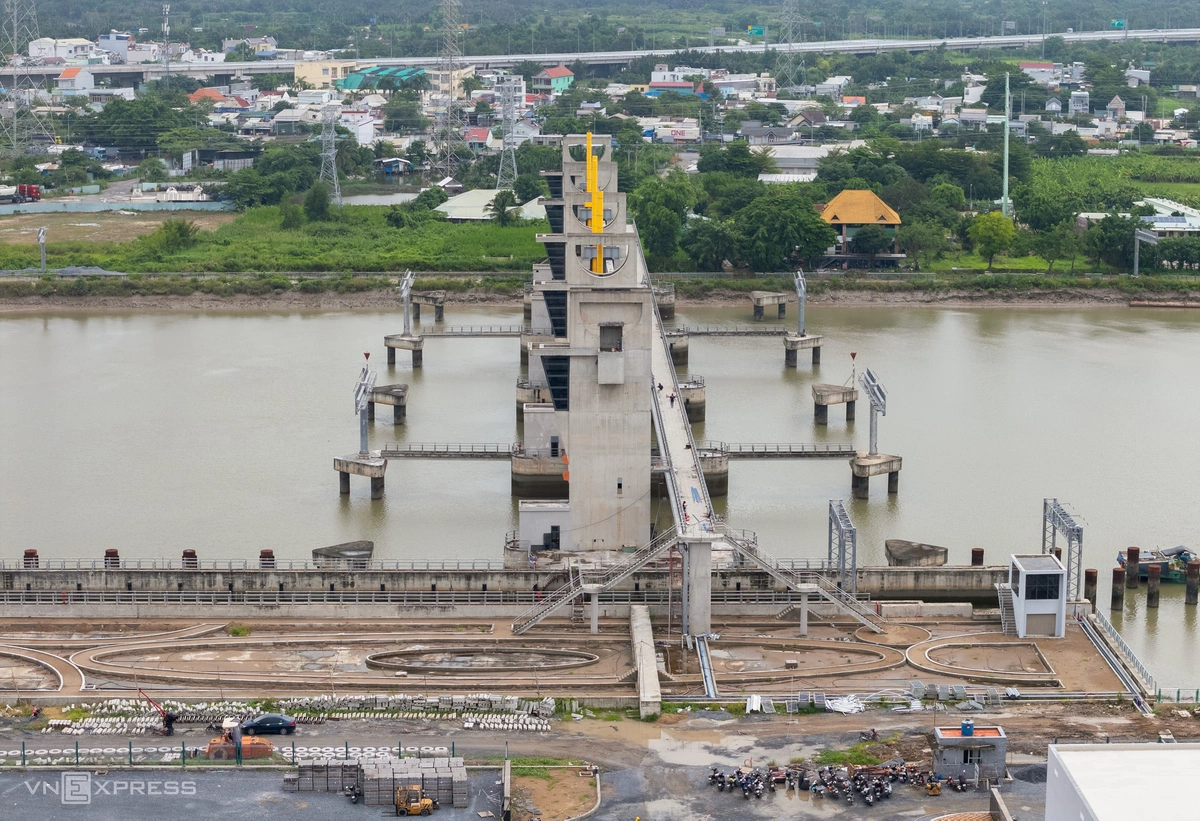

The facility's ship-lock gate, signaling system, and pumping station are fully installed. The entire system is slated to begin trial operations and final testing in October.

The facility's ship-lock gate, signaling system, and pumping station are fully installed. The entire system is slated to begin trial operations and final testing in October.

The facility's ship-lock gate, signaling system, and pumping station are fully installed. The entire system is slated to begin trial operations and final testing in October.
The facility's ship-lock gate, signaling system, and pumping station are fully installed. The entire system is slated to begin trial operations and final testing in October.

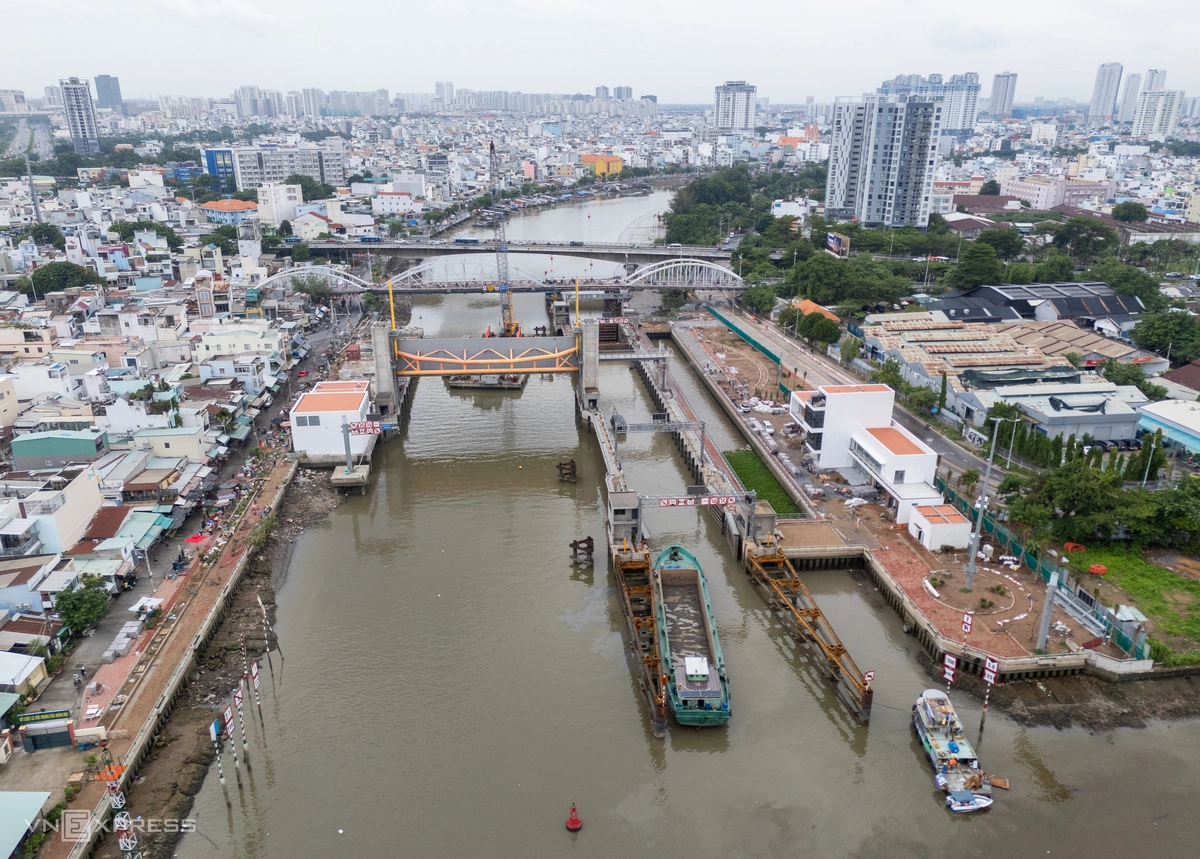
The Phu Dinh sluice gate on the Doi Canal in former District 8 prevents tidal water from the Vam Co Dong and Can Giuoc rivers from flowing into the city center.

The contractor reports the structure is 93% complete, with its main tidal-control gate finished and ready for operation. Crews are currently preparing to install the ship-lock gate system.
Across the project's six construction sites, nearly 1,500 officials, engineers, and workers have been deployed alongside heavy machinery to expedite the remaining work.

At the Phu Dinh site, crews are expediting work on auxiliary facilities and equipment ahead of trial operations.
Nearby, contractors are leveling ground, laying asphalt, and paving sidewalks along sections of Phu Dinh and Dinh An Tai streets bordering the Doi Canal.

At the Phu Xuan sluice gate, which spans the former districts 7 and Nha Be, contractors have successfully installed two 212-ton gates.
Crews are now finalizing the site's management building and auxiliary facilities ahead of scheduled operations in November.

Located on Cay Kho Creek across Binh Chanh and Nha Be districts, the Cay Kho sluice gate is designed to prevent tidal waters from the Soai Rap and Can Giuoc rivers from flooding the city center.
The facility features a ship lock, a management building, and three piers supporting two massive gates. Combined, the gates weigh 460 tons, with each measuring 8.5 meters high and more than 40 meters wide.

At 99% complete, the Ben Nghe sluice gate in Sai Gon Ward is the most advanced of the six major structures and is undergoing periodic trial operations.
Unlike the project's other sites, Ben Nghe features a 40-m submerged arched gate, uniquely designed to blend into the surrounding urban landscape.


The facility's major components are fully finished, including the 434-ton gate system, supporting beams, waterproofing sheet piles, regulating valves, an automated SCADA control center, and canal dredging works.
Once the broader flood-control project goes live, all six sluice gates will remain open under normal conditions to allow uninterrupted boat traffic. During high tides or heavy rain, the gates will close and vessels will be routed through the ship locks.

The locations of the flood-control project's sluice gates in HCMC's $400-million anti-flooding project. Graphics by Khanh Hoang
KioskNews shows a cleaned-up reading view extracted from the publisher’s page — the original always lives on their site, not ours.