8 tidal gates shield Ho Chi Minh City streets from flooding
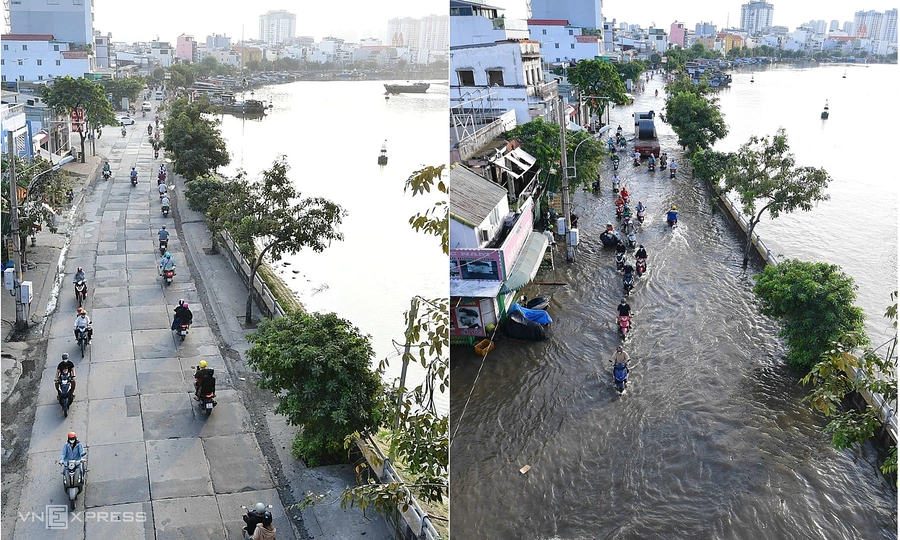
Areas protected by eight tidal control gates in Ho Chi Minh City were flood-free during high tide on Wednesday afternoon, while unprotected neighborhoods such as Thanh Da and Thao Dien were inundated.


Tran Xuan Soan Street in former District 7 remained dry at 5:30 p.m., despite being a regular flooding hotspot whenever water levels in nearby rivers and canals rise. Just a month earlier, a stretch of more than 3 km of the road was submerged, with floodwaters reaching halfway up vehicle wheels and forcing many commuters to push their motorbikes through the water.
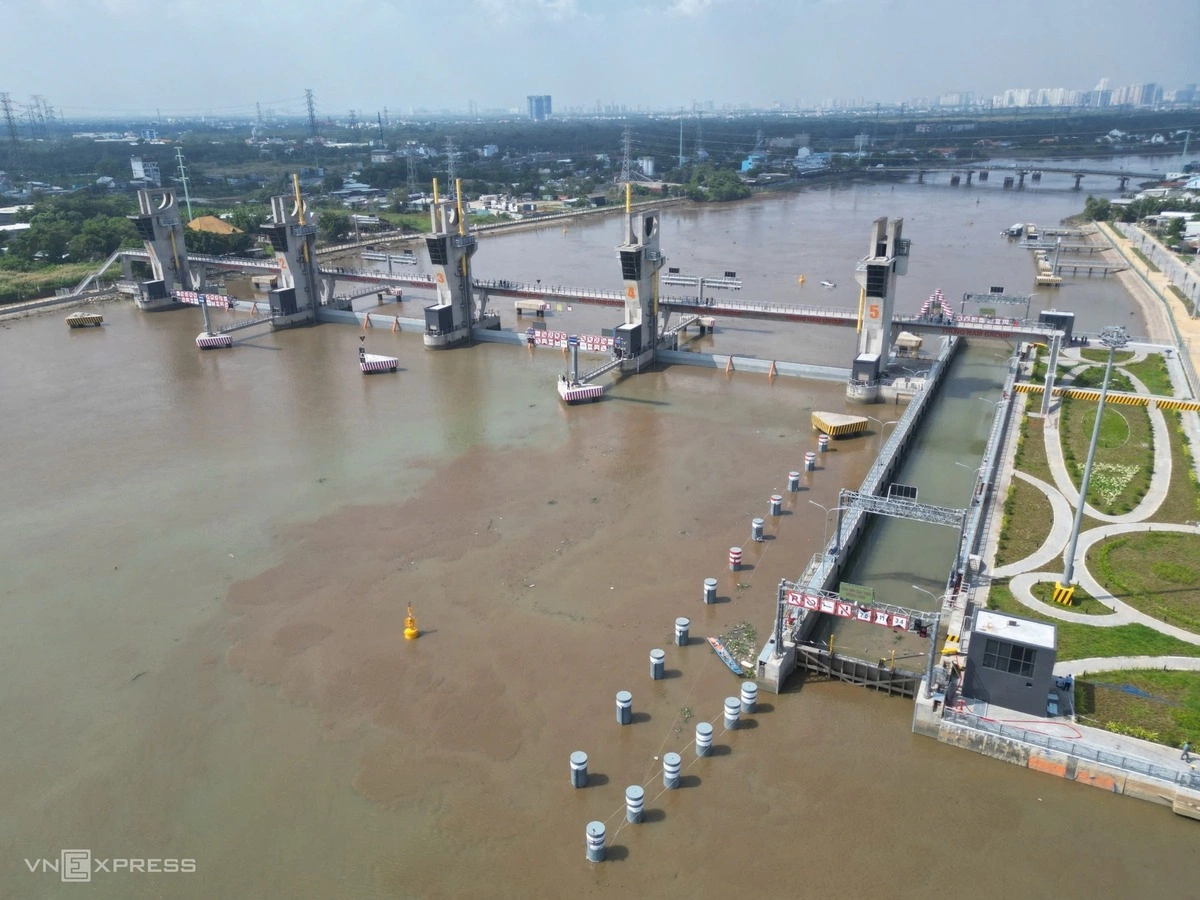
The road's protection from flooding is attributed to the newly completed VND10 trillion (US$387 million) tidal control system. At noon on Wednesday, project investor Trung Nam Group lowered the sluice gates, closing all eight tidal control structures at the mouths of major rivers in the city's urban core. The system has helped reduce high-tide flooding in several areas in the city's south, including parts of the former districts 1, 7 and 8, and Nha Be District.
The project is expected to mitigate flooding across 570 sq.km of the inner city, equivalent to one-fourth of the city’s land area before the merger, benefiting approximately 6.5 million people.
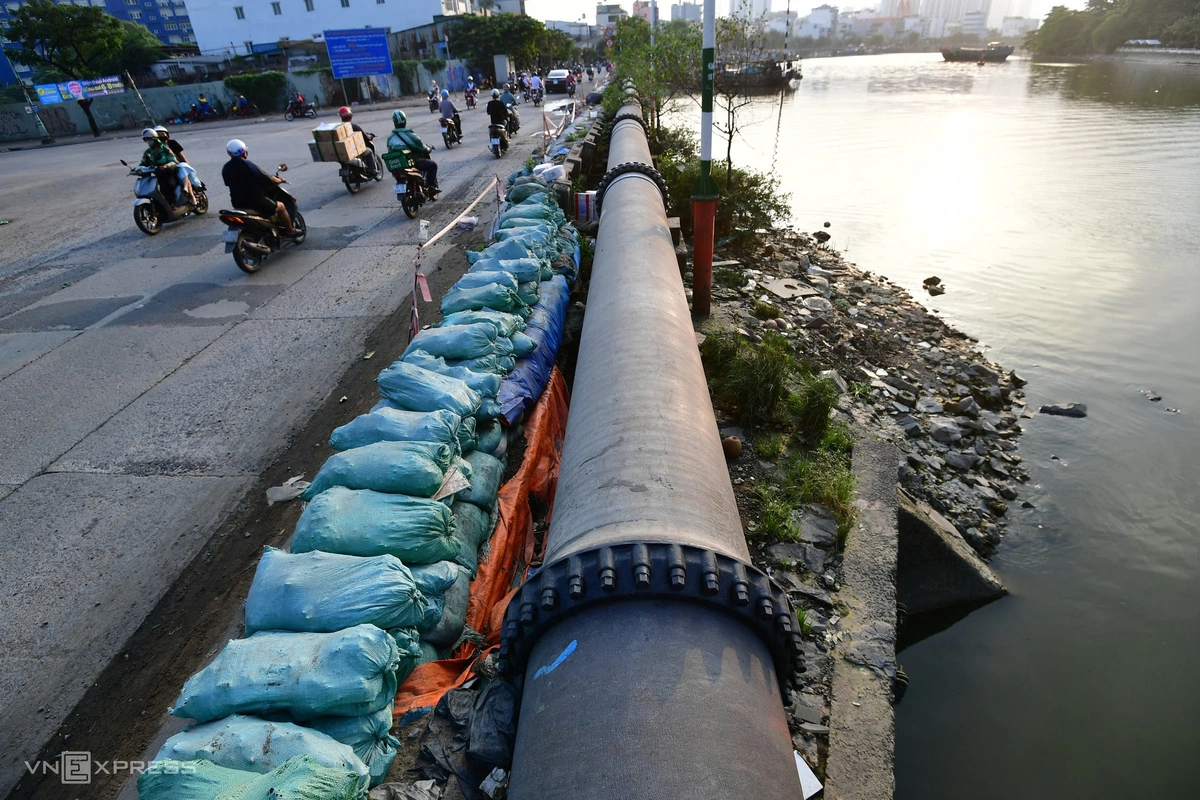

The Tan Thuan tidal control gate is operational, helping keep areas around Tran Xuan Soan and Truong Dinh Hoi streets relatively dry.

About 8 km away, Pham Huu Lau Street also remained free of the flooding that affected it last month. The busy road has frequently suffered severe traffic disruptions during previous floods.

About 8 km away, Pham Huu Lau Street also remained free of the flooding that affected it last month. The busy road has frequently suffered severe traffic disruptions during previous floods.
About 8 km away, Pham Huu Lau Street also remained free of the flooding that affected it last month. The busy road has frequently suffered severe traffic disruptions during previous floods.

Pham Thi Thom, a 60-year-old sugarcane juice vendor on Pham Huu Lau Street, said the road was flooded in the morning but the water had receded by the afternoon.
“Whenever the street flooded, we could only stand around looking at each other. We couldn't do any business at all,” she said.

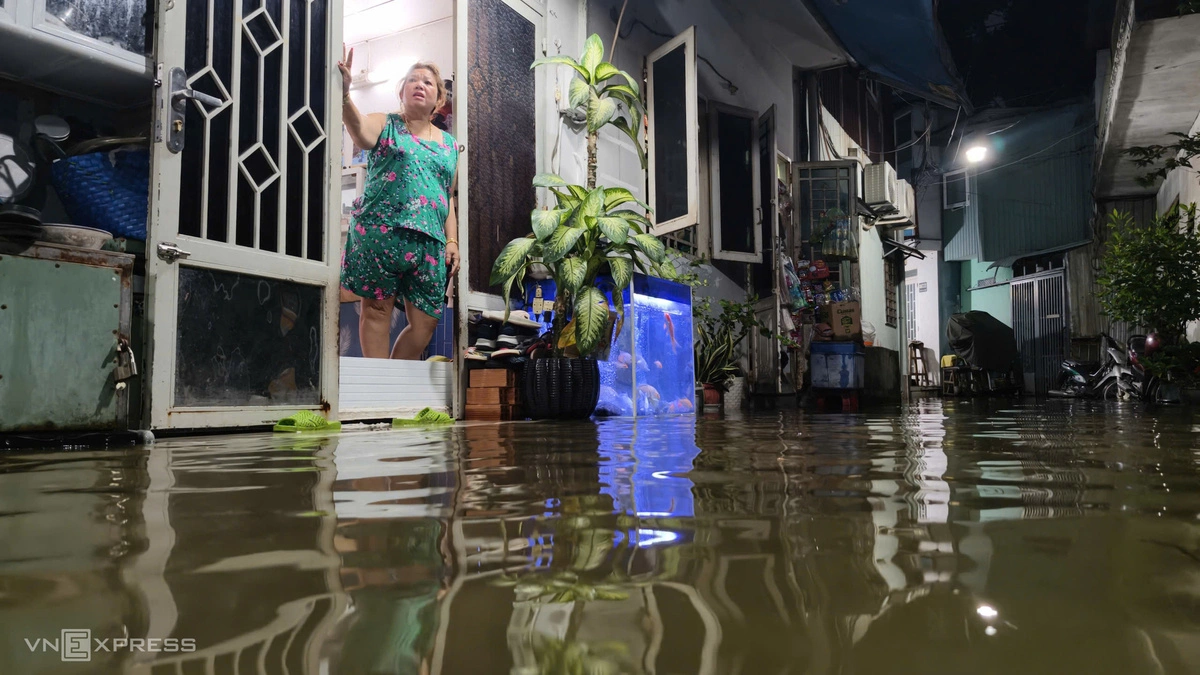
Several areas outside the tidal control system’s protection zone experienced severe flooding. In many alleyways in Thanh Da Peninsula in the city's northeast, floodwaters reached nearly 0.5 meters at the peak of high tide around 6 p.m. Motorcycles passing through low-lying sections of the alleys stalled, forcing residents to wade through the water while pushing their vehicles.

Several areas outside the tidal control system’s protection zone experienced severe flooding. In many alleyways in Thanh Da Peninsula in the city's northeast, floodwaters reached nearly 0.5 meters at the peak of high tide around 6 p.m. Motorcycles passing through low-lying sections of the alleys stalled, forcing residents to wade through the water while pushing their vehicles.
Several areas outside the tidal control system’s protection zone experienced severe flooding. In many alleyways in Thanh Da Peninsula in the city's northeast, floodwaters reached nearly 0.5 meters at the peak of high tide around 6 p.m. Motorcycles passing through low-lying sections of the alleys stalled, forcing residents to wade through the water while pushing their vehicles.

Not far from Thanh Da, rising waters of the Saigon River spilled into the grounds of riverside restaurants in Binh Quoi. Many tables and chairs were completely submerged, forcing the establishments to suspend business.
Binh Quoi falls within the scope of the tidal control project's second phase.

Across the Saigon River from Thanh Da and Binh Quoi, water levels began rising around 5 p.m., inundating riverside roads in Thao Dien, home to HCMC's largest expat community.
How the tidal control system works. Video by Diem Hanh, Elle Nguyen

The tidal control project is a cornerstone of Ho Chi Minh City's "1547" flood-control master plan, which aims to protect 19 former urban districts, as illustrated. However, its full effectiveness depends on integration with other independently developed flood-control infrastructure. Graphic by Tam Thao
KioskNews shows a cleaned-up reading view extracted from the publisher’s page — the original always lives on their site, not ours.