Could potatoes be off the menu this Christmas? Experts predict ‘worst harvest since 1950s’
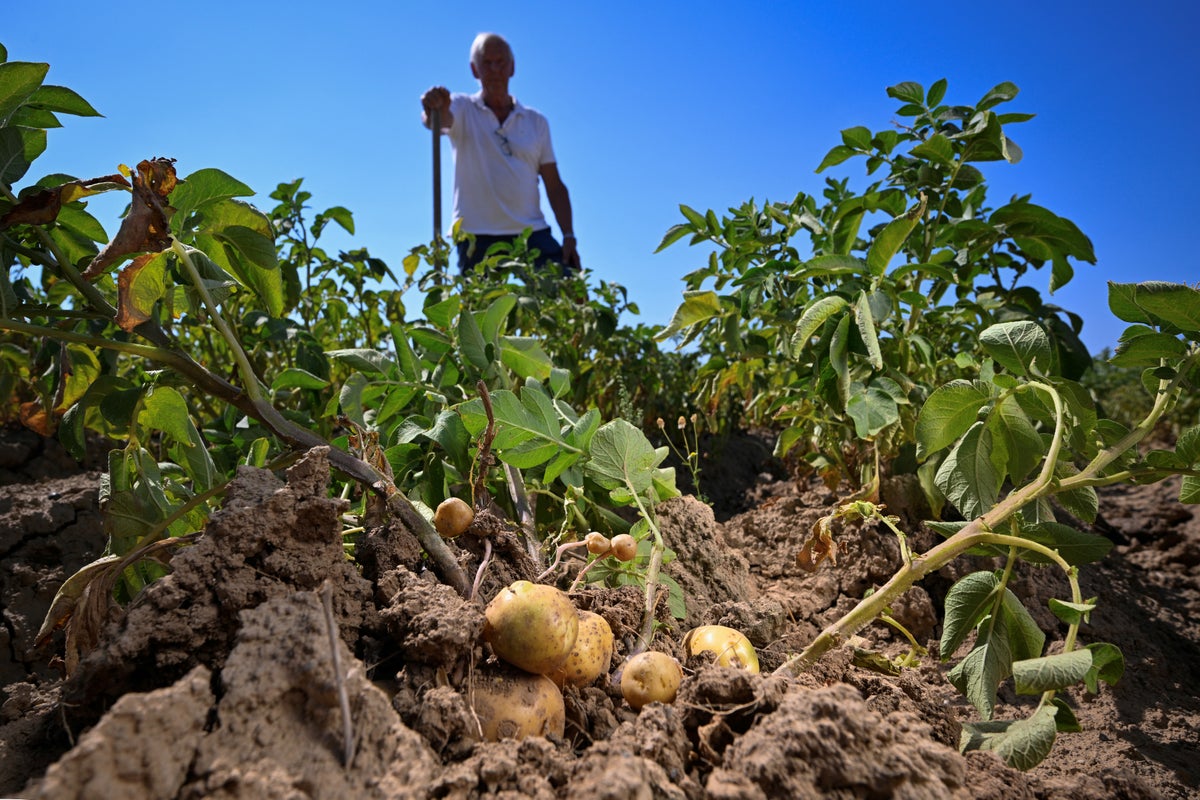
Britain’s potato harvest this winter could be one of the smallest in decades.
This is partly down to the hot summer and a poor growing year. Potatoes have shallow roots and need steady moisture, so dry spells cut yield and size. Where farmers had stored water to regularly irrigate, crops fared better.
With 75% of England in drought in September, and Wales also affected by dry conditions, one model estimated that British potato yields would be 11% below average. It used the 2018 harvest as a guide. Some farmers reported a greater than 50% drop in how many potatoes they were harvesting.
Wholesale prices had already risen by more than 40% by early August. By September, big British buyers were reportedly paying more than £300 a tonne for potatoes.
The Food and Drink Federation has warned of the worst potato harvest since the 1950s.
Growers have warned supermarkets to expect smaller potatoes and tighter supplies this year, so shoppers may need to accept wider variation in size and quality. This is partly because other European countries, which often provide supplies to the UK, suffered the same hot summer, and this affected their crops, too.
But shoppers may not feel the full effect of higher wholesale prices this winter. Potatoes are more likely to become significantly more expensive next year. It is also worth noting that many supermarkets subsidise potato prices.

Lidl has announced that a 2kg bag will cost 9p in the week before Christmas. The supermarket says it is funding the low price itself, so this price tells shoppers nothing about what the crop costs to grow.
Supermarkets agree prices and volumes with farmers well in advance. Retailers may absorb some of the higher costs this year rather than risk losing customers to competitors.
The bigger question is whether British farmers will carry on planting Britain’s favourite vegetable in future, and what happens if more decide it is no longer worth the risk.
How does potato production work?
In 2025, the issue was too many potatoes heading for shops – the UK produced 5.5 million tonnes, 8.5% more than the year before. This caused prices paid to farmers to collapse.
By February 2026, top-quality maris piper potatoes were fetching about £180 a tonne on the open market, less than half the £400 of a year earlier. Contract prices for the following year were also weaker.
Growers did what economics predicts: they planted less. Analysts put this year’s area in Great Britain at around 101,000 hectares, well below the 117,500 recorded in 2020.
Then came the heat and drought.
Why can’t farmers cash in?
Higher prices should encourage farmers to plant more. But a price spike helps only those with potatoes to sell at open-market rates. Most crops are grown under contract, and growers who struggle to deliver the agreed tonnage or quality may miss out.
Some big buyers that normally rely on contracts are buying open-market potatoes as fast as they can, so growers with uncommitted crops may do well.
Meanwhile, costs for farmers keep climbing. Conflict in the Middle East has pushed up energy and fertiliser costs. Labour and machinery are also more expensive.
Meanwhile, the end of the basic payment scheme (an annual payment for farmers that followed environmental guidelines) and controversies about its replacements may have removed a financial cushion that once helped farms through bad years.
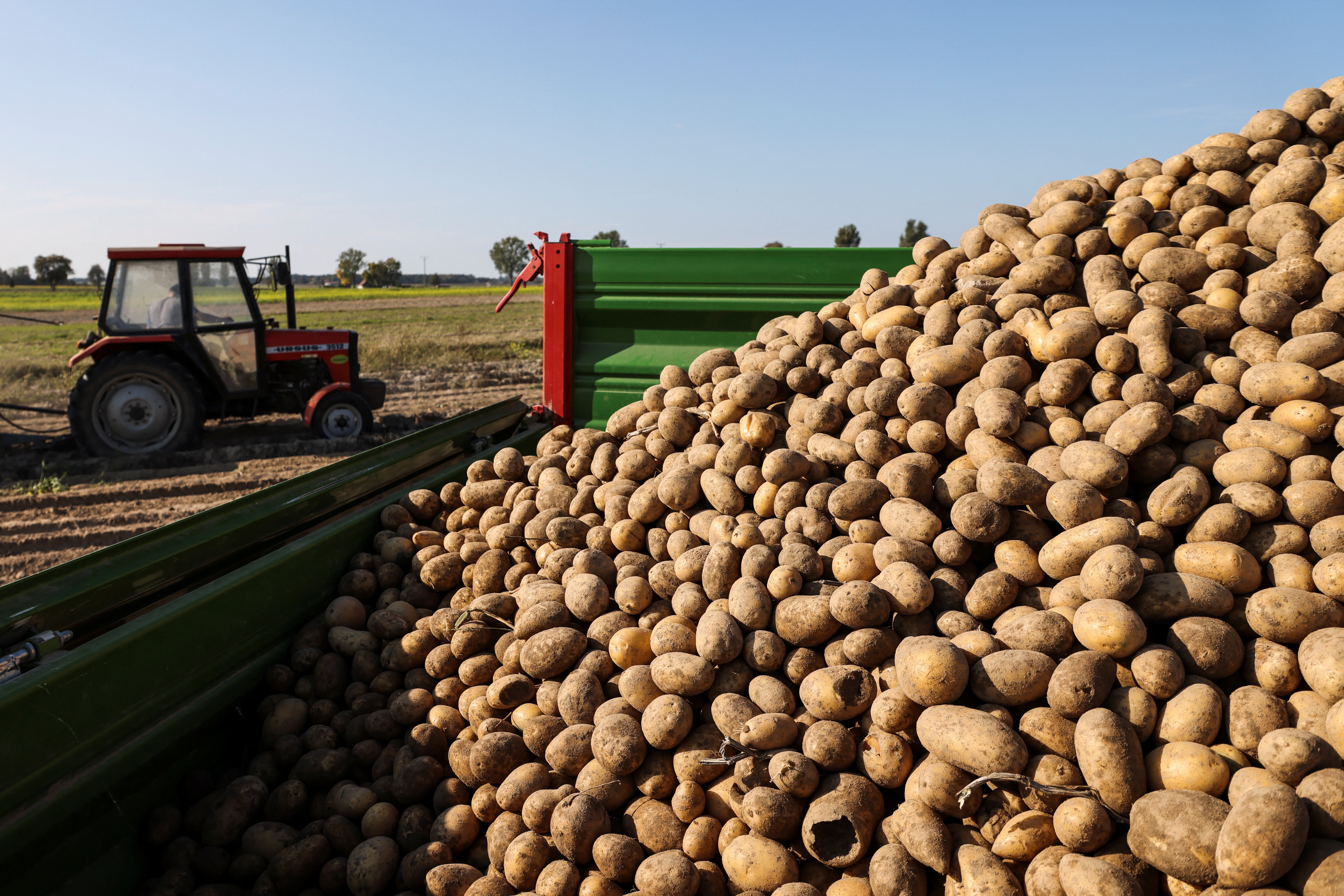
The potato contract price is fixed in advance, so growers have little room to pass costs on. Tighter margins are also hitting buyers, packers and processors, but it is growers that carry the bulk of the weather risk.
Economists call this pattern the cobweb cycle. In the textbook version, farmers plant according to last season’s price, so a glut leads to a price crash, then cuts in planting, then shortage and high prices, then over-planting again. Potatoes have followed this familiar cycle almost to the letter this year.
Yet several forces pull the other way. Speaking before the summer’s hot weather and drought, in May, Scott Walker, chief executive of the industry body representing the potato sector, GB Potatoes, said that many growers were weighing up how much exposure they would carry into 2027. The body has warned that growers could leave the business or reduce their crop.
About the author
Robin Gowers is a senior lecturer at the Writtle School of Agriculture, Animal and Environmental Sciences, Anglia Ruskin University.
This article is republished from The Conversation under a Creative Commons licence. Read the original article.
Contract prices were weaker this year, costs are higher, and drought has shown how exposed the crop is. Depressed cereal markets offer little alternative income, so a wholesale exit is not certain either.
Farmers will be looking closely at what supermarkets offer them in 2027. High open market prices alone will not bring growers back.
Two things matter most: the contracts offered this winter, and whether farmers can secure water supplies for next summer. Signs are that water access may remain tight. For instance, the Environment Agency put England’s reservoirs at only 54% of capacity in early October. Higher prices could prompt a rebound in planting, but a normal-weather harvest could tip the market back into glut, forcing prices down again.
Will British farmers stop planting potatoes?
In September 2026, the Department for Environment, Food and Rural Affairs saw no indication that winter supplies were at risk but added that it was too early to assess the drought’s full impact on potato production and that there was, at that point, no indication that winter potato supplies were at risk. Registered potato farmer numbers fell from about 2,466 in 2000 to 1,611 in 2020, when the statutory body collating data on potato farmers was discontinued. But each bad year pushes more to ask whether the crop is worth it.
Tim Rooke, National Farmers’ Union potato policy group chair, said in 2025 that the UK imports approximately 1 million tonnes of frozen chips a year, because the risk against return on investment of growing potatoes is astronomically high.
A food system that leaves a shrinking number of growers to absorb the weather and price risk should not be surprised when they plant less. One option could be fairer contracts that share risk, and investment in water storage. But less certain supply chains and more volatile prices could cost shoppers more.
Climate change means water shortages and high temperatures will happen more often across Europe. Potato farmers are, therefore, likely to face these challenges more regularly in the future.
KioskNews shows a cleaned-up reading view extracted from the publisher’s page — the original always lives on their site, not ours.