China pushes back as US lawmaker seeks blacklist of universities and tech labs
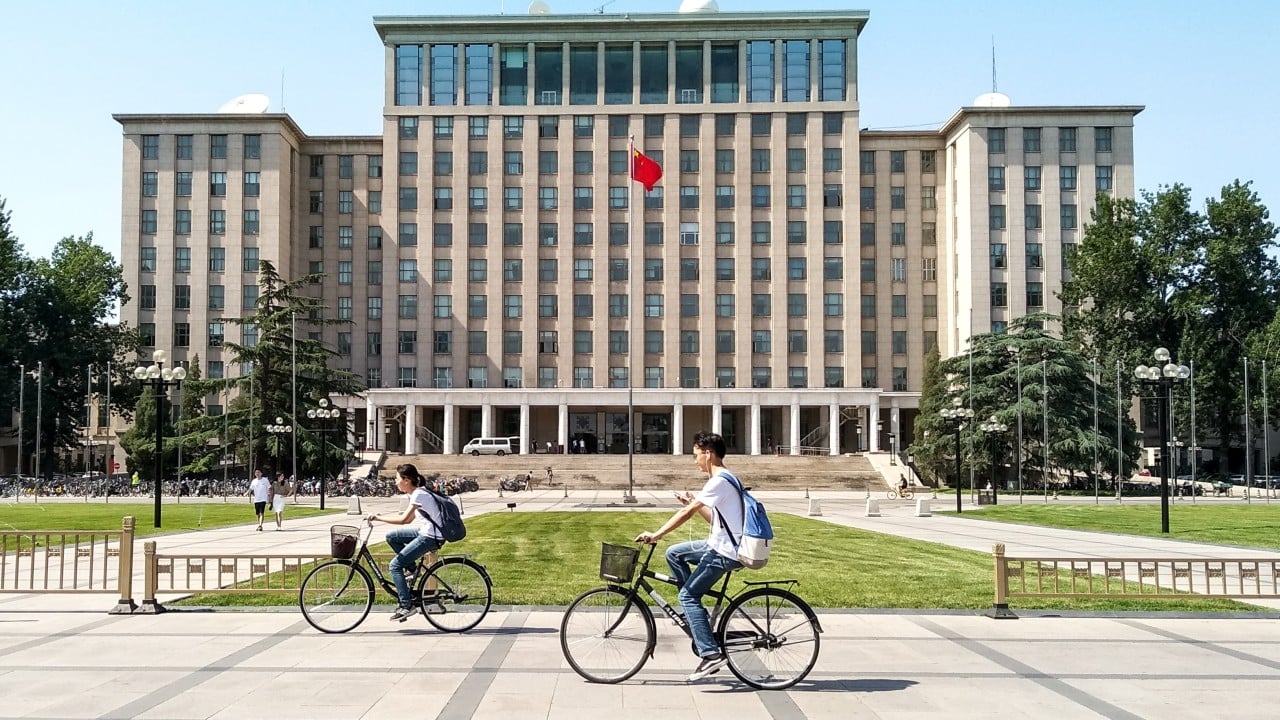
A Republican lawmaker is requesting the Pentagon blacklist 58 Chinese universities and 62 technology labs as national security threats, a move Beijing calls Cold War-style overreach and critics warn could freeze US-China scientific collaboration and ultimately undermine American innovation itself.
In a letter to US Secretary of Defence Pete Hegseth, House Select Committee on China Chairman John Moolenaar urged the Pentagon to add several prestigious Chinese institutions – some linked to Nvidia, Apple and Advanced Micro Devices (AMD) – to the Section 1286 list.
“The Select Committee has identified PRC [People’s Republic of China] research institutions with documented affiliations, formal agreements, oversight relationships, or other significant ties to China’s defence research and industrial base,” the select committee wrote in an October 14 press release, accompanying the letter.
The letter was dated October 1, but was made public this week.
In response to the letter, Chinese embassy spokesperson Liu Chang said that China consistently opposes the overstretching of the concept of national security and the politicisation or instrumentalisation of what he called normal scientific, educational and academic exchanges.
03:00
US adds Alibaba, BYD, Baidu and other Chinese tech giants to military blacklist
“Scientific innovation and academic development require open cooperation; restricting normal research exchanges will ultimately harm the interests of all parties, including US researchers and institutions,” he said.
“The US side should abandon the Cold War mentality and foster an open, fair and non-discriminatory environment for educational, scientific and people-to-people exchanges between China and the United States.”
Tsinghua University among elite institutions proposed for blacklist
Among the institutions listed by Moolenaar is Tsinghua University in Beijing, an elite organisation whose alumni cover top political and business leaders.
The university’s board executives include those from major US tech giants, including chipmaker Nvidia, technology giant Apple and semiconductor company Advanced Micro Devices (AMD).
Nvidia, Apple and AMD did not immediately respond to requests for comment.
A large number of the targeted institutions focus on critical technology sectors, including artificial intelligence, semiconductors and quantum computing, according to the letter.
The letter also urged the department to add 14 Chinese Academy of Sciences Institutes “identified as core CCP [Chinese Communist Party] defence partners” as well as “22 foreign malign talent programmes, and the China Scholarship Council and affiliated scholars” to the Section 1286 List.
SCMP Plus is a new premium news platform that gives you an
all-inclusive edge to stay ahead on China news.
To access our exclusive content you’ll need to subscribe.
Already a subscriber?
LOG IN
Many of the institutions have recruited numerous scholars serving in the United States in recent years to strengthen their basic research. For example, Omar M. Yaghi, the 2025 Nobel Prize in Chemistry laureate, joined Tsinghua University in July this year to lead a new AI-driven research centre.
It remains unclear whether similar appointments will still be possible if Moolenaar’s list is adopted.

The letter also requests that the China Scholarship Council (CSC) be included on the list because “it requires sponsored students to report to PRC embassies or consulates every three months, detailing their academic progress” and subjects students to mandatory political/ideological guidance sessions abroad.
The South China Morning Post has contacted Tsinghua University, Peking University and several CAS institutes on the list; none has officially replied so far.
Created under the 2019 National Defence Authorisation Act, the list identifies foreign institutions and talent recruitment programmes that “present national security risks to the US research enterprise”.
Historically, the list has focused on People’s Liberation Army academies and institutions tied directly to the defence industry, but Washington has increasingly broadened its push against unwanted Chinese influence.
This reflects the committee’s view that the talent and research systems associated with military-civil fusion are no longer confined to institutions traditionally designated as national defence academies.
Geoff Wade, senior analyst at the Australian Strategic Policy Institute, said Tsinghua is one of the educational institutions “most tightly linked with China’s military aspirations”, calling the inclusion on the Section 1286 List “clearly warranted”.
“Tsinghua University is assessed by ASPI’s China Defence Universities Tracker as very high risk due to its extensive defence research activities, focus on armaments science research, secret-level security credentials, ties to the military – industrial complex, and IT infrastructure allegedly linked to cyberattacks,” he said.
US targeting of Chinese universities may impact future scientific collaborations
Meanwhile, some critics and researchers worry that widening the blacklist to include prominent civilian universities could significantly affect broader scientific collaborations between the US and China.
Zhou Mi, a scholar at Tsinghua University’s Centre for Strategic and Security Studies, told Hong Kong-based newspaper Wen Wei Po that such blockade measures have obvious limitations.
According to Zhou, US blockades ignore the realities of modern technology, which requires international labour sharing and large-scale market adoption to succeed.
Rather than cutting China off from global scientific networks, Zhou contends “the restrictions will, on the contrary, drive other nations to partner with Beijing while locking American tech firms out of critical foreign opportunities”.
Zhu Ying, director of the Centre for American Studies at Southwest University of Political Science & Law, shared a similar idea in an interview with Global Times in August.
“In addition to expanding [the 1286 List], the US side’s controls on scientific research cooperation with China are also continually expanding, which has already created a chilling effect in US academic circles,” Zhu said.
“Such moves will weaken the United States’ own ability to attract talent and undermine the open research ecosystem on which it relies to maintain its advantages.”
KioskNews shows a cleaned-up reading view extracted from the publisher’s page — the original always lives on their site, not ours.