Chinese artefacts damaged in mystery fall at British Museum as calls for their return grow
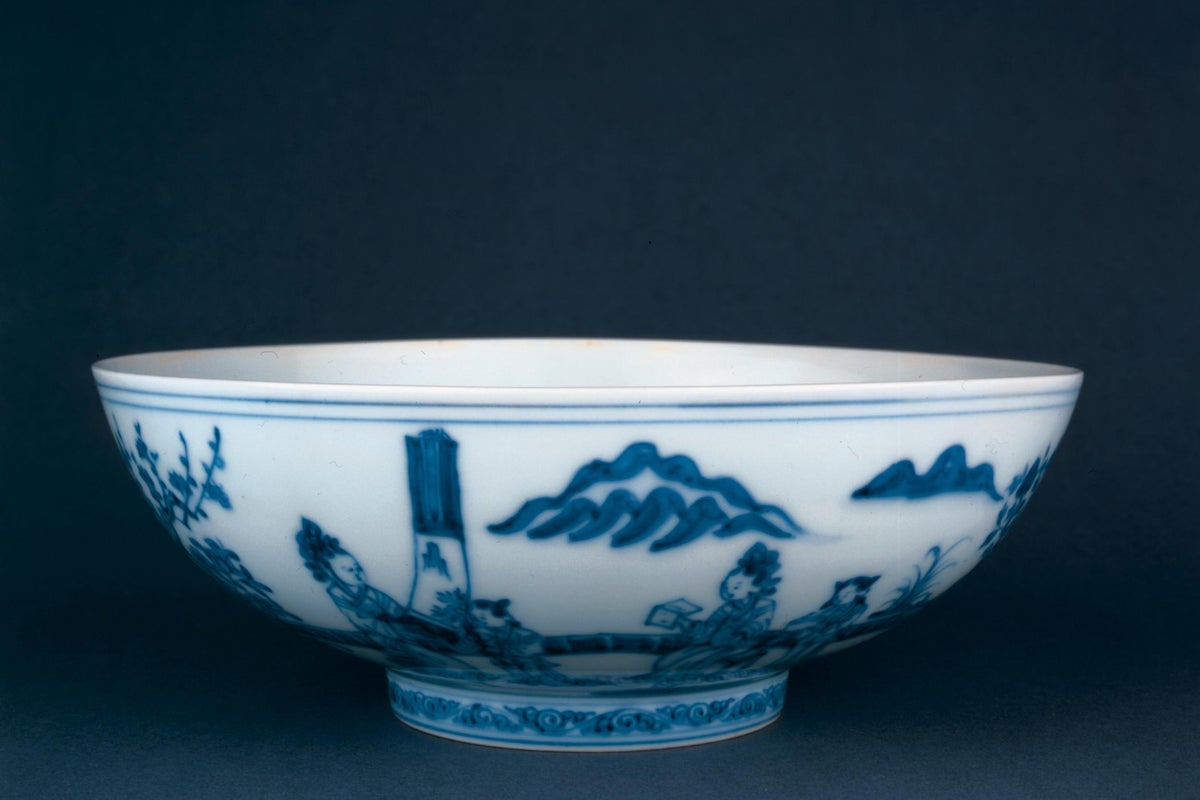
The British Museum is investigating how a 300-year-old Chinese porcelain bowl fell from its display shelf and shattered, damaging another artefact in an unexplained incident that has led to outrage in China and raised fears of a diplomatic row.
The blue-and-white bowl, dating to the Kangxi period of China’s Qing dynasty (1662-1722), fell on 4 October, and struck a small porcelain box on a shelf below, according to Chinese news outlet The Paper.
The bowl, which the British Museum has described as “a very fine copy of a 15th century Ming porcelain bowl”, depicts women in a garden admiring a painting, playing a traditional stringed instrument, and taking part in board games.
The second object was a small blue-and-white porcelain box decorated with a Buddha’s hand citron, peach branches and camellias. Both pieces were made in Jingdezhen, a city in China’s Jiangxi province renowned for its porcelain production, during the reign of the Kangxi emperor, according to the South China Morning Post.
The bowl was on display in Room 95, the museum’s gallery of Chinese ceramics. An international student told Chinese newspaper New Express that staff suddenly evacuated visitors from the crowded gallery at around noon on 4 October.
“After the hall reopened, I no longer saw exhibit B629 on display, and exhibit 634 was also missing,” she told the newspaper.
She added: “The exhibits are quite valuable, and it’s heartbreaking. I think the museum should strengthen visitor control.”
“Regrettably a bowl and small box from the Qing Kangxi period in the Sir Percival David Collection have been damaged after the bowl fell from its shelf and landed on the bottom shelf. The shelf and mount show no sign of failure but we will continue to investigate how this happened,” a museum spokesperson said in a statement to The Telegraph.
“Both objects are already with our expert conservation team for complete restoration. We take the care of objects incredibly seriously and have stringent measures in place within cases to protect from such incidents occurring,” the statement added.
The Independent has reached out to the British Museum for comment.
Pan Jinyu, a Chinese-speaking guide who reportedly works at the British Museum, said in a post on WeChat that he had been giving a tour in Room 95 when it unexpectedly closed, but had not initially suspected that anything had happened to the ceramics.
He only began to believe the reports after seeing photographs of the broken pieces circulating among his contacts the following evening, according to Chinese media.
Mr Pan said he returned to the gallery on 7 October and asked museum staff about the damage.
“They seemed surprised that we had seen photos of it, but confirmed to me that porcelain had indeed been broken,” he told the Global Times.
At the time, he said the label where the artefacts were kept read “object removed for study”, but were changed to “Destination: Conservation” the following day.
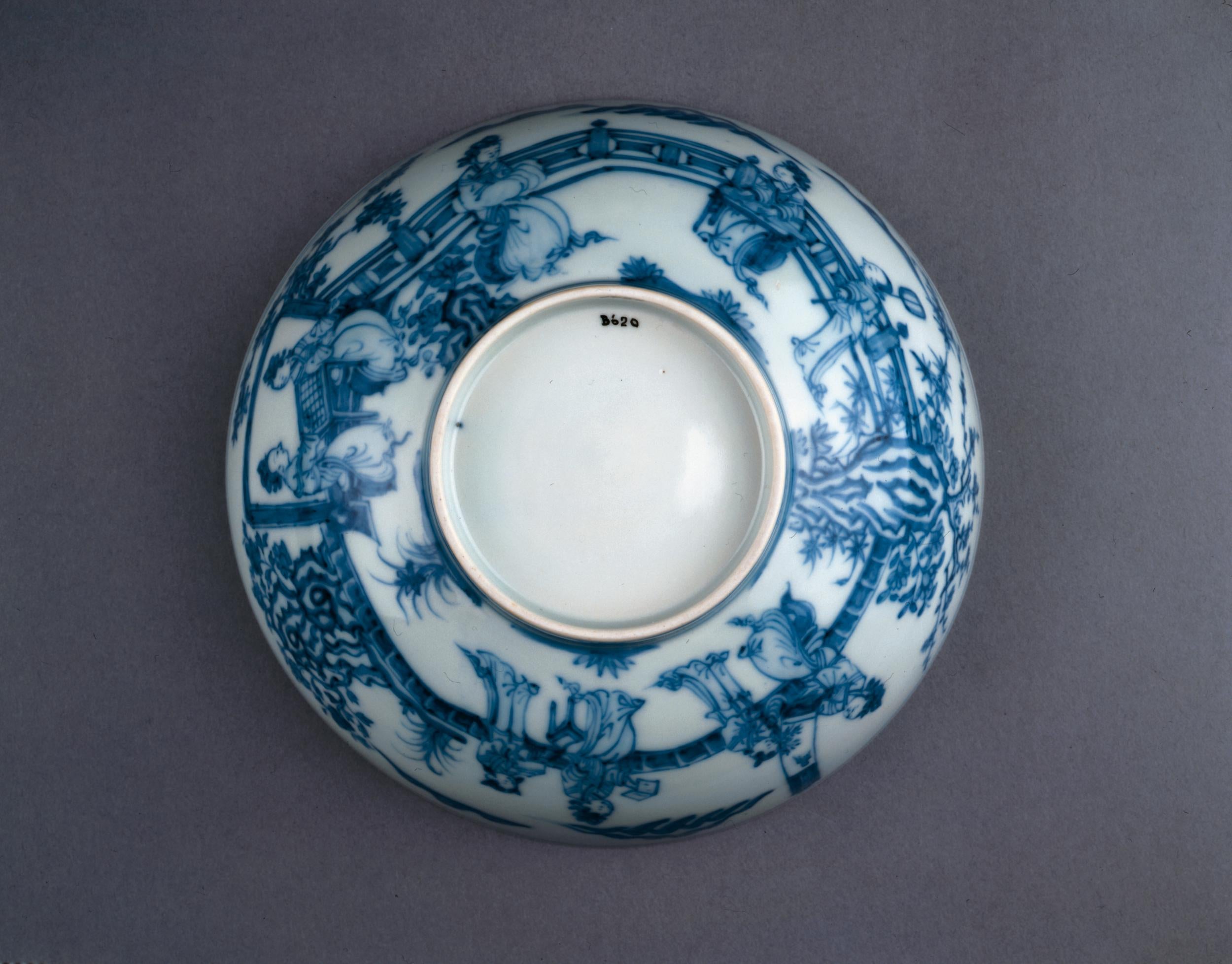
The bowl, Mr Pan explained, was placed upside down on a support, apparently so visitors could see its base. Looking at photographs taken after it fell, he felt the mount did not appear particularly secure and that there was enough space for the bowl to drop.
“I am more concerned with why the accident happened, how the artefacts will be restored and how similar incidents can be prevented in the future,” he wrote in his post.
The bowl and box belonged to the Sir Percival David Foundation of Chinese Art, established in 1952 by British businessman and collector Sir Percival David. The collection was displayed at the University of London’s School of Oriental and African Studies until 2007, before moving to the British Museum in 2009 on long-term loan.
The foundation’s trustees agreed to donate the collection permanently to the museum in 2024, with the transfer receiving formal approval from the Charity Commission in March 2025.
The collection comprises around 1,700 objects and is estimated to be worth £1bn, making it the most valuable object donation in British museum history, according to the Charity Commission.
The damage and lack of clarity on the artefacts has fuelled anger on Chinese social media, with some calling for Chinese cultural items held overseas to be returned.
According to the Global Times, one person wrote: “Chinese cultural relics that were looted and scattered across the world embody the soul of Chinese culture. They must come home, and one day they will.”
Another wrote: “If you can’t take proper care of them, give them back.”
KioskNews shows a cleaned-up reading view extracted from the publisher’s page — the original always lives on their site, not ours.