Radioactive trees to fighting fish: the best of Photoworks festival 2026 – in pictures
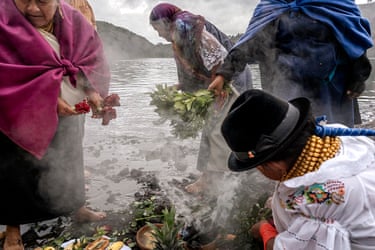
Johanna Alarcón, When the Earth Gives Birth
The Photoworks festival 2026 uses its theme, ‘Un/Stable: Lands, Anxieties, Dreams’, to push contemporary photography beyond traditional gallery walls and passive viewing. By examining how human identity, memory and physical environments overlap, the festival positions photography not just as a tool for recording crises, but as a space for building agency, raising ecological awareness and aiding social transformation. Photoworks festival 2026 runs from 2 October until 1 November in Brighton and Hove, UK. Photo Fringe runs from 2-31 October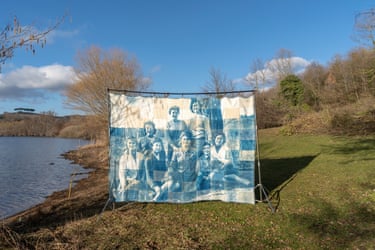
Daniele Cimaglia and Giuseppe Odore, Lago La Dote di Latera
The festival encourages us to question assumptions, embrace multiple perspectives and think critically about the relationships between people, histories, landscapes and technology. Featuring artworks created by a range of emerging and established artists, each exploring subjects that include ecosystems, forest restoration and ecological renewal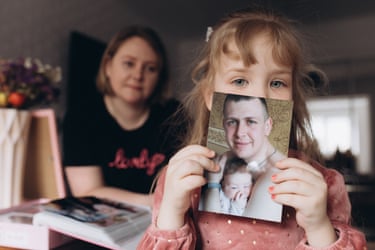
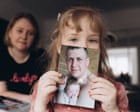
Dasha Tenditna, Not Alone, 2026
The Ukrainian-born photographer’s practice is rooted in her interest in people and the ways in which individual lives are shaped by their social environments. After fleeing the war in Ukraine in 2022, Tenditna maintained a close connection to Ukraine through her documentary work. Working at the intersection of portraiture, documentary photography and social anthropology, her projects explore difficult or overlooked subjects, including domestic violence, the consequences of war, and the experiences of marginalised and underrepresented communities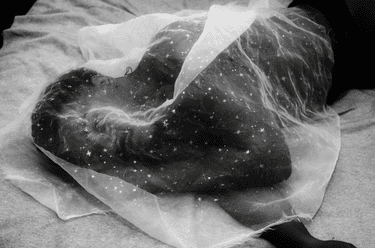
Debmalya Ray Choudhuri, The Weight of the Earth
The Weight of the Earth is a diary of fragility, loss, and desire. Developed over seven years, the series unfolds as a multilayered narrative exploring identity as a South Asian immigrant in a politically and socially fragmented America, as well as the tragic death of a lover and the artist’s experience of tuberculosis as a young adult. It was selected by Photoworks as part of the International Photography Festivals Association (IPFA) award 2025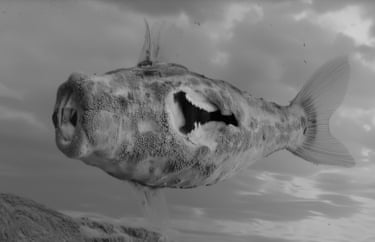
Holly Birtles, Fighting Fish
As part of the Chennai Photo Biennale X Photoworks Darkroom Residency, Holly Birtles developed a series titled Fighting Fish. These images are part of an ongoing body of work inspired by the Thames river and estuary. In Chennai, India, Birtles responded to the Adyar and Cooum rivers, identifying parallels linked to sentimentality, dedication, care and destruction. The work examines speculative ecological struggles through the material and the digital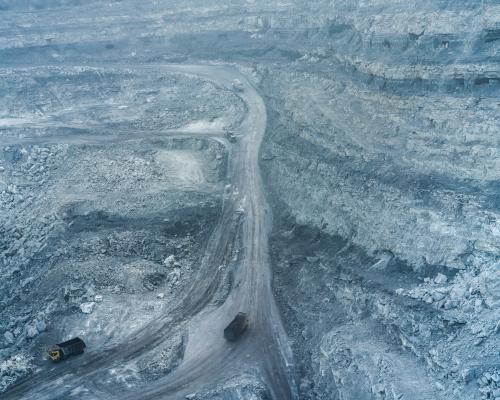
Sarker Protick, from the series Awngar, 2020-ongoing
Sarker Protick works through photography and moving images, exploring the layered relationships between landscape, history, ecology and power. His practice focuses on colonial legacies, infrastructure and environmental transformation in Bangladesh and the wider Bengal region, where imperial histories sediment and reappear. His work is included in Cosmophotographies, the 2026 Photoworks Annual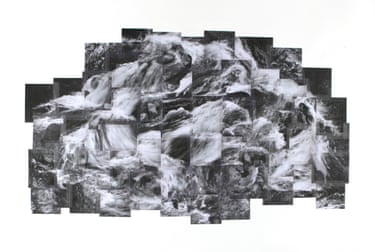
Eugenie Shinkle, The Deluge, 2023
Eugenie Shinkle is a photographer and writer based in London. Her work engages a range of topics, including landscape, fashion photography and human-technology relations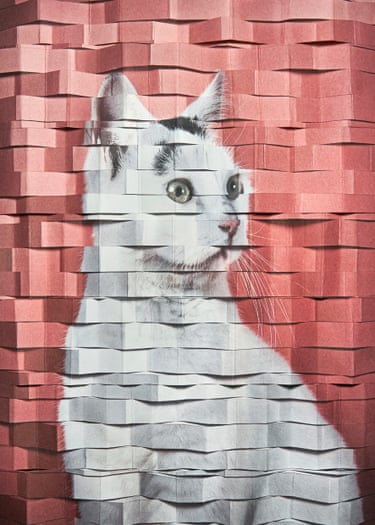
Alma Haser, To Have a Tomcat
Alma Haser is known for her complex and meticulously constructed photographs, which are influenced by her creativity and her background in fine art. Expanding the dimensions of traditional photography, Haser uses analogue techniques, such as inventive paper-folding, collage and mixed media to create layers of intrigue around her subjects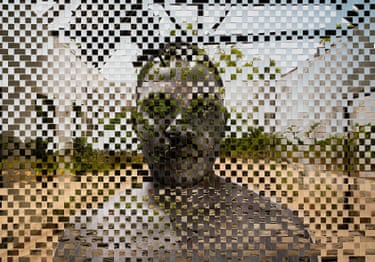
Ayobami Ogungbe, Between the Ocean and the Lagoon – Point of Return, 2025
Ayobami Ogungbe cuts up photographs of his hometown in Badagry, Nigeria, once a major slave centre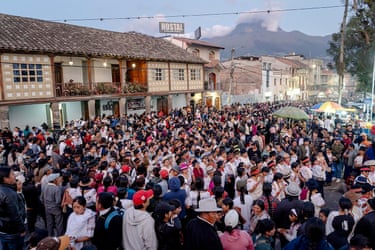
Johanna Alarcón, When the Earth Gives Birth
Johanna Alarcón’s show presents a powerful documentary project exploring Indigenous maternal healthcare in Ecuador. Through stories of Indigenous midwives, apprentices and patients from AMUPAKIN and Partera di Anaku, the first Indigenous midwifery schools and hospitals in Ecuador’s Amazon and Andes, the exhibition explores community-led maternal healthcare, reproductive sovereignty and the preservation of Indigenous knowledge
Hugh Fox, Come on Sense, 2026, Fringe
This year, Photo Fringe has a refreshed focus on the grassroots values that have shaped the festival since 2003: artist-led participation, experimentation, community connection and self-curated exhibitions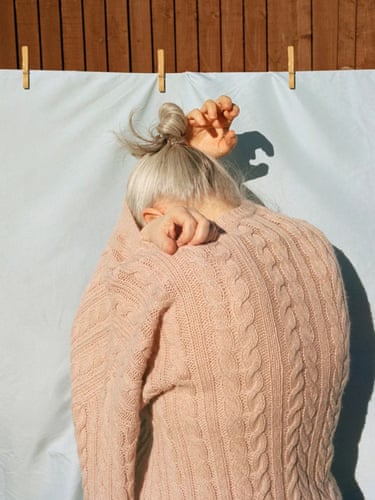
Emily June Smith, A Dissonant Past Unmasked, 2023 - ongoing, Fringe
For Photo Fringe 2026, photographers, artists, collectives, curators, community groups and organisers are invited to take part and submit expressions of interest with their proposals for exhibitions. These could take place in all kinds of venues, in galleries, community venues, cafes, seafront spaces, empty shops and unexpected sites across the region. This year’s festival celebrates the creative potential of working collectively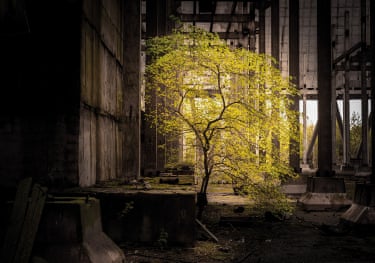
Halfdan Hallseth, Monument Chernobyl Series, 2019, Eco 26, Fringe
On the floor of the unfinished cooling tower of Chernobyl’s Reactor 5, a tree grows through layers of concrete. Built beside Reactor 4, the site bears the scars of one of history’s most devastating ecological disasters. The tree becomes a monument to life – its roots and branches reclaim a place designed to control immense forces. In the face of the climate crisis, the image offers both a warning and a possibility: nature is remarkably resilient, but its survival should not be mistaken for permission to keep pushing its limits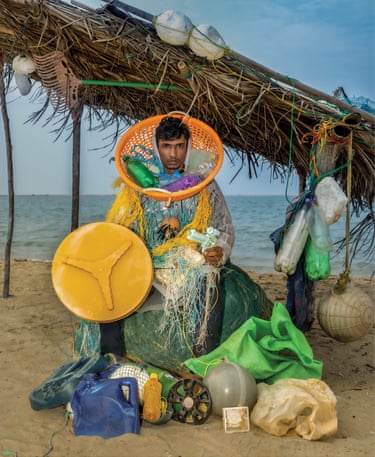
Gil Mualem Doron, Sea of Change, Eco 26 Fringe
Sea of Change is a collaborative photography series created with young people from a fishing village in Sri Lanka. Participants transformed plastic waste collected from local beaches into wearable sculptures, masks and costumes. Connecting local experiences of pollution and coastal precarity to the global ecological crisis, the work shows how discarded materials can take on new meanings through creativity and collective actionKioskNews shows a cleaned-up reading view extracted from the publisher’s page — the original always lives on their site, not ours.