Herzog meets Bahrain's foreign minister in Azerbaijan as Baku emerges as a regional hub

President Isaac Herzog’s meeting with Bahraini Foreign Minister Abdullatif bin Rashid Al-Zayani in Baku on Wednesday highlighted Azerbaijan’s increasingly important role in regional diplomacy. At a time when relations across the Middle East remain strained, the Azerbaijani capital has become a meeting point for countries that do not always find it easy to talk to one another.
The meeting took place on the sidelines of the Conference on Interaction and Confidence Building Measures in Asia (CICA) summit, hosted by Azerbaijan. According to Herzog’s office, the two discussed strengthening the Abraham Accords and expanding regional cooperation. Herzog also met Azerbaijani President Ilham Aliyev to discuss bilateral relations and regional security.
For Azerbaijan, an emerging middle power, the meetings reflect a diplomatic role that has developed over the years. The country maintains close relations with Israel while preserving strong ties with Turkey, Bahrain, the United Arab Emirates and other Muslim-majority countries. Its ability to work with governments whose interests sometimes conflict has made it a useful venue for sensitive discussions.
Azerbaijan’s diplomatic role allows for ‘reconciliation without a public stage’
Joseph Epstein, director of the Turan Research Center and a senior fellow at the Yorktown Institute, describes this approach as “reconciliation without a public stage.”
“Azerbaijan established relations with Israel in 1992 and has kept them intact through two Karabakh wars, the war in Gaza and years of pressure from Tehran and Ankara,” Epstein said. “The partnership covers security, trade, technology, and energy, and Baku built it without cutting a single tie to the Arab and Muslim world.”
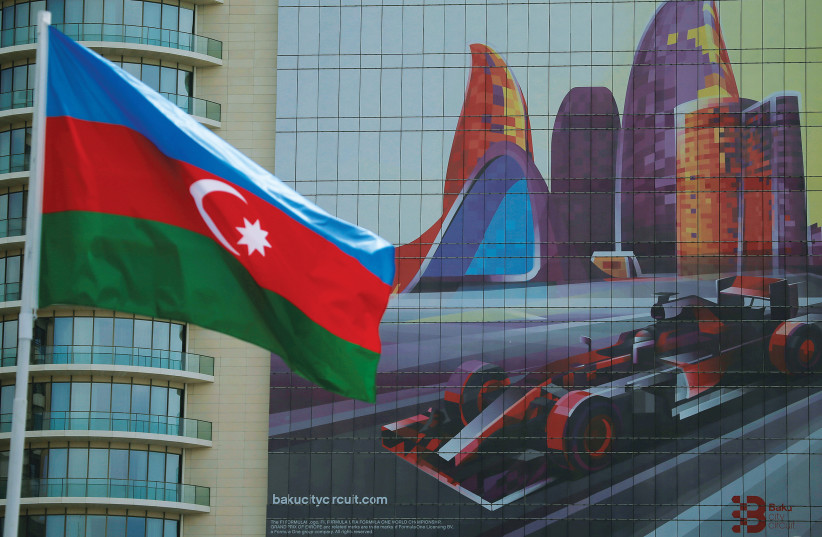
According to Epstein, Azerbaijan’s relationships with Israel and Muslim countries gave it a diplomatic role well before the Abraham Accords were signed in 2020.
“Israeli and Arab officials could meet there years before because no one saw Azerbaijan as Israel’s enemy or as its client. Every side trusted the host,” he said.
That relationship has also helped manage tensions between Israel and Turkey. In April 2025, Israeli and Turkish security delegations met in Azerbaijan for talks aimed at establishing a mechanism to prevent military incidents in Syria, where both countries have strategic interests. The Prime Minister’s Office publicly thanked Azerbaijan and President Aliyev for hosting the discussions.
The talks did not resolve the broader disagreements between Jerusalem and Ankara, but they demonstrated the value of maintaining a direct channel even when political relations are strained.
“The same logic now applies to Turkey and Israel,” Epstein said. “Baku is Ankara’s closest ally and one of Jerusalem’s closest partners, and it uses that trust to keep the two from drifting into confrontation.”
After its victory in Karabakh, Azerbaijan took another step in this strategy, moving from military success toward normalization with Armenia. Negotiations over a peace treaty, border delimitation and the opening of transport links reflect Baku’s stated aim of consolidating its gains through a new regional framework rather than military force alone.
The process has also created opportunities for normalization between Armenia and Turkey. Without reduced tensions between Baku and Yerevan, progress between Armenia and Turkey would have been considerably more difficult.
Azerbaijan emerging as a middle power in the Middle East
Professor Ze’ev Khanin, head of the Post-Soviet Conflicts Research Program at the Begin-Sadat Center for Strategic Studies, sees Azerbaijan’s emergence as a middle power as a model distinct from the formal framework of the Abraham Accords.
Baku continues to develop relations with Israel despite the escalation of the Israeli-Palestinian conflict and pressure from Iran and Turkey. For Israel, Khanin argues, this makes Azerbaijan not merely a partner but a rare example of a durable bridge between the Jewish state and the Muslim world.
Herzog’s visit also underscores Azerbaijan’s growing importance to the United States and the West. Washington’s recognition of the country’s role in regional stability was reflected in the strategic partnership charter the two governments signed in February 2026, which emphasized their shared interest in peace and security in the South Caucasus.
For Baku, this presents an opportunity to consolidate its position as a diplomatic intermediary. For Israel, Turkey, Armenia, and the Arab states, it highlights the availability of a venue for dialogue even during periods of regional tension.
Azerbaijani officials involved in the country’s foreign policy present Baku’s diplomatic approach as pragmatic rather than ideological. In this view, Azerbaijan does not require governments to endorse its political model or make public concessions as a condition for dialogue. Nor does it seek to turn diplomatic contacts into public propaganda campaigns.
This approach helps explain why Israel, Turkey, the Gulf Arab states, and Armenia can engage with Azerbaijan despite their sometimes conflicting interests, without necessarily turning such contacts into domestic political controversies.
This role is especially important as the Middle East faces continued tensions over Gaza and Iran and a wider crisis of trust among regional governments. The Abraham Accords demonstrated that normalization is possible, but their durability depends on more than formal agreements. It also requires countries willing to maintain relationships when political rhetoric hardens.
Azerbaijan has become one such country, preserving its partnership with Israel while maintaining contacts across the Arab and Muslim world.
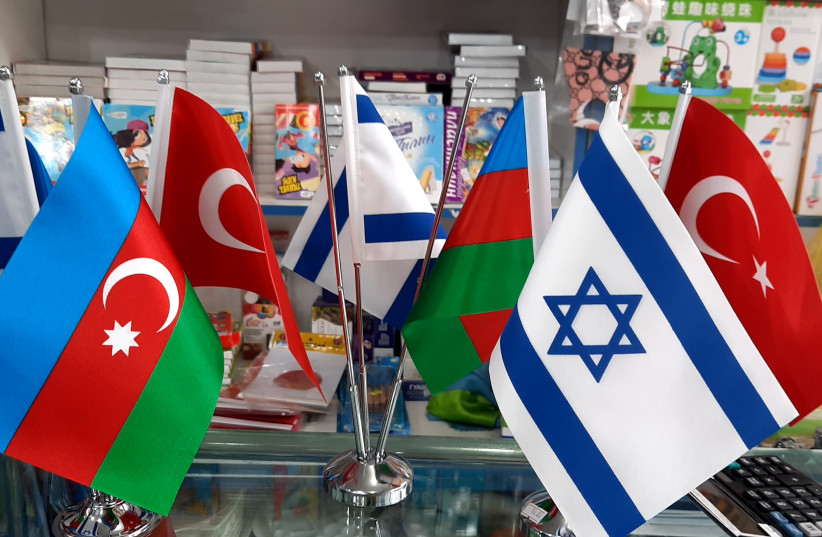
Herzog’s meeting with the Bahraini foreign minister in Baku therefore carried significance beyond diplomatic protocol. Israel and Bahrain established diplomatic relations under the Abraham Accords in 2020, but their relationship came under strain following the outbreak of the Gaza war in October 2023.
The meeting showed that, despite a period of cooling relations, Jerusalem and Manama can still engage in direct dialogue, with Baku providing a venue for their talks.
For Israel, the encounter offered an opportunity to preserve and strengthen the Abraham Accords. For Washington, it underscored the importance of maintaining regional diplomatic channels. For Azerbaijan, it reinforced its growing status as a middle power and an independent center of influence.
As Prof. Khanin puts it, “Baku can offer a venue for dialogue between governments that have reasons to maintain contact despite their disagreements. As regional tensions continue, Azerbaijan’s experience suggests that diplomatic influence does not always depend on brokering a major peace agreement. Sometimes, maintaining relationships and providing a place where difficult conversations can continue is an achievement in itself.”
KioskNews shows a cleaned-up reading view extracted from the publisher’s page — the original always lives on their site, not ours.