Every Universal Monster, Ranked (Including Dracula And Frankenstein's Monster)

Richard Craig is a Senior Author at Screen Rant covering film and TV. Richard has also written extensively about horror and film soundtracks, contributing a chapter to the first major academic collection on the folk horror genre, The Routledge Companion to Folk Horror. Richard is also a performing musician and holds an MA in Music and Sound Art.
Sign in to your ScreenRant account
Universal Monsters helped define cinematic horror, turning literary villains, ancient legends, and tragic outsiders into some of the most recognizable creatures in movie history. Beginning with the silent-era success of The Phantom of the Opera (1925), the studio developed an extraordinary collection of monsters whose influence extends far beyond their original films. Boris Karloff's stitched-together creation, Bela Lugosi's aristocratic vampire, and Lon Chaney Jr.'s tormented werewolf became enduring Halloween icons, while later creations expanded the studio's supernatural universe.
However, not every Universal monster movie has enjoyed the same cultural longevity. Some are defined by a single unforgettable appearance, while others headlined entire franchises, with sequels exploring their mythology and introducing new interpretations. The best examples transcend their frightening designs, whether through tragic backstories, sympathetic performances, or an unsettling ambiguity about the boundary between humanity and monstrosity.
Ranking these classic creatures means considering their visual impact, performances, memorable scenes, and lasting influence on horror cinema. From fleeting vampire brides to the studio's most celebrated creation, these are the Universal Monsters ranked.
9 The Brides Of Dracula

The Brides of Dracula are among Universal's most visually striking monsters, but their extremely limited screen time prevents them from ranking higher. In Tod Browning's Dracula (1931), Geraldine Dvorak, Cornelia Thaw and Dorothy Tree play the three vampires lurking in Count Dracula's Transylvanian castle. Their appearance establishes vampirism as something seductive and predatory before Dracula himself becomes the film's central threat.
The women emerge in flowing white gowns, moving with an eerie confidence that makes their supernatural appetites clear. However, Dracula dismisses them before turning his attention to Renfield, and they never return in the English-language film. Their role is memorable precisely because it is so brief: they suggest a whole world of vampiric danger without requiring lengthy explanations.
The Spanish-language Drácula, filmed simultaneously using the same sets, gives its brides a more overtly sexualized presentation. That version makes their seductive menace more pronounced, but neither film develops them beyond their function as Dracula's servants.
8 The Mummy

Universal's Mummy deserves its place among the studio's essential monsters, but its changing identity across the original six-film series makes it less distinctive than the characters ranked above it. In Karl Freund's The Mummy (1932), Boris Karloff plays Imhotep, an ancient Egyptian priest resurrected after thousands of years who seeks to reunite with his lost love, Anck-es-en-Amon.
Imhotep's controlled movements and piercing gaze make him unnerving without requiring constant displays of violence. The later films shift towards Kharis, a bandaged, lumbering mummy played by Tom Tyler in The Mummy's Hand (1940) and Lon Chaney Jr. in subsequent installments.
Kharis helped establish the shambling, unstoppable mummy as a horror staple, but he lacks Imhotep's intelligence and romantic obsession. The character never quite reaches the psychological complexity of Frankenstein's Monster or Dracula. Karloff's Imhotep remains the standout, while Kharis's repeated appearances cemented the archetype.
7 The Gill-Man

The Gill-Man, introduced in Creature from the Black Lagoon (1954), is one of Universal's most distinctive designs, combining the appearance of an aquatic predator with a strangely human presence. When a scientific expedition discovers the creature in an isolated Amazonian lagoon, its members encounter an ancient species that has survived beyond the world they understand.
The Gill-Man's frightening physicality is obvious, but the film's most memorable scenes reveal something more unusual: a creature capable of grace, curiosity, and apparent desire. Its underwater movements are particularly effective. The famous sequence in which the Gill-Man swims beneath Kay Lawrence, mirroring her movements without her knowledge, gives the monster an unsettlingly intimate quality.
The scene is beautiful and threatening simultaneously, suggesting an attraction that can never be separated from the danger it poses. Its two sequels, Revenge of the Creature (1955) and The Creature Walks Among Us (1956), expand its story, but the original remains its defining appearance.
6 The Wolf Man
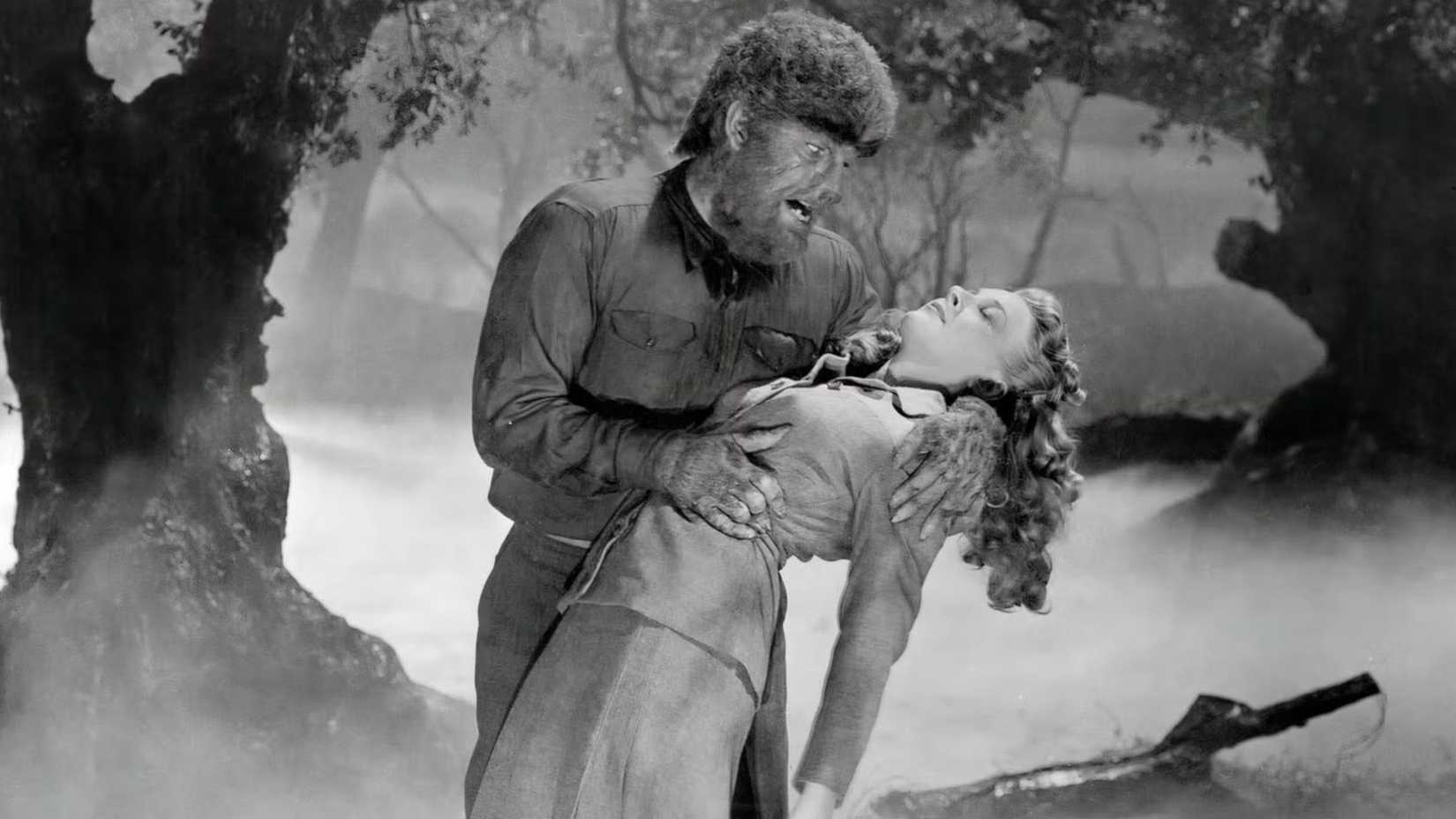
Lon Chaney Jr.'s Larry Talbot is one of Universal's most tragic monsters, although his familiar werewolf mythology is less visually inventive than the creations ranked higher. In The Wolf Man (1941), Larry returns to Wales and is bitten by a wolf while trying to help a young woman.
Larry subsequently learns that the animal was a werewolf and that its curse has passed to him. The conflict between Larry's ordinary identity and the violence he cannot control is the Wolfman’s most defining feature. Chaney conveys his desperation through a performance that makes the transformations feel like a personal catastrophe rather than a convenient excuse for murder.
The character appeared in five films centered on Chaney's Larry Talbot, including Frankenstein Meets the Wolf Man (1943). His repeated attempts to find a cure give the franchise emotional continuity, but the films rarely escape the cycle of transformation and tragedy.
5 The Invisible Man

James Whale's The Invisible Man (1933) stars Claude Rains as Jack Griffin, a scientist whose invisibility experiment gradually destroys his sanity. Rains makes Griffin compelling through his voice alone, shifting from dry amusement to unrestrained cruelty while his unseen body commits increasingly disturbing acts.
The film's most memorable sequence comes when Griffin removes the bandages covering his head. The revelation that there is nothing beneath them is an extraordinary special-effects moment, while his casual removal of his nose turns the scene into a macabre joke.
Griffin also has a more complicated motivation than many of the studio's villains. He begins as a scientist pursuing a remarkable discovery, but invisibility gives him a sense of impunity that accelerates his descent into madness. The character's ability to be terrifying without being visible continued throughout the sequels, even if the franchise never became quite as culturally ubiquitous as Dracula or Frankenstein's Monster.
4 The Phantom

Lon Chaney's The Phantom of the Opera (1925) presents Erik as a disfigured, obsessive figure haunting the Paris Opera House, where he becomes fixated on singer Christine Daaé. His manipulation and violence make him dangerous, but his isolation also makes him one of Universal's most unsettlingly human monsters.
Chaney's self-designed makeup remains the film's defining achievement. Erik's distorted nose, hollow eyes, and exposed-looking teeth create a face that seems almost skeletal. The unmasking scene, in which Christine suddenly reveals his face to herself and the audience, is one of silent cinema's great horror shocks.
Universal's 1943 Technicolor remake, starring Claude Rains, offers a different interpretation, but Chaney's original remains the definitive version. Erik is not supernatural, and his crimes should not be confused with romantic devotion. His obsessive behavior makes him horrifying, while his desperate need for acceptance gives the story its tragic dimension.
3 Count Dracula
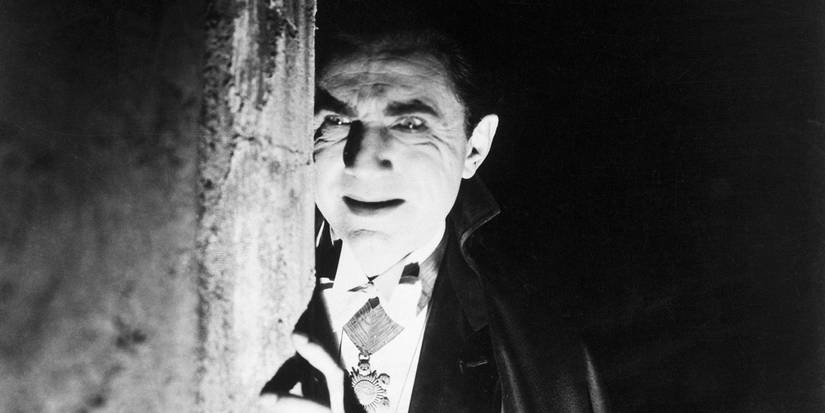
Bela Lugosi's Count Dracula ranks third because his influence on the horror genre is almost impossible to overstate. Tod Browning's Dracula (1931) established the character's enduring screen image: aristocratic clothing, an unnerving stare, measured gestures, and a thick Hungarian accent. Lugosi's deliberate delivery makes Dracula seem completely assured of his superiority.
The performance's genius lies in its restraint. Dracula rarely needs to shout or move quickly; his composure makes his threats feel inevitable. When he fixes his attention on a victim, the scene becomes a contest of wills rather than a conventional struggle between attacker and prey. His seductiveness is equally important, giving vampirism a dangerous allure that distinguishes him from Universal's more physically threatening creatures.
Dracula also proved adaptable across the studio's shared monster universe. John Carradine played the Count in House of Frankenstein (1944) and House of Dracula (1945), while Lugosi returned in Abbott and Costello Meet Frankenstein (1948). Yet no successor displaced his interpretation as the definitive cinematic Dracula.
2 The Bride Of Frankenstein

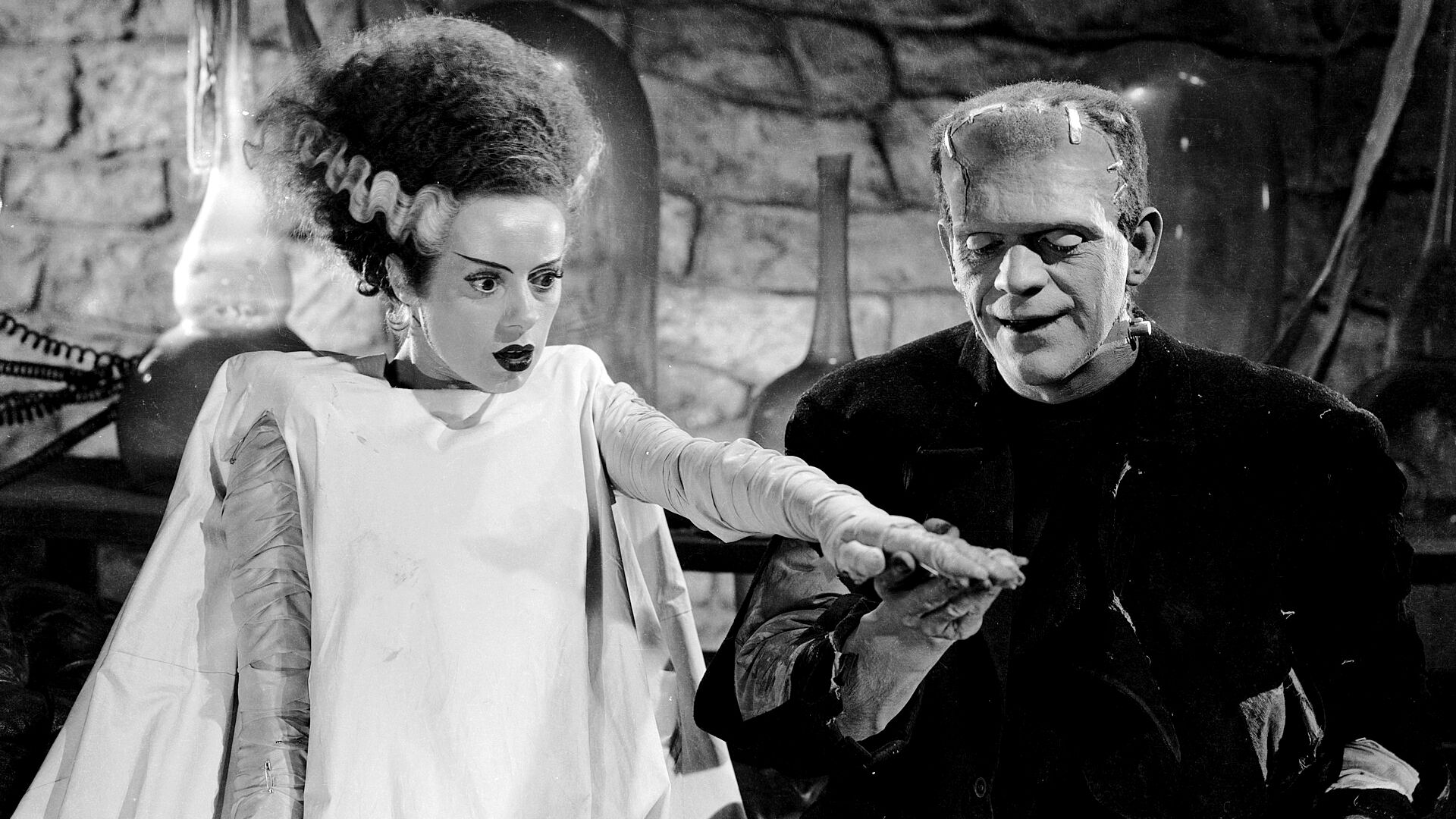
The Bride of Frankenstein ranks second despite appearing for only a few minutes in Bride of Frankenstein (1935). Her extraordinary cultural legacy demonstrates how a character can become iconic without needing an extensive backstory or a long screen presence.
Elsa Lanchester's performance makes the Bride feel genuinely alien. Her stiff movements, startled expressions, and distinctive hissing vocalization suggest someone struggling to understand a world she has only just entered. The towering hairstyle, streaked with white lightning-like patterns, is among horror cinema's most recognizable designs.
Her refusal to accept the Monster also gives the film a sharper emotional edge. The Monster ultimately destroys Frankenstein's laboratory tower, apparently killing the Bride and Pretorius alongside himself. Her brief appearance has inspired decades of imitation, but the original remains difficult to surpass. She falls just short of first place because her potential is largely unexplored within the film itself.
1 Frankenstein's Monster

Frankenstein's Monster takes the top spot because no other Universal creation combines a defining visual design, a deeply sympathetic performance, and such enduring cultural influence. In James Whale's Frankenstein (1931), Boris Karloff plays the creature assembled from dead bodies by Henry Frankenstein.
Jack P. Pierce's makeup, with its flat head, heavy eyelids, scars, and neck bolts, created an image so influential that subsequent portrayals have rarely abandoned its essential features. Karloff's performance is what elevates the Monster above a memorable design. His slow movements and bewildered expressions suggest a being struggling to understand a world that immediately fears and rejects him.
The sequence in which he encounters a little girl beside a lake is particularly revealing: his inability to comprehend the consequences of his actions turns an apparently innocent interaction into tragedy. He is dangerous, but he is also profoundly vulnerable. Bride of Frankenstein (1935) deepens this characterization, allowing the Monster to express his loneliness and desire for companionship.
Across the Universal franchise, the role passed from Karloff to Lon Chaney Jr., Glenn Strange, and even Bela Lugosi, but Karloff's interpretation remains definitive. Dracula may have established the template for the cinematic vampire, and the Bride may have one of horror's most iconic designs, but Frankenstein's Monster offers the richest combination of visual impact, emotional depth and lasting influence. He is Universal's greatest monster because audiences can fear him, pity him, and recognize something human in him all at once.

- Movie(s)
- Phantom of the Opera (1943), Dracula, Frankenstein, The Mummy (1932), The Invisible Man (1933), The Bride of Frankenstein (1935), The Wolfman, Creature from the Black Lagoon, The Mummy, The Mummy Returns, Van Helsing, The Mummy: Tomb of the Dragon Emperor (2008), The Wolfman, Dracula Untold, The Mummy, The Invisible Man (2020), Renfield, The Last Voyage of The Demeter, Lisa Frankenstein, Abigail, Wolf Man, The Bride!
- First Film
- The Hunchback of Notre Dame
- Cast
- Béla Lugosi, Boris Karloff, Lon Chaney, Lon Chaney Jr., Claude Rains, Ricou Browning, Ben Chapman, Elsa Lanchester, Dwight Frye, Colin Clive
- Character(s)
- Erique Claudin, Dracula, Frankenstein, Dr. Henry Frankenstein, The Mummy (Imhotep), The Invisible Man (Dr. Jack Griffin), The Bride of Frankenstein, The Wolf Man (Lawrence Talbot), The Gill-Man, R.M. Renfield, Dr. Abraham Van Helsing
KioskNews shows a cleaned-up reading view extracted from the publisher’s page — the original always lives on their site, not ours.