9 months after Ajit Pawar crash, Baramati airfield set for Rs 65-crore revamp
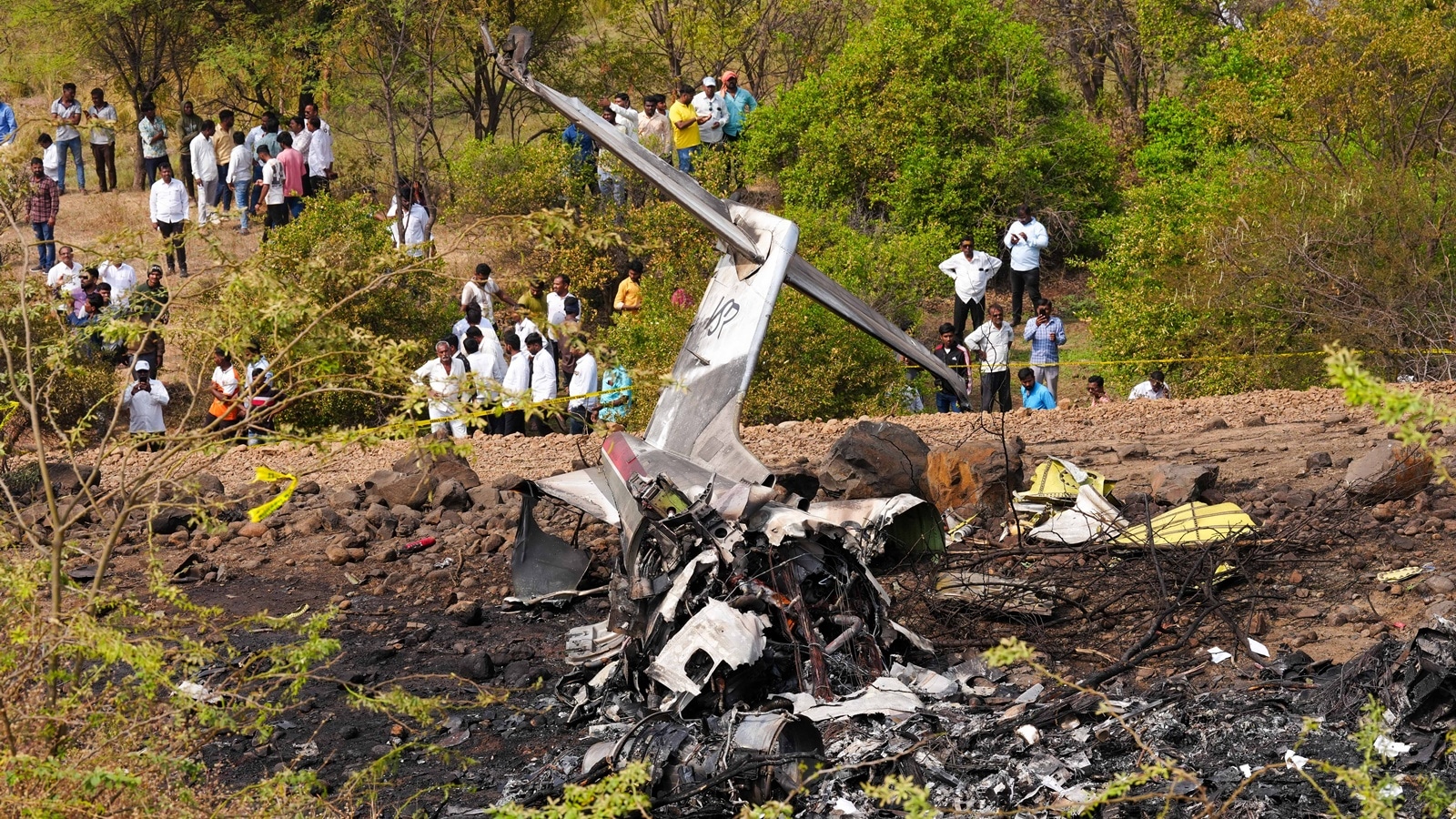
Nine months after a plane crash at Baramati airfield killed then Maharashtra deputy chief minister Ajit Pawar and four others, the state government Thursday approved a Rs 65-crore first phase of the airfield’s development, with a focus on upgrading infrastructure and improving safety.
The proposed works include recarpeting the runway, constructing a runway safety area and an air traffic control (ATC) tower, along with other infrastructure upgrades.
“After a lot of hard work, we have today (Thursday) received government approval for Phase 1 of the development work at Baramati Airport, worth Rs 65 crore,” said Deepak Kapoor, Vice-Chairman and Managing Director, Maharashtra Airport Development Corporation (MADC).
“The first phase will include recarpeting of the existing runway, construction of a runway and safety area, area grading, construction of a compound wall and an ATC tower. Other proposed facilities include a prefabricated technical block, fire station, emergency room, and CCTV surveillance systems,” Kapoor said.
Kapoor said the process of appointing a consultant to expedite the development work would begin immediately.
“From Friday itself, we will invite bids for the appointment of a consultant to ensure speedy execution of these works. We will now move ahead with the development of Baramati Airport at a fast pace,” he said in a post on X.
Expert speak
Aviation expert and analyst Dhairyashil Vandekar said the Phase 1 approval was a much-needed step toward strengthening Baramati airfield’s safety infrastructure and operational preparedness.
Story continues below this ad
However, he cautioned that constructing an ATC tower alone would not transform the uncontrolled airfield into a controlled aerodrome.
“An ATC tower requires appropriately qualified and authorised personnel, approved operating procedures, reliable communication facilities, suitable airspace arrangements and the necessary regulatory approvals to function effectively,” Vandekar said.
He said Phase 1 should be viewed as the foundation of a broader airport safety and operational modernisation programme rather than its completion. He also called for additional infrastructure, including Precision Approach Path Indicator (PAPI) systems, appropriate runway and approach lighting, and other visual aids to support safe night operations, subject to applicable regulatory requirements.
Vandekar also recommended considering an Automatic Weather Observing System (AWOS) to provide reliable and timely meteorological information to pilots and operational personnel.
Story continues below this ad
Referring to the operational requirements at uncontrolled aerodromes, he stressed the importance of adhering to prescribed meteorological minima, particularly for flights operating under Visual Flight Rules (VFR).
“A comprehensive Detailed Project Report (DPR) should examine the technical and operational feasibility of introducing Instrument Flight Rules (IFR) operations at Baramati,” he said.
He added that the Maharashtra Government and MADC should work closely with the Directorate General of Civil Aviation (DGCA) to determine the applicable aerodrome licensing, registration or other authorisation requirements, depending on the intended category and nature of operations.
“All necessary regulatory approvals and compliance assessments must be completed. Equally important is strengthening the DGCA’s regulatory surveillance and safety oversight of the flight training organisations operating from Baramati,” Vandekar said.
Accidents at Baramati airfield
Story continues below this ad
The approval comes amid heightened safety concerns following the January 28, 2026, Learjet 45 crash at Baramati airfield, which killed Ajit Pawar and four others.
A preliminary report by the Aircraft Accident Investigation Bureau (AAIB), which examined the Baramati accident, highlighted several infrastructure-related shortcomings at the airfield.
The Bureau noted that Baramati lacked a meteorological facility and that the uncontrolled airfield lacked navigational aids beyond wind socks.
The inspection also pointed to the poor condition of the runway. The last runway recarpeting was carried out in March 2016. The absence of subsequent recarpeting had resulted in faded runway markings and loose gravel on the runway surface.
Story continues below this ad
Concerns over the Baramati airfield’s safety were further highlighted by two accidents involving trainee aircraft in May and August 2026. In the latest incident, a trainee aircraft from Carver Aviation Academy skidded off the runway while taxiing on August 9.
Baramati airfield
Baramati is among the 15 domestic unlicensed airports in Maharashtra listed by MADC. The Maharashtra Industrial Development Corporation (MIDC) owns the airfield, which has a single asphalt runway measuring 7,710 feet (2,350 metres).
The airfield was established in the 1990s and primarily caters to a limited number of charter flights. Shivaji Taware, manager of Baramati airfield, said the facility handled around six to seven charter flights every month, most of them involving politicians.
In 2009, the airfield, along with four other similar facilities in Maharashtra, was leased to step-down subsidiaries of Reliance Infrastructure Limited for development. However, citing a lack of development and flight operations, MIDC took back possession of the facility in 2025.
Story continues below this ad
At present, Baramati airfield also houses two flight training organisations (FTOs) – Academy of Carver Aviation Private Limited and Redbird Flight Training Academy.
KioskNews shows a cleaned-up reading view extracted from the publisher’s page — the original always lives on their site, not ours.